Why Does My Telescope Show Upside Down?
Discover the fundamental physics of astronomical optics. Learn why celestial views appear reversed and how to fix them.

Astronomical telescopes utilize simple lens or mirror designs that naturally invert images. Erecting optics or diagonal prisms are required to restore standard terrestrial orientation.
Ready to compare models? Start with our Best Telescope: Top Backyard Picks for Astronomy.
Practical Quick-Reference Table
| Scenario / Metric | Recommended Target | Why It Matters |
|---|---|---|
| Newtonian Reflector | Inverted View | Mirrors flip images horizontally and vertically. |
| Refractor with Star Diagonal | Right-Side Up, Mirrored | Prism corrects vertical but reverses left to right. |
| Erecting Eyepiece | Fully Corrected Image | Adds internal lenses for standard terrestrial viewing. |
| Porro Prism Binoculars | Standard Orientation | Prism clusters maintain correct upright alignment. |
| Maksutov-Cassegrain | Corrected with Diagonal | Rear cell output requires supplementary erecting glass. |
| Collimation Check | Proper Optical Axis | Ensures sharp focus despite inverted orientation. |
Understanding Optical Inversion and Light Paths
Light traveling through lenses or reflecting off curved mirrors undergoes a natural geometric inversion. Primary focal points concentrate rays, causing the top of an object to project onto the bottom of the focal plane.
When choosing the best telescope for deep-space astronomy, image orientation holds zero scientific relevance. Inverted light paths maximize raw optical transmission by minimizing unnecessary glass elements.
Removing extra erecting lenses significantly reduces internal light scatter and chromatic aberration. Pure optical paths deliver sharper contrast on faint nebulae and distant planetary features.
Mastering basic ray tracing helps astronomers comprehend why standard telescope designs project inverted scenes. Geometric physics dictate that every single convex lens flips incoming wavefronts completely.
When stellar light passes through a primary objective lens or reflects off a curved mirror, the focal point naturally creates an inverted image. This fundamental geometric property stems from the rectilinear propagation of light rays.
Astronomical telescopes omit image-erecting optical groups to maximize light transmission efficiency. Introducing extra glass elements reduces total optical throughput by roughly five to ten percent, degrading faint deep-space visibility significantly during high-magnification sessions.
Ray tracing diagrams clearly show that intersection points inside the optical tube flip both top-to-bottom and left-to-right. Understanding this exact path explains why standard celestial views require no corrective lenses for accurate scientific data recording.
In deep space, cardinal directions hold zero practical meaning because celestial spheres lack an inherent upward orientation. Consequently, manufacturers prioritize absolute optical clarity over the ergonomic convenience of an upright terrestrial viewing experience.
- Light rays cross at the focal point of any objective lens.
- Mirrors reverse images based on the angle of incidence.
- Deep-space objects do not require upright orientation.
- Fewer optical surfaces yield brighter, higher contrast views.
The Physics of Focal Plane Reversal
Incoming parallel rays converge through the objective lens before reaching the eyepiece focal plane. Focal inversion occurs naturally at this exact convergence point within the optical tube.
Understanding this light crossover prevents unnecessary mechanical panic during initial instrument setup. Optical ray paths remain entirely predictable across all standard refracting and reflecting designs.
- Rays cross at the focal point.
- Inversion is mathematically constant.
Refractor Telescopes and Diagonal Prisms
Traditional refracting telescopes use front objective lenses to gather and focus incoming starlight. Unmodified refractors produce completely upside-down and reversed images directly at the focuser drawtube.
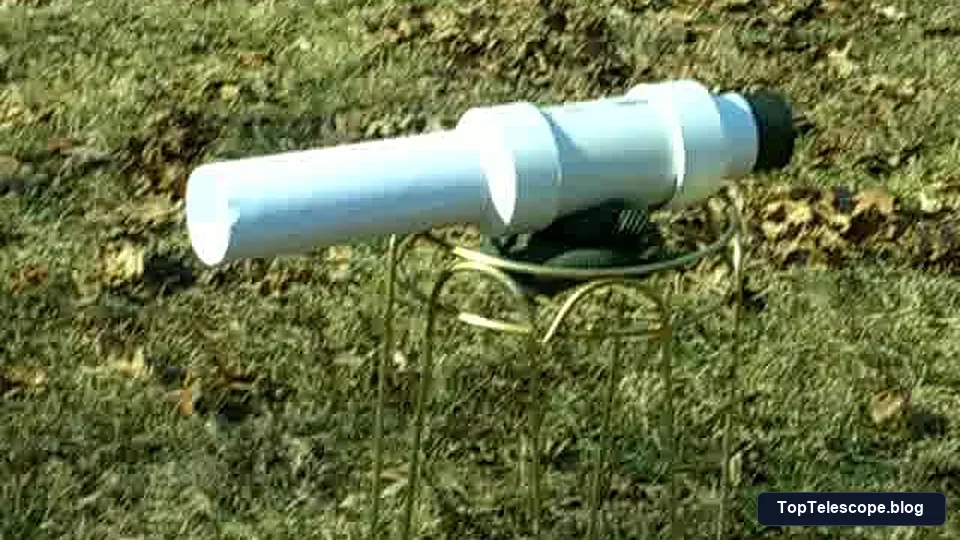
Adding a star diagonal bends the light path by ninety degrees for comfortable viewing angles. Standard star diagonals use a single mirror or prism, fixing vertical orientation while leaving images flipped horizontally.
Amateur astronomers targeting planets often utilize erecting prisms to achieve completely normal views. Amici roof prisms split and recombine light waves to restore true upright and unreversed orientations.
Selecting the correct accessory depends entirely on whether your observing session involves stars or landscape. Right-angle correctors sacrifice a fraction of light transmission for absolute terrestrial viewing convenience.
Standard refractor telescopes utilize a long optical tube where light travels straight from the objective lens to the focuser. Without any redirection, the viewed image appears completely upside down and horizontally reversed to human eyes.
Inserting a standard 90-degree star diagonal bends the light path upward for comfortable eyepiece positioning. This mirror or single prism corrects the vertical inversion but leaves the image horizontally mirrored for astronomical targets.
If you are evaluating the best starter telescope for terrestrial observation, swap standard diagonals for an erecting prism. These precision Amici designs restore correct left-to-right and vertical orientation natively.
Always verify the barrel diameter compatibility, typically measuring 1.25 inches or 2 inches, before mounting any accessory prism. Ill-fitting barrels introduce mechanical tilt errors that degrade high-magnification resolution across the entire field.
- Refractor tubes project inverted images without accessories.
- Star diagonals fix vertical flip but reverse left-right.
- Amici prisms provide fully corrected terrestrial views.
- Prism quality directly impacts overall image sharpness.
Installing and Aligning Star Diagonals
Insert the diagonal securely into the visual back before attaching any high-power eyepieces. Secure thumb screws prevent accidental equipment drops during nocturnal observation sessions.
Verify that the internal mirror coating remains completely free from dust and fingerprint residue. Clean optical surfaces ensure maximum light throughput without unwanted ghosting or flare.
- Tighten retaining screws firmly.
- Inspect mirror coatings regularly.
Video Walkthrough: #DearCelestron - Why is the image in my telescope upside down and/or backwards?
Newtonian Reflectors and Orientation Realities
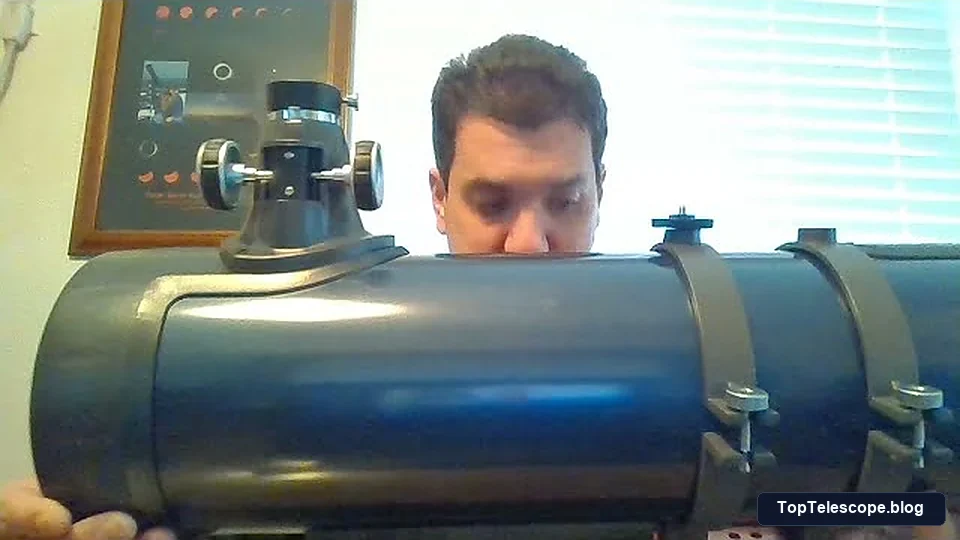
Newtonian reflector telescopes gather light via a large parabolic mirror at the tube base. Primary mirrors bounce photons upward to a flat diagonal secondary mirror positioned near the front aperture.
This dual-reflection optical scheme results in images that appear upside down and rotated. Rotational orientation shifts depending on where the focuser sits relative to the mounting rings.
Because reflectors target astronomical phenomena, correcting this upside-down state is entirely unnecessary. Celestial navigation relies strictly on relative coordinates rather than terrestrial up-and-down references.
Attempting to erect a Newtonian image requires complex erecting relay lenses inside the focuser. Internal relay optics often degrade planetary sharpness and drastically limit total available inward travel.
Newtonian reflector telescopes utilize a curved primary mirror at the tube base alongside a flat secondary mirror near the front aperture. This multi-bounce optical configuration produces views that appear both inverted and rotationally shifted.
Because the focuser sits on the side of the optical tube rather than the rear, viewing angles change dynamically as the mount tracks objects. Rotating the optical tube inside its metal mounting rings often becomes necessary.
Erecting an image inside a Newtonian reflector is rarely recommended due to the substantial light loss and mechanical clearance challenges. Most observers simply learn to navigate star atlases that match their reversed eyepiece orientation.
The physical position of the spider vanes supporting the secondary mirror introduces diffraction spikes around bright stars. These optical artifacts remain completely independent of image inversion, reflecting pure wave optics limitations in physical hardware.
- Newtonians use parabolic primary and flat secondary mirrors.
- Images appear both inverted and rotationally flipped.
- Erecting lenses are rarely recommended for reflectors.
- Focuser rotation alters apparent field orientation.
Managing Focuser Rotation and Viewer Comfort
Loosening the tube ring clamps allows you to rotate the entire optical assembly. Tube rotation places the eyepiece at an ergonomic viewing height for observers.
Always support the main optical tube firmly with both hands during any rotation adjustments. Preventative handling protects delicate internal collimation settings from sudden mechanical shocks.
- Loosen ring clamps carefully.
- Maintain firm grip on optical tube.
Compound Optical Systems and Correctors
Catadioptric instruments like Schmidt-Cassegrains combine refractive corrector plates with spherical mirrors. Compound designs fold light paths multiple times inside compact, short-tube physical configurations.
The resulting image at the rear visual back remains upside down and reversed left-to-right. Standard back output requires the exact same accessory solutions used in traditional refractors.
When setting up any best telescope for beginners, attaching an erecting diagonal transforms the instrument into a terrestrial spotting scope. Erecting prisms restore standard orientation for daytime nature viewing and target shooting.
Always ensure your visual back accessories match the specific thread pitch of your instrument. Thread compatibility prevents cross-threading and secures heavy camera or eyepiece payloads safely.
Schmidt-Cassegrain and Maksutov-Cassegrain systems fold light multiple times between a spherical primary mirror and a convex secondary mirror. This folded path yields a compact physical tube while preserving an upside down celestial image.
Because these compound instruments typically accept standard 1.25-inch visual backs, they readily accommodate standard star diagonals. Attaching a diagonal makes terrestrial viewing much easier by correcting the vertical plane automatically.
Internal baffling tubes prevent stray light from reaching the focal plane, maintaining high contrast levels for planetary observation. However, these baffles do not alter the basic parity of the final projected optical image.
When attaching heavy camera equipment directly to the rear cell thread, users must utilize a secure locking ring. Maintaining precise back-focus distance prevents field curvature and off-axis aberrations during long-exposure astrophotography.
- Catadioptric systems fold light using mirrors and lenses.
- Rear visual output mirrors standard refractor behavior.
- Erecting diagonals enable comfortable daytime spotting.
- Verify thread standards before attaching accessories.
Optimizing Back-Focus and Accessory Chains
Calculate your optical train length carefully to maintain proper focal travel margins. Back-focus distance dictates whether your eyepieces will reach sharp, clean focus.
Avoid stacking multiple adapter rings unnecessarily to minimize mechanical flexure and image shift. Rigid connections keep your optical axis perfectly aligned during tracking.
- Measure back-focus tolerances accurately.
- Minimize adapter counts to prevent flexure.
Terrestrial Viewing Versus Astronomical Standards
Viewing distant landscapes introduces unique optical challenges absent in nighttime deep-space observing. Terrestrial targets require intuitive up-down and left-right orientation for effective navigation.
Astronomical eyepieces prioritize wide apparent fields and maximum light transmission over upright imagery. Standard eyepieces show inverted scenes that confuse beginners scanning local horizons.
Investing in dedicated erecting eyepieces or porro prism correctors solves terrestrial orientation issues. Erecting modules use internal erecting systems to flip views back to normal.
Switching between astronomical and terrestrial modes takes only seconds with modular visual accessories. Quick-swap setups maximize the versatility of your core optical investment.
Terrestrial spotting scopes are engineered specifically for landscape observation, incorporating internal image-erecting prisms directly into the chassis. This design ensures that mountains, wildlife, and ships appear right-side up naturally.
Astronomical telescopes prioritize maximum light gathering power using large apertures, often measuring 8 inches or greater in diameter. Erecting systems would introduce unnecessary optical absorption for faint nebulae and distant galaxies.
Using an astronomical telescope for daytime birdwatching requires an optional erecting lens or erecting diagonal. Without this specific hardware addition, tracking moving subjects across a horizon becomes extremely counterintuitive and frustrating.
Running our telescope magnification calculator shows that calculations remain identical regardless of orientation. Dividing the focal length by the eyepiece focal length yields the exact factor for stars or landscapes.
- Landscape viewing demands correct spatial orientation.
- Astronomical eyepieces ignore image inversion.
- Dedicated erecting eyepieces normalize daytime scenes.
- Modular accessories enhance overall instrument utility.
Choosing Daytime Erecting Eyepieces
Select eyepieces featuring integrated erecting prisms for straightforward daytime target acquisition. Integrated correctors eliminate the need for bulky external star diagonals.
Check magnification limits to ensure your daytime viewing remains crisp and steady. Atmospheric turbulence severely limits high magnification during warm daytime hours.
- Look for integrated erecting prisms.
- Keep daytime magnifications moderate.
Video Walkthrough: Ready to Observe: Why is it Upside Down? [Telescopes: Eyes On the Universe]
Calibration, Alignment, and Mechanical Safety
Maintaining optical alignment ensures your inverted or corrected images remain razor sharp. Collimation precision dictates maximum resolving power on planetary details and tight double stars.
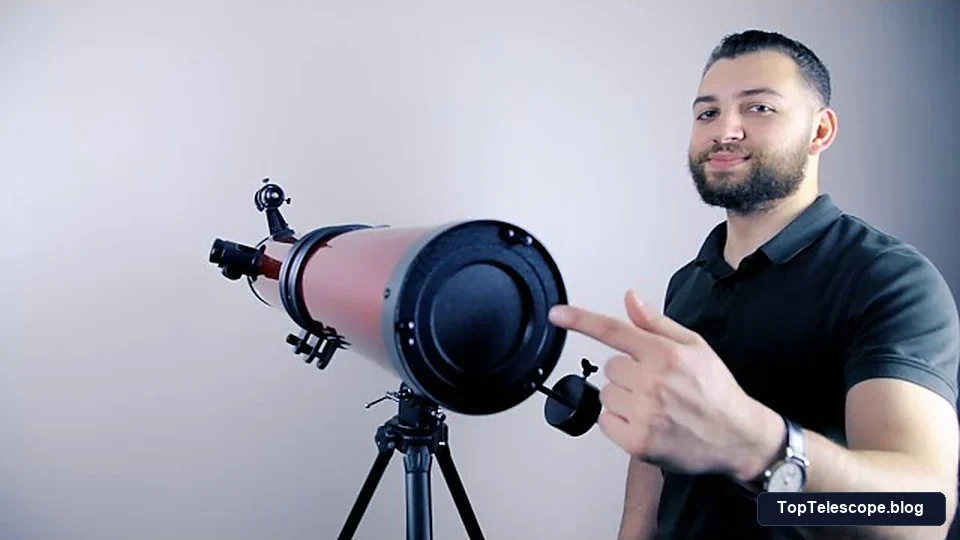
Secure all mounting hardware and dovetail bars firmly before mounting heavy optical tubes. Mechanical safety prevents accidental slips that could damage expensive glass elements.
Regularly inspect tripod leg spread and spreader tray tension for optimal mechanical stability. Rigid platforms eliminate micro-vibrations caused by wind or accidental observer contact.
Store sensitive optical accessories in padded cases with desiccant packs to prevent moisture. Dry storage stops fungal growth on optical coatings and internal glass surfaces.
Regular collimation ensures that optical components remain properly aligned along the mechanical axis. Misaligned mirrors introduce severe coma and astigmatism, making it difficult to achieve sharp focus on planets and double stars.
When handling heavy counterweights and dovetail bars, always tighten all locking thumbscrews securely to prevent accidental slippage. Maintaining proper balancing protocols protects delicate internal glass elements and extends the lifespan of motorized mount gears.
Safety margins require that tripod spread radius encompasses at least one-third of the total height to prevent tipping under heavy operational loads. Never force mechanical focusers past their physical travel limits.
Periodic cleaning of objective lenses or mirrors should be performed using specialized optical microfiber cloths and photographic-grade cleaning fluid. Avoid aggressive rubbing motions to prevent scratching anti-reflective coatings on precision optics.
- Check collimation before every serious observing session.
- Secure dovetail clamps and safety stop screws.
- Ensure tripod spreaders are fully locked open.
- Store optics in dry, padded containers.
Executing Routine Collimation Checks
Center a bright star in your eyepiece and defocus slightly to inspect diffraction rings. Defocused star patterns reveal whether your mirrors or lenses are out of alignment.
Make tiny adjustments to collimation screws while watching the star image shift centrally. Incremental tuning prevents over-correction and maintains optical integrity.
- Use defocused star test for alignment.
- Adjust mirror screws in small increments.
Frequently Asked Questions
Why is my telescope view upside down?
The fundamental physics of lenses and mirrors naturally invert light rays at the focal point. Optical inversion is standard for astronomical telescopes because celestial objects have no natural orientation.
How can I make my telescope image right-side up?
You can insert an erecting prism, Amici diagonal, or dedicated erecting eyepiece into the optical train. Erecting accessories flip the image back to normal for daytime terrestrial viewing.
Do star diagonals fix upside-down images completely?
Standard star diagonals correct the vertical inversion but leave images reversed left-to-right. Amici prisms are required if you need both vertical and horizontal corrections.
Do erecting optics reduce telescope image quality?
Extra glass elements can introduce minor light scatter and slight chromatic aberration. High-grade prisms minimize these optical losses while providing standard terrestrial orientation.
Should I use erecting lenses for deep-space astronomy?
Astronomers avoid erecting lenses during nighttime observations to maximize light transmission. Direct optical paths deliver brighter, sharper views of faint nebulae and distant galaxies.