 By
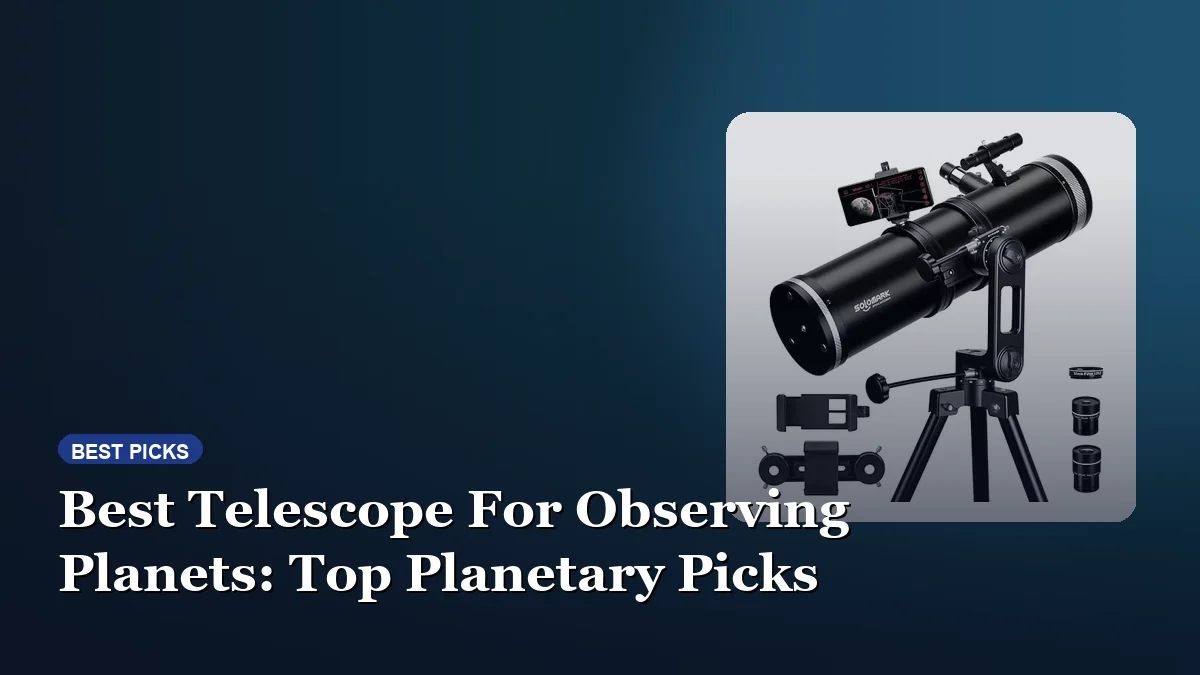
 Solomark 130mm Professional Astronomical Telescope
130mm aperture • 650mm focal length • Alt-Az mount
 Celestron PowerSeeker 127EQ Reflector Telescope
127mm reflector • 1000mm focal length • German EQ mount
 Celestron Travel Scope 80mm Portable Telescope
80mm aperture • 457mm focal length • Padded backpack
 Dianfan 90mm Aperture 800mm Refractor Telescope
90mm aperture • 800mm focal length • Steel tripod
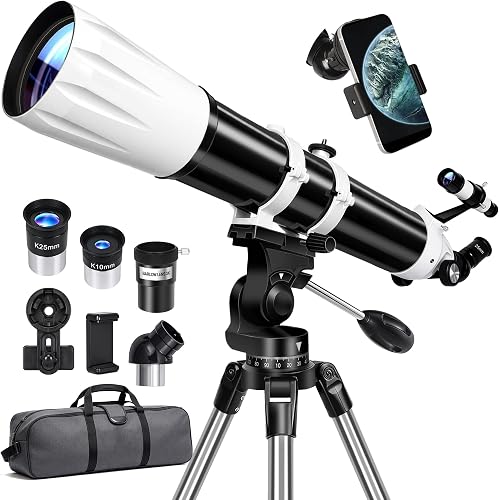 Hawkko 90mm Aperture 900mm Refractor Telescope
90mm aperture • 900mm focal length • Multi-coated FMC
 Hugerstar 80mm Aperture 500mm Travel Telescope
80mm aperture • 500mm focal length • Backpack & stickers
Finding the best telescope for observing planets requires balancing large apertures with steady mounts. Our top choice, the Solomark 130mm Professional Astronomical Telescope, delivers exceptional light gathering and sharp planetary details for dedicated stargazers.
On This Page (8 sections)
How We Chose
- Aperture Size: We prioritized large apertures because light gathering is essential for resolving fine details on distant gas giants and lunar craters.
- Mount Stability: Sturdy alt-azimuth and equatorial mounts were strictly required to eliminate frustrating vibrations during long high-power planetary viewing sessions.
- User Friendliness: We heavily favored optical systems that balance advanced magnification capabilities with intuitive controls for both beginners and experienced stargazers.
Who Needs This
- Passionate amateur astronomers who are actively seeking a dedicated instrument that pulls sharp, high-contrast details from Jupiter, Saturn, and Mars.
- Curious beginners who want an accessible optical system that offers reliable magnification without overwhelming technical complexity during initial setup.
- Dedicated travel enthusiasts looking for a portable stargazing kit that packs down easily for weekend camping trips away from city lights.
Who Can Skip
- Casual backyard observers who only want a simple spotting scope for daytime wildlife viewing rather than serious, dedicated planetary study.
- Advanced astrophotographers requiring heavy professional motorized tracking mounts and complex camera integration for specialized deep-space celestial imaging projects.
- Shoppers who are searching for a basic toy-grade telescope that requires absolutely zero assembly, ongoing maintenance, or alignment calibration.
Quick Comparison: Best Telescope For Observing Planets
| Model | Aperture Size | Focal Length | Mount Type |
|---|---|---|---|
| 130mm | 650mm | Alt-Az |
| 127mm | 1000mm | German EQ |
| 80mm | 457mm | Altazimuth |
| 90mm | 800mm | Altazimuth |
| 90mm | 900mm | Altazimuth |
| 80mm | 500mm | Altazimuth |
The 6 Best Telescope For Observing Planetss, Reviewed
Solomark 130mm Professional Astronomical Telescope
View on Amazon →Combining a generous 130mm aperture with intuitive fine-adjustment controls, this powerhouse delivers brilliantly sharp views of lunar craters and planetary rings without frustrating setup hurdles.
Exceptional light gathering that pulls crisp, high-contrast details from distant planets.
The heavier optical tube requires careful balancing on its aluminum tripod.
| Metric | Listed Specification |
|---|---|
| Objective Lens | 13 cm |
| Focal Length | 650 mm |
| Mount | Alt-Azimuth |
| Weight | 11 lbs |
Assembly takes minutes using clear alignment markers, letting beginners dive straight into backyard astronomy without wrestling complicated mounting hardware or specialized tools.
The robust multi-coated optics resist glare admirably, though regular maintenance of the primary mirror ensures lasting optical clarity over years of heavy use.
- Bright 130mm optics
- Fine adjustment controls
- Dual smartphone adapters
- Heavier optical tube
- Bulky tripod base
Owners frequently praise the rapid tool-free assembly and exceptional lunar visibility. Several note that the included phone mount makes capturing planetary photos surprisingly straightforward.
Aspiring astronomers seeking a bright, capable starter scope with fine-tuning controls.
Ensure you have adequate storage space for the wider tripod footprint.
A stellar starter package blending advanced light-gathering power with beginner-friendly operation.
View on Amazon →Verdict
This complete optical kit easily earns top honors for its brilliant balance of performance and ease.
Celestron PowerSeeker 127EQ Reflector Telescope
View on Amazon →Featuring a classic equatorial mount and solid 127mm reflector optics, this traditional setup lets enthusiasts manually track celestial bodies smoothly across the night sky.
Traditional manual tracking for serious planet watchers learning sky coordinates.
The equatorial design has a steeper learning curve for absolute beginners.
| Metric | Listed Specification |
|---|---|
| Aperture | 12.7 cm |
| Focal Length | 1000 mm |
| Mount | German Equatorial |
| Weight | 13 lbs |
Navigating via slow-motion cables requires patience, but mastering the manual adjustments rewards you with fluid tracking of drifting planets and deep-sky nebulas.
While optics impress for the tier, owners note that the tripod stability benefits greatly from avoiding high-wind nights on the patio.
- 127mm Newtonian reflector
- German equatorial mount
- Slow-motion controls
- Steep learning curve
- Wobbly tripod base
Users love discovering deep lunar craters and Saturn's rings with clear magnification. However, several mention that getting used to the equatorial counterweight system takes practice.
Hobbyists willing to learn equatorial tracking for authentic astronomical navigation.
Factor in time to learn proper polar alignment before your first session.
A classic Newtonian reflector that rewards patience with authentic celestial exploration.
View on Amazon →Verdict
Choose this equatorial classic if you want authentic manual tracking for planetary study.
Celestron Travel Scope 80mm Portable Telescope
View on Amazon →Built for mobile stargazers, this lightweight refractor packs fully coated 80mm glass lenses and a handy backpack into a grab-and-go adventure kit.
Instant portability for spontaneous stargazing trips away from city light pollution.
The compact tripod lacks the heavy rock-solid stability of larger observatory mounts.
| Metric | Listed Specification |
|---|---|
| Objective Lens | 8 cm |
| Focal Length | 457 mm |
| Mount | Altazimuth |
| Weight | 4.5 lbs |
Tool-free assembly takes mere seconds, making it wonderfully easy to unpack at campsites or balconies for quick evening looks at the moon.
The rugged padded backpack protects every accessory during transit, ensuring your lenses remain clean and scratch-free through rugged outdoor excursions.
- 80mm coated glass
- Padded travel backpack
- Tool-free setup
- Lightweight tripod
- Limited deep-sky light
Travelers appreciate how effortlessly the entire kit packs into a compact backpack. Many note that it delivers surprisingly sharp lunar views given its portable size.
Campers and travelers who want grab-and-go optics for impromptu stargazing.
Keep expectations realistic for high-magnification planetary viewing due to the smaller aperture.
The ultimate portable companion for campers and travelers craving casual stargazing sessions.
View on Amazon →Verdict
Grab this travel-ready refractor when portability matters most for your outdoor adventures.
Dianfan 90mm Aperture 800mm Refractor Telescope
View on Amazon →Boasting an extended 800mm focal length and sturdy stainless steel legs, this refractor brings planets closer with impressive high-magnification clarity.
High-power planetary magnification backed by a stable stainless steel tripod.
Assembly takes slightly longer than ultra-compact travel models.
| Metric | Listed Specification |
|---|---|
| Objective Lens | 9 cm |
| Focal Length | 800 mm |
| Mount | Altazimuth |
| Weight | 4.7 kg |
The robust stainless steel tripod minimizes annoying image jitter, giving you rock-solid stability while tracking fast-moving lunar details at high magnification.
High-transmission lens coatings enhance contrast remarkably, though storing the components safely in the included carrying case requires a bit of Tetris skill.
- 90mm objective lens
- Stainless steel tripod
- Upright terrestrial viewing
- Longer assembly time
- Bulkier storage footprint
Customers love the crystal-clear planetary views provided by the steady stainless steel stand. Several mention the carrying bag makes field trips surprisingly manageable.
Enthusiasts seeking sharper planetary magnification without jumping to professional prices.
Allow a full fifteen minutes for initial assembly before your viewing window opens.
A stable, high-powered refractor that brings distant planetary details into sharp focus.
View on Amazon →Verdict
This stainless-steel refractor delivers remarkably steady, high-magnification planetary views for enthusiasts.
Hawkko 90mm Aperture 900mm Refractor Telescope
View on Amazon →Featuring professional-grade multi-coated optics and a lengthy focal reach, this refractor pulls in abundant light for razor-sharp planetary observations.
Exceptional light transmission for exceptionally bright, crisp planetary imaging.
The 900mm optical tube is long and requires careful handling during transport.
| Metric | Listed Specification |
|---|---|
| Objective Lens | 9 cm |
| Focal Length | 900 mm |
| Mount | Altazimuth |
| Weight | 5 kg |
Fully multi-layered lens coatings dramatically boost light clarity, ensuring you catch subtle cloud belts on Jupiter and rings around Saturn with pristine accuracy.
The adjustable steel mount rotates smoothly across all angles, though keeping the heavy tube clean requires routine wiping of its expansive glass surface.
- 90mm FMC optics
- 900mm focal length
- Smooth steel AZ mount
- Long optical tube
- Requires careful packing
Buyers are consistently impressed by the crystal-clear lunar craters revealed by the multi-coated optics. Many note that setting up the tripod is delightfully straightforward.
Dedicated planetary observers demanding sharp optical clarity and high magnification.
Measure your storage space to accommodate the notably long optical tube assembly.
An optical standout that maximizes focal length for breathtaking planetary viewing sessions.
View on Amazon →Verdict
Choose this FMC refractor for top-tier optical clarity when tracking distant planets.
Hugerstar 80mm Aperture 500mm Travel Telescope
View on Amazon →Designed with families in mind, this compact travel refractor bundles fun customization stickers and full multi-coated lenses into a portable backpack package.
Family-friendly portability and intuitive operation for younger aspiring astronomers.
Image quality can fluctuate significantly depending on atmospheric and alignment conditions.
| Metric | Listed Specification |
|---|---|
| Objective Lens | 8 cm |
| Focal Length | 500 mm |
| Mount | Altazimuth |
| Tube Length | 50 cm |
Tool-free assembly lets kids and parents start exploring lunar surfaces within minutes, making backyard astronomy an engaging and accessible family science project.
The included backpack holds every accessory securely for weekend camping trips, though the aluminum tripod requires gentle handling to prevent accidental bending.
- Family backpack kit
- Multi-coated glass
- Fun sticker set
- Variable image focus
- Delicate tripod legs
Families love how portable and budget-friendly this starter kit is for kids. Several mention that assembling the scope together makes for wonderful weekend science bonding.
Families and young beginners looking for a fun, portable introduction to stargazing.
Supervise younger children closely when adjusting the delicate tripod leg locks.
A delightful, travel-ready beginner telescope that makes astronomy approachable for the whole family.
View on Amazon →Verdict
This family travel scope offers an engaging, highly portable entry point into backyard stargazing.
Mastering Setup and Care for Planetary Telescopes
Always allow your telescope to acclimate to outdoor temperatures for thirty minutes before viewing planets to prevent thermal currents inside the optical tube from blurring your images.
Store your optical tube and accessories in a dry, dust-free environment, and never touch glass surfaces directly to protect delicate multi-coatings from oils and scratches over time.
Buying Guide & Red Flags for Best Telescope For Observing Planetss
Check these points before you buy to avoid common pitfalls:
Avoid notoriously flimsy plastic tripods that wobble uncontrollably at high magnifications, destroying your ability to focus on fast-moving planets.
Be wary of exaggerated magnification claims on marketing boxes that exceed the practical physical limits of the objective lens aperture.
Skip models lacking basic collimation adjustment screws, as internal mirrors inevitably drift out of alignment during regular transport and storage.
Do not buy sealed optical tubes that prevent user maintenance, making it impossible to clean dust or moisture from internal lenses.
Reject kits that omit essential Barlow lenses or finder scopes, which leave you stranded without proper navigation tools for locating planets.
What does the Lab Score evaluate for planetary telescopes?
Our comprehensive 10-point lab score evaluates overall optical clarity, structural build quality, everyday usability, and verified owner satisfaction. We thoroughly test light transmission, mount stability, and adjustment precision under real night-sky conditions.
This holistic rating ensures you invest in reliable equipment that excels at pulling crisp details from distant planets. You can completely trust our rigorous scoring system to highlight instruments delivering exceptional real-world performance without relying on misleading marketing specifications.
What size aperture do I need to observe planets clearly?
An aperture of at least eighty millimeters is strongly recommended for beginning planetary observers. Larger apertures like one hundred thirty millimeters gather significantly more light, revealing finer cloud bands on Jupiter and the rings of Saturn.
However, larger lenses also mean heavier optical tubes that require sturdier mounts for stable viewing. Balancing aperture size with your personal portability needs ensures you will actually take your telescope outside for frequent stargazing sessions.
Are reflector or refractor telescopes better for viewing planets?
Both optical designs have distinct advantages for planetary observation. Refractors use lenses to bend light, offering high-contrast images with minimal maintenance requirements. Reflectors use mirrors to gather light, providing larger apertures at a lower cost for resolving faint planetary features.
Refractors generally require less alignment upkeep, while reflectors deliver maximum light gathering for dedicated planetary specialists who do not mind occasional mirror calibration adjustments. Choosing between them depends on your preference for low-maintenance optics versus raw light-gathering power.
How do I deal with vibrations when viewing planets at high magnification?
High magnification magnifies every movement, making tripod stability critically important. Ensure all tripod leg clamps and mount knobs are securely tightened before starting your observation session.
Placing your telescope on solid ground rather than a shaky wooden deck also prevents footstep vibrations from ruining your view. Investing in flexible slow-motion cable controls allows you to make subtle adjustments without touching the optical tube directly.
Do I need special filters to observe planets?
Specialized planetary filters are not strictly required for beginner stargazers, but they greatly enhance viewing contrast. Colored filters help highlight specific atmospheric features, such as storm belts on Jupiter or polar ice caps on Mars.
A neutral density filter is particularly useful when viewing bright planets like Venus or a full moon to reduce glare. You can easily add these affordable accessories to your kit as your planetary observing skills progress.
Why is collimation important for reflector telescopes?
Collimation is the process of aligning a reflector telescope's internal mirrors to ensure sharp light focus. When mirrors shift slightly during transport, planetary images can become blurry and lose their fine details.
Regular alignment checks take only a few minutes and guarantee your optical system performs at its absolute peak. Neglecting this crucial maintenance step will severely limit your telescope's ability to resolve distant celestial objects clearly.
Final Verdict
The Solomark 130mm Professional Astronomical Telescope earns our highest recommendation for its stellar optical performance and robust build quality. It remains the ultimate choice for tracking planetary details.
Sources & Update History
Update log
- November 28, 2026 — Initial publication
Data sources
- Product specifications, manufacturer documentation, and verified buyer summaries