How to Calculate Telescope Eyepiece Focal Length?
Master the precise mathematical formulas needed to determine correct eyepiece focal length. Ensure optimal optical performance across various astronomical viewing conditions.

Calculate your required eyepiece focal length by dividing telescope focal length by your target magnification. Always respect maximum practical magnification limits for your specific objective aperture.
Ready to compare models? Start with our Best Telescope: Top Backyard Picks for Astronomy.
Practical Quick-Reference Table
| Scenario / Metric | Recommended Target | Why It Matters |
|---|---|---|
| Planetary Viewing | 1.5x to 2x per millimeter of aperture | Resolves fine atmospheric and surface details. |
| Deep-Sky Objects | 0.5x to 1x per millimeter of aperture | Maximizes brightness and true field of view. |
| Exit Pupil (Dark Skies) | 5mm to 7mm diameter | Matches fully dilated human eye pupils. |
| Exit Pupil (Planets) | 0.5mm to 1mm diameter | Reduces glare and enhances contrast. |
| Maximum Magnification | 50x per inch of aperture | Prevents empty magnification and blurry images. |
| Minimum Magnification | 3.5x to 5x per inch of aperture | Avoids obstruction shadow and vignetting. |
Understanding Optical Fundamentals of Focal Length
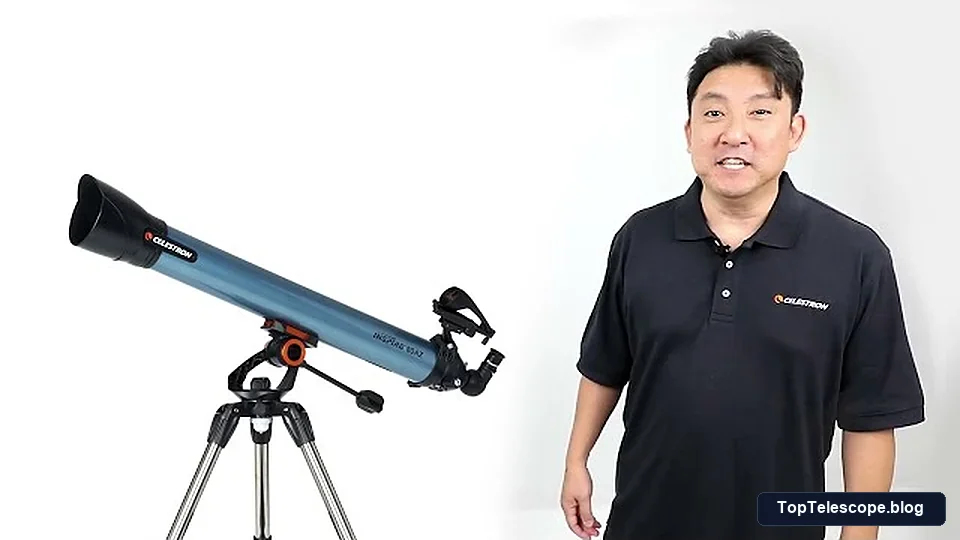
Calculating telescope eyepiece focal length requires thoroughly understanding the fundamental mathematical relationship between the objective lens and your desired target magnification. Precision in optical math ensures you never exceed physical limitations.
Every optical tube assembly features a fixed focal length determined by its primary mirror or objective lens curvature. When designing a system, understanding focal length vs aperture helps balance light gathering power and optical reach.
Eyepieces act as high-magnification magnifying glasses inspecting the focal plane image created by your telescope. Matching these components correctly dictates your final visual or photographic output quality.
Ignoring basic optical proportions leads to severe image degradation, chromatic aberration, or frustratingly narrow fields of view. Systematic mathematical planning prevents costly accessory purchasing mistakes.
- Always verify your telescope primary focal length before purchasing glass.
- Recognize that tube focal length directly dictates base focal ratios.
- Understand how focal planes collect and focus incoming light rays.
- Keep conversion formulas handy for inches and millimeters.
Primary Mirror and Objective Measurements
Measuring your telescope focal length accurately involves checking manufacturer specifications or performing direct laser tests. Physical tube length does not always equal true focal length due to folded optics.
Refractors feature straightforward tube dimensions matching their stated focal length specifications quite closely. Shorter refractor tubes demand steeper eyepiece curves to achieve high power.
- Measure from objective center to rear focal plane.
- Account for star diagonals in your optical train length.
The Role of Eyepieces in the Optical Train
Eyepieces contain multiple internal lens elements designed to correct optical aberrations while magnifying the image. Complex lens groupings provide wider apparent fields of view for comfortable viewing.
The internal field stop dictates the exact boundary of the light cone reaching your eye. Quality field stops ensure sharp edge definition without optical distortion.
- Inspect internal lens coatings for maximum light transmission.
- Verify barrel diameters match your focuser dimensions.
Mathematical Formulas for Eyepiece Calculation
The core equation for determining magnification involves dividing the telescope focal length by the eyepiece focal length. Selecting the best telescope eyepiece to view Jupiter relies heavily on mastering this foundational optical principle.
If you need to calculate required eyepiece focal length directly, rearrange this formula into a division sequence. Divide telescope focal length by your desired target magnification value.
For example, a telescope measuring one thousand millimeters divided by a twenty-millimeter eyepiece yields fifty magnification. Mathematical consistency requires keeping all units in millimeters.
Failing to maintain consistent measurement units results in wild calculation errors that ruin observing sessions. Double-check your numbers before committing to specialized optical purchases.
- Magnification equals telescope focal length divided by eyepiece focal length.
- Eyepiece focal length equals telescope focal length divided by magnification.
- Always convert centimeter measurements to millimeters before calculating.
- Keep a dedicated notebook for tracking your optical ratios.
Isolating Eyepiece Focal Length in Equations
Rearranging algebraic formulas allows you to solve for any unknown variable in your optical train. Isolating the eyepiece variable gives you exact purchasing parameters.
Divide your primary objective focal length by your target magnification to find the exact millimeter specification. Exact millimeter targets simplify browsing equipment catalogs immensely.
- Use algebraic inversion for precise variable isolation.
- Test multiple magnification scenarios on paper first.
Applying Multipliers and Barlow Lenses
Barlow lenses introduce a multiplicative factor that effectively doubles or triples your telescope focal length. Optical multipliers change the math by altering the incoming light cone divergence.
When using a two-times Barlow, multiply your telescope focal length before calculating eyepiece requirements. Modified focal lengths expand your functional eyepiece collection significantly.
- Multiply primary focal length by the Barlow rating factor.
- Recalculate required eyepiece focal length using the new total.
Video Walkthrough: Understanding Collimation to Determine Optical Lens Focal Length
Determining Magnification and Exit Pupil Constraints
Exit pupil diameter represents the column of light exiting your eyepiece and entering your eye. Proper exit pupil sizing prevents eye strain and maintains optimal image brightness.
Calculate your exit pupil by dividing your eyepiece focal length by the telescope focal ratio. Evaluating the best telescope choices helps ensure your optical setup respects human anatomical limits during dark adaptation.
If your calculated exit pupil exceeds seven millimeters, light is wasted outside your dilated pupil. Matching dark adaptation limits ensures you capture every available photon efficiently.
Planetary viewing demands much smaller exit pupils to suppress glare and maximize contrast on bright targets. Miniature exit pupils around zero point seven millimeters work exceptionally well.
- Exit pupil equals eyepiece focal length divided by focal ratio.
- Never let exit pupil exceed normal human eye dilation limits.
- Keep planetary exit pupils small for enhanced surface contrast.
- Balance magnification against atmospheric seeing degradation.
Calculating Human Eye Pupil Limitations
Young dark-adapted human eyes dilate up to seven millimeters, while older observers dilate slightly less. Anatomical matching optimizes low-power deep-sky scanning sessions.
Exceeding maximum physical dilation wastes precious light collection capability across wide-field telescope configurations. Optimal light gathering requires respecting these biological constraints strictly.
- Test your personal dark adaptation dilation limits outdoors.
- Select low-power eyepieces matching your specific eye anatomy.
Balancing Brightness Versus High Magnification
Pushing magnification too high spreads available light across a massive area, dimming the final image. Surface brightness reduction ruins faint nebula and galaxy observations completely.
Finding the equilibrium point between power and brightness defines successful advanced telescope operation. Balanced optical performance reveals delicate spiral arm details successfully.
- Lower magnification preserves maximum image surface brightness.
- High magnification darkens backgrounds for planetary contrast.
Field of View and True Field Calculations
Apparent field of view describes the angular width of the circular image seen inside the eyepiece. Wide apparent fields provide immersive spacewalk experiences during stargazing sessions.
True field of view measures the actual patch of sky visible through your complete telescope system. Using our telescope magnification calculator simplifies determining both your apparent field and overall system performance.
Divide the eyepiece apparent field specification by your calculated magnification to find true sky coverage. Accurate sky coverage math helps you plan star-hopping routes effectively.
Large deep-sky targets like the Andromeda Galaxy demand wide true fields to fit entirely within view. Proper field planning prevents frustrating target clipping during observations.
- True field equals apparent field divided by system magnification.
- Wide-field eyepieces offer expansive views of large star clusters.
- Narrow field designs excel at high-power lunar inspections.
- Always check field stop diameters for absolute accuracy.
Apparent Field Specifications Explained
Manufacturer specifications list apparent field angles ranging from forty degrees up to one hundred degrees. Sprawling eyepiece designs require complex multi-element internal lens groupings.
Stepping up to ultra-wide designs changes your psychological perception of floating in outer space. Immersive optical experiences rely heavily on massive eye lens diameters.
- Review manufacturer specifications for apparent field angles.
- Account for eye relief compromises in ultra-wide designs.
Using Field Stops for True Sky Angles
The field stop is a physical ring inside the eyepiece barrel that sharply frames the image. Field stop diameters allow precise calculation of true angular sky coverage.
Multiply field stop diameter by fifty-seven point three, then divide by telescope focal length. Accurate angular math guarantees precise astrophotography framing ratios.
- Measure physical field stop openings with digital calipers.
- Apply angular conversion constants for precise results.
Optical Constraints and Atmospheric Seeing Limits
The Earth atmosphere acts as a turbulent ocean of air distorting incoming starlight constantly. Atmospheric seeing conditions impose strict hard ceilings on maximum useful magnification.
No matter how you calculate eyepiece focal length, turbulent skies will blur excessive magnification attempts. Patience during observation beats chasing impossible high-power atmospheric limits.
A general rule dictates a maximum limit of fifty magnification per inch of objective aperture. Aperture-based limits prevent empty magnification that shows only blurry noise.
Checking local weather forecasts for jet stream stability helps you plan high-power planetary viewing sessions. Stable atmospheric layers reward calculated high-magnination eyepiece choices.
- Maximum magnification equals aperture in inches multiplied by fifty.
- Turbulent jet streams ruin high-power planetary observations.
- Empty magnification enlarges atmospheric blur without adding detail.
- Adapt your eyepiece selection to prevailing local weather.
Evaluating Local Seeing and Transparency
Seeing describes atmospheric turbulence, while transparency measures aerosol haze and moisture content overhead. Comprehensive weather assessment dictates whether high-power eyepieces will perform well.
Poor transparency dims faint deep-sky targets, forcing you to use wider exit pupils. Transparent dark skies allow aggressive high-magnination exploration of globular clusters.
- Observe twinkling star patterns to gauge high-altitude turbulence.
- Select moderate power eyepieces during hazy atmospheric conditions.
Avoiding Empty Magnification Traps
Empty magnification occurs when you magnify an image beyond the optical resolution limits. Resolution boundaries are rigidly set by the physical diameter of your objective.
Pushing past resolution limits yields large, dim, featureless blobs instead of sharp astronomical details. Respecting optical physics ensures every viewed object remains crisp.
- Calculate maximum useful power before inserting eyepieces.
- Recognize the visual signs of over-magnified optical blur.
Video Walkthrough: What is Focal Length
Practical Eyepiece Selection for Specific Targets
Different celestial targets require radically different eyepiece focal lengths to reveal their hidden structural details. Target-specific matching maximizes your visual observing efficiency across all nights.
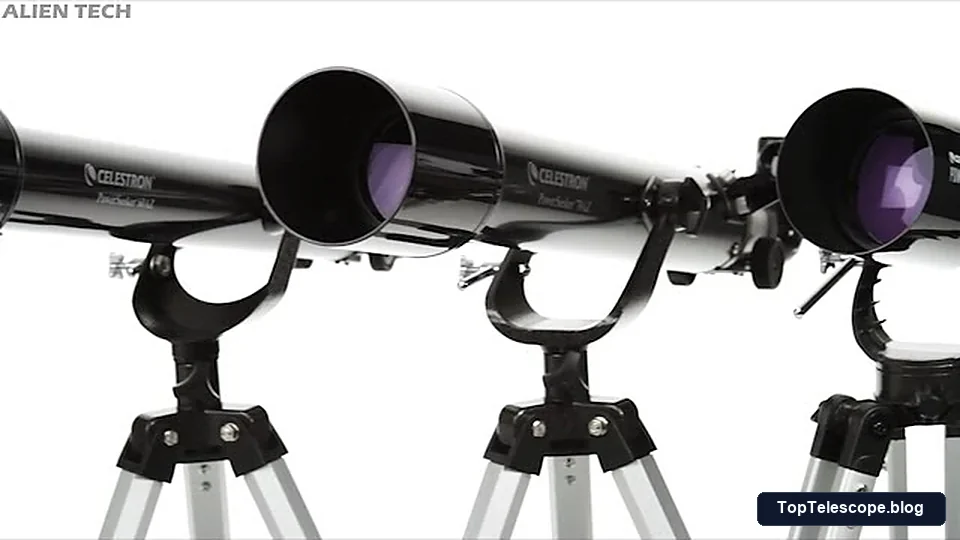
Planetary nebulae and small galaxies demand high magnification and small exit pupils for contrast. High-power optical configurations darken backgrounds and isolate faint emission sources.
Large emission nebulae and Milky Way dust lanes require wide true fields and bright exit pupils. Low-power scanning setups frame sprawling cosmic structures in breathtaking context.
Building a balanced eyepiece collection means covering low, medium, and high magnification steps evenly. Logical step spacing prevents awkward gaps in your operational focal lengths.
- Match eyepiece focal length directly to target object classes.
- Keep low-power glass ready for sweeping large star fields.
- Reserve high-power eyepieces for tight double stars and planets.
- Build incremental focal length steps for smooth power scaling.
Lunar and Planetary Observation Setups
Planetary surfaces require high contrast and sharp focus to resolve subtle color variations. Specialized planetary eyepieces utilize minimal glass elements to maximize light transmission.
Calculate focal lengths yielding exit pupils between zero point five and one millimeter. Ideal planetary scaling suppresses internal reflections and atmospheric glare.
- Target high magnification ranges for lunar crater rims.
- Minimize internal glass scattering for maximum contrast.
Deep-Sky Wide-Field Scanning Arrays
Faint fuzzies require maximum light concentration and expansive true fields of view. Wide-field low-power glass frames entire constellations and massive cluster complexes.
Calculate exit pupils approaching five to six millimeters for maximum visual photon collection. Optimal deep-sky brightness reveals subtle spiral arm extensions.
- Prioritize wide apparent field designs for deep-sky scanning.
- Ensure exit pupils match fully dilated human eye anatomy.
Maintenance, Ergonomics, and Eyepiece Maintenance Standards
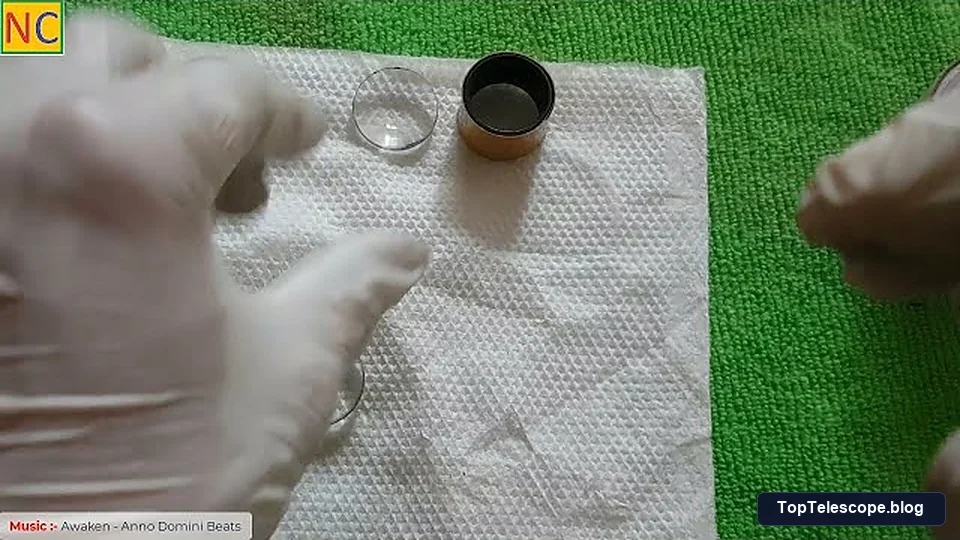
Maintaining your eyepiece collection requires strict adherence to professional optical cleaning protocols and safety standards. Proper mechanical maintenance preserves expensive lens coatings over decades of use.
Dust and moisture degrade optical coatings, leading to scattered light and reduced contrast during viewing. Regular preventative maintenance ensures pristine views every time you head outdoors.
Ergonomic factors like eye relief dictate how comfortably you can view through high-power eyepieces. Adequate eye relief prevents eye fatigue during extended planetary sketching sessions.
Always store optical equipment in temperature-controlled environments with desiccant caps securely fastened. Rigorous storage standards prevent internal fungus growth on delicate lens cements.
- Clean optical surfaces only with specialized micro-fiber cloths.
- Store eyepieces vertically in padded protective foam cases.
- Maintain proper eye relief for comfortable eyeglasses compatibility.
- Inspect lens coatings regularly for micro-abrasions and residue.
Cleaning Protocols for Coated Optics
Remove loose dust particles using a bulb air blower before applying any liquid cleaning solutions. Non-contact cleaning steps prevent scratching soft fluoride anti-reflective lens coatings.
Apply optical cleaning fluid to micro-fiber cloths rather than directly onto lens surfaces. Controlled liquid application prevents moisture from seeping past barrel retaining rings.
- Use bulb blowers to clear loose abrasive debris first.
- Apply approved optical cleaning fluids sparingly to cloths.
Ergonomics and Eye Relief Considerations
Eye relief measures how far your eye must sit from the outer lens to see fully. Generous eye relief is essential for observers wearing corrective eyeglasses outdoors.
Short focal length traditional designs often suffer from uncomfortable pinprick eye relief dimensions. Modern optical engineering incorporates built-in Barlow groups to preserve comfortable viewing.
- Verify eye relief specifications before purchasing high-power glass.
- Adjust twist-up eyecups for optimal viewing distance positions.
Frequently Asked Questions
How do I calculate required eyepiece focal length?
Divide your telescope focal length by your desired target magnification value. Ensure all units are converted to millimeters before performing any calculations.
What happens if magnification exceeds aperture limits?
Pushing past maximum magnification creates empty blur without extra detail. Aperture-based power limits prevent dim, featureless, and washed-out images.
Why is exit pupil calculation important?
Exit pupil sizing dictates overall image brightness and visual comfort. Proper exit pupil matching ensures light efficiency matches human eye anatomy.
How does a Barlow lens affect my math?
A Barlow lens multiplies your effective primary focal length factor. Optical multipliers require recalculating your eyepiece requirements using the new focal length.
What is the best eyepiece for deep sky objects?
Deep-sky objects generally require lower magnification and wider true fields. Wide apparent fields provide bright exit pupils and expansive sky framing.