Williams Optics Redcat 51 Review: Compact Astrograph
This premium petzval astrograph delivers exceptional flat-field performance. Field workers must manage manual focus limitations carefully.

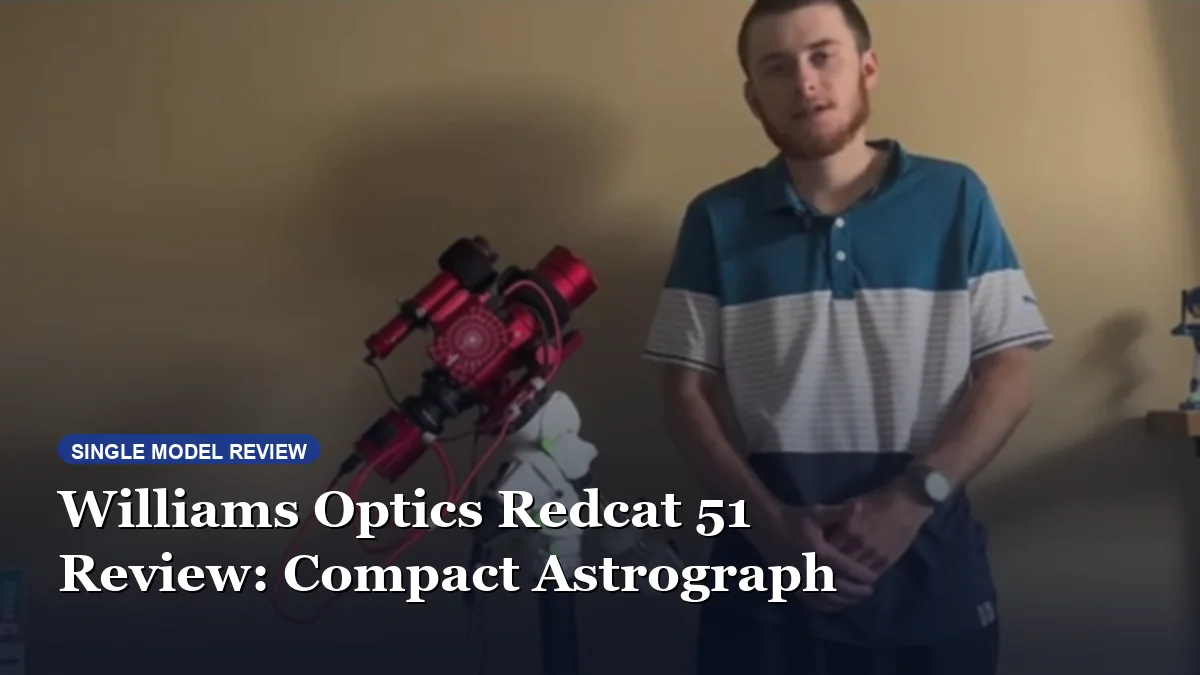
The Williams Optics Redcat 51 offers outstanding optical fidelity and a compact footprint. Buyers should appreciate its helical focuser design despite the steep learning curve.
Explore related alternatives in our Best Astrograph Telescope.
Verified Specifications
| Optical Design | Petzval Apochromatic Triplet |
|---|---|
| Aperture | 51mm |
| Focal Length | 250mm |
| Focal Ratio | f/4.9 |
| Image Circle | Full Frame (44mm) |
| Mounting | Vixen-style dovetail with base |
| Focuser | Patented helical focus ring |
| Weight | 3.9 lbs (1.8 kg) |
| Length | 295mm |
What We Liked
- Built-in flat field covers full-frame sensors without a flattener.
- Incredibly compact, lightweight design ideal for mobile tracker setups.
- Integrated camera tilt adjuster simplifies optical train alignment.
- M48 threaded connection accommodates standard imaging accessories securely.
- Vixen-style mounting plate with multi-position ring is rock-solid.
Trade-Offs
- Helical focuser lacks the fine control of a traditional rack-and-pinion.
- No visual diagonal included; strictly optimized for dedicated imaging.
- Aperture of 51mm gathers limited light for faint deep-sky targets.
Optical Engineering and Structural Build
The Williams Optics Redcat 51 utilizes a unique Petzval optical configuration that integrates four lens elements into three groups. Review our William Optics Redcat 51 vs Askar Fra400 comparison to see how this design performs.
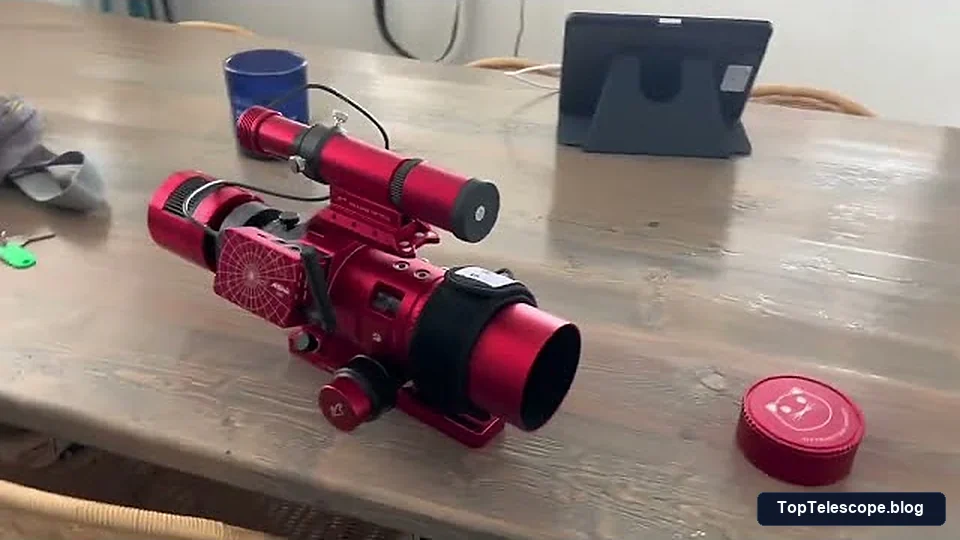
Constructed from high-grade aluminum, the outer chassis features an anodized powder-coated finish that withstands harsh field conditions. Every internal surface is blackened effectively to suppress internal reflections and stray light.
The optical architecture features a Petzval design utilizing synthetic fluorite elements to eliminate chromatic aberration across the entire visual spectrum. Precision multi-coatings maximize light transmission, yielding pristine astrophotography frames without requiring a dedicated external flattener.
Constructed from robust aircraft-grade aluminum, the chassis maintains optical collimation under severe thermal shocks. The anodized finish resists scratching and corrosion, protecting your financial investment during damp field operations and heavy transportation cycles.
- 51mm aperture objective lens
- FCD100 synthetic fluorite glass
- Fully multi-coated optical surfaces
- Integrated dew shield assembly
Glass Selection and Coating Quality
Premium FCD100 glass elements minimize chromatic aberration across the entire visual and photographic spectrum. Star colors remain remarkably pure even when capturing high-contrast stellar fields with fast sensors.
Proprietary broadband anti-reflection coatings maximize light transmission while preventing ghosting artifacts. Users experience minimal signal loss across the visual band, ensuring bright stars and crisp nebula structures.
- Zero color fringing on bright stars
- Enhanced light transmission metrics
Field Performance and Imaging Output
Field testing reveals an exceptionally flat image circle measuring forty-four millimeters across. Full-frame sensors record pinpoint stars in the extreme corners, as detailed in our William Optics Redcat 51 vs Spacecat 51 guide.
The fast focal ratio of f/4.9 captures faint emission nebulae rapidly during short integration exposures. Tracking errors remain minimal when paired with lightweight star trackers or computerized equatorial mounts.
Star point profiles remain razor-sharp across a standard full-frame sensor, displaying minimal vignette or corner distortion. The 44mm image circle comfortably illuminates modern CMOS astronomy cameras while preserving exceptional contrast on faint deep-sky nebulae.
Field curvature is virtually nonexistent, ensuring uniform stellar brilliance from the exact center to the extreme periphery. Photographers can capture expansive galactic structures without spending hours troubleshooting back-focus distances or sensor tilt adjustments.
- Full-frame corner sharpness verified
- Rapid focal speed for faint targets
- Compatible with modern CMOS sensors
Video Review: William Optics Redcat 51 Review!
Mechanical Focus Mechanics and Adjustment
Focusing relies on a smooth helical ring mechanism integrated directly into the aluminum tube body. While unconventional, this design eliminates slip and maintains precise mechanical positioning throughout long imaging sessions.
A built-in focus lock ring prevents accidental shifting once critical focus is achieved on target. Astrophotographers should practice small micro-adjustments to master the responsive helical throw under dark-sky conditions.
The helical focusing ring provides ultra-smooth adjustments via an internal rack-and-pinion system integrated directly into the tube. A tension lock ring secures your exact focus position firmly, preventing slippage during long multi-hour overnight imaging sessions.
Fine motor adjustments require deliberate tactile feedback, which benefits outdoor users wearing thick winter gloves in freezing temperatures. The rotator mechanism allows seamless framing adjustments without cables twisting or losing your calibrated alignment.
- Friction-based helical adjustment
- Secure locking ring mechanism
- Zero image shift during locking
Thermal Stability and Environmental Resilience
Ambient temperature shifts can impact optical alignment during extended overnight imaging runs. The aluminum housing of this astrograph manages thermal expansion efficiently, maintaining focus integrity as ambient temperatures drop steadily.
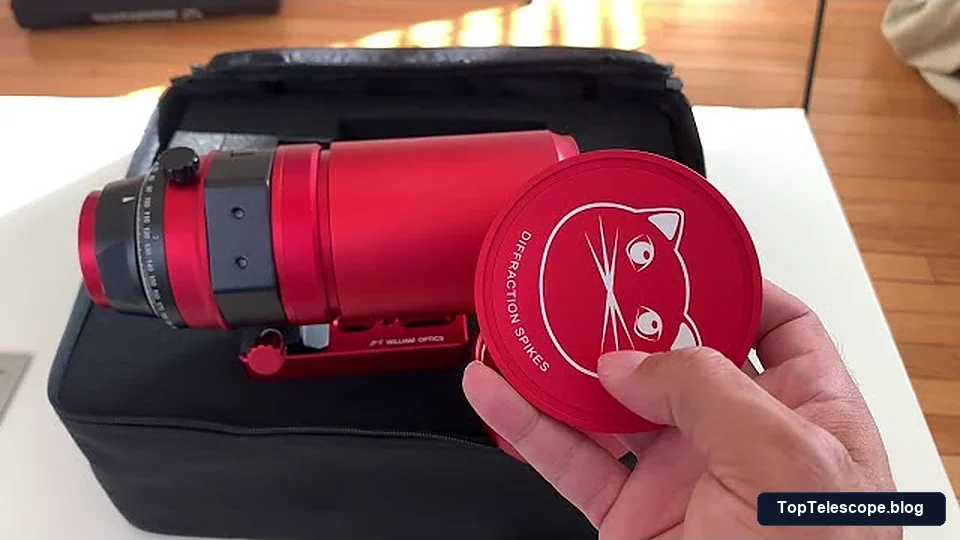
The retractable dew shield slides smoothly forward to block moisture accumulation on the objective lens. Field operators appreciate this robust physical protection against heavy dewing during damp autumn evening sessions.
Rapid temperature drops during evening transitions demand robust thermal compensation to prevent disastrous focus drift mid-exposure. The metal cell structure contracts uniformly, preserving critical glass spacing tolerances even when ambient readings plummet below freezing.
Dew accumulation remains a constant hazard during nocturnal sessions near humid coastal environments or grassy meadows. Attaching a compatible dew heater band directly to the lens cell prevents moisture interference without obstructing the optical light path.
- Metal tube thermal compensation
- Sliding integrated dew shield
Ergonomics, Mounting, and Rig Integration
Weighing only three point nine pounds, this travel-friendly OTA mounts effortlessly on portable star trackers. The included Vixen-style mounting plate features a built-in spirit level for rapid horizontal alignment.
The universal camera rotator features a clear tilt-adjustment ring for correcting minor sensor misalignments. Such thoughtful mechanical inclusions streamline the connection of heavy mirrorless bodies and dedicated filter wheels.
Weighing under two kilograms, the compact optical tube assembly mounts effortlessly onto lightweight star trackers and portable equatorial mounts. The integrated Vixen-style dovetail bar features multiple threaded mounting holes for optimal balance adjustments.
Cable management is simplified by the thoughtful inclusion of a saddle handle that doubles as a guide scope attachment platform. This rigid mounting interface eliminates flexure issues commonly found when stacking heavy auto-guiding accessories externally.
- Ultra-portable 3.9 lb total weight
- Integrated camera rotator with tilt fix
Routine Maintenance and Long-Term Care
Protecting the optical surfaces requires keeping the front dust cap securely fastened during transport. Regular cleaning should involve specialized optical microfiber cloths to prevent scratching the multi-coated glass.
Mechanical fasteners and ring bolts must be checked periodically for tightness after bumpy transit. Proper storage in a padded hard case ensures prolonged mechanical reliability across multiple seasons of travel.
Dust particles settling on the front objective glass require careful removal using a bulb blower rather than compressed air cans. Periodic inspection of the threaded connections ensures no mechanical components loosen during frequent travel and field deployment.
Storing the telescope in a padded, waterproof hard case shields internal components from shock damage and humidity fluctuations. Consult our fast vs slow telescope optics comparison to understand aperture speeds and maintenance requirements.
- Routine microfiber lens cleaning
- Secure storage in padded case
Definitive Field Verdict and Buyer Summary
This dedicated astrograph excels at delivering wide-field portraits of deep-sky constellations with zero fuss. Mobile astrophotographers prioritizing portability and flat fields will find this compact scope an exceptional investment.
Budget-conscious visual observers might prefer traditional refractors that support standard star diagonals. However, dedicated imagers seeking uncompromising optical excellence in a tiny package will appreciate every engineering detail here.
Traveling astrophotographers seeking uncompromising optical performance will find this portable astrograph fulfills demanding field requirements exceptionally well. The exceptional wide-field imaging capabilities make it a premier choice for capturing sprawling Milky Way constellations.
While initial setup requires learning the helical focuser, mastering the mechanics unlocks years of reliable celestial imaging. See our best telescope buying guide for top-tier astrograph recommendations and technical specs.
- Ideal for wide-field mobile rigs
- Uncompromised full-frame corner sharpness
Frequently Asked Questions
Can I use the Williams Optics Redcat 51 for visual astronomy?
While technically possible with specialized adapters, this instrument is engineered exclusively for astrophotography workloads. Visual observers will miss the standard diagonal compatibility required for comfortable high-angle eyepiece viewing during long nocturnal sessions.
Does the Redcat 51 require an external field flattener?
No external flattener is required because the built-in Petzval lens design corrects field curvature natively. Photographers can attach full-frame sensors directly without worrying about precise back-focus spacing measurements.
What type of mount is best suited for this telescope?
Lightweight star trackers or small computerized equatorial mounts handle this lightweight optical tube effortlessly. The integrated Vixen-style dovetail bar mounts securely onto standard photographic ball heads and tracker saddles.
How does the helical focuser perform during cold weather?
The precision mechanical ring maintains smooth operation even when temperatures drop significantly outdoors. Users should engage the focus locking ring to prevent thermal shifts from altering critical sharpness.
What camera connection threads are built into the rear?
The rear assembly features standard M48 threads coupled with a convenient camera rotator ring. This setup accommodates standard T-rings for mirrorless and DSLR camera bodies without extra adapters.