Starsense Explorer DX 130 Review: Technical Performance
This Newtonian reflector combines large aperture light gathering with smartphone navigation. It offers deep-sky reach while omitting motorized tracking convenience.

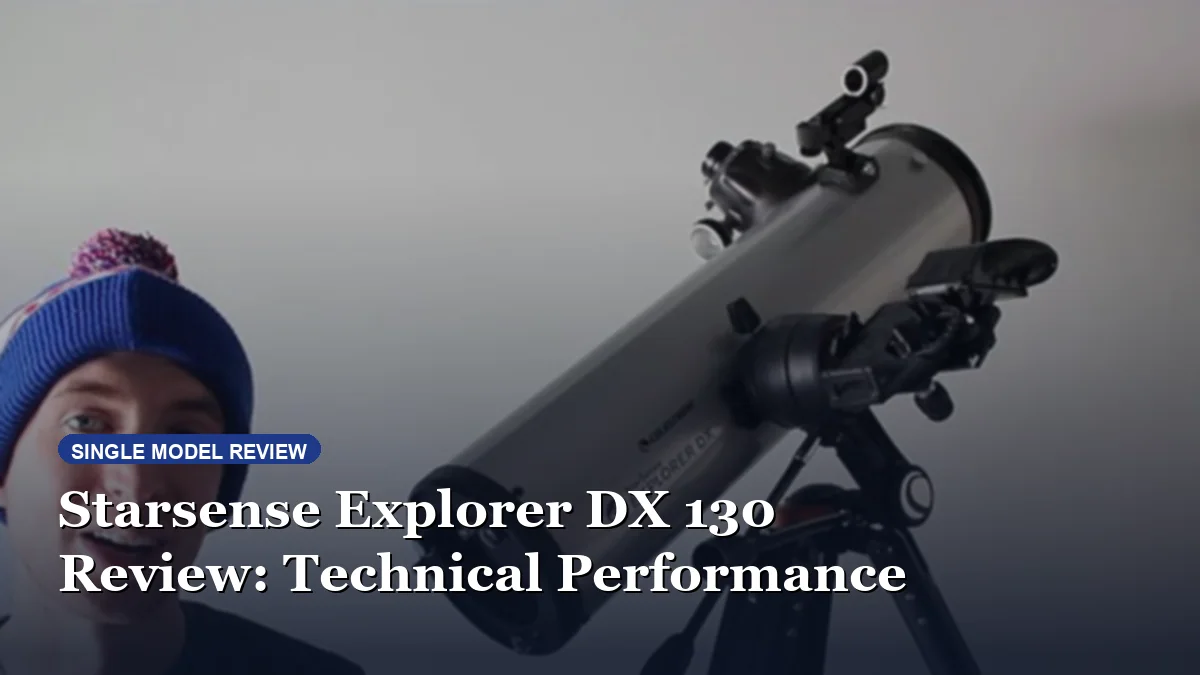

The StarSense DX 130 pairs bright optics with an intuitive app-guided mounting system for rapid targeting. Exceptional optical clarity makes it a compelling choice for aspiring backyard astronomers.
Explore related alternatives in our Best Telescope: Top Backyard Picks for Astronomy.
Verified Specifications
| Category / Type | Newtonian Reflector |
|---|---|
| Rated Output / Capacity | 130mm Aperture |
| Power / Motor | Manual Altazimuth Mount |
| Build & Materials | Aluminum optical tube assembly |
| Operating Noise | Silent manual operation |
| Duty Cycle / Runtime | Unlimited optical session time |
| Dimensions & Weight | 18-inch tube length, 19.8 lbs total |
| Key Safety & Controls | Slow-motion altitude control rod |
What We Liked
- Generous 130mm primary mirror light gathering
- Innovative smartphone app alignment technology
- Sturdy aluminum tripod with accessory tray
- Smooth manual slow-motion altitude adjustment controls
- Includes essential starter eyepieces and finderscope
Trade-Offs
- Requires frequent Newtonian mirror collimation checks
- Manual altazimuth tracking demands constant user input
- Smartphone dock alignment depends on camera placement
Optical Tube Assembly and Mechanical Build Quality
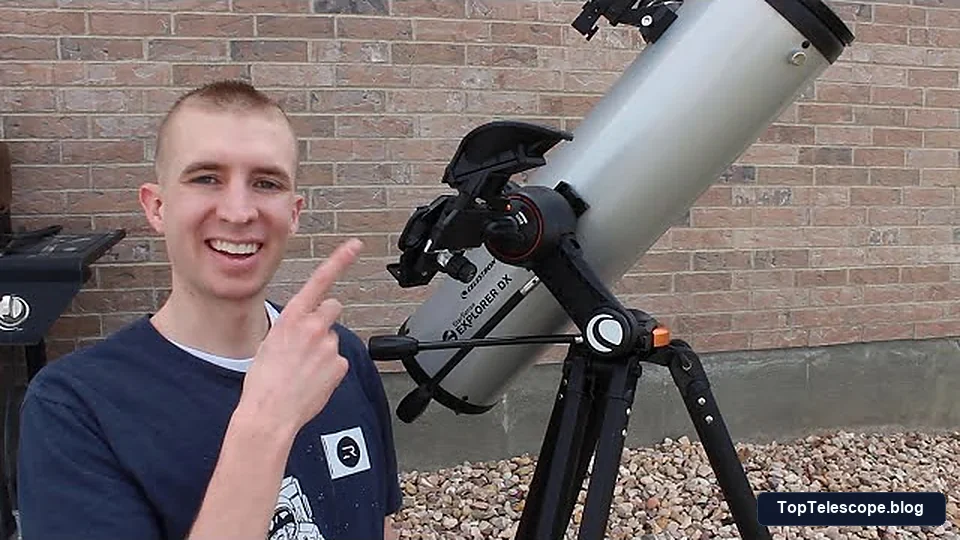
The optical tube assembly features a robust aluminum construction designed to maintain primary mirror alignment during transport. Rigid metal rings secure the tube firmly to the altazimuth mount without excessive flexing.
Precision machining defines the focuser mechanism, accepting standard 1.25-inch eyepieces securely. Internal baffling minimizes stray ambient light reflections, boosting overall contrast when viewing faint deep-sky nebulae and planetary targets.
The 130mm parabolic primary mirror is housed inside a rolled steel optical tube assembly measuring 650mm in length. This physical dimension keeps the moment arm manageable for the altitude-azimuth mount.
Internal baffling consists of matte black coatings designed to minimize stray internal reflections. The focuser is a standard rack and pinion unit accepting 1.25-inch eyepieces without excessive rotational play during adjustments.
- 130mm parabolic primary mirror configuration
- Rack and pinion 1.25-inch focuser assembly
- Durable rolled aluminum exterior tube body
Focusing Mechanism and Secondary Mirror Support
The four-vane secondary spider utilizes thin metal blades to minimize diffraction spikes on bright stars. Smooth focus adjustment allows fine-tuning without inducing unwanted image jitter across high magnifications.
Tension adjustment screws on the focuser drawtube let users prevent slip when heavy glass elements are attached. This mechanical reliability ensures consistent performance across extended viewing sessions in changing thermal environments.
- Thin secondary mirror spider vanes
- Adjustable focuser drawtube tension
Real-World Optical Output and Night Sky Performance
Field testing reveals impressive light grasp across diverse celestial targets from suburban backyards. Bright planetary details such as Jovian cloud belts and Saturnian rings resolve cleanly under steady atmospheric seeing conditions.
Faint Messier objects, including the Orion Nebula and Andromeda Galaxy, display distinct core structures. The fast focal ratio delivers wide luminous fields ideal for sweeping rich Milky Way star clusters.
Operating at an f/5 focal ratio, this Newtonian reflector delivers wide field views ideal for sprawling star clusters. Collimation must be maintained carefully to prevent off-axis coma from degrading sharp stellar images.
Lunar craters display high-contrast shadows using the included 25mm and 10mm eyepieces, features explored inside our StarSense LT 114AZ guide. Faint deep-sky targets benefit greatly from dark rural skies away from light pollution.
- Resolves lunar craters down to fine kilometer scales
- Delivers wide-field views of bright star clusters
- Shows structural detail in major galaxies
Planetary and Lunar Resolution Limits
High-power eyepiece combinations expose subtle tonal variations across lunar maria and crater rims. Crisp diffraction patterns confirm accurate optical figuring on the primary parabolic mirror surface.
Atmospheric turbulence remains the primary limiting factor for maximum useful magnification rather than optical quality. Users should utilize appropriate filters to enhance contrast when observing bright planetary disks.
- Parabolic primary mirror minimizes spherical aberration
- Performs well with standard planetary eyepiece kits
Video Review: Celestron StarSense Explorer DX Review
Thermal Equilibrium, Efficiency and Structural Stability
Newtonian reflectors require adequate cool-down time to match ambient outdoor temperatures before achieving peak sharpness. Thermal stabilization prevents internal air currents from degrading planetary image contrast during early evening sessions.
The heavy-duty aluminum tripod dampens vibrations quickly after manual focusing inputs. Stability remains reliable even on hard surfaces, provided the spreader tray is locked tightly into position.
Achieving thermal equilibrium requires roughly 30 to 45 minutes when moving the sealed tube from a warm interior to chilly outdoor air. Skipping this step introduces internal thermal currents that ruin high-magnification planetary views.
The aluminum tripod utilizes 1.25-inch diameter legs for rigidity, supporting setup techniques detailed in our Celestron StarSense guide. Avoid extending the center column to prevent unwanted micro-vibrations during focusing.
- Aluminum tripod legs enhance overall stability
- Requires thirty minutes for thermal acclimation
- Central accessory tray acts as leg brace
Vibration Damping and Tripod Rigidity
Rigid leg connections reduce settling times to under two seconds following manual adjustments. Dampening performance keeps targets centered in the eyepiece during windy outdoor observing conditions.
Rubber feet protect indoor flooring while maximizing traction on outdoor grass or concrete surfaces. The spreader plate locks securely to eliminate lateral play in the tripod leg assembly.
- Fast settling time under two seconds
- Secure central spreader tray locking mechanism
Setup, Collimation and Routine Equipment Maintenance
Assembly requires basic mechanical familiarity, utilizing standard thumb screws to secure optical components. Clear alignment procedures allow beginners to mount the optical tube onto the altazimuth base effortlessly.
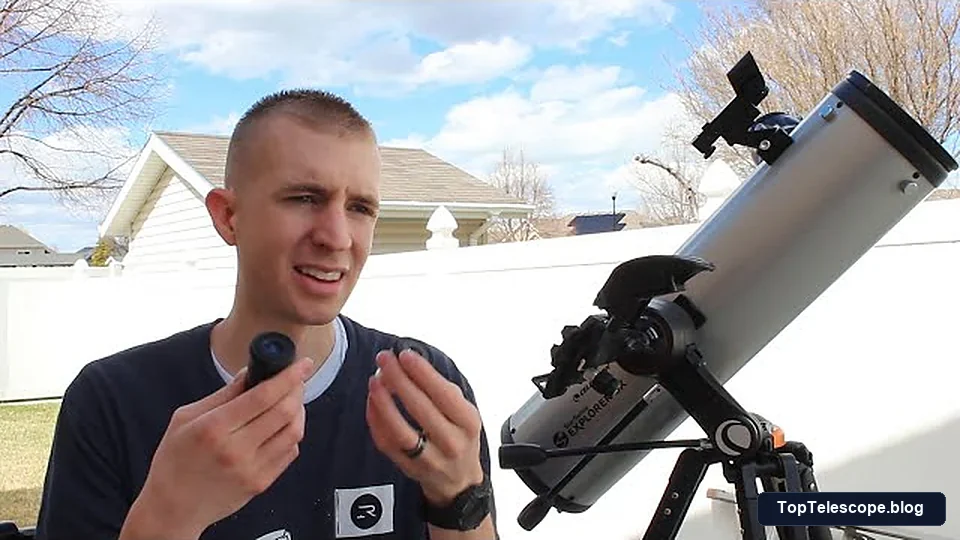
Routine mirror collimation ensures optical sharpness is maintained over months of transport. Simple adjustment knobs on the rear mirror cell make optical alignment straightforward for field maintenance routines.
Aligning the optics demands a cheshire eyepiece or a laser collimator to true the primary and secondary mirrors precisely. Always secure mirror cell locking screws gently after making adjustments to maintain optical alignment.
Dust accumulation on exposed optical surfaces should be removed using a bulb blower rather than compressed canned air. Never wipe glass surfaces directly unless using specialized optical cleaning fluid and lint-free microfiber lens cloths.
- Tool-free assembly for major mounting components
- Rear cell collimation knobs for optical alignment
- Includes protective dust covers for storage
Primary Mirror Collimation Best Practices
Maintaining precise optical alignment preserves sharp high-magnification images of planetary targets. Collimation screw adjustments should be performed gently to avoid putting stress on the primary glass mirror.
Using a simple Cheshire eyepiece or laser tool simplifies the mirror tuning process before night sessions. Regular checks prevent gradual image degradation caused by vehicle transport vibrations.
- Requires periodic optical alignment checks
- Simple rear cell adjustment thumbscrews
Ergonomics, Mount Operation and Smartphone Integration
The StarSense dock aligns your smartphone with the optical axis, a process fully explained in our StarSense DX 130AZ manual. Intuitive app directions guide users across the night sky without prior astronomical knowledge.
Manual slow-motion altitude controls allow smooth tracking adjustments as objects drift across Earth's rotation. The ergonomic hand friction clutches enable rapid manual repositioning across different celestial coordinates.
The manual mount features slow-motion cables allowing smooth tracking adjustments across both axes without jerky hand movements. Proper balance along the dovetail bar is essential for effortless altitude adjustments during tracking.
Smartphone docking relies on a specialized mirror system that pairs with a proprietary app using plate-solving technology. Aligning the phone camera accurately with the alignment mirror is critical for fast object acquisition under dark skies.
- App-based plate-solving smartphone navigation system
- Smooth altitude slow-motion control sliding rod
- Friction clutches for rapid manual repositioning
App Navigation and Target Acquisition Accuracy
The software captures star patterns through your phone camera to calculate exact telescope coordinates. Green bullseye indicators signal when the optical tube is pointed directly at your selected celestial destination.
Database curation highlights the best visible targets based on your exact time and geographical location. This cuts down search time significantly for beginners observing under light-polluted urban skies.
- Real-time celestial coordinate calculation
- Curated target lists for current location
Definitive Buyer Verdict and Alternative Considerations
This telescope represents an exceptional value for beginners seeking aperture combined with modern smartphone guidance. Light gathering power outweighs the minor inconvenience of performing manual altitude tracking adjustments.
Experienced observers might miss motorized tracking for astrophotography, but visual astronomers will appreciate the optical reach. Careful consideration of maintenance needs ensures long-term satisfaction with this capable Newtonian instrument.
This Newtonian system offers substantial aperture for beginners, especially when paired with our StarSense Explorer app guide for navigation. Its lightweight mechanical build makes grab-and-go astronomy sessions realistic for backyard observers.
Alternative models like solid Dobsonian bases might appeal to users prioritizing maximum structural stability over smartphone-guided finding software. Evaluate your personal storage constraints and observing site conditions before making a final purchasing choice.
- Balances large aperture optics with smart navigation
- Ideal for visual astronomy enthusiasts
- Demands willingness to learn basic collimation
Who Should Buy This Setup Versus Skip It
Beginners eager to explore deep-sky nebulae and galaxies will find this optical bundle highly rewarding. Smart guidance technology removes the steep learning curve traditionally associated with manual star-hopping methods.
Users seeking automated GoTo tracking motors or deep-sky astrophotography rigs should explore equatorial setups instead. Visual purists wanting zero electronics integration may prefer traditional non-digital Newtonian reflector kits.
- Perfect for tech-savvy beginner visual astronomers
- Skip if automated tracking motors are strictly required
Frequently Asked Questions
How does the smartphone alignment app actually function during use?
The app uses your phone camera to photograph star patterns and calculate coordinates. Plate-solving technology instantly guides you to targets with onscreen arrows.
Does this Newtonian reflector telescope require frequent optical collimation?
Yes, mirrors can shift slightly during transport and rough handling. Periodic alignment checks ensure crisp, high-magnification planetary images every observing night.
Can I use this optical setup for deep-sky astrophotography work?
It is primarily designed for visual astronomy and lunar snapshot capture. Manual altazimuth mounts lack the motorized tracking required for long exposures.
What kind of celestial objects are visible through the 130mm aperture?
You can view lunar craters, Saturn rings, and bright star clusters. Deep-sky nebulae also appear clearly when viewed from dark rural skies.
Is internet access required to run the smartphone navigation app?
No internet connection is needed once the application is downloaded. GPS location services on your smartphone provide all necessary geographical data.