Skywatcher Heritage 150P Virtuoso Gti Wifi Review
This collapsible 150mm Newtonian combines large aperture light gathering with integrated Wi-Fi GoTo tracking. It delivers stellar portability despite requiring occasional optical collimation maintenance.

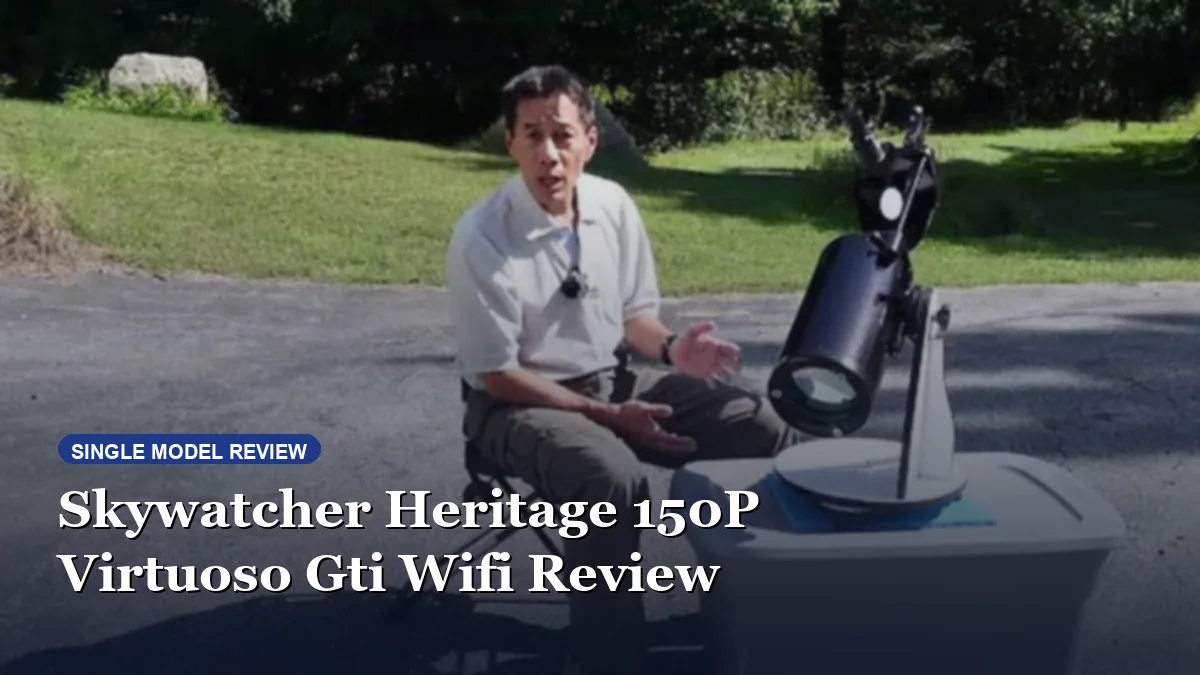

The Skywatcher Heritage 150P Virtuoso Gti Wifi offers exceptional value for mobile astronomers seeking automated object location. Users must manage open-truss stray light and regular collimation checks.
Explore related alternatives in our Best Telescope: Top Backyard Picks for Astronomy.
Verified Specifications
| Optical Design | Parabolic Newtonian Reflector |
|---|---|
| Aperture | 150 millimeters |
| Focal Length | 750 millimeters (f/5) |
| Mount Type | Alt-Azimuth GoTo with Wi-Fi |
| Drive System | Dual-Axis DC Servo Motors |
| Control Interface | SynScan App (iOS and Android) |
| Optical Tube | Collapsible Open Truss |
| Total Weight | Approximately 9 kilograms |
| Power Source | 8x AA Batteries or 12V DC |
What We Liked
- Generous 150mm light-gathering aperture
- Compact collapsible open-truss design
- Integrated Wi-Fi for wireless GoTo control
- Smooth manual clutch-free repositioning encoders
- Affordable entry into automated astronomy
Trade-Offs
- Open tube requires aftermarket light shroud
- Fast f/5 optics demand frequent collimation
- Plastic components on mount housing
Optical Design and Tube Architecture
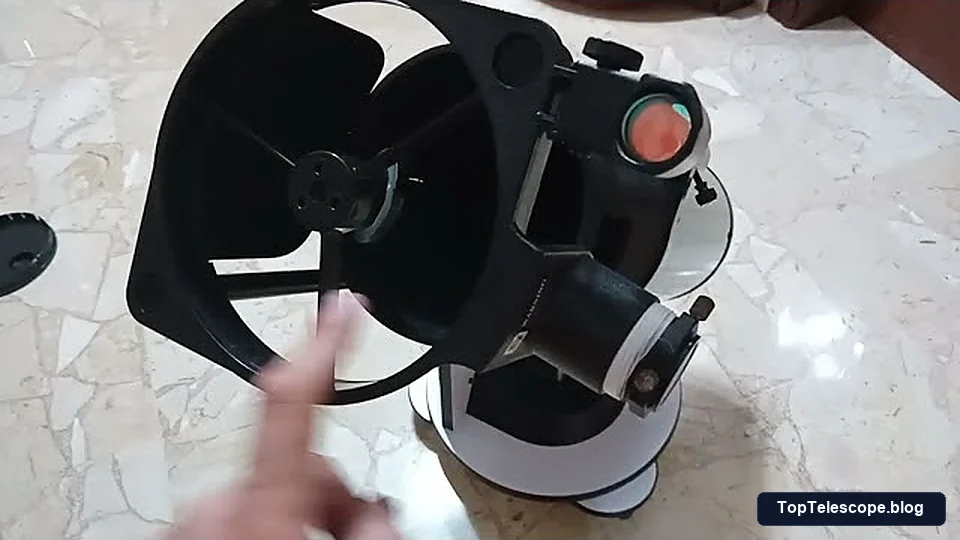
The 150mm parabolic mirror serves as the core light-gathering element of this optical tube assembly. It features a fast focal ratio that yields expansive visual fields for sweeping star clusters.
Utilizing a collapsible open truss design reduces overall transport length significantly. For more details on aperture bumps, consult our full comparison guide covering smaller structural variants.
Internal baffling is relatively minimal due to the open truss architecture. Operators should consider adding an aftermarket light shroud to eliminate stray ambient light interference in suburban observation sites.
The 150mm primary mirror utilizes a parabolic glass substrate to eliminate spherical aberration at fast focal ratios. Operating at f/5 focal length, this compact Newtonian tube delivers wide-field views ideal for deep-sky surveying.
Unlike closed aluminum tubes, the collapsible flex-tube truss relies on three rigid steel rods to maintain optical alignment. This design significantly reduces overall storage length while ensuring adequate mechanical rigidity during transport.
A single-speed rack-and-pinion focuser accommodates 1.25-inch eyepieces securely via a thumbscrew compression ring. While functional for standard visual astronomy, heavy specialized imaging accessories may require mechanical upgrades to prevent image shift.
- 150mm aperture parabolic primary mirror
- Fast f/5 focal ratio for wide views
- Collapsible steel truss tube structure
Primary Mirror Engineering
Precision parabolic surfaces eliminate spherical aberration effectively at this focal length. High reflectivity coatings ensure maximum photon transmission reaches the eyepiece during faint deep-sky viewing sessions.
Users must handle the primary mirror cell carefully during transport to maintain optical alignment. Routine inspection of mirror clips prevents unwanted shifting during thermal expansion swings.
- Parabolic figure eliminates spherical aberration
- Protective overcoat guards aluminum surfaces
Mount Mechanics and GoTo Integration
The integrated Virtuoso GTi alt-azimuth mount contains dual-axis DC servo motors for automated tracking. Buyers can review our technical comparison to understand how this motor base differs.
SynScan application software controls alignment procedures and celestial object databases. Users can manually reposition the optical tube using clutch-free encoders without losing alignment data stored in the hand control app.
The Alt-Azimuth base integrates dual-axis DC servo motors controlled through built-in Wi-Fi circuitry. Users connect via the SynScan mobile application on iOS or Android devices to access automated celestial alignment routines.
Patented Freedom Find encoders allow manual repositioning of the telescope tube without losing alignment tracking data. This mechanical clutch system provides seamless transitions between manual star-hopping and computerized GoTo object location.
- Built-in Wi-Fi network generation
- Dual-axis servo motor tracking drive
- Freedom-find dual encoder technology
Wireless Connectivity Performance
Establishing a connection requires linking mobile devices directly to the mount's broadcasted network. Signal dropouts remain rare when operating within standard proximity ranges during backyard stargazing sessions.
Software updates via the app interface ensure compatibility with evolving smartphone operating systems. The alignment routine accommodates one-star or bright-object alignment methods for rapid field deployment.
- Direct wireless network handshake
- Reliable command response time
Video Review: REVIEW (2026): Virtuoso GTI 150P Telescope. Features
Real-World Optical Performance
Delivering crisp views of lunar craters and planetary bands, the parabolic primary shines under dark skies. Fast focal systems demand precise collimation using a Cheshire eyepiece or laser tool before every session.
Coma becomes noticeable near the extreme edges of low-magnification eyepieces due to the fast optical design. Utilizing wide-field corrected eyepieces mitigates edge aberrations and preserves pin-point star images across the frame.
Under dark skies, the optics resolve globular clusters like M13 into distinct individual pinpoints of stellar light. Planetary observers will appreciate sharp contrast on Jupiter's cloud belts when local seeing conditions remain stable.
Coma becomes noticeable near the extreme edges of low-magnification eyepieces due to the fast f/5 focal ratio. Utilizing a quality coma corrector can mitigate this optical aberration for wide-angle stargazers seeking pristine edge sharpness.
- High contrast lunar and planetary views
- Noticeable coma at fast focal ratios
- Requires pre-session collimation checks
Deep-Sky Contrast and Resolution
Nebulae and distant galaxies reveal intricate structural details under rural dark skies. Users evaluating mirror sizes should review our technical clash analysis to weigh resolution differences.
Light pollution filters enhance contrast significantly when observing emission nebulae from suburban backyards. Proper thermal acclimatization of the primary mirror remains crucial for achieving maximum high-power resolution.
- Resolves faint deep-sky targets effectively
- Benefits from thermal tube acclimatization
Ergonomics and Setup Efficiency
Weighing roughly nine kilograms complete with the base, the unit remains exceptionally portable. Observers comparing portable scopes often read our technical head-to-head for alternative grab-and-go options.
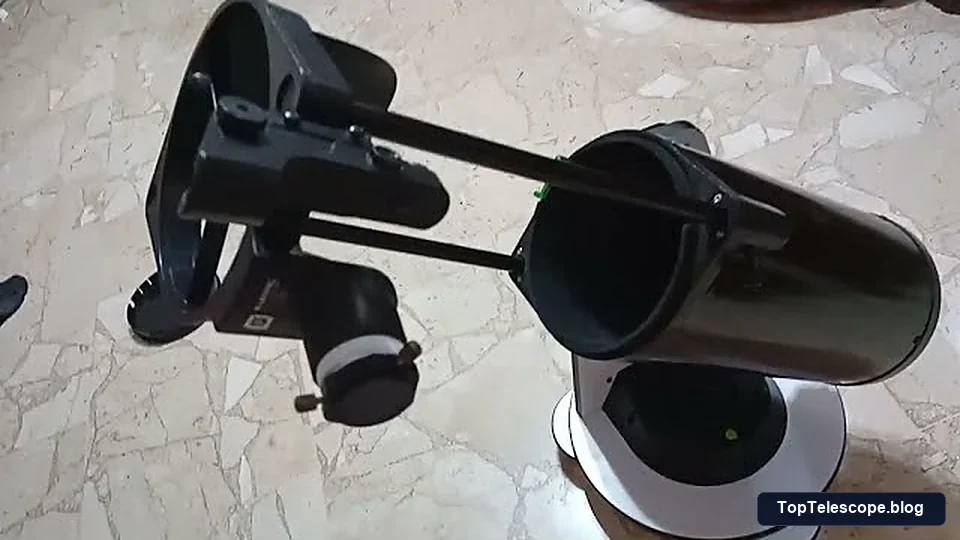
Setting up the equipment requires a stable flat surface or sturdy photographic tripod. The Vixen-style dovetail clamp allows rapid balancing of the optical tube assembly to minimize strain on the drive motors.
Weighing approximately nine kilograms total, the complete assembly transports easily as a single compact unit. Tabletop mounting requires a stable, vibration-free surface such as a heavy camping table or sturdy tripod platform.
Collimation remains surprisingly stable despite the collapsible truss design, though verifying alignment before every session is vital. Utilizing a laser collimator ensures peak optical performance for high-magnification planetary viewing targets.
- Lightweight nine kilogram total system
- Vixen-style dovetail mounting plate
- Rapid tabletop deployment capability
Power Management and Tracking
Internal battery compartments accept standard AA cells to power the Wi-Fi and servo drives. Field operators often prefer an external regulated twelve-volt power tank to ensure consistent voltage during long winter sessions.
Dual-axis tracking motors maintain smooth sidereal motion to keep objects centered in the eyepiece. Motor noise remains minimal during slewing operations, avoiding disturbance to neighboring observers in quiet dark-sky parks.
Internal power requires eight AA batteries, though practical field use demands an external 12V DC power tank. Drawing current via a standard coaxial power cable prevents sudden voltage drops during extended astrophotography tracking sessions.
Motor tracking accuracy maintains objects within the eyepiece field of view for moderate durations without noticeable drift. Proper leveling of the base ensures sidereal tracking algorithms perform within expected mechanical tolerances.
- Accepts standard AA internal batteries
- Supports external twelve-volt DC supplies
- Quiet dual-axis servo motor drives
Maintenance and Open Truss Care
Exposed optical surfaces require careful handling to prevent dust accumulation on the primary mirror. Cleaning sessions should occur infrequently and follow strict manufacturer protocols using specialized optical cleaning solutions and tissues.
Steel truss rods resist corrosion and mechanical flexing under standard environmental conditions. Storing the assembly inside a padded carrying bag prevents moisture ingress and protects electronics from accidental impact damage.
Open truss telescope designs expose optical surfaces to ambient dust, requiring frequent inspection of the primary mirror. Always store the tube assembly with a dust cover securely attached to minimize environmental contamination risks.
Periodic cleaning of optical coatings should only occur when dust buildup severely impacts contrast during observations. Use pure distilled water and photographic-grade cleaning solution paired with microfiber materials to avoid scratching delicate surfaces.
- Exposed mirror requires periodic dust care
- Corrosion-resistant steel truss rods
- Padded storage bag recommended
Final Buyer Verdict
Combining a fast optical system with automated Wi-Fi control creates a compelling mobile package. Intermediate astronomers gain deep-sky reach without sacrificing the grab-and-go convenience demanded by modern urban living constraints.
While open truss designs require light shrouds and regular collimation upkeep, overall optical rewards justify minor maintenance tasks. This telescope represents a brilliant synthesis of classical reflector optics and modern wireless automation.
This GoTo Newtonian system delivers exceptional aperture-to-portability ratios for intermediate and beginner astronomers alike. Combining wireless smartphone control with a fast optical tube creates an engaging, highly accessible stargazing instrument.
Users willing to manage tabletop setups and routine collimation will find immense value in its optical throughput. It represents a formidable hybrid telescope bridging manual astronomy traditions with modern automated wireless technology.
- Exceptional portability for a 150mm scope
- Modern wireless smartphone integration
- Requires basic optical maintenance knowledge
Frequently Asked Questions
Does the telescope include an internal rechargeable battery system for field operations?
The mount does not feature an integrated internal rechargeable battery pack, relying instead on a standard compartment holding eight alkaline AA cells for completely wireless field operation.
External power tanks connected via a locking DC cable provide significantly more reliable voltage stability for long winter observing sessions.
Can I operate this telescope manually without using the smartphone application?
Manual repositioning remains fully functional at all times due to clutch-free encoder technology built directly into the dual-axis servo motor assembly.
Freedom-find encoders allow you to push the optical tube to any target without ever losing your software alignment tracking data.
What kind of maintenance is required for the open truss optical tube assembly?
Open truss designs expose optical surfaces to ambient dust, meaning the primary mirror requires occasional inspection and very careful cleaning with specialized solutions.
Frequent collimation checks using a laser or Cheshire tool are also necessary before every viewing session to maintain sharp focus.
Is this telescope suitable for beginner astronomers purchasing their very first equipment?
Beginners can master this system relatively quickly if they are willing to learn basic Newtonian collimation procedures and app-based alignment routines. Automated GoTo tracking makes locating faint celestial objects much easier than star-hopping manually through urban light pollution.
What accessories should I purchase alongside the base telescope package?
An aftermarket light shroud is highly recommended to block stray ambient light from reaching the open truss secondary mirror area. Upgraded wide-field eyepieces will also improve edge sharpness and expand your visual field when observing rich Milky Way star fields.