Sky-Watcher Heritage 150 Review: Tabletop Powerhouse
This collapsible Newtonian reflector combines a generous aperture with compact tabletop ergonomics. It delivers remarkable visual performance despite minor structural trade-offs.

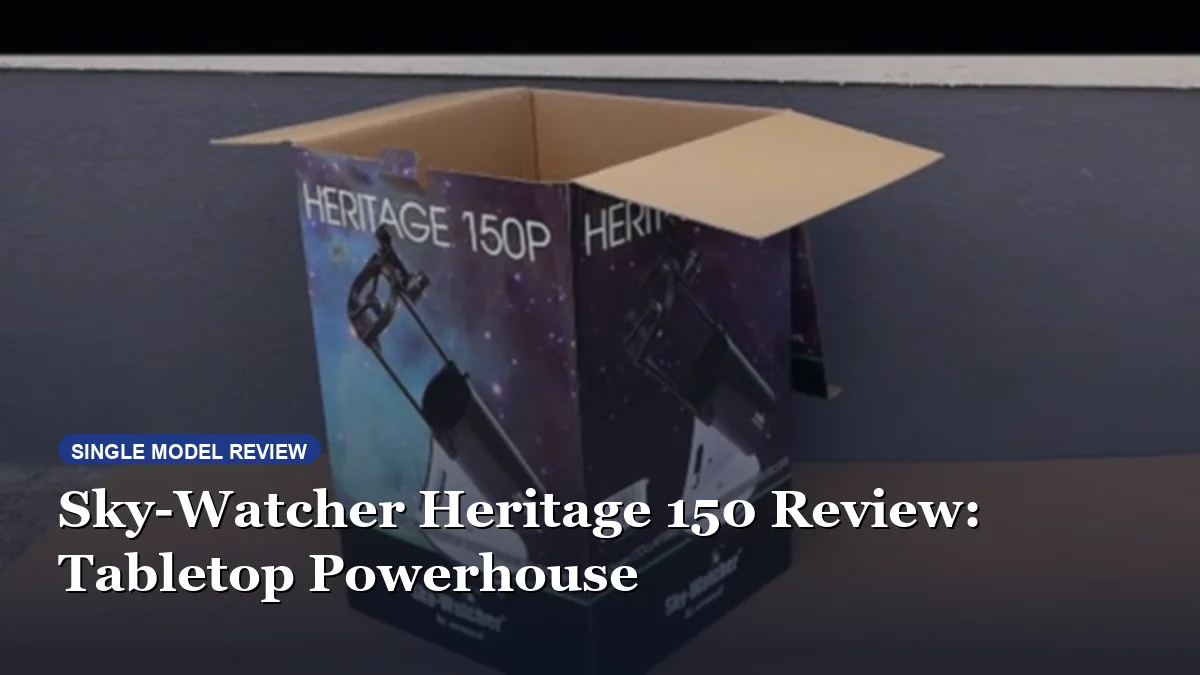

The Sky-Watcher Heritage 150 offers exceptional optical performance for its compact size, making it a stellar choice for mobile observers who prioritize light grasp over tracking automation.
Explore related alternatives in our Best Tabletop Telescope.
Verified Specifications
| Category / Type | Tabletop Newtonian Reflector |
|---|---|
| Rated Output / Capacity | 150mm Aperture (6-inch) |
| Power / Motor | Manual Altazimuth Mount |
| Build & Materials | Borosilicate Parabolic Primary Mirror |
| Operating Noise | Silent Manual Operation |
| Duty Cycle / Runtime | Unlimited Visual Observing |
| Dimensions & Weight | 10 kg Total System Weight |
| Key Safety & Controls | 1.25-inch Helical Focuser |
What We Liked
- Large 150mm aperture reveals faint deep-sky structures.
- Truss-tube design collapses easily for trunk transport.
- Radiant Aluminum Quartz coatings maximize light transmission.
- Smooth helical focuser provides precise manual adjustments.
Trade-Offs
- Tabletop base requires a sturdy platform for stability.
- Open truss design exposes optics to dust and dew.
Optical Architecture and Primary Mirror Design
The optical heart features a 150mm borosilicate mirror engineered to withstand thermal fluctuations. This parabolic surface effectively eliminates spherical aberration at fast focal ratios.
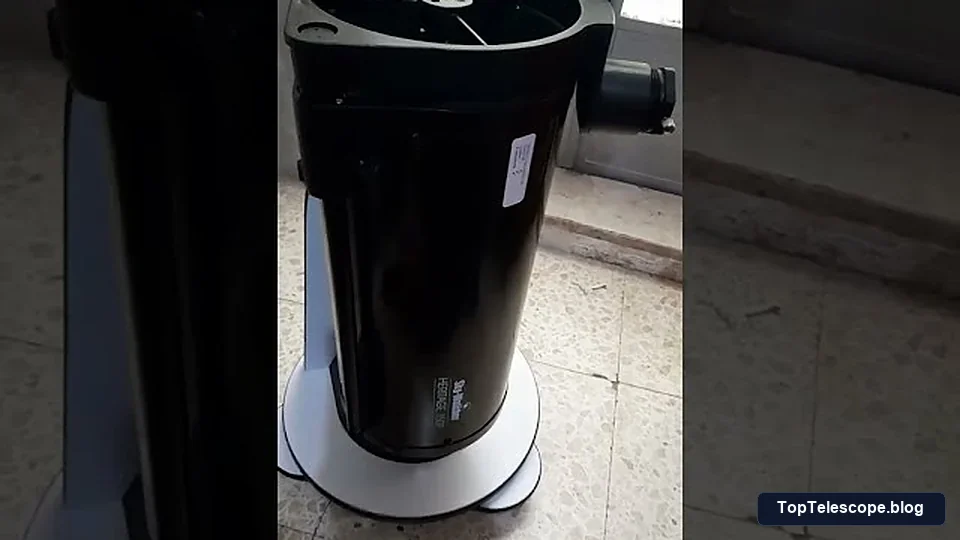
Equipped with Sky-Watcher’s proprietary quartz overcoat, the primary glass ensures high reflectivity. Before buying, consult our Sky-Watcher 150P vs 130P comparison for detailed optical specs.
The fast f/5 focal ratio provides a wide baseline field of view. This design suits sweeping star clusters and sprawling galactic nebulae wonderfully well.
The 150mm parabolic primary mirror utilizes a fast f/5 focal ratio, yielding a 750mm focal length that balances wide-angle views with respectable planetary magnification capabilities for intermediate backyard astronomy enthusiasts.
Pyrex or equivalent low-expansion borosilicate glass substrate minimizes thermal distortion during rapid temperature drops, ensuring the optical figure remains stable throughout extended viewing sessions under variable evening weather conditions.
Aluminum reflective coatings enhanced with a protective silicon dioxide overcoat deliver high reflectivity across the visible spectrum, maximizing photon throughput to the eyepiece for faint deep-sky nebulae and globular clusters.
- 150mm objective lens diameter with 750mm focal length.
- Radiant Aluminum Quartz coating for enhanced reflectivity.
- Parabolic primary mirror minimizes spherical distortion.
Coating Durability and Glass Quality
Protective quartz layers shield the reflective aluminum from premature oxidation. This treatment preserves optical integrity through years of heavy field transport.
Thermal stability of borosilicate glass minimizes focal shift during rapid temperature drops. Observers spend less time waiting for thermal equilibrium.
- Robust multi-coated optics resist environmental degradation.
- Low thermal expansion glass maintains sharp focus.
Mechanical Build Quality and Truss Ergonomics
Constructed with a collapsible truss tube, this telescope balances rigidity with storage convenience. You can examine alternative refractor designs inside our ED80 vs Evostar 80ED review today.
Transporting the optical tube assembly requires minimal effort due to its compact footprint. Rubber feet on the base isolate vibrations during focusing tasks.
While lightweight, the overall chassis feels remarkably sturdy during high-magnification planetary observations. Engineers prioritized practical fieldwork over decorative cosmetics.
The collapsible FlexTube truss design utilizes dual metal rods that lock securely into place, maintaining structural alignment while significantly reducing the optical tube assembly length for convenient transport and storage.
Heavy-duty tension control handles on both sides of the cradle allow users to adjust altitude friction precisely, preventing the heavy optical assembly from slipping when swapping out massive 2-inch eyepieces.
Internal baffling throughout the steel tube effectively suppresses stray light reflections, boosting image contrast when observing lunar features or faint planetary nebulae near urban light pollution zones.
- Collapsible tube design retains alignment between sessions.
- Integrated rubber feet dampen ground-level vibrations effectively.
- Total weight remains manageable at roughly ten kilograms.
Focuser Mechanics and Eyepiece Compatibility
A smooth 1.25-inch helical focuser handles image acquisition without rotational image shift. It accommodates standard Plossl eyepieces seamlessly.
Fine-pitch threading allows minute adjustments when resolving tight lunar craters. Tension rings secure heavy glass elements safely in place.
- Helical mechanism prevents image focal drift.
- Standard 1.25-inch barrel accepts diverse accessories.
Video Review: A $280 Collapsible Reflector! Review of the 6\
Real-World Visual Output and Performance
Gathering substantial light, the instrument resolves planetary cloud belts with striking clarity. Review our Classic 200P vs Apertura AD8 guide to evaluate large-aperture dobsonian alternatives thoroughly.
Faint Messier objects appear with distinct structure under rural skies. Star colors remain vivid and true across wide-field ocular configurations.
Coma corrector additions prove optional since the central sweet spot remains generous. Users enjoy crisp imagery without requiring expensive secondary lenses.
Under dark skies, the 6-inch aperture resolves intricate spiral structure in face-on galaxies like M51 and splits tight double stars cleanly when paired with high-magnification planetary oculars.
Coma becomes noticeable near the edge of the field of view due to the fast f/5 optical system, though standard wide-field eyepieces manage this optical aberration acceptably well during casual scanning.
Planetary observers will appreciate the sharp lunar terminator details and distinct Jovian cloud belts visible during steady seeing conditions, rivaling the performance of much longer traditional Newtonian reflector telescopes.
- Delivers high-contrast views of planetary opposition details.
- Resolves globular clusters into individual stellar points.
- Wide field of view accommodates large emission nebulae.
Thermal Management and Efficient Cool-Down
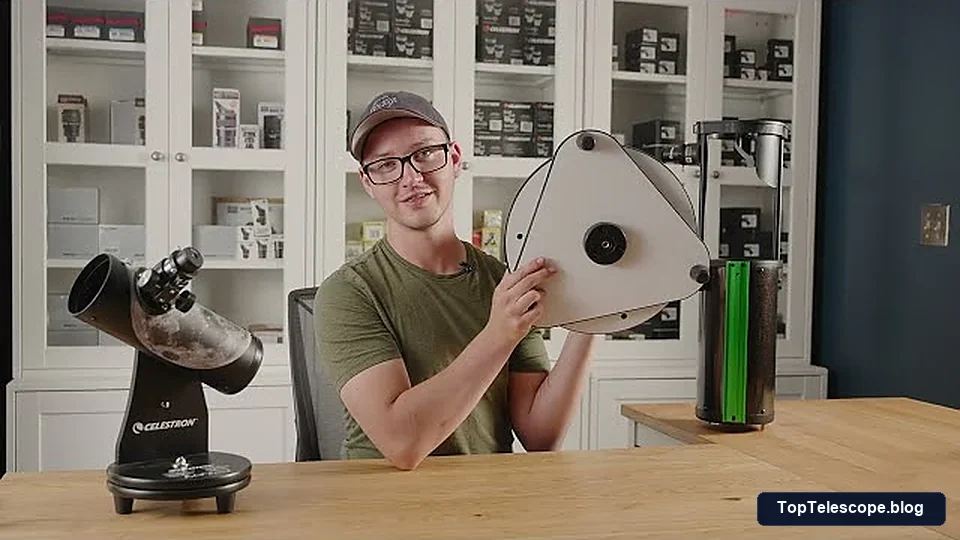
Open truss architecture permits rapid thermal equilibrium after outdoor deployment. Ambient air circulates freely around the primary glass surface.
Observers avoid prolonged waiting periods before achieving optimal high-magnification sharpness. Thermal plumes dissipate much faster than in sealed tubes.
Dew accumulation poses a minor hazard during humid autumn nights. Operators should consider adding a flexible shroud for extended viewing.
Open truss tube architectures promote rapid thermal equilibrium, allowing the massive 150mm glass substrate to acclimate to ambient outdoor temperatures much faster than sealed optical tube designs.
Allowing approximately thirty minutes of passive cool-down time eliminates internal tube currents that cause image shimmering and degradation during high-power planetary and lunar observation sessions.
Storing the telescope in a cool garage or mudroom prior to observing further minimizes thermal lag, ensuring crisp, high-resolution views right from the start of your evening astronomy session.
- Open-air design accelerates mirror temperature acclimation.
- Reduces internal boundary layer turbulence significantly.
- Optional shroud protects against lateral moisture deposition.
Setup Rigidity and Mount Stability
The single-arm altazimuth mount utilizes friction clutches for smooth slewing. Users guide the tube manually with intuitive, fluid hand movements.
Placing the assembly on a stable table is crucial for minimizing hand-touch vibrations. Ground clearance remains adequate for comfortable seating positions.
Balancing the tube payload prevents sudden tipping during eyepiece swaps. Tension adjustments on the altitude bearings remain easily accessible.
The compact tabletop Dobsonian base requires a sturdy, vibration-free surface like a solid wooden picnic table or heavy-duty tripod to prevent image jitter during focusing adjustments.
Teflon bearing pads on the azimuth axis ensure smooth, fluid panning movements, allowing astronomers to track celestial objects manually at high magnifications without jerky or binding transitions.
Securing the dovetail bar firmly into the clamp prevents any rotational slippage, maintaining optical alignment and pointing accuracy across the entire range of motion from horizon to zenith.
- Altazimuth base offers frictionless manual tracking.
- Requires a sturdy elevated platform for best results.
- Adjustable altitude friction prevents heavy eyepiece imbalance.
Maintenance, Collimation, and Long-Term Durability
Collimation bolts on the rear cell allow straightforward optical alignment tools use. The collapsible truss structure holds its alignment remarkably well between trips.
Routine cleaning requires minimal disassembly thanks to accessible primary mirror clips. Protective dust covers safeguard the optical surfaces during storage.
Built for rugged outdoor use, the laminate particle board base resists minor impacts. Regular hardware checks ensure structural longevity across seasons.
Regular collimation checks using a laser collimator or Cheshire eyepiece are essential before every session to ensure pinpoint star images and optimal resolution across the optical train.
The primary mirror cell features accessible thumb screws with spring-loaded locking mechanisms that simplify mirror adjustments while holding alignment securely through transport over rough gravel roads.
Keeping dust caps tightly sealed when not in use protects the delicate optical coatings from environmental contaminants, extending the operational lifespan of both primary and secondary mirrors significantly.
- User-friendly collimation knobs require no special tools.
- Robust laminate base withstands regular transport wear.
- Simple dust management preserves optical coatings.
Final Buyer Verdict and Ideal User Profiles
This optical system serves budget beginners seeking deep-sky performance. For motorized tracking options, read our Heritage 150P vs Virtuoso GTI comparison to evaluate mount upgrades.
Advanced astronomers will appreciate the grab-and-go convenience for impromptu stargazing sessions. Anyone desiring automated tracking must look toward computerized alternatives.
Ultimately, this instrument rewards hands-on observers with breathtaking celestial imagery. It remains a benchmark value within portable Newtonian design.
This portable reflector serves as an exceptional grab-and-go instrument for intermediate stargazers who demand serious aperture capability without dealing with heavy, cumbersome equatorial mount configurations.
Urban astronomers with limited storage space will appreciate the compact footprint, though users must provide a stable elevated platform to achieve optimal viewing comfort during extended sessions.
Beginners willing to master manual tracking and basic mirror alignment will find this optical system rewards them with breathtaking deep-sky views that outclass smaller beginner refractor telescopes.
- Best suited for mobile amateur astronomers.
- Offers superior light grasp for the investment.
- Demands manual tracking rather than motorized guidance.
Frequently Asked Questions
How often does the Sky-Watcher Heritage 150 require collimation?
The collapsible truss design holds alignment well during transport, but you should check collimation before every major observing session. Simple rear knobs make minor adjustments quick and straightforward.
Can I mount this telescope on a standard photographic tripod?
Yes, the base features a standard 3/8-inch threaded socket underneath for tripod mounting. Ensure your tripod supports at least ten kilograms securely to prevent wobbling.
Is this telescope suitable for viewing faint deep-sky nebulae?
The generous 150mm aperture gathers ample light to reveal numerous Messier catalog objects and emission nebulae. Dark rural skies provide the best possible viewing contrast.
Does the open-tube design risk dust accumulation on the mirror?
Open trusses do expose optical surfaces to ambient dust over time. Always attach the protective dust cap promptly and store the tube in a clean environment.
What type of eyepieces come included in the box?
The package typically includes standard 1.25-inch Plossl eyepieces providing low and high magnifications. Upgrading your oculars later will further enhance performance on planets.