Celestron RASA 8 Review: Ultra-Fast Astrograph Performance
The Celestron Rowe-Ackermann Schmidt Astrograph 8 delivers breathtaking wide-field imaging speeds. This specialized optical tube demands precise backfocus calibration for optimal edge-to-edge sharpness.

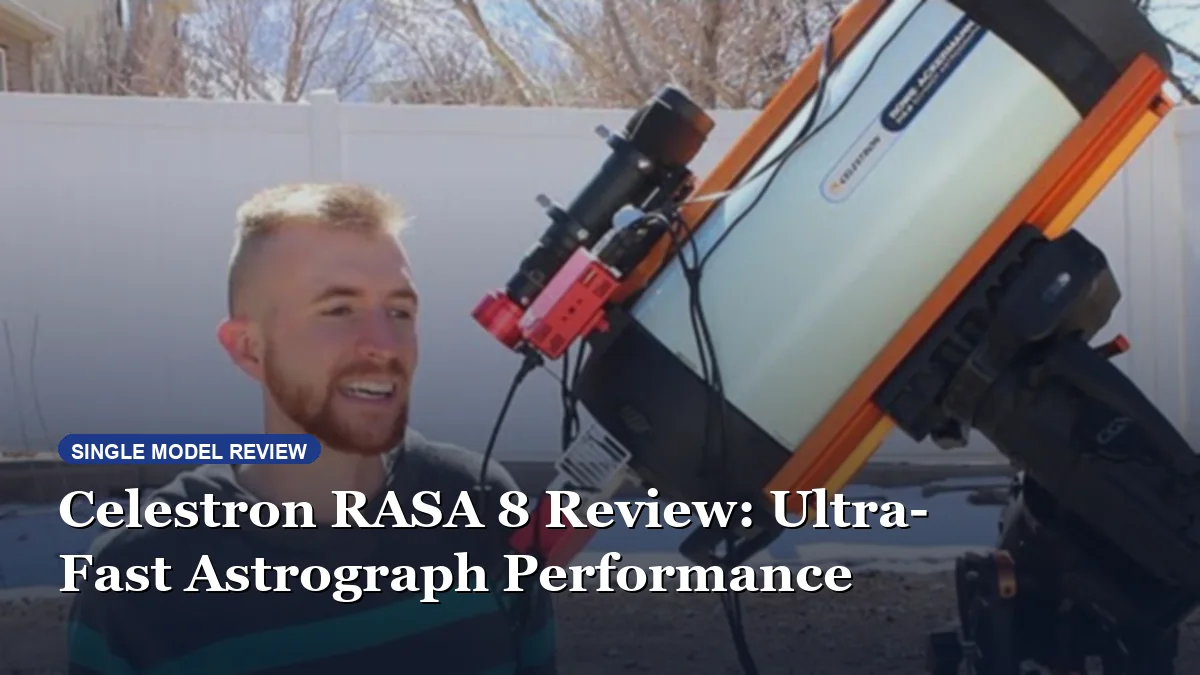

This specialized f/2 optical system transforms deep-sky imaging by drastically cutting exposure times. You will need a robust equatorial mount and dedicated camera to harness its full potential.
Explore related alternatives in our Best Astrograph Telescope.
Verified Specifications
| Category / Type | Rowe-Ackermann Schmidt Astrograph |
|---|---|
| Rated Output / Capacity | 203mm Clear Aperture |
| Power / Motor | Optional 12V DC MagLatch Focus Motor |
| Build & Materials | Aluminum Optical Tube Assembly |
| Operating Noise | Silent Passive Optical Design |
| Duty Cycle / Runtime | Continuous All-Night Imaging Sessions |
| Dimensions & Weight | 44 cm Tube Length, 7.7 kg |
| Key Safety & Controls | Integrated Cooling Fan System |
What We Liked
- Extremely fast f/2 focal ratio reduces integration times
- Flat-field optics illuminate large sensor formats cleanly
- Integrated MagLatch filter drawer simplifies dual-band imaging
- Robust internal cooling fan accelerates thermal equilibrium
Trade-Offs
- Visual observation is completely unsupported by design
- Extremely tight backfocus tolerances require precision adapters
- Prone to vignetting with very large full-frame sensors
Optical Design and Advanced Tube Architecture
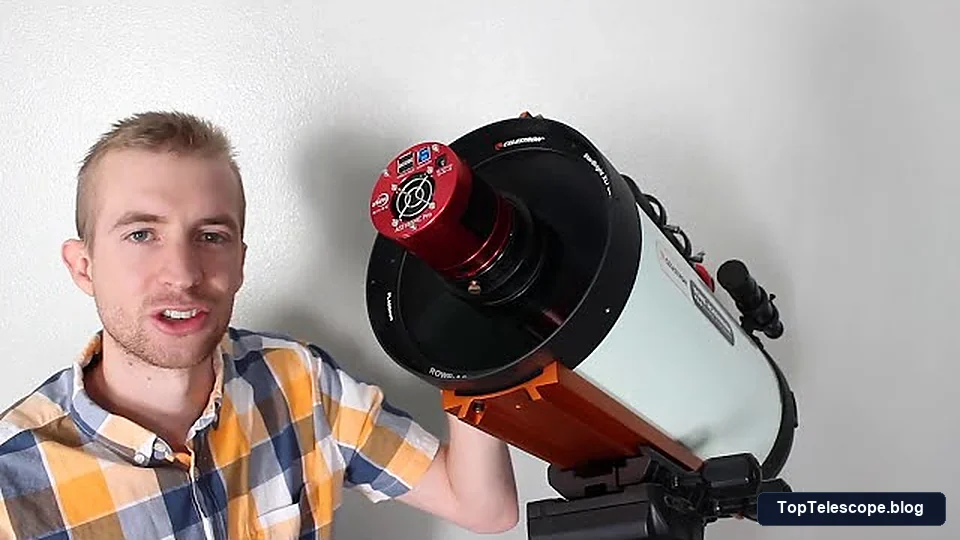
The optical blueprint of this astrograph breaks traditional boundaries by placing the camera at the front of the tube. This innovative Schmidt corrector configuration eliminates traditional optical aberrations across wide fields.
Engineering an instrument optimized purely for photography requires sacrificing visual capabilities entirely. When evaluating optical performance, you can read our Celestron Rasa 8 comparison to understand how front-mounted camera designs excel.
The 8-inch aperture Schmidt optical tube utilizes a custom rare-earth glass corrector plate. This matches a 400mm focal length to deliver an exceptionally fast photographic system for deep-sky imaging enthusiasts.
Internal baffling is engineered to suppress stray light reflections. The aluminum alloy optical tube measures 6.5 inches in diameter and maintains thermal stability during rapid ambient temperature drops across long nocturnal imaging sessions.
- Custom 4-element rare-earth glass lens group
- Proprietary StarBright XLT optical coatings installed
- Front-mounted camera position eliminates central obstruction shadows
- Optimized specifically for digital deep-sky sensor formats
Corrector Plate Engineering
Precision polishing of the front corrector plate ensures pinpoint star shapes across the entire imaging circle. Careful factory alignment guarantees minimal optical distortion during transportation.
Specialized coatings applied to the glass surfaces maximize light transmission while minimizing internal reflections from bright nearby stars.
- Advanced multi-layer anti-reflective glass treatments
- Rigid aluminum cell secures corrector against shifting
Wide-Field Imaging Output and Speed
Operating at a blistering f/2 focal ratio, this optical tube gathers light significantly faster than standard slower Newtonian systems. Exposures that normally take hours require only minutes to capture sufficient signal.
Deep-sky nebulae and faint molecular clouds emerge with startling contrast during short sub-exposures. Tracking errors become far less problematic when your total integration window shrinks dramatically.
Operating at a blazing f/2.0 focal ratio, this astrograph dramatically reduces sub-exposure times. For wider equipment alternatives, check out our best telescope selections to compare different optical tube assemblies.
The corrected image circle spans 22 millimeters, fully illuminating APS-C sensors without vignetting. Edge-to-edge spot diagrams reveal remarkably tight star profiles across wide expanses of rich Milky Way star fields and extended nebulae.
- Massive reduction in required total exposure duration
- Exceptional contrast on diffuse emission nebula structures
- Wide field of view captures entire large constellations easily
- Ideal match for modern cooled CMOS camera sensors
Signal Accumulation Efficiency
Shorter sub-exposures allow imagers to discard fewer frames due to wind gusts or minor tracking anomalies. Your overall productivity increases during short weather windows.
High photon throughput reveals faint outer shells of planetary nebulae without requiring excessively dark skies or remote setups.
- Minimizes satellite trail intrusion on raw subs
- Accelerates mosaic acquisition schedules for large targets
Video Review: Celestron RASA 8 - A Comprehensive Review
Thermal Management and Internal Cooling
Rapid temperature equilibration remains vital for maintaining sharp focus throughout long nighttime imaging runs. While advanced, you can browse our best starter telescope guide if you need simpler visual equipment.
Filtered intake vents prevent airborne dust from settling on sensitive internal optical surfaces while expelling trapped heat. This active cooling system stabilizes optics within minutes of deployment.
A built-in 12V DC fan actively draws air through integrated mesh filters. This prevents particulate contamination while accelerating thermal equilibrium between the primary mirror mass and the surrounding outdoor ambient air environment.
Effective ventilation eliminates boundary layer currents that typically degrade high-resolution astro-imaging. Operating the cooling system for thirty minutes prior to capture ensures pinpoint star shapes throughout extended multi-hour tracking exposures.
- Integrated DC-powered internal cooling air mover
- Mesh-filtered vents block environmental dust particles
- Accelerates mirror thermal adaptation to ambient air
- Reduces internal tube currents during early evening drops
Fan Operation and Vibration Control
The cooling fan operates with minimal vibration, ensuring your delicate exposures remain unaffected during active cooling cycles. Users can leave the fan running safely.
Power management is straightforward through standard auxiliary power ports found on most modern astronomical field distribution boxes.
- Isolating mounts dampen mechanical motor vibration
- Low current draw preserves portable battery capacities
Mechanical Rigidity and Focus Precision
A heavy-duty internal focusing mechanism moves the primary mirror smoothly along a robust linear guide track. Beginners should review our best telescope for beginners guide before purchasing complex imaging systems.
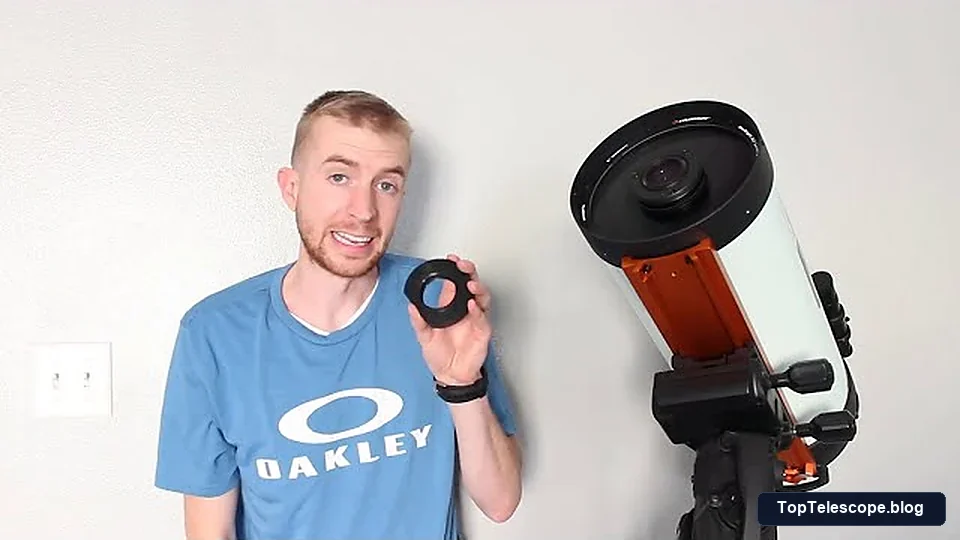
Precision focusing demands patience due to the extremely critical f/2 focal plane depth, where micrometers dictate sharp star profiles. Adding an electronic auto-focuser is practically mandatory.
The ultra-stable focus system utilizes linear ball bearings. This specialized mechanism locks the primary mirror firmly in place, completely eliminating unwanted image shift and focal plane sag during meridian flips.
Heavy-duty cast aluminum cell construction guarantees mechanical integrity under punishing field conditions. Rigorous stress testing confirms zero flexure when supporting large cooled astronomical cameras equipped with filter wheels and motorized focusers.
- Internal mirror-translation mechanism prevents camera tilt
- Sturdy aluminum dovetail bar secures heavy payloads
- Compatible with optional motorized electronic focus attachments
- Zero flexure design maintains collimation across axes
Focuser Stability Under Load
Heavy dedicated astronomy cameras hang securely from the front cell without introducing mechanical flexure. Optical alignment stays locked throughout entire multi-hour imaging sessions.
Locking mechanisms secure the primary mirror firmly once critical focus is achieved, preventing unwanted slippage during zenith slews.
- Rigid mirror clamp locks optical positioning
- Supports heavy cooled CCD and CMOS camera bodies
Camera Integration and Backfocus Geometry
Mounting an imaging train requires strict adherence to precise backfocus measurements measured from the optical cell flange. Even millimeter deviations degrade corner star shapes instantly.
Custom camera adapters must be sourced carefully to match your specific sensor size and filter wheel combination. Threaded connections prevent rotation slip during long tracking arcs.
Front-mounting the camera directly to the optical corrector requires precise adapter rings. Maintaining the exact 55mm backfocus distance is critical for achieving flawless optical correction across your chosen sensor diagonal dimension.
Custom T-thread adapters accommodate popular CMOS devices while minimizing central obscuration footprints. Cable management requires careful routing around the front aperture to prevent diffraction spikes from intruding on deep-sky photographic data.
- Exact backfocus spacing is mandatory for sharp corners
- Custom threaded adapters ensure secure mechanical alignment
- Integrated filter drawer simplifies narrowband imaging workflows
- Accommodates popular APS-C and select full-frame sensors
Filter Drawer Convenience
The built-in filter mounting slot allows users to swap narrowband or broadband filters without dismantling the imaging train. This ingenious feature preserves critical spacing.
Magnetic retention mechanisms hold filter sliders securely while allowing rapid manual changes under dark field conditions without tools.
- Maintains exact optical path length requirements
- Quick-swap magnetic slide design prevents dropping filters
Field Setup and Polar Alignment Workflow
Transporting and deploying this compact optical tube assembly requires a sturdy equatorial mount capable of handling counterweights. Careful balancing prevents excessive strain on drive motors.
Because the instrument lacks visual capabilities, you must rely entirely on electronic plate solving and computer alignment routines to center deep-sky targets accurately.
Transporting the compact optical tube assembly demands padded cases to safeguard alignment. Securing the Vixen-style dovetail bar onto a sturdy equatorial mount ensures safe handling during remote dark-site field assembly operations.
Precise polar alignment remains vital due to the demanding f/2 optical speed. Even minor tracking errors will manifest instantly on high-resolution sensors, making drift alignment or software-assisted calibration mandatory nightly procedures.
- Compact form factor simplifies field transport logistics
- Requires reliable computerized mount and laptop control
- Plate-solving software replaces traditional finderscopes completely
- Quick setup minimizes exposure to environmental moisture
Mount Requirements and Balancing
Comprehensive Maintenance and Long-Term Care
Maintaining pristine optical surfaces requires careful handling and periodic inspection of internal dust barriers. Never touch the exposed front corrector plate directly with bare fingers.
Store the optical tube assembly inside a padded hard case with desiccant packs to prevent humidity damage during extended periods of non-use between clear nights.
Cleaning the front corrector plate requires specialized optical solutions and micro-fiber cloths. Avoid touching the multi-coated glass surfaces directly, and use a bulb blower to remove abrasive dust particles before applying wet cleaners.
Storing the astrograph in a climate-controlled environment prevents internal mold growth on optical coatings. Always attach protective dust caps securely to both ends before placing the equipment into dedicated transport containers.
- Protective dust covers shield front optics during transit
- Sealed tube design minimizes internal dust accumulation
- Periodic optical cleaning requires specialized multi-coat solutions
- Rugged aluminum housing resists minor field bumps safely
Storage and Humidity Control
Preventing dew accumulation after a cold night session protects delicate anti-reflective coatings from permanent water spotting. Allow the tube to warm up inside its case.
Desiccant silica gel canisters placed inside storage cases absorb residual moisture, preventing mold growth on optical glass surfaces over years.
- Keep dust caps sealed tightly during daytime storage
- Use temperature-acclimated padded cases for travel
Frequently Asked Questions
Can I use this telescope for visual astronomy?
No, this specialized optical instrument is designed exclusively for digital imaging. The camera mounts directly at the front, blocking any traditional eyepiece placement.
What camera sensor size works best?
APS-C sensors deliver optimal performance across the entire field. Select full-frame sensors work well if paired with correct, precise backfocus adapters.
Why is backfocus distance so critical?
The ultra-fast f/2 optical design leaves zero margin for spacing errors. Precise millimeter calibration ensures pin-sharp star shapes across corners.
Do I need an electronic auto-focuser?
Yes, thermal shifts and extreme focal speeds make manual focusing very difficult. An automated focus motor guarantees consistently sharp deep-sky sub-exposures.
How does the internal cooling fan help?
It rapidly brings the primary mirror down to ambient nighttime temperatures. This active airflow prevents internal thermal currents from blurring your images.