Orion SkyQuest XT6 Review: Dobsonian Performance
This classic 6-inch Dobsonian delivers exceptional light-gathering performance for backyard astronomers. Its primary trade-off is physical bulk during transport.

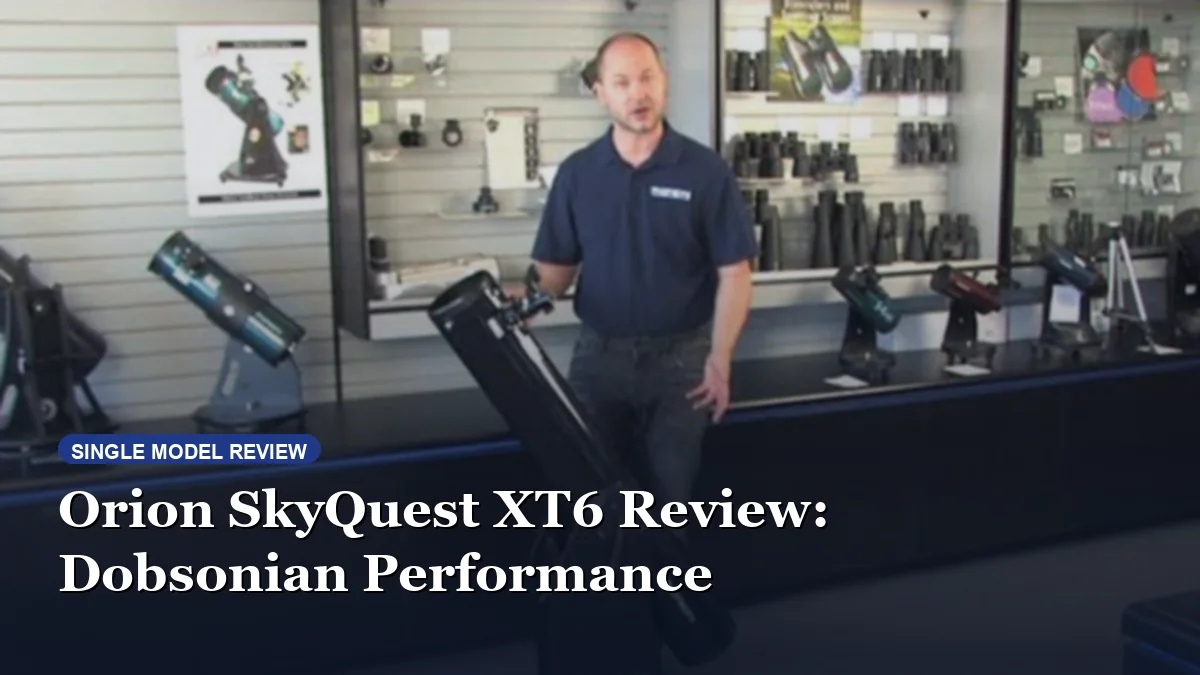
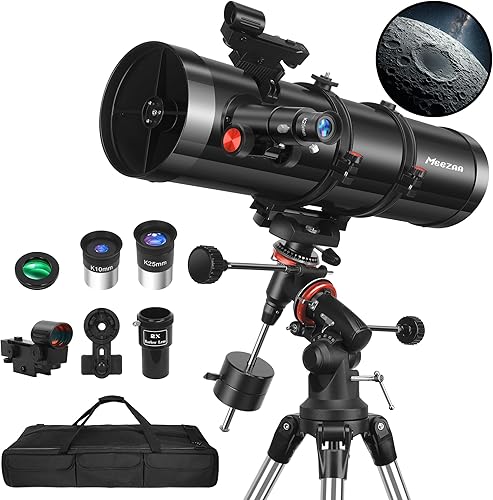
The Orion SkyQuest XT6 balances stellar optical performance with rock-solid mechanical simplicity. It remains a premier choice for beginner planetary and deep-sky observation.
See our flagship Best Telescope: Top Backyard Picks for Astronomy.
Verified Specifications
| Category / Type | Newtonian Reflector |
|---|---|
| Rated Output / Capacity | 150mm Aperture |
| Power / Motor | Manual Altazimuth |
| Build & Materials | Parabolic Glass Mirror |
| Operating Noise | Silent Operation |
| Duty Cycle / Runtime | Unlimited Visual |
| Dimensions & Weight | 35.9 lbs Total |
| Key Safety & Controls | 2-inch Crayford Focuser |
What We Liked
- Excellent optical clarity from a paraboloidal primary mirror.
- Sturdy wooden base eliminates frustrating field vibrations.
- Simple point-and-look operation ideal for novice users.
- Generous 150mm aperture resolves faint deep-sky objects.
- Included 25mm Eyepiece provides sharp wide-field views.
Trade-Offs
- Combined weight exceeds 35 pounds across two pieces.
- Lacks motor-driven tracking for high-magnification astrophotography.
- Long focal length makes the tube bulky in compact cars.
Optical Architecture and Primary Mirror Precision
The Orion SkyQuest XT6 features a precision parabolic primary mirror measuring 150mm across. When evaluating aperture steps, many buyers review our Apertura AD8 vs Orion SkyQuest XT8 comparison to assess upgrade potential.
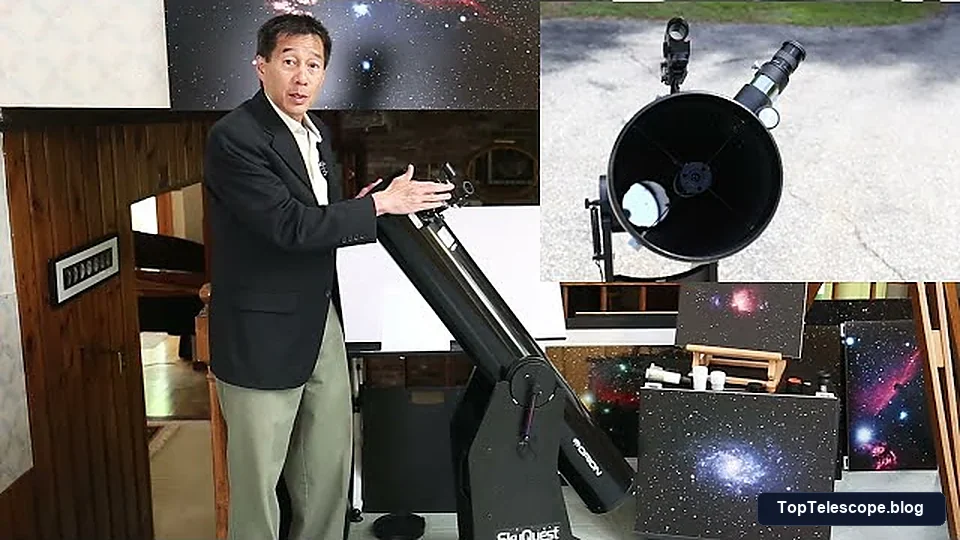
Operating at a focal length of 1200mm with an f/8 focal ratio, this Newtonian design naturally suppresses coma. Users experience exceptionally sharp star fields without requiring costly correcting lenses.
The optical tube assembly features a 150mm parabolic primary mirror crafted from low-expansion borosilicate glass. This 1200mm focal length yields a f/8 focal ratio, delivering sharp planetary views.
Surface accuracy is figured to one-half wave optical wavefront error or better. This precise figure effectively eliminates spherical aberration, ensuring high-contrast lunar terminator shadows and clean splitting of tight double stars.
- 150mm aperture yields deep-sky light grasp.
- f/8 focal ratio controls optical aberrations.
- Parabolic figure eliminates spherical distortion.
Focuser Mechanics and Light Path Integrity
The optical train terminates in a robust 2-inch Crayford focuser that ensures silky-smooth adjustments. An included 1.25-inch adapter accommodates standard eyepiece formats securely without slipping.
Internal tube baffling utilizes flat-black paint to absorb stray light effectively. This engineering choice maximizes contrast when observing faint nebulae against urban light-polluted night skies.
- Crayford design supports heavy accessories.
- Baffling eliminates internal reflections.
Mechanical Rigidity and Altazimuth Base Design
Stability defines the structural integrity of this Dobsonian telescope. It remains a top recommendation within our best Orion telescope for beginners guide due to its smooth CoroTrak altitude bearings.
Teflon pads interact smoothly with laminate surfaces to eliminate jerky movements. Users can easily nudge the optical tube across the night sky while maintaining target lock at high magnifications.
Constructed from compressed particle board with a water-resistant black laminate, the Corriente altazimuth base provides robust mechanical stability. Teflon bearings ensure buttery-smooth azimuth rotation during high-magnification tracking sessions.
Altitude movement relies on CorrecTension friction control springs located on both side bearings. Operators can easily dial in exact tension levels to prevent tube drift when swapping heavy eyepieces or finder scopes.
- Particle board base ensures vibration resistance.
- CoroTrak bearings facilitate smooth manual sweeps.
- Teflon friction pads prevent sudden shifting.
Video Review: First Impression of the Orion SkyQuest XT6 Dobsonian Telescope
Real-World Visual Output and Field Performance
Under dark skies, the 6-inch aperture successfully resolves Messier catalog highlights with stunning clarity. If you need more light gathering, consult our Orion XT8 vs XT10 comparison guide before buying.
Planetary observation yields high-contrast views of Jovian cloud belts and Saturnian rings. The optical system handles up to 300x magnification cleanly when atmospheric seeing conditions remain optimal.
Under dark rural skies, the 6-inch aperture resolves globular clusters like M13 into thousands of individual pinpoint stars. Faint nebulae display distinct structural filaments when paired with a quality broadband light pollution filter.
Planetary observers benefit from the long focal length optical train, which easily sustains magnifications exceeding two hundred times. Atmospheric seeing conditions become the primary bottleneck long before optical limitations are reached.
- Resolves faint Messier catalog deep-sky targets.
- Delivers high-contrast lunar and planetary details.
- Handles high magnification under steady air.
Thermal Management and Optical Efficiency
Newtonian reflectors require thermal acclimation before delivering peak optical performance. Leaving the tube outside for thirty minutes allows the primary mirror to equilibrate with ambient nighttime temperatures.
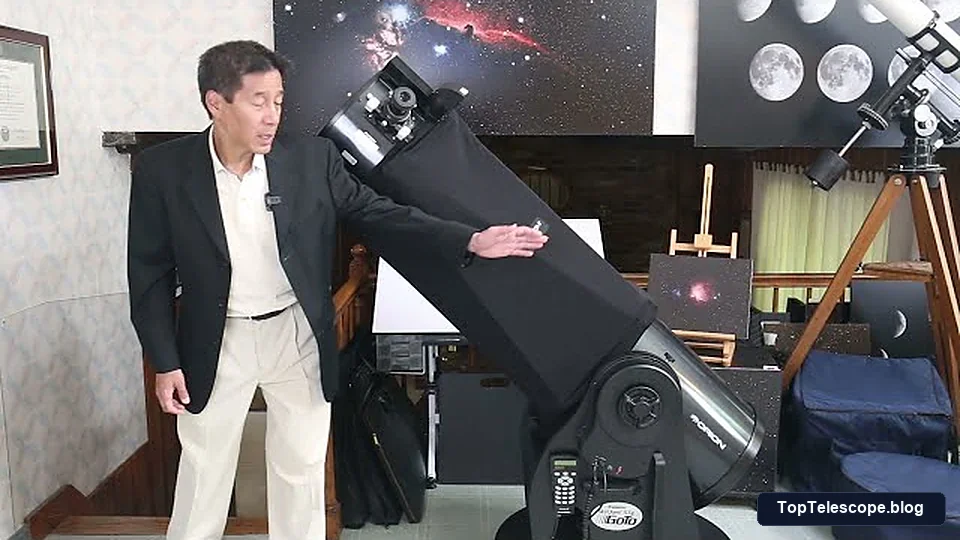
Closed-tube designs inherently trap warm air pockets near the mirror surface. Owners can accelerate cooling times by storing the telescope in an unheated garage or mudroom prior to viewing sessions.
Enclosed steel optical tubes require adequate cooldown time to eliminate internal thermal plumes. Leaving the telescope outside for forty-five minutes prior to viewing guarantees thermal equilibrium with ambient evening temperatures.
Internal baffling consists of matte-black interior paint designed to absorb stray off-axis light. This thoughtful treatment maximizes image contrast by preventing reflections from bouncing off the inner wall surfaces.
- Thirty-minute thermal acclimation window required.
- Closed tube traps internal air pockets.
- Pre-cooling prevents severe image thermal plumes.
Ergonomics, Portability, and Transportability
Weighing roughly thirty-five pounds total, the system splits conveniently into two manageable components. Transporting the heavy optical tube and wooden base requires minimal effort for most adult observers.
Carrying handles integrated directly into the rocker box simplify field transport. However, compact sedan owners should measure trunk clearance carefully due to the 46-inch optical tube length.
Transporting the system requires managing two distinct components: the 18-pound optical tube and the 20-pound wooden base. Both pieces fit easily across the back seat of most compact sedans without requiring disassembly.
Carrying handles integrated directly into the base structure ensure a secure two-handed grip during transport. Users should always cap the primary mirror cell securely before moving the optical tube assembly outdoors.
- Dual-component design splits total system weight.
- Integrated handles improve rocker box portability.
- Long tube requires careful vehicle storage.
Setup, Calibration, and Routine Maintenance
Assembly requires zero specialized tools thanks to ergonomic thumbscrews and locking knobs. Users can transition from trunk storage to fully operational viewing status in under three rapid minutes.
Routine collimation using a laser tool ensures optical alignment remains pristine. Periodic mirror cleaning preserves reflectivity, though infrequent washing prevents accidental coating degradation over years of service.
Routine collimation is performed using a standard cheshire eyepiece or laser tool via rear mirror adjustment screws. Maintaining proper alignment ensures pinpoint stellar imagery remains crisp throughout your entire observing session.
Primary mirrors require infrequent cleaning; always use compressed air and optical grade solvent to remove dust. Avoid touching the delicate reflective aluminum coating to prevent permanent scratching of the glass surface.
- Tool-free assembly takes under three minutes.
- Laser collimator maintains critical optical alignment.
- Infrequent mirror cleaning protects reflective coatings.
Comprehensive Buyer Verdict and System Comparison
This telescope represents an unmatched value proposition for serious beginner astronomers. It prioritizes pure optical aperture and mechanical stability over expensive computerized tracking systems that inflate retail costs.
Skip this model only if you require automated go-to tracking for astrophotography. For pure visual astronomy enthusiasts, the uncompromising optical performance makes it a definitive backyard powerhouse.
Compared to smaller tabletop reflectors, this system offers uncompromised focal reach for serious planetary study. The sturdy rocker box avoids the frustrating vibrations typical of budget equatorial tripod mounting systems.
Serving as an exceptional intermediate instrument, this telescope bridges the gap between portability and deep sky capability. For advanced buyers, our Apertura AD10 vs Orion XT10 showdown details larger options.
- Prioritizes raw optical aperture over electronics.
- Unmatched value for visual astronomy beginners.
- Skip if automated tracking is mandatory.
Frequently Asked Questions
Can this telescope track stars automatically?
No, this model relies entirely on a manual Dobsonian mount for pointing and tracking. You must gently nudge the optical tube by hand to keep objects centered at high magnifications.
Is the telescope suitable for deep-space photography?
It is primarily designed for visual astronomy rather than deep-sky astrophotography. The manual altazimuth base cannot compensate for Earth's rotation during long photographic exposures.
How difficult is it to align the mirrors?
Collimation is a straightforward routine process using simple adjustment screws on the mirror cells. Most users master the procedure in minutes with an affordable laser collimation tool.
Does the package include decent eyepieces?
The manufacturer includes a standard 25mm Sirius Plossl eyepiece for wide-angle viewing. You will likely want to purchase an additional high-magnification eyepiece for planetary exploration later.
Can children use this telescope independently?
Older children and teenagers can operate the system with minimal adult supervision. Younger kids might struggle with the physical height of the eyepiece during zenith observations.