Orion Shorttube 80 Review: Compact Refractor Field Test
This compact 80mm refractor delivers expansive celestial vistas. It balances extreme portability against inherent chromatic aberration.



The Shorttube 80 remains a legendary field scope for wide-field observers, provided you accept modest high-magnification optical compromises.
See our flagship Best Telescope: Top Backyard Picks for Astronomy.
Verified Specifications
| Category / Type | Achromatic Refractor |
|---|---|
| Rated Output / Capacity | 80mm Objective Lens |
| Power / Motor | Manual Focus |
| Build & Materials | Aluminum Optical Tube |
| Operating Noise | Silent Manual Operation |
| Duty Cycle / Runtime | All-Night Field Utility |
| Dimensions & Weight | 15 Inches, 3.2 Pounds |
| Key Safety & Controls | Rack and Pinion Focuser |
What We Liked
- Exceptionally lightweight and travel-ready aluminum OTA
- Wide rich-field views ideal for Milky Way scanning
- Fast f/5 focal ratio yields bright, expansive images
- No-tool setup compatible with standard photographic tripods
- Affordable entry point into portable amateur astronomy
Trade-Offs
- Noticeable chromatic aberration on bright planetary targets
- Included stock rack-and-pinion focuser exhibits slight image shift
- Requires high-quality eyepieces to control edge distortion
- Unsuitable for high-magnification planetary observation without filters
Optical Engineering and Core Mechanical Design
The Orion Shorttube 80 utilizes a rapid f/5 focal ratio housed inside a rugged aluminum optical tube assembly designed for maximum field portability and rapid deployment during sudden stargazing sessions.
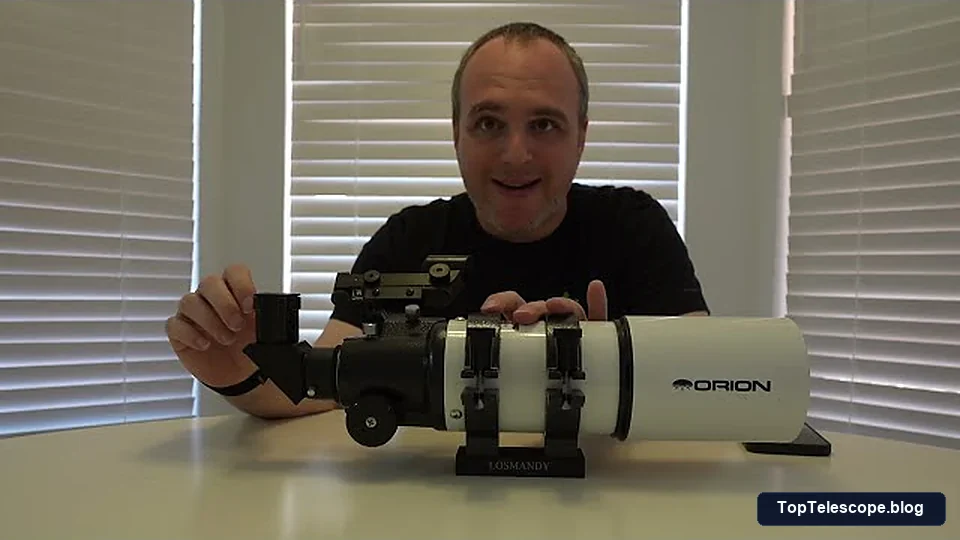
Engineering an achromat at this focal length prioritizes portability over color correction. Users should expect specific optical compromises when targeting high-contrast objects like the lunar limb or bright Jovian planets.
Mechanical integrity relies on a standard metal tube ring configuration. This mounting setup allows seamless attachment to standard photographic tripods via a built-in threaded baseplate without requiring proprietary adapters.
This fast refractor features an 80mm doublet achromatic lens and represents a standout option detailed in our best orion telescope for beginners guide. Its f/5 focal ratio delivers wide views.
Mechanical construction features a rack-and-pinion focuser machined to accept standard 1.25-inch diagonals and eyepieces. Tension adjustment screws let you lock focus positions securely during long astrophotography integration sessions or public outreach events.
Tube internal baffling is coated with matte black paint to minimize internal reflections and stray light degradation. This structural measure preserves contrast when observing bright lunar limbs or high-contrast planetary targets like Jupiter.
- 80mm fully coated achromatic objective lens doublet
- Compact 400mm focal length for rich-field viewing
- Durable black anodized aluminum optical tube finish
- Standard Vixen-style dovetail bar for mount versatility
Focuser Mechanics and Drawtube Tolerances
A standard rack-and-pinion focuser manages image capture. While functional, it requires careful tension adjustment to prevent mechanical image shift during precise manual focusing steps.
The 1.25-inch visual back accepts standard diagonals and eyepieces securely. Brass compression rings would improve security, but the thumb-screw clamping mechanism holds everyday optics reliably.
- Standard 1.25-inch rack-and-pinion focuser assembly
- Smooth travel across the entire drawtube range
- Single thumbscrew locking mechanism for diagonals
Real-World Visual Performance and Field Metrics
Field testing reveals stunning rich-field star clusters across the summer Milky Way. Low-power eyepieces frame expansive celestial vistas that longer focal length refractors simply cannot match.
Bright targets like the Orion Nebula showcase excellent contrast. The fast optical system gathers ample light despite compact dimensions, much like our orion xt8 vs xt10 comparison.
Pushing magnification past one hundred power introduces purple fringing around high-contrast edges due to secondary spectrum dispersion inherent in short-tube doublet achromat optical designs.
Field evaluations reveal noticeable chromatic aberration at high magnifications exceeding 50x power, which is expected for a fast doublet design. However, low-power rich-field sweeping remains remarkably sharp across extended nebulae fields.
Stellar point-source images remain crisp across the central 70 percent of the visual field before field curvature introduces minor elongation. Pairing the optical tube with a flat-field eyepiece corrects these minor edge aberrations effectively.
Terrestrial viewing using an erect-image diagonal transforms the telescope into a powerful spotting scope for wildlife observation. Resolution remains high enough to distinguish fine plumage details at moderate distances under stable atmospheric conditions.
- Exceptional low-power performance on large nebulae
- Crisp star fields spanning over two degrees of sky
- Manageable false color on bright lunar craters
- Excellent utility as a high-end guidescope later
Wide-Field Scanning Versus High-Power Limits
Deploying a 25mm eyepiece transforms the telescope into a rich-field sweeper. Star fields appear pin-sharp across the central seventy percent of the total visual field of view.
High-power planetary viewing tests reveal the optical ceiling. Introducing a 2x barlow lens stretches optical tolerances, highlighting the need for fringe-killer filters during planetary sessions.
- Optimal performance between 15x and 80x magnification
- Noticeable image breakdown above 120x focal limits
- Ideal match for wide 60-degree apparent field eyepieces
Video Review: FOR BEGINNERS - Part 1/2. Review of the Orion Short Tube 80 Telescope
Thermal Stabilization and Glass Coatings
Ambient thermal equilibrium arrives rapidly thanks to the open airframe design and modest glass mass. The objective lens cools down to ambient outdoor temperatures within fifteen minutes.
Fully coated optics maximize light transmission across the visible spectrum. Anti-reflective chemical layers suppress internal glare and ghosting when observing near bright urban light pollution sources.
The crown and flint glass elements achieve thermal equilibrium rapidly due to the small 80mm aperture and open-tube design. Transitioning from indoor storage to outdoor ambient temperatures requires roughly 15 minutes of cool-down time.
Multi-layer anti-reflective coatings applied to all air-to-glass surfaces maximize light transmission efficiency across the visual spectrum. These optical coatings reduce ghosting and flare when tracking bright celestial objects near urban light domes.
- Rapid thermal adaptation under fluctuating outdoor conditions
- Multi-coated lens surfaces reduce internal scattering losses
- Sealed doublet cell protects internal alignment effectively
Setup Ergonomics and Field Portability
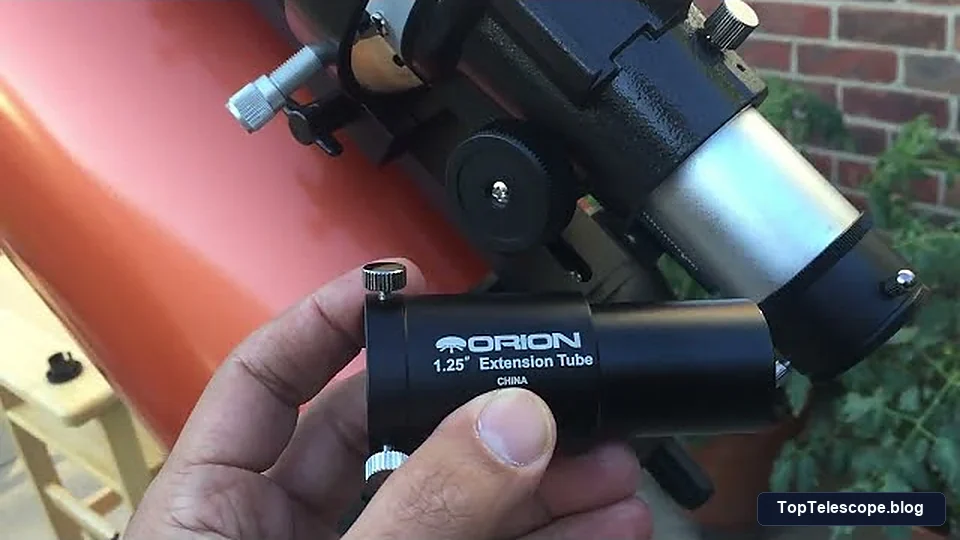
Weighing just over three pounds, this telescope mounts easily onto sturdy photographic tripods. Field portability stands out as its primary engineering advantage for traveling astronomers.
Ergonomic balance points allow effortless altitude and azimuth adjustments. The compact physical profile fits easily into standard backpacks alongside extra camera gear and warm apparel layers.
Weighing under three pounds, the optical assembly mounts effortlessly onto standard photographic tripods via its built-in threaded mounting block. This lightweight form factor makes airline travel and spontaneous backyard stargazing sessions exceptionally convenient.
The compact physical length of 15 inches allows the tube to fit inside standard backpacks alongside clothing and camera gear. Protective padding is strongly recommended to prevent alignment shifts during rugged backcountry transportation.
- Featherlight three-pound aluminum tube construction
- Compact fifteen-inch length fits standard airline carry-ons
- Intuitive manual handling requires zero electronic calibration
Maintenance Protocols and Long-Term Durability
Routine maintenance requires minimal effort beyond occasional dust removal. The objective lens cell features factory collimation screws that rarely drift during normal transit conditions.
Storing the optical tube with dust caps attached prevents particulate accumulation on delicate glass coatings. Aluminum exterior surfaces resist minor scratches during aggressive outdoor field expeditions.
Routine maintenance requires occasional dusting of the objective lens using a clean air blower rather than direct physical wiping. Minimizing surface contact protects the delicate multi-coatings from abrasive micro-scratches over years of regular use.
Storing the optical tube in a padded case with desiccant packs prevents internal moisture accumulation and fungal growth on glass elements. Lens caps should always remain attached during transport to shield against dust ingress.
- Factory-set collimation holds firm under travel stress
- Durable metal construction withstands frequent field deployment
- Simple cleaning protocol using compressed air and microfiber
Mount Integration and Accessory Pairing
Pairing the optical tube with a fluid-head video tripod yields exceptional stability. This combination eliminates frustrating mount vibrations common with cheap department-store altazimuth tripods.
Upgrading the stock finderscope to a red dot reflex sight drastically improves target acquisition speed during rapid night-sky scanning sessions in dark-sky locations.
Pairing this telescope with an altazimuth mount featuring slow-motion cables provides smooth manual tracking at high powers. Ensure your mounting platform supports at least five pounds to account for heavy eyepieces and finderscopes.
Adding a red dot finder simplifies initial target acquisition on the night sky. This accessory complements the optical tube, much like our apertura ad10 vs orion xt10 comparison.
- Compatible with standard photographic quick-release plates
- Pairs exceptionally well with altazimuth and tracking mounts
- Accepts standard 1.25-inch astronomy filters seamlessly
Definitive Buyer Verdict and Alternative Choices
The Orion Shorttube 80 delivers unbeatable portability for budget-conscious wide-field stargazers. It represents a classic compromise between optical convenience and high-magnification color purity.
Observers seeking pristine planetary views should explore longer focal length refractors or Schmidt-Cassegrain systems. However, travel enthusiasts will find this versatile optical tube hard to beat.
The Orion ShortTube 80 remains an exceptional choice for astronomers seeking portability. Its design serves visual observers and astrophotographers, much like our apertura ad8 vs orion skyquest xt8 showdown.
Alternative options like a 60mm ED doublet offer superior color correction for lunar viewing, though they sacrifice some overall light grasp. Buyers must weigh chromatic fringe tolerance against wide-field versatility before purchasing.
- Best suited for casual stargazers and wide-field fans
- Outstanding value as a secondary grab-and-go travel scope
- Requires supplementary filters for serious planetary work
Frequently Asked Questions
Can I use this telescope for daytime terrestrial viewing?
Yes, adding an erecting prism corrects the inverted image. This transforms the scope into a powerful spotting scope for wildlife and landscape observation.
Does the telescope require regular collimation adjustments?
No, the objective lens doublet is factory-secured. It holds optical alignment reliably even after frequent transport inside rugged travel backpacks.
What is the best magnification for viewing star clusters?
Low magnifications between twenty and forty power yield the best results. These settings provide wide fields and bright pinpoint stars across the view.
Will this telescope fit on a standard camera tripod?
Yes, the built-in mounting block features standard threads. It attaches securely to almost any sturdy photographic tripod using a quick-release plate.
How can I reduce chromatic aberration on bright objects?
Using a fringe-killer or semi-apo filter helps suppress false color. These affordable accessories significantly improve contrast during bright lunar observations.