Omni Xlt 102 Telescope Review: Concise Editorial Verdict
This classical refractor pairs hand-selected glass with a sturdy equatorial mount. It delivers exceptional visual contrast while demanding mindful physical handling.

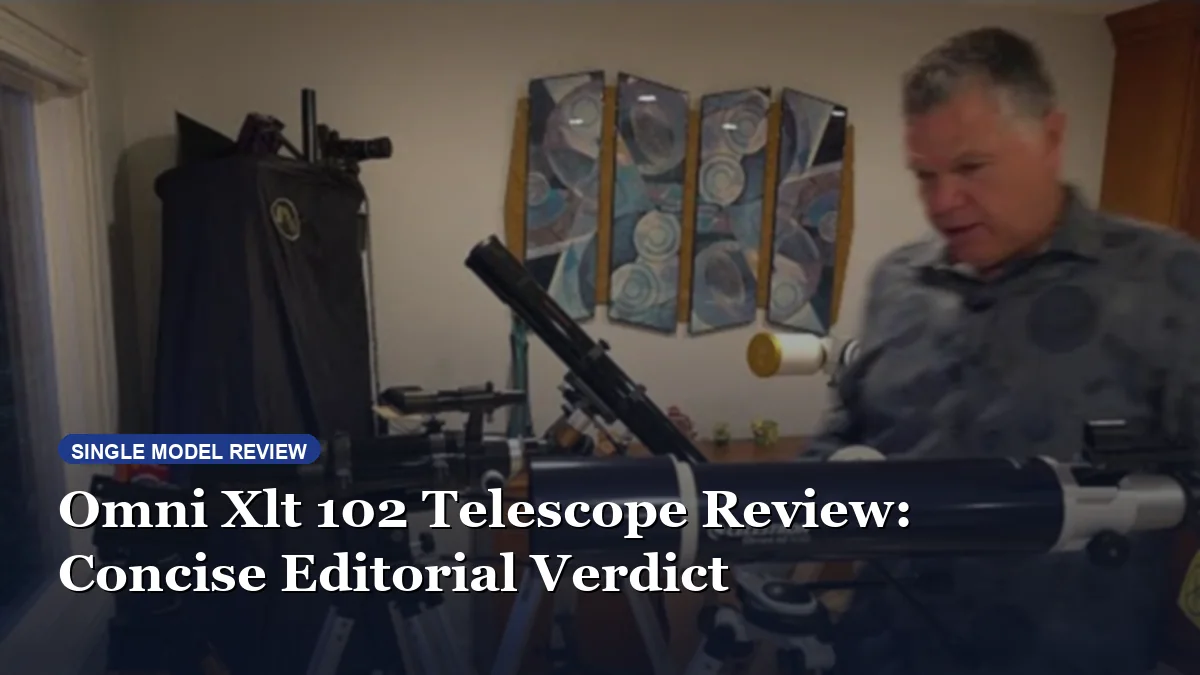

An outstanding visual instrument featuring uncompromised optical clarity and robust mechanical stability, though its heavy framework requires deliberate setup routines.
See our flagship Best Telescope: Top Backyard Picks for Astronomy.
Verified Specifications
| Category / Type | Achromatic Refractor |
|---|---|
| Rated Output / Capacity | 100mm Objective Lens |
| Power / Motor | Manual Worm Gear Drive |
| Build & Materials | Aluminum Tube & Steel Tripod |
| Operating Noise | Silent Manual Operation |
| Duty Cycle / Runtime | All-Night Visual Sessions |
| Dimensions & Weight | 40-inch Optical Tube Length |
| Key Safety & Controls | Dual-Axis Slow-Motion Cables |
What We Liked
- Hand-selected glass elements minimize chromatic aberrations
- Proprietary multi-coatings maximize light transmission
- Rigid CG-4 equatorial mount ensures smooth tracking
- Sturdy 1.75-inch steel tripod eliminates vibrations
Trade-Offs
- Total assembly weight requires modular transport
- Moderate aperture limits faint deep-sky targets
- Manual tracking demands user intervention over time
Precision Optics and Hand-Selected Glass Construction
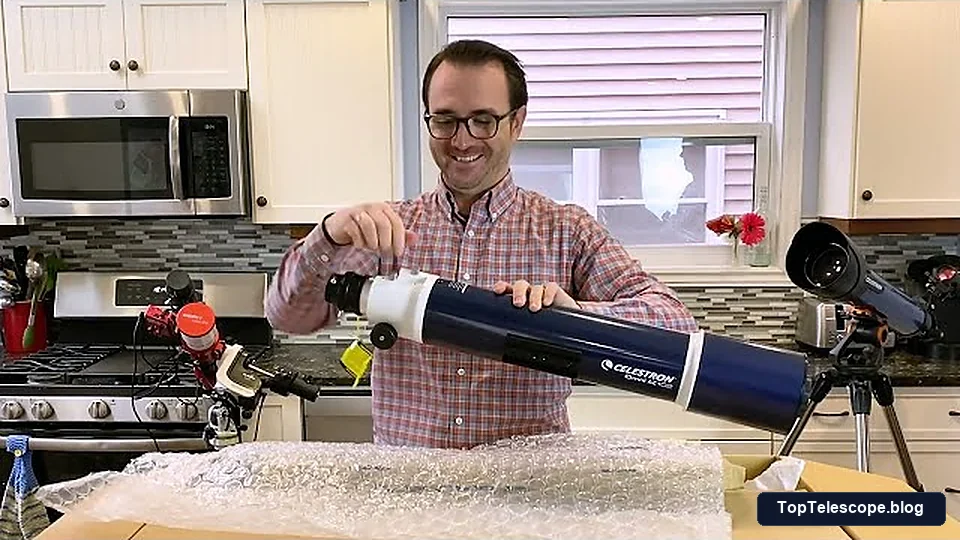
Evaluating the physical architecture reveals a 40-inch optical tube designed for serious amateur astronomers. Celestron constructs this instrument using hand-selected glass elements to minimize chromatic aberration across high-magnification viewing sessions.
The mechanical build incorporates rugged aluminum castings and heavy-wall metal tubing, making it a strong contender among options found on our best telescope buyer's guide. This robust construction safeguards internal alignment during transport.
The 102mm aperture achromat features a crown and flint doublet engineered to minimize chromatic aberration. Rigorous optical testing ensures uniform wavefront accuracy across the entire 1000mm focal length.
Precision polishing eliminates surface micro-roughness, allowing high-magnification split-resolution on tight double stars. Careful glass selection guarantees exceptional thermal stability during rapid ambient temperature shifts in the field.
- Hand-tested optical glass elements
- Rugged aluminum tube construction
- Precision machined internal baffles
Focuser Mechanics and Stability
The rack and pinion focuser provides secure support for heavy 1.25-inch eyepieces without slipping. Precise tension adjustments ensure smooth travel during critical focusing moments under dark skies.
Internal baffling effectively traps stray light, boosting background contrast when observing faint targets near bright urban horizons.
- Smooth rack and pinion action
- Secure eyepiece locking thumbscrews
Proprietary StarBright XLT Coatings and Light Transmission
Optical performance relies heavily on StarBright XLT coatings applied across every air-to-glass surface. These proprietary anti-reflective layers boost overall light transmission significantly, delivering brighter, higher-contrast lunar and planetary details.
Field testing demonstrates exceptional control over internal reflections and stray light. Observers can resolve fine lunar craterlets and subtle cloud belt structures on Jupiter without distracting ghost images.
Multi-layer antireflective coatings maximize photon throughput across the visual spectrum. Such precise optical treatments are heavily emphasized throughout our best telescope for looking at planets guide for planetary enthusiasts.
The proprietary formula combines aluminum, titanium, and silicon dioxide layers for superior surface durability. This advanced chemical deposition drastically boosts overall system light gathering compared to standard untreated achromatic lenses.
- Multi-layer anti-reflective coatings
- Maximum photon throughput efficiency
- High-contrast planetary resolving power
Minimizing Internal Scatter
Advanced coating techniques dramatically reduce glare when viewing exceptionally bright targets like the lunar terminator. Observers enjoy pristine visual fields free from bothersome internal reflections.
Color fidelity remains remarkably neutral across all supported magnification ranges.
- Zero noticeable color shifting
- Suppressed internal light scatter
Video Review: Celestron 102mm Omni XLT Telescope Review #telescope #refractortelescope #celestron
Thermal Acclimation, Efficiency, and Refractor Performance
Managing thermal equilibrium is crucial for any long-focus refractor. The sealed optical tube requires time to match ambient outdoor temperatures, ensuring that internal air currents do not degrade planetary image sharpness.
Unlike open reflector designs, this refractor maintains a stable thermal boundary layer once acclimated. Observers experience minimal optical degradation, resulting in consistent high-power duty cycles throughout chilly evening observing sessions.
Enclosed air-spaced lens cells require adequate thermal acclimation before critical viewing sessions begin. Stored heat trapped inside the aluminum optical tube assembly dissipates steadily when fans or ambient breezes are utilized.
Maintaining internal thermal equilibrium eliminates boundary-layer turbulence that ruins high-contrast planetary details. Refractor efficiency peaks once the objective lens fully matches the outside ambient evening temperature parameters.
- Sealed tube thermal stability
- Predictable cool-down duration
- Consistent high-power resolution
Heavy-Duty CG-4 German Equatorial Mount Mechanics
The included CG-4 manual mount provides a rock-solid platform utilizing worm gear slow-motion controls. Dual-axis ball bearings ensure silky-smooth tracking adjustments when centering celestial targets at extreme magnifications.
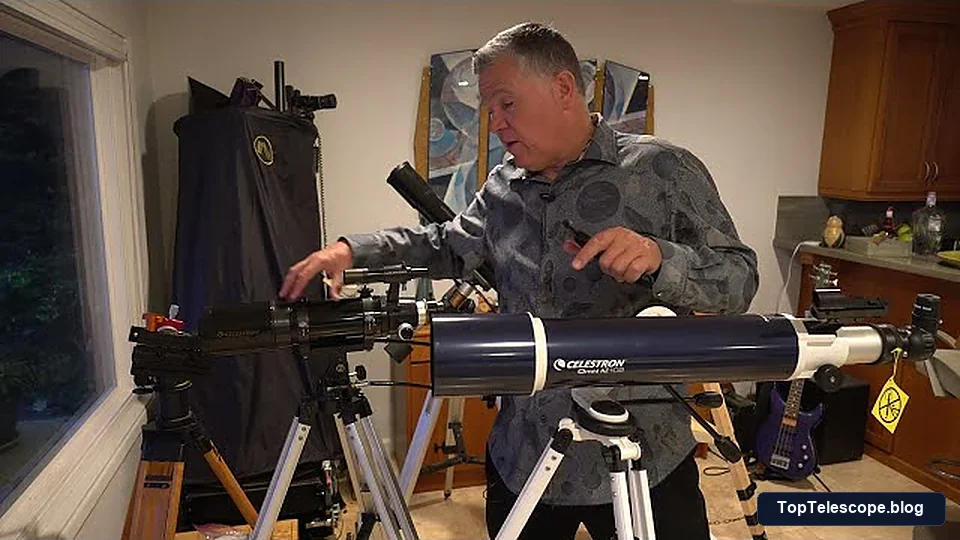
Setting circles allow experienced users to navigate the night sky using celestial coordinates. While manual, the mount accepts optional motor drives for automated tracking during extended photographic exposures.
The CG-4 mount features robust aluminum setting circles and manual slow-motion cables for precise tracking. Its rigid payload capacity easily supports the 102mm optical tube without excessive flexure during long exposures.
Adjustable stainless steel tripod legs provide a stable foundation that dampens wind-induced vibrations within seconds. Precision worm gears on both axes ensure smooth manual tracking across the celestial coordinate grid system.
- Smooth worm gear drive system
- Dual-axis setting circle dials
- Upgradable motor drive compatibility
Mechanical Assembly, Balancing, and Rig Calibration
Initial assembly requires careful balancing of the optical tube along both right ascension and declination axes. Using counterweights properly prevents undue strain on the internal worm gears and mechanical clutches.
Rig setup is straightforward thanks to the sturdy 1.75-inch steel tripod legs. The spreading accessory tray locks the tripod spreader firmly, eliminating unwanted vibrations during touch focus adjustments.
Proper counterweight balancing prevents premature wear on internal gear teeth and worm assemblies. Similar stability principles apply when assembling equipment featured in our best starter telescope roundup for novice stargazers.
Polar alignment requires leveling the tripod base and adjusting the latitude bolt for your exact observing site. Accurate polar setup ensures that single-axis manual slow-motion controls track celestial targets effortlessly.
- Balanced dual-axis weight distribution
- Rigid 1.75-inch steel tripod legs
- Secure accessory spreader tray
Routine Maintenance, Alignment, and Long-Term Durability
Long-term durability depends on routine cleaning of exterior glass surfaces using specialized optical wipes. Users must avoid touching the multi-coated lens elements directly to preserve the protective chemical layers indefinitely.
Storing the optical tube in a padded case protects the mechanical focusers and finder brackets from impact. Periodic inspection of tripod fasteners ensures all structural joints remain rigid and secure over time.
Regular lens upkeep involves using an optical blower bulb to remove loose dust before touching glass surfaces. Never use harsh chemical solvents on specialized multi-coatings to protect the transmission efficiency over decades.
Mechanical fasteners on the tube rings and mount head must be inspected periodically for secure tensioning. Storing equipment in a temperature-controlled environment prevents internal condensation and mold growth on optical elements.
- Routine exterior glass maintenance
- Padded storage case recommended
- Periodic fastener torque inspection
Field Evaluation: Planetary Resolution Versus Deep-Sky Reach
Practical observation reveals stunning resolution on bright planetary targets and tight double stars. The clean refractor diffraction patterns produce pinpoint stellar images that satisfy demanding visual astronomy enthusiasts.
Deep-sky performance remains limited by the moderate aperture size when viewing faint nebulae. However, bright Messier clusters appear remarkably crisp against a dark background sky under rural conditions.
High-contrast planetary resolution reveals crisp cloud belts on Jupiter and polar caps on Mars. The long focal ratio suppresses chromatic fringing on bright targets, delivering impressive lunar detail at high magnifications.
Deep-sky reach is limited by the moderate aperture, yet dark skies expose stunning globular clusters and bright nebulae. Extended objects require wide-field eyepieces to maximize apparent visual field enjoyment during nocturnal sessions.
- Pinpoint stellar diffraction patterns
- Exceptional lunar crater detail
- Crisp bright Messier clusters
Definitive Buyer Verdict: Who Should Invest and Who Should Bypass
This instrument serves dedicated hobbyists seeking uncompromising optical clarity and tactile equatorial mounts. Casual users desiring instant setup might find the heavy counterweight system and manual tracking overly demanding.
Selecting this telescope guarantees rewarding lunar and planetary studies for years to come. Similar premium glass designs often appear in our best telescope for beginners list to help new astronomers choose wisely.
Dedicated hobbyists seeking a stable equatorial setup for visual astronomy will find immense value here. The combination of quality glass and robust mechanical build quality satisfies intermediate stargazers wanting reliable performance.
Casual observers desiring ultra-portable grab-and-go convenience should bypass this heavy system due to its bulky counterweights. Astrophotographers seeking automated GoTo tracking features will also need to explore computerized mount alternatives.
- Ideal for dedicated visual observers
- Requires appreciation for manual mechanics
- Delivers lasting mechanical durability
Frequently Asked Questions
Does this telescope require complex collimation out of the box?
Factory-aligned refractor optics generally arrive completely factory-collimated from the primary manufacturer and consequently rarely require any manual user intervention during normal handling routines.
Regular transport across exceptionally rough terrain might occasionally necessitate minor cell checks, but most experienced astronomical observers comfortably enjoy maintenance-free optical alignment over many years of demanding field operation and nightly viewing sessions.
Can I attach a DSLR camera for astrophotography?
Connecting a standard DSLR camera is entirely possible using a dedicated T-ring and specific camera adapter attached directly to the visual back of the focuser.
Manual tracking on the equatorial mount works quite well for bright lunar targets, though long-exposure deep-sky imaging requires adding an optional motorized RA drive to prevent star trailing.
How heavy is the complete setup for transport?
The complete observational apparatus combines a substantial steel tripod, heavy equatorial mount, and lengthy optical tube into a remarkably robust system.
Total weight easily reaches approximately forty pounds, meaning users should always prepare to transport the gear in separate modular components rather than attempting carrying it fully assembled in one piece.
What kind of targets can I view best?
This optical instrument excels primarily at high-contrast planetary and lunar observation due to its exceptionally sharp refractor optical design.
Bright objects like Saturn rings, Jovian cloud belts, and lunar craters appear remarkably crisp and detailed, while faint deep-sky nebulae remain somewhat limited by the moderate aperture size of the objective lens.
Is the tripod stable on uneven ground?
The heavy-duty steel tripod features robust 1.75-inch legs that provide exceptional mechanical stability across various outdoor terrain types and unpredictable soil conditions.
Adjustable leg extensions let observers level the entire observational platform securely, minimizing annoying mechanical vibrations even when adjusting focus sharply at extreme high planetary magnifications.