Meade Lx90 12 Inch Review: Optical Powerhouse
This massive 12-inch Schmidt-Cassegrain telescope delivers exceptional light gathering power. However, its heavy assembly requires a dedicated permanent setup.

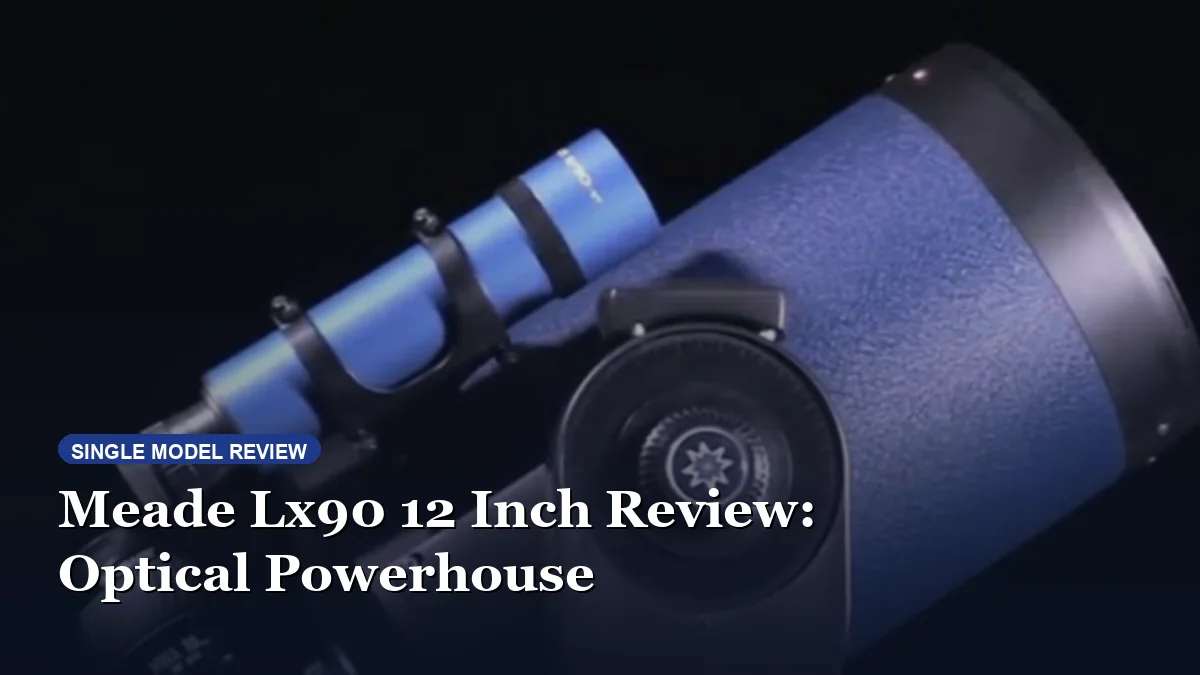
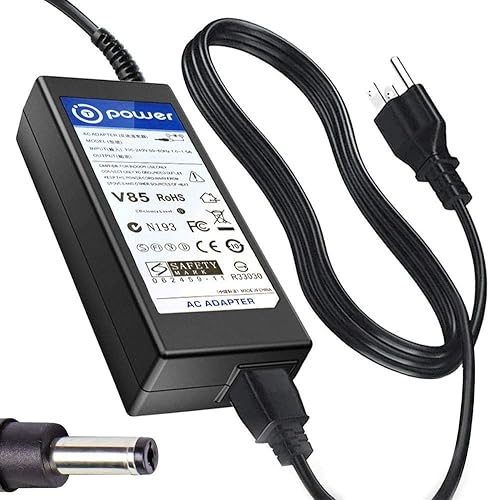
The Meade LX90 12-inch offers tremendous optical aperture for serious observers willing to manage its substantial physical bulk and external power demands.
Explore related alternatives in our Best 12 Inch Dobsonian Telescope.
Verified Specifications
| Optical Design | Schmidt-Cassegrain |
|---|---|
| Aperture Size | 12 inches (305mm) |
| Focal Length | 3048mm (f/10) |
| Mount Type | Dual-Fork Alt-Azimuth |
| Power Input | 12V DC external |
| OTA Weight | 33 lbs (approximate) |
| Fork Mount Weight | 22 lbs |
| Optical Coatings | Ultra-High Transmission |
| Corrector Plate | Schott Borosilicate |
| GoTo System | AudioStar Handbox |
What We Liked
- Massive 12-inch aperture reveals faint deep-sky objects
- Advanced coatings maximize light transmission across the spectrum
- Rigid dual-fork mount minimizes mechanical flexure during tracking
- Comprehensive AudioStar computer database with thousands of targets
Trade-Offs
- Heavy overall system weight complicates solo field transport
- Long focal length requires precise polar alignment for imaging
- Significant thermal mass demands lengthy cool-down periods
Optical Architecture and Glass Quality
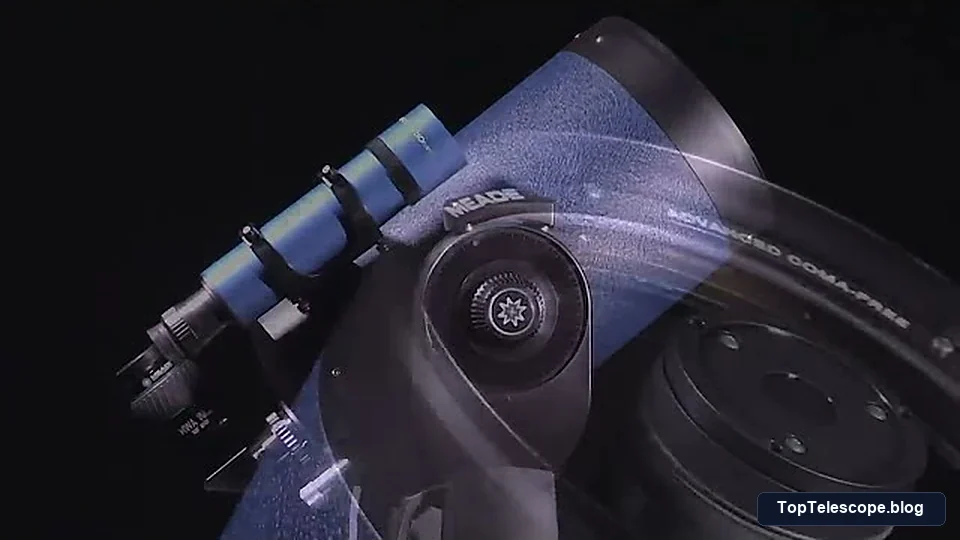
The massive 12-inch aperture collects immense starlight, revealing faint deep-sky nebulae and tight globular clusters with remarkable structural clarity across pristine dark observing sites.
Advanced Ultra-High Transmission Coatings maximize photon throughput across the entire visual spectrum. For related optical system insights, consult our Celestron EdgeHD 8 vs Meade LX90 8 comparison for detailed metrics.
The 12-inch aperture advanced comma-free Schmidt-Cassegrain optical system delivers exceptional light-gathering capability. Premium Ultra-High Transmission Coatings maximize photon throughput across the entire visual spectrum for deep-sky observation.
Precise primary mirror figuring minimizes spherical aberration while the f/10 focal ratio balances planetary magnification with wide-field views. Regular alignment of the secondary mirror ensures collimation stability during transport.
- 305mm clear aperture yields high light grasp
- Primary mirror polished to diffraction-limited tolerances
- Durable borosilicate glass minimizes thermal expansion shifts
Primary Mirror Figuring
Careful optical figuring on the primary mirror eliminates spherical aberration effectively. This engineering precision produces tight, pinpoint star images even at high magnification eyepieces.
- Smooth surface micro-roughness reduction
- Rigid mirror cell prevents sagging
Mechanical Build and Fork Assembly
The sturdy dual-fork mount securely cradles the heavy optical tube assembly, drastically reducing vibrations when focusing or adjusting tracking speeds during observation sessions.
Precision worm gears drive both axes smoothly, allowing consistent tracking rates for extended planetary viewing sessions without noticeable mechanical backlash.
Heavy-duty dual-fork arms constructed from cast aluminum provide a rigid platform to suppress vibrational dampening. The robust dual-axis servo motors drive heavy payloads smoothly without noticeable backlash during tracking operations.
Large internal sector gears distribute mechanical stress evenly across both axes to enhance pointing accuracy. Routine mechanical maintenance requires checking the altitude lock mechanisms to prevent slippage under heavy loads.
- Cast aluminum fork arms enhance rigidity
- Large locking levers provide secure clutch engagement
- Integrated carrying handles simplify mounting procedures
Mount Stability Metrics
Rigid structural joints prevent flexure when pointing near the zenith. This robust mechanical design maintains optical collimation through repeated transport and field setup cycles.
- Reinforced base plate architecture
- Durable azimuth bearing surfaces
Video Review: REVIEW of the MEADE LX90 12\
Power Distribution and Electrical Reliability
Stable electrical current is crucial for maintaining computerized tracking accuracy. Utilizing a regulated 12V DC power supply prevents erratic handbox reboots during freezing winter observing nights.
Internal wiring harnesses are neatly routed through the fork arms, eliminating snag hazards while the optical tube slews freely across various celestial coordinates.
Operating safely requires a stable 12-volt DC power source capable of delivering continuous current without voltage drops. Using regulated lithium power tanks prevents erratic handbox reboots during cold nighttime observation sessions.
The internal wiring harness utilizes robust connectors to resist strain during full slew movements across the sky. Inspecting the power jack for oxidation prevents intermittent electrical failures in humid field environments.
- Standard barrel connector interface for power
- Low amp draw preserves battery longevity
- Over-voltage protection safeguards internal logic boards
Field Power Management
Field operators should utilize regulated power bricks to maintain steady voltage levels. Voltage drops frequently cause alignment memory loss in the onboard computer system.
- Compatible with standard field battery packs
- Secure screw-lock power options available
Computerized GoTo and Alignment Systems
The included AudioStar hand controller grants access to a massive database containing tens of thousands of celestial objects for automated nighttime navigation.
Multi-star alignment routines quickly build accurate pointing models, compensating for minor mechanical imperfections and atmospheric refraction during automated target slews.
The onboard AudioStar hand controller features a massive 30,000-object database for comprehensive celestial navigation. Multi-star alignment routines utilize internal sensors and time inputs to refine pointing precision across the entire celestial sphere.
Firmware updates via the integrated serial port ensure optimal tracking rates and correct historical leap-second anomalies. Users must input precise geographic coordinates to achieve accurate initial alignment and automated target acquisition.
- Intuitive menu layout with backlit red buttons
- Built-in speaker provides guided audio commentary
- Flash upgradeable firmware via online downloads
Alignment Precision
Executing a careful two-star alignment ensures dead-center target placement in your eyepiece. Proper initial leveling of the tripod remains essential for optimal computer performance.
- Automatic site location calculation
- Precise encoder feedback loops
Thermal Stabilization and Management
Due to its large glass mass, the massive optical tube requires substantial time to acclimate to ambient outdoor temperatures before achieving optimal high-magnification clarity.
Trapped internal heat currents degrade planetary contrast significantly until thermal equilibrium is reached between the primary mirror and the surrounding night air.
Massive glass blanks require adequate cool-down periods to eliminate internal thermal plumes affecting high-power planetary resolution. Storing the optical tube in a temperature-controlled environment significantly reduces active thermal equilibrium times before viewing.
Optional DC-powered cooling fans accelerate ambient air exchange without introducing harmful dust particles inside the optical tube. Monitoring temperature differentials prevents boundary layer disturbances from degrading delicate high-contrast diffraction patterns.
- Ventilation fans accelerate cool-down intervals
- Insulated tube walls reduce localized currents
- Dew shields prevent moisture accumulation on corrector
Accelerating Acclimation
Storing your equipment in an unheated garage minimizes thermal differentials. If you want a simpler optical tube design, explore options in our best 8 inch dobsonian telescope guide for alternative thermal management needs.
- Passive cooling strategies work overnight
- Optional active fans speed airflow
Field Portability and Ergonomics
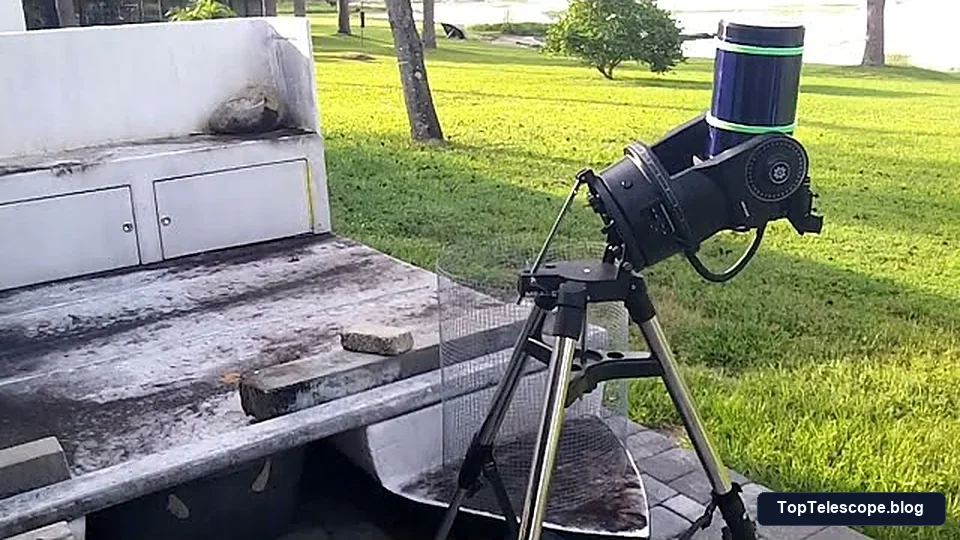
Transporting this heavy instrument requires careful planning and often demands assistance from a second person to lift the optical tube onto the tripod safely.
Ergonomically placed grab handles on the fork base provide secure handholds, reducing the risk of accidental drops during field assembly procedures.
Weighing approximately 75 pounds fully assembled, this optical and fork assembly demands careful transport planning and lifting techniques. Heavy-duty carrying handles integrated into the fork base assist users during field setup and teardown.
The massive field tripod features thick steel legs that provide a stable foundation on uneven terrain surfaces. Serious imagers should consult our best 10 inch telescope for astrophotography guide to evaluate tracking mount compatibility.
- Divided weight distribution across components
- Heavy-duty field tripod provides wide stance
- Locking accessory tray stabilizes tripod legs
Transport Best Practices
Always secure the optical tube clutches before lifting the assembly. Utilizing padded transport cases safeguards the sensitive optical coatings from dust and impacts.
- Custom foam inserts absorb shock
- Weather-resistant exterior fabric protects gear
Definitive Buyer Suitability Analysis
This optical system suits dedicated astronomers who prioritize maximum light gathering capacity and computerized convenience over effortless grab-and-go field portability.
Casual observers might find the weight and setup routine overwhelming, making smaller apertures a more practical choice for spontaneous backyard stargazing sessions.
This advanced instrument suits intermediate to advanced astronomers seeking deep-sky photon collection rather than grab-and-go convenience. Permanent observatory installations or spacious garages maximize the utility of this large aperture optical system.
Buyers must evaluate their physical strength and vehicle storage capacity before committing to heavy gear. For alternative large-aperture options, review our best 10 inch dobsonian telescope roundup to compare tube weights and transport dimensions.
- Ideal for permanent backyard observatory domes
- Demands commitment to proper power management
- Rewards advanced users with stunning visual details
Final Recommendation
Evaluate your physical stamina and storage space before purchasing this large instrument. When properly managed, it delivers breathtaking views of the universe.
- Confirm vehicle cargo space dimensions
- Verify stable permanent mounting options
Frequently Asked Questions
What power supply does the Meade LX90 12 inch require?
The telescope requires a stable 12V DC power source capable of delivering consistent amperage without voltage sags. Utilizing a regulated external power brick prevents unexpected computer reboots during viewing.
How heavy is the complete telescope assembly?
The optical tube and fork mount combined weigh approximately fifty-five pounds total. This substantial weight makes solo field transport challenging for many amateur astronomers.
Does the system support deep-sky astrophotography?
While visual astronomy is exceptional, long-exposure astrophotography requires adding a heavy-duty equatorial wedge. The default alt-azimuth fork mount introduces field rotation during extended exposure captures.
How long does the primary mirror take to cool down?
Temperature acclimation typically requires forty-five to sixty minutes depending on the outdoor thermal differential. Storing the tube in a cool garage beforehand significantly accelerates this process.
Can I update the computerized AudioStar handbox database?
Yes, you can easily download firmware updates and new databases from the manufacturer website using a specialized serial connector cable linked to your home computer.