Meade Lx200 12 Inch Review: High-Performance Aperture Giant
The Meade LX200 12-inch delivers massive light-gathering power and precise computerized tracking for serious astronomers. However, its substantial weight and physical dimensions require dedicated transport and careful setup.

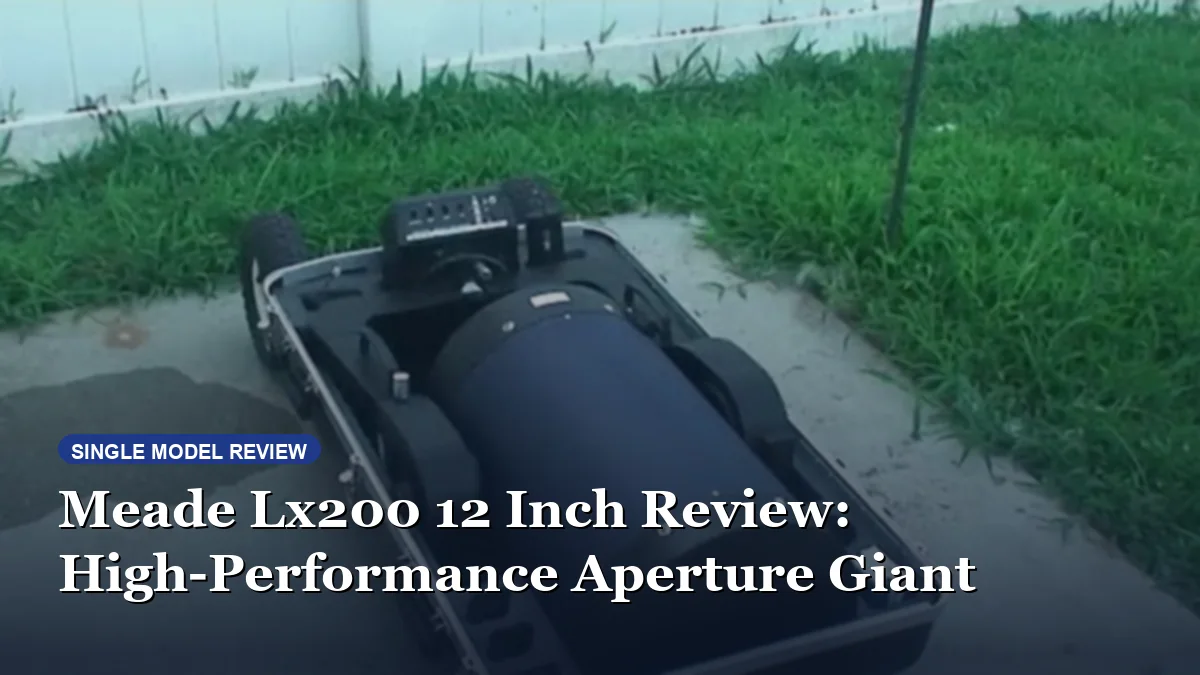

This advanced Schmidt-Cassegrain telescope offers professional-grade optical performance and robust GoTo automation. It is best suited for committed backyard astronomers who prioritize uncompromising aperture over effortless portability.
See our flagship Best Telescope: Top Backyard Picks for Astronomy.
Verified Specifications
| Category / Type | Schmidt-Cassegrain GoTo Telescope |
|---|---|
| Rated Output / Capacity | 305mm Optical Aperture |
| Power / Motor | 12V DC Micro-Stepper Motors |
| Build & Materials | Aluminum Optical Tube and Fork Base |
| Operating Noise | Low-decibel quiet sidereal tracking |
| Duty Cycle / Runtime | Continuous operation via external power |
| Dimensions & Weight | Heavy-duty dual-fork system (>45kg total) |
| Key Safety & Controls | Manual Primary Mirror Locking Mechanism |
What We Liked
- Massive 12-inch aperture reveals faint deep-sky structures
- Advanced SmartFinder alignment streamlines setup routines
- Rigid dual-fork mounting base minimizes vibration decay
- Manual mirror lock eliminates image shift during focusing
Trade-Offs
- Exceptionally heavy system requires two-person handling
- Demands a high-capacity external power supply for motors
- Substantial cool-down time needed for large glass optics
Optical Architecture and Advanced Tube Design
The Meade LX200 12-inch features a sophisticated Advanced High Transmission Coatings optical system. This Schmidt-Cassegrain design delivers exceptional light gathering capability for deep-sky observation and detailed planetary imaging sessions.
Encased in a sturdy aluminum tube assembly, the optics maintain collimation remarkably well. Heavy-duty internal baffling suppresses stray light reflections, maximizing contrast across faint stellar targets and high-magnification lunar features.
The Advanced High-Definition Optics design utilizes a large aperture similar to our best 10 inch dobsonian telescope selections. This configuration minimizes spherical aberration and coma across a wide photographic field.
Ultra-low expansion glass substrates maintain surface figure stability during rapid temperature drops. Internal baffling reduces stray light reflection, significantly increasing contrast when observing faint planetary details and deep-sky nebulae.
- 3048mm focal length provides high magnification potential
- Aperture diameter measures a generous 305 millimeters
- Ultra-low expansion primary mirror glass minimizes thermal distortion
Primary Mirror Locking Mechanism
Heavy primary mirrors can shift during focusing, causing image jump. Meade integrated a manual mirror lock mechanism to secure the primary optic firmly against the rear cell during long exposures.
Engaging this robust control completely eliminates image shift when transitioning between coarse focus adjustments and fine-tuning your target through the oversized micro-focuser knob.
- Secures heavy optical glass against mechanical play
- Essential for stable astrophotography framing routines
Mount Mechanics and GoTo Tracking Precision
Operating on a heavy-duty dual-fork arm structure, the mounting base provides exceptional physical stability. The massive casting minimizes vibrational decay times when handling high winds or manual accessory adjustments.
Powered by precision micro-stepper motors on both axes, the computerized drive system executes smooth slewing maneuvers. Alignment routines leverage advanced sensor arrays to streamline initial sky orientation procedures efficiently.
Dual-fork mount structures house oversized worm gear drives on both axes. This mechanical arrangement minimizes backlash during high-magnification tracking and supports heavy imaging payloads without slipping or stalling.
The AutoStar II computer system incorporates precision encoders to achieve accurate celestial pointing. Such tracking accuracy rivals systems featured in our best 10 inch telescope for astrophotography guide during long-exposure imaging sessions.
- Dual-fork arms distribute massive optical tube weight evenly
- Internal gear reduction ensures backlash-free tracking performance
SmartFinder and Alignment Systems
Automated alignment routines simplify setup sequences for intermediate and advanced astronomers alike. The integrated electronic sensor technology cross-references multiple reference stars to build highly accurate pointing models.
Users can easily override automated tracking commands using the hand controller without losing internal alignment data parameters stored within the permanent flash memory architecture.
- Rapid multi-star alignment reduces field setup time
- Flash memory retains calibration profiles between power cycles
Video Review: Meade LX200 8\
Ergonomics, Portability, and Field Assembly
Transporting massive optical tubes demands careful logistical planning and physical endurance. Reviewing options like our best 8 inch dobsonian telescope helps buyers understand size constraints before upgrading to larger apertures.
Heavy-duty field tripods feature wide footprint diameters to anchor the system securely against ground vibrations. Integrated carrying handles on the fork base ease the daunting lifting sequence significantly.
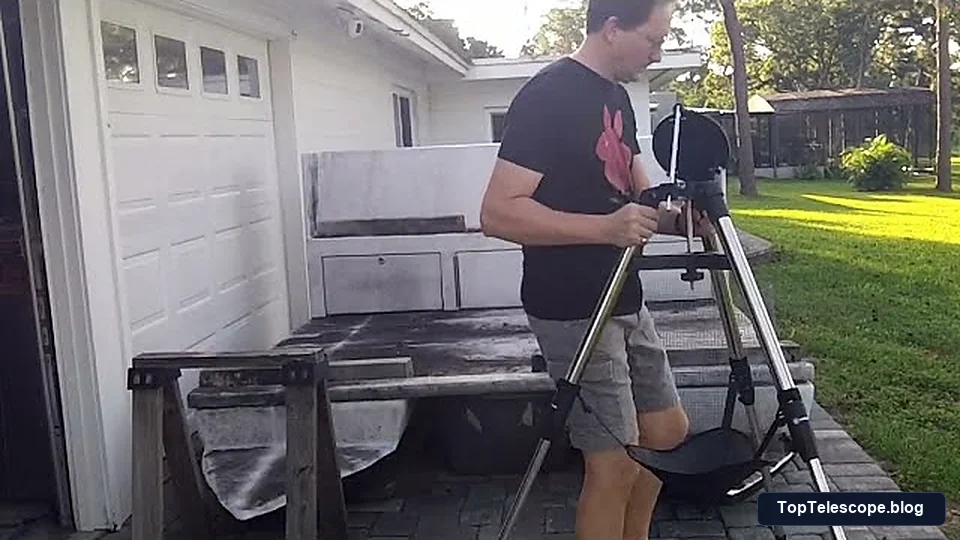
Weighing over 65 pounds for the optical tube assembly alone, field transport requires careful lifting techniques. Integrated carrying handles provide secure grip points during assembly on heavy-duty field tripods.
Setting up this heavy system demands a systematic approach to prevent accidental pinch injuries. Using a dedicated wedge and counterweight shaft helps balance the massive instrument safely before powering electronics.
- Total system weight exceeds standard portable thresholds
- Carrying handles integrated directly into fork base castings
Thermal Efficiency, Power, and Operational Noise
Large aperture glass plates, much like those found on any best 12 inch dobsonian telescope setup, require significant thermal stabilization. Active cooling fans accelerate ambient temperature matching to prevent internal air currents from degrading images.
Power consumption spikes during rapid slewing operations, requiring a reliable external direct current power source. Operating noise levels remain remarkably low during standard sidereal tracking rates across extended observation windows.
Large apertures trap significant thermal masses that require adequate cool-down time. Optional electric cooling fans accelerate ambient temperature equalization, reducing internal tube currents before critical imaging runs begin.
The internal electronics operate on standard 12-volt DC power supplies. Drive motors produce minimal operational noise, emitting a quiet hum while maintaining steady tracking rates across various tracking speeds.
- High-draw motors demand stable 12-volt DC power supplies
- Quiet gear trains prevent disturbance during backyard observations
Real-World Optical Output and Deep-Sky Performance
Under dark sky conditions, the massive light gathering power resolves faint globular clusters and distant galaxies brilliantly. Planetary contrast reveals subtle cloud belt details on Jupiter and subtle polar cap textures on Mars.
Field curvature remains minimal across standard eyepieces, though utilizing wide-field accessories benefits from an optional field flattener. Stellar pinpoints stay sharp across eighty percent of the standard visual framing circle.
Under dark skies, the massive light-gathering power resolves distant globular clusters into individual stellar components. Faint galactic arms become visible when combining transparent atmospheric conditions with optimal eyepiece selection.
Planetary observation benefits from high-contrast baffling that yields sharp edges on Jupiter's cloud belts. High magnification limits are dictated primarily by local atmospheric seeing rather than optical deficiencies.
- Deep-sky object resolution exposes intricate spiral arms
- Planetary filter responses enhance surface feature contrast remarkably
Maintenance, Collimation, and Long-Term Durability
Routine maintenance involves keeping the corrector plate clean using specialized optical cleaning solutions. Collimation adjustments are rarely necessary thanks to the rugged factory alignment of secondary mirror assemblies.
Weather-resistant exterior coatings protect internal electronics from nocturnal dew accumulation and light moisture exposure during prolonged observation marathons. Protective dust covers safeguard delicate optical surfaces between scheduled sessions.
Routine maintenance requires regular inspection of the secondary mirror collimation screws. Keeping dust covers securely fastened protects the retaining ring assemblies from moisture accumulation and environmental particulate buildup.
Optical coatings demand careful cleaning using certified optical solutions and micro-fiber cloths. Mechanics benefit from occasional relubrication of internal gear trains using specialized low-temperature grease compounds.
- Corrector plate requires infrequent but careful cleaning procedures
- Factory collimation holds steady through repeated transport cycles
Comparative Buyer Verdict and Ideal User Profile
This advanced instrument serves serious amateur astronomers who demand uncompromising aperture and GoTo automation. Casual backyard stargazers might find the physical dimensions and heavy weight overwhelming for spontaneous sessions.
Investing in this sophisticated platform rewards dedicated observers with professional-grade light grasp and tracking accuracy. Careful consideration of transport logistics ensures long-term satisfaction with this capable optical powerhouse.
This optical instrument suits advanced amateur astronomers seeking permanent observatory installations or robust mobile setups. Its heavy structural footprint demands dedicated transport solutions and patient technical handling.
Buyers prioritizing deep-sky imaging and high-resolution planetary study will appreciate the robust aperture advantages. The system rewards experienced operators who master its complex alignment procedures and power requirements.
- Ideal for permanent observatory installations or dedicated hobbyists
- Requires committed setup effort compared to smaller refractors
Frequently Asked Questions
How difficult is it to transport the Meade LX200 12-inch telescope?
Transporting this massive twelve-inch instrument requires serious physical effort, careful advance planning, and a dedicated transport vehicle equipped with ample cargo space.
The exceptionally heavy optical tube and massive dual-fork mount demand careful two-person lifting routines to ensure safe field deployment without ever damaging sensitive internal electronic components or permanent factory alignment calibrations.
What power source is recommended for the computerized GoTo system?
Operating the heavy-duty micro-stepper motors and computerized hand controller requires a stable external twelve-volt direct current power supply during all field operations.
Using a dedicated high-capacity lithium power tank prevents voltage drops that can cause erratic slewing behavior or interrupt your automated alignment sequences during long astrophotography sessions in remote dark sky locations.
Does the optical system require frequent collimation adjustments?
The advanced Schmidt-Cassegrain optical design maintains factory collimation remarkably well even when transported across bumpy roads to remote dark sky observation sites.
When minor fine-tuning is eventually needed, the easily accessible secondary mirror screws allow straightforward adjustments using basic hand tools under standard nighttime observation conditions without requiring professional technical assistance.
How does the primary mirror lock prevent image shift?
Heavy primary mirrors can slide slightly along the baffle tube during manual focusing, causing frustrating visual jumps in your eyepiece or camera frame.
Actively engaging the manual mirror lock securely clamps the primary glass firmly against the rear cell, completely eliminating mechanical play while you achieve razor-sharp focus on faint distant celestial targets.
Can this telescope be used effectively for astrophotography?
The massive aperture and precise computerized tracking make this heavy optical platform exceptionally capable for capturing highly detailed deep-sky images and high-resolution planetary photographs.
Adding a heavy-duty equatorial wedge allows long-exposure tracking without field rotation, transforming the fork-mounted system into a truly professional-grade astrophotography rig for advanced hobbyist users.