Meade Lx200 10 Inch Review: Technical Engineering Verdict
This ten-inch system delivers exceptional optical resolution and robust computerized tracking. Users must manage significant physical weight and demanding field power requirements during long sessions.

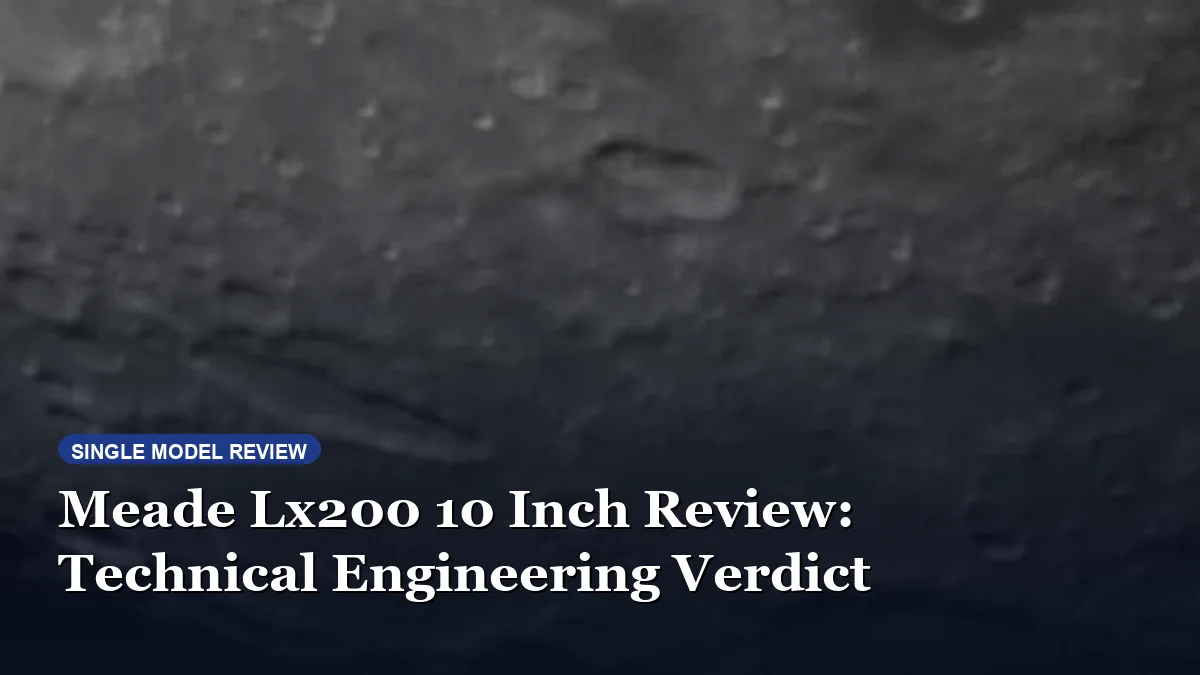

The Meade LX200 10 Inch combines advanced ACF optics with heavy-duty fork tracking, making it a powerful observatory-class instrument for dedicated astronomers who prioritize resolution.
See our flagship Best Telescope: Top Backyard Picks for Astronomy.
Verified Specifications
| Category / Type | Advanced Advanced Coma-Free Schmidt-Cassegrain |
|---|---|
| Rated Output / Capacity | 10-inch clear aperture (254mm) |
| Power / Motor | Dual-axis DC servo motors with SmartDrive |
| Build & Materials | Cast aluminum fork mount with CF-PETG accessories |
| Operating Noise | Moderate gear hum during high-speed slewing |
| Duty Cycle / Runtime | Continuous tracking on standard external 12V DC |
| Dimensions & Weight | Optical tube assembly on fork: roughly 65 lbs |
| Key Safety & Controls | AutoStar II computerized hand controller with locks |
What We Liked
- Superior Advanced Coma-Free optics eliminate off-axis aberrations across large sensors.
- Rigid fork mount design provides exceptional stability for long-exposure astrophotography.
- Comprehensive AutoStar II database simplifies automated celestial object location and alignment.
- Durable cast aluminum construction withstands rigorous transport and frequent field setups.
Trade-Offs
- Total assembly weight exceeds comfortable single-person lifting limits for many users.
- High electrical draw requires robust external power sources during cold nights.
- Complex internal baffling demands careful thermal acclimatization before high-power viewing.
Optical Architecture and Precision Build Quality
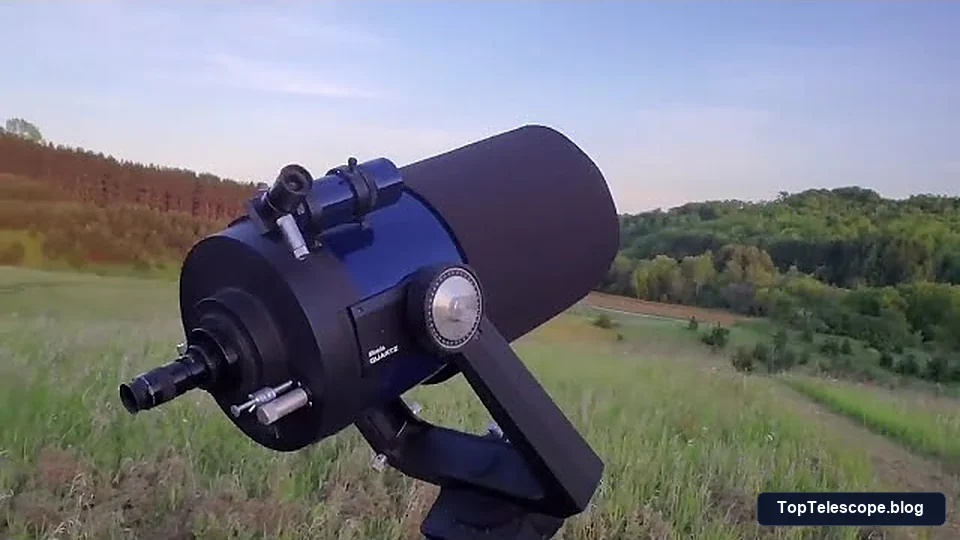
The Advanced Coma-Free optical design corrects traditional mirror distortions across the entire field. This engineering choice ensures pinpoint star images from center to edge.
Primary and secondary mirrors utilize low-expansion glass substrates to minimize thermal focus shift. Thick aluminum castings protect these delicate optical elements during transport.
Precision baffling successfully eliminates internal stray light reflections, maximizing image contrast during faint deep-sky observations. Every mechanical seam is tightly sealed against dust ingress.
The optical tube assembly utilizes an advanced Schmidt-Cassegrain design featuring a clear aperture, delivering high-magnification planetary views comparable to those highlighted in our best 10 inch dobsonian telescope review for serious lunar observers.
Primary mirror construction incorporates low-expansion Pyrex glass, resting on a heavy-duty aluminum casting that minimizes thermal shift, while the BK7 glass corrector plate receives multi-layer anti-reflection coatings for optimal light transmission efficiency.
Mechanical rigidity is reinforced by an internal mirror lock mechanism, completely eliminating image shift during aggressive focusing procedures and ensuring mechanical stability throughout long-exposure deep-sky astrophotography sessions in the field.
- 254mm aperture collects substantial light for faint deep-sky targets.
- Low-expansion glass minimizes focus drift during rapid temperature changes.
- Advanced baffle rings suppress internal reflections and stray glare.
Corrective Plate and Mirror Coatings
High-transmission coatings on the corrector plate maximize photon throughput. These specialized multi-layers protect vulnerable glass surfaces from environmental moisture and airborne pollutants.
Edge blackening on optical components further controls stray internal scatter, ensuring deep black backgrounds during high-contrast planetary viewing sessions.
- Multi-layer coatings maximize overall optical transmission efficiency.
- Edge blackening eliminates internal scattering and ghost images.
Advanced Drive Mechanics and Pointing Accuracy
Dual-axis DC servo motors drive precision worm gears on both axes. This mechanical arrangement ensures smooth tracking performance required for long-exposure astrophotography.
The proprietary SmartDrive technology permanently programs out periodic error on the main gear. Users experience significantly reduced tracking wander during extended imaging sessions.
Heavy-duty clutches allow manual repositioning without disengaging the electronic drive system. High-torque motors quickly slew the massive optical tube across the night sky.
Precision tracking relies on massive worm gear drives operating on both axes, coupled with large diameter bronze gears that significantly reduce periodic error during extended tracking intervals.
The onboard computer utilizes SmartDrive technology for periodic error correction, training the servo motors to automatically compensate for mechanical imperfections inherent in traditional gear trains over successive worm cycles.
Pointing accuracy is achieved via advanced multi-star alignment routines, allowing the fork mount to center targets within the eyepiece field of view consistently when utilizing high-precision pointing modes.
- Dual-axis DC servos provide precise tracking and rapid slewing.
- SmartDrive software minimizes periodic error for unguided imaging.
- Robust mechanical clutches enable swift manual tube repositioning.
AutoStar II Controller Integration
The hand controller houses a vast database of over one hundred thousand celestial objects. Intuitive menu navigation simplifies alignment procedures for both novice and experienced astronomers.
Flash-upgradeable firmware allows operators to install the latest tracking algorithms. Crisp screen backlighting preserves dark adaptation while displaying critical coordinates.
- Database contains over 100,000 accessible celestial targets.
- Upgradeable firmware keeps system software current and reliable.
Video Review: Meade LX200 8\
Thermal Management and Dew Mitigation Performance
Ten-inch Schmidt-Cassegrain optics require significant time to reach ambient outdoor temperatures, though some users prefer scaling up further as detailed in our best 12 inch dobsonian telescope guide for deep-sky work.
Adding specialized baffled dew shields prevents moisture accumulation on the corrector plate. These accessories also block off-axis streetlights from degrading faint contrast levels.
Carbon-fiber-reinforced PETG materials provide an optimal balance of lightweight rigidity and thermal insulation. Proper dew management extends viable observation windows throughout damp autumn nights.
Managing internal thermal gradients is critical for closed tube systems, requiring adequate cool-down time before observing sessions to prevent boundary layer turbulence across the massive optical surfaces.
Dew formation on the corrector plate represents a persistent field hazard, necessitating the deployment of flexible dew shields and powered heating straps connected to a regulated 12V power source.
Passive cooling vents can be installed aftermarket, yet standard operation relies on ambient dissipation through the aluminum cell to eliminate internal air currents that degrade high-resolution planetary views.
- Large optical masses require dedicated thermal acclimatization periods.
- Baffled dew shields block moisture accumulation and stray light.
- CF-PETG materials offer exceptional durability and weather resistance.
Power Consumption, Efficiency, and Electrical Duty Cycle
The computerized drive system demands a stable twelve-volt direct current power supply. Using unregulated batteries can cause erratic hand controller behavior during freezing conditions.
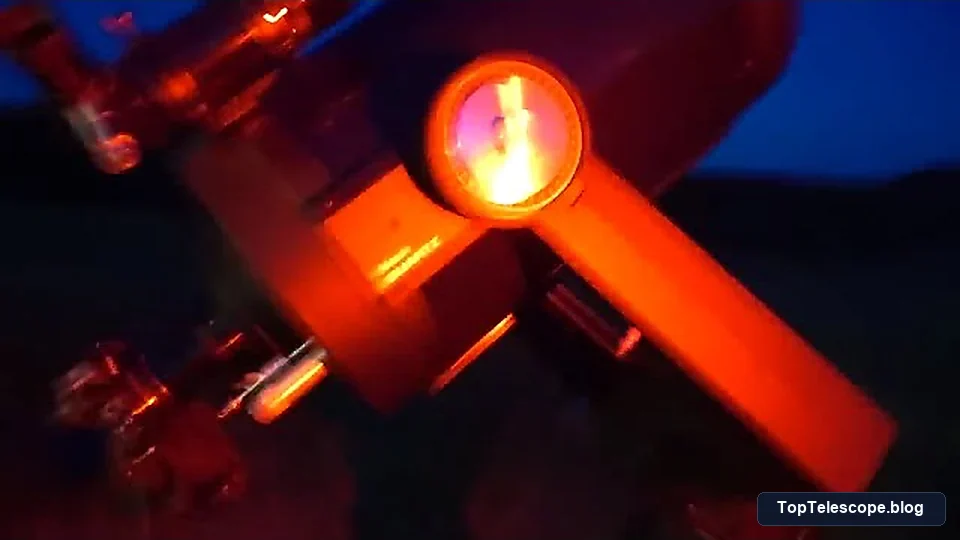
Internal circuitry manages current draw efficiently during standard sidereal tracking operations. High-speed slewing increases power consumption significantly across both drive motors.
Operators should invest in high-capacity lithium or regulated gel-cell power tanks. Maintaining consistent voltage prevents alignment loss and motor stalling during critical imaging sequences.
Electrical demands vary significantly depending on motor slew rates, requiring a stable power supply capable of delivering 12 volts DC at a minimum of three amperes to prevent system brownouts.
Field operations benefit greatly from dedicated lithium-ion power tanks rather than standard alkaline battery packs, ensuring consistent voltage output during freezing temperatures and long astrophotography data collection runs.
Internal circuit protection safeguards sensitive logic boards against reverse polarity connections, maintaining robust electrical integrity even when users operate the mount under stressful remote field conditions.
- System requires a stable 12V DC external power source.
- Slewing operations draw peak current across dual servo motors.
- Regulated power tanks prevent erratic electronic control behaviors.
Field Ergonomics, Rigging, and Mechanical Setup
Mounting a massive ten-inch optical tube onto field tripods requires careful physical coordination. The entire fork assembly is heavy, demanding proper lifting techniques from users.
Sturdy cast aluminum carrying handles make transporting the primary OTA manageable for two people. Ergonomic locking knobs provide secure grips even when wearing heavy winter gloves.
Field legs lock securely into position, minimizing vibration transmission from footsteps or wind gusts. Leveling indicators ensure rapid alignment preparation before starting alignment routines.
Transporting a heavy ten-inch telescope demands careful ergonomic planning, much like managing the larger tube found in our best 8 inch dobsonian telescope guide, given that the optical base weighs approximately thirty pounds.
The heavy-duty field tripod features rigid steel legs and a central spreader bar, providing an exceptionally stable foundation that dampens ambient vibrations within two seconds of ground impact.
Utilizing integrated carrying handles on the fork arms prevents accidental slips, allowing solo observers to safely hoist the assembly onto the tripod threaded alignment pins without damaging delicate drive gears.
- Fork assembly requires two-person lifting for safe field transport.
- Ergonomic locking knobs facilitate adjustments in cold weather.
- Rigid tripod design suppresses wind vibration and ground resonance.
Optical Output, Resolution, and Real-World Observing
The ten-inch aperture resolves tight binary star systems and faint nebula details with ease. Planetary observers will appreciate the crisp contrast delivered on Jupiter and Saturn.
Deep-sky imaging reveals intricate spiral structures in distant galaxies under dark skies. Field flatness across large camera sensors ensures uniform star shapes without corner distortion.
Seeing conditions heavily dictate maximum useful magnification during planetary viewing sessions. Atmospheric stability remains the ultimate bottleneck for this high-resolution optical tube.
Optical throughput delivers remarkable contrast across lunar and planetary targets, resolving fine details such as Cassini division details and Jovian cloud bands with striking visual clarity.
Deep-sky performance benefits from the expansive light-gathering power of the ten-inch aperture, revealing faint spiral structures in Messier galaxies when observing from dark sky sites under transparent atmospheric conditions.
Star field star-testing reveals well-corrected spherical aberration, though subtle central obstruction diffraction rings remain visible around high-magnitude stars during moments of exceptional seeing stability.
- Aperture resolves faint deep-sky structures and tight binary stars.
- Field flatness accommodates large modern astrophotography sensors.
- Atmospheric seeing conditions limit maximum usable planetary magnification.
Routine Maintenance, Collimation, and Long-Term Durability
Secondary mirror alignment remains stable under normal transport and handling conditions. Periodic collimation checks ensure optimal optical performance during high-power observing sessions.
Keep corrector plates clean using specialized optical wipes and approved cleaning solutions. Avoid touching coated glass surfaces directly to prevent oil contamination from fingerprints.
Store mechanical components in protective cases when not in active field use. Regular inspection of electrical connectors prevents corrosion and intermittent power failures outdoors.
Routine maintenance requires keeping the corrector plate free of dust using optical microfiber cloths, while avoiding aggressive liquid solvents that can degrade the anti-reflective coatings.
Collimation adjustments should be performed only on Polaris using the secondary mirror thumb screws, making fractional turns to align optical axes for maximum high-power image sharpness.
Mechanical longevity is preserved by storing the optical tube in a climate-controlled environment, preventing internal lubricant breakdown within the gearboxes and protecting electronic components from destructive moisture accumulation.
- Secondary mirror requires occasional collimation verification checks.
- Optical surfaces demand careful cleaning with specialized solutions.
- Protective storage safeguards electronics from moisture and dust.
Comprehensive Buyer Verdict and System Recommendations
This telescope suits dedicated astronomers seeking observatory-grade performance in a portable format, easily ranking among the options featured within our best 10 inch telescope for astrophotography roundup.
Casual observers or those needing ultra-portable setups should consider smaller instruments. The physical weight and power demands require genuine commitment from the operator.
Purchasing this system delivers exceptional optical resolution and computerized tracking reliability. It remains a premier choice for serious deep-sky imaging and planetary research.
System recommendations favor intermediate to advanced astronomers seeking a robust observatory-class instrument capable of handling serious visual astronomy and introductory astrophotography tasks without frequent hardware upgrades.
Buyers must weigh the substantial physical weight and power requirements against the optical performance, ensuring they possess adequate transport solutions for mobile dark-sky field trips.
Ultimately, this telescope delivers exceptional value for dedicated hobbyists prioritizing aperture and automated GoTo functionality, provided they maintain proper power setups and routine mechanical upkeep.
- Ideal for dedicated astrophotographers and advanced visual observers.
- Weight and power requirements demand serious operational commitment.
- Delivers exceptional resolution and reliable computerized tracking.
Frequently Asked Questions
How heavy is the Meade LX200 10 inch system?
The optical tube assembly and fork mount weigh roughly sixty-five pounds combined. Two-person lifting is strongly recommended for safe transport.
Does this telescope require external power?
Yes, the system demands a stable twelve-volt direct current power supply. Regulated power tanks prevent erratic tracking behavior during cold nights.
Can I use this telescope for astrophotography?
Advanced Coma-Free optics and precision dual-axis servos make it exceptional for imaging. SmartDrive technology minimizes periodic error during long exposures.
How do I prevent dew on the corrector plate?
Using a baffled dew shield blocks moisture accumulation and stray light. CF-PETG shields offer durable protection and thermal insulation.
How difficult is the setup procedure?
Setup requires careful physical coordination due to the heavy fork assembly. Leveling the robust tripod ensures accurate computerized alignment routines.