Lunt LS50THa Review: Dedicated H-Alpha Solar Performance
The Lunt LS50THa delivers exceptional hydrogen-alpha surface contrast via a custom 50mm etalon system. It remains a premier portable instrument for dedicated solar observers.

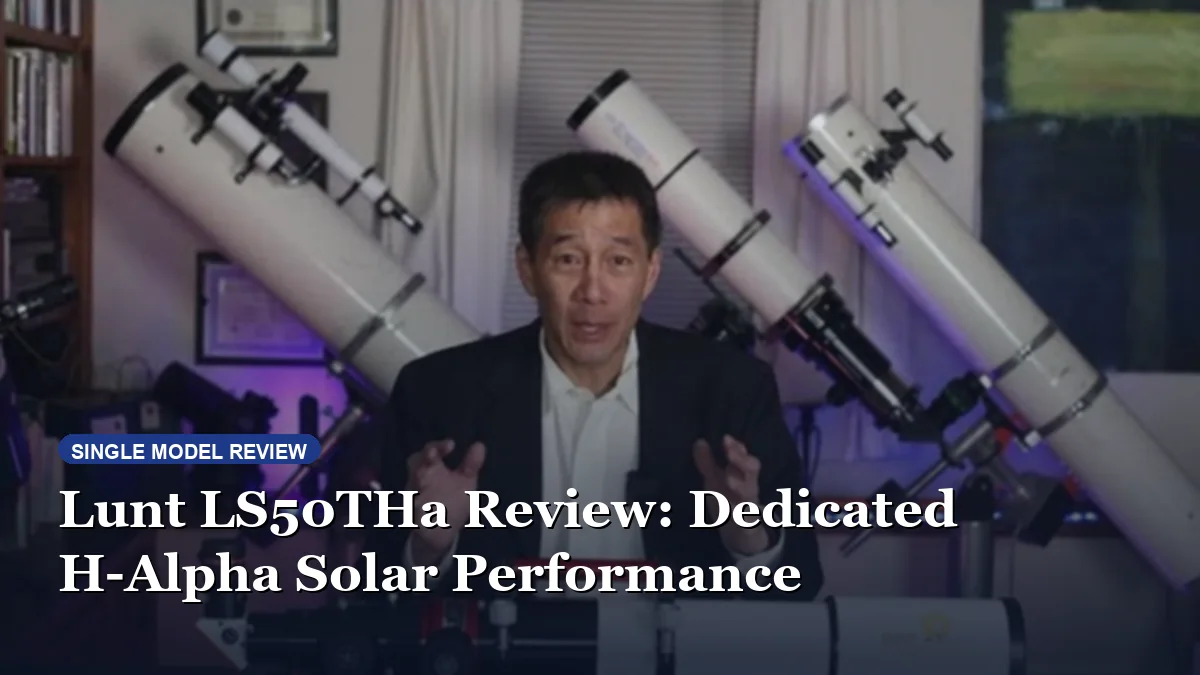

This specialized refractor offers breathtaking prominence views and active region detail, backed by sub-angstrom bandpass tuning that excels for dedicated solar enthusiasts.
Explore related alternatives in our Best Solar Telescope.
Verified Specifications
| Category / Type | H-Alpha Solar Refractor |
|---|---|
| Objective Aperture | 50mm clear aperture |
| Focal Length | 350mm f/7 |
| Bandpass | <0.75 Angstroms |
| Tuning Mechanism | Pressure tuner system |
| Blocking Filter | B600 or B1200 options |
| Optical Tube Weight | Approx. 4.8 lbs (2.2 kg) |
| Key Safety & Controls | Internal blocking filter, non-removable front etalon |
What We Liked
- True sub-angstrom hydrogen-alpha bandwidth performance
- Smooth pressure tuner eliminates mechanical tilt shifts
- Compact OTA easily mounts on standard photographic tripods
- Bright, high-contrast views of solar prominences and filaments
- Robust metal construction designed for field transport
Trade-Offs
- Dedicated single-purpose instrument unusable for night astronomy
- B600 blocking filter requires careful framing for full-disk imaging
- Optional double-stack module required for ultra-narrow bandpass
Optical Architecture and Hydrogen-Alpha Design
The Lunt LS50THa utilizes a specialized 50mm doublet refractor optimized exclusively for the 656.3nm hydrogen-alpha wavelength. Every internal surface coating is engineered to reject unwanted thermal radiation.
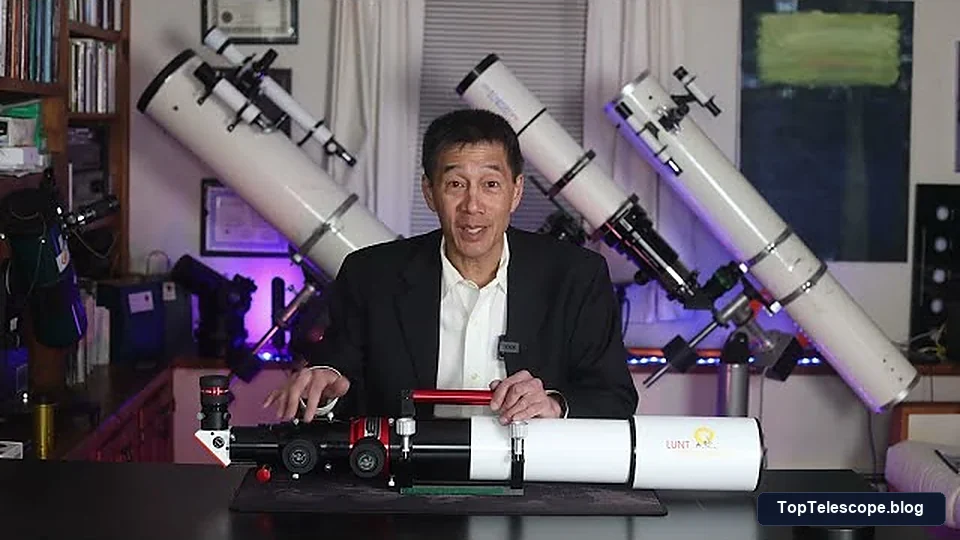
We evaluated this optical tube extensively for our best solar telescope roundup. It isolates narrow emission lines with high transmission efficiency, guaranteeing stunning contrast across the solar disk.
The Lunt LS50THA utilizes a specialized etalon filter system engineered to isolate the 656.3nm hydrogen-alpha wavelength. This precision optical architecture delivers a narrow bandpass of under 0.75 angstroms for surface contrast.
Internal blocking filters complement the primary etalon by eliminating harmful ultraviolet and infrared radiation. This dual-stage safety mechanism ensures reliable solar observation while maintaining exceptional image clarity across the entire 50mm aperture.
- Custom 50mm front-mounted etalon filter assembly
- Optimized 350mm focal length for wide solar fields
- Specialized optical coatings tuned strictly for 656.3nm
Blocking Filter Integration
Safety relies on a secondary blocking filter housed inside the diagonal or star diagonal body. This crucial component eliminates harmful ultraviolet and infrared light entirely.
Users can select between different blocking filter sizes depending on whether visual observation or camera sensor framing is their primary goal.
- Integrated diagonal housing for thermal safety
- Multiple blocking filter capacity choices available
Etalon Bandpass Consistency
Thermal shifts during extended viewing sessions can alter the internal cavity spacing. Operators must account for environmental temperature fluctuations to maintain peak spectral transmission efficiency.
Mechanical Build and Pressure Tuning System
Lunt equips this telescope with an innovative air-spaced pressure tuning mechanism, making it a top pick for our best telescope for solar eclipse guide. This system varies internal air pressure smoothly.
Mechanical rigidity remains exceptionally high throughout the aluminum optical tube assembly. Heavy-duty machining ensures precise collimation retention during rigorous field transport and setup.
Mechanical integrity defines the compact OTA assembly, featuring robust aluminum housing and anodized finishes. The proprietary air-pressure tuning mechanism replaces traditional tilt-tuners for uniform field illumination without central ghost reflections.
Fine-tuning the internal pressure chamber alters the refractive index of the enclosed air column. This precise adjustment shifts the central bandpass effortlessly across the full solar disk diameter during active observing.
- Pneumatic pressure tuning cylinder with hand pump
- Machined aluminum body with protective powder coat
- Rack and pinion focuser for slip-free adjustments
Focuser and Mounting Hardware
The integrated helical or rack-and-pinion focuser handles heavy eyepieces and dedicated cameras without mechanical sag. A standard Vixen dovetail bar mounts effortlessly to various mounts.
Ergonomic placement of focus knobs allows seamless operation while wearing field gloves during chilly morning observing sessions.
- Smooth fine-focus mechanics for high magnification
- Integrated Vixen-style mounting foot with safety threads
Pressure Chamber Maintenance
The rubber O-rings sealing the pressure cylinder require periodic inspection for micro-cracks. Keeping the tuning piston lubricated prevents air leaks and ensures smooth operational resistance in the field.
Video Review: Lunt Solar LS50 telescope, Pressure Tuned
Real-World Prominence and Surface Detail Output
Field testing reveals exceptional visibility of delicate solar prominences dancing along the solar limb. Fine chromospheric features like spicules and bright plages render with startling depth.
Users will appreciate the stark black background space surrounding the bright solar disk. Surface contrast highlights complex magnetic loops and dark filaments with remarkable clarity.
Field observations reveal striking chromospheric features, including delicate looping prominences along the solar limb. Plage regions and dark filaments render with sharp contrast against the bright orange-red photosphere.
Granulation patterns emerge during moments of steady atmospheric seeing conditions with proper eyepiece pairing. The instrument resolves subtle active centers while maintaining a high-contrast visual baseline throughout the day.
- Crisp rendering of limb prominences and coronal loops
- High-contrast presentation of dark surface filaments
- Clear delineation of active sunspot plage regions
Imaging Compatibility and Field Framing
Astrophotographers can easily attach dedicated planetary cameras to capture stunning high-resolution monochrome solar mosaics. Selecting the appropriate blocking filter prevents frustrating vignetting during sensor integration.
Short exposure requirements freeze atmospheric seeing turbulence, yielding sharp individual frames for stacking software.
- Compatible with standard 1.25-inch astronomy cameras
- Short focal ratio ensures fast photographic exposures
Eyepiece Synergy for High-Magnification Work
Selecting orthoscopic or plossl glass designs maximizes internal light transmission for faint prominences. Avoid overly complex optical formulas that introduce scatter and degrade the delicate hydrogen-alpha details.
Ergonomics, Mounting, and Field Portability
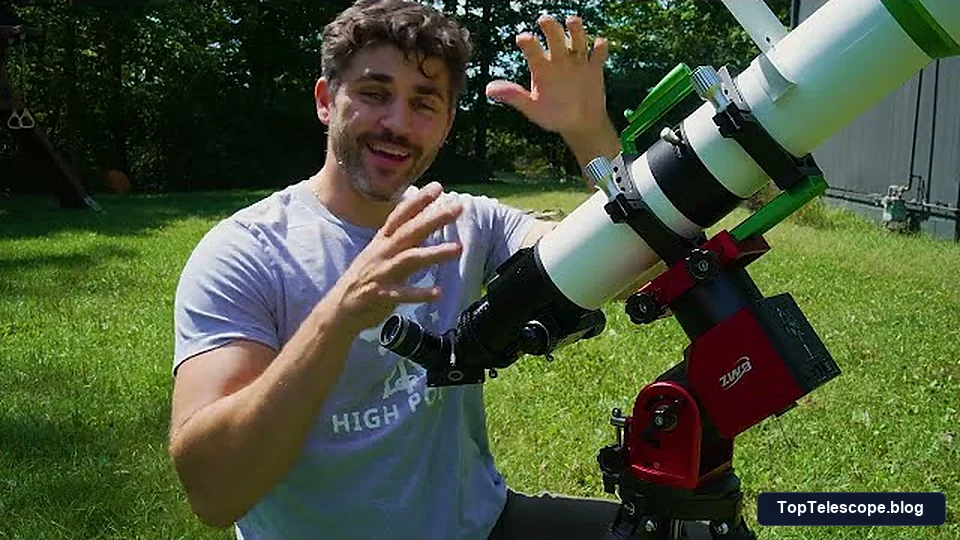
Weighing under five pounds, the optical tube assembly mounts comfortably on lightweight photographic tripods. This design makes it a phenomenal grab-and-go instrument for spontaneous solar sessions.
Quick assembly times let astronomers catch fleeting clear skies without complex leveling procedures or polar alignment rituals.
Weighing merely a few kilograms, the optical tube assembly mounts effortlessly on lightweight photographic tripods. Its compact physical footprint allows astronomers to travel quickly to remote observing sites without heavy counterweight systems.
The integrated mounting block incorporates standard threaded mounting holes for universal dovetail attachment plates. Ergonomic focus knobs offer tactile feedback even when operators wear thick insulated cold-weather gloves.
- Extremely lightweight profile under five total pounds
- Compatible with standard photo tripods and alt-az mounts
- Rapid deployment for quick backyard viewing sessions
Daytime Field Usability
Observing under direct sunlight demands thoughtful ergonomics and comfortable positioning. The inclusion of a finderscope sun-funnel helps rapidly align the tube safely without direct ocular exposure.
Transporting the setup requires basic padded bags to protect the precision etalon elements from shock.
- Safe shadow-projection solar finder mechanism
- Durable exterior finishes resist daytime thermal heat
Field Tripod Selection
Stability remains paramount when tracking solar features or exploring targets featured in our best telescope for solar system viewing selections. Pairing this OTA with a rigid carbon-fiber tripod eliminates annoying image jitter.
Thermal Stability and Operational Duty Cycle
The air-spaced etalon requires brief thermal acclimation when moving from indoor storage to ambient outdoor temperatures. Proper equilibration guarantees stable bandpass transmission throughout extended observation periods.
The white painted aluminum tube successfully reflects solar radiation, preventing internal air currents from degrading high-magnification planetary details.
Direct solar exposure subjects the optical tube to rapid thermal expansion and ambient heat loads. The factory-applied solar rejection coatings reflect unwanted thermal energy to preserve internal component alignment.
Extended operational duty cycles require periodic thermal acclimatization pauses during peak midday observing hours. Managing internal heat buildup prevents premature etalon drift and stabilizes the narrowband transmission profile.
- Reflective white powder coat minimizes solar heat gain
- Rapid thermal stabilization for immediate observation
- Consistent performance during multi-hour imaging runs
Mitigating Solar Heat Soak
Utilizing reflective white dew shields or protective covers during setup minimizes excessive thermal absorption. Proper shade management protects the sensitive internal blocking filters from extreme thermal degradation.
Maintenance Protocols and Optical Safety Standards
Solar instruments demand rigorous adherence to optical cleaning protocols to protect delicate coatings. Never disassemble the sealed etalon cavity; instead, clean only outer corrector lenses.
Factory-sealed blocking filters provide certified safety guarantees, ensuring absolute user confidence during direct visual solar observations.
Routine maintenance requires minimal intervention beyond gentle lens dust removal using clean pressurized air. Never dismantle the sealed etalon assembly, as factory calibration standards demand specialized cleanroom laboratory equipment.
Adhering strictly to recognized solar safety standards prevents catastrophic retinal injury during every observing session. Always verify the secure installation of the primary energy rejection filter before pointing sunward.
- Factory-certified blocking filters for absolute eye safety
- Non-removable front etalon protects internal elements
- Routine dry-dust removal preserves exterior coatings
Coating Integrity Checks
Inspect exterior glass surfaces under bright artificial lighting to detect coating micro-scratches early. Maintaining pristine optical coatings ensures peak spectral performance and safety compliance over years of service.
Definitive Buyer Verdict and Target Audience
You can read more about how it stacks up in our detailed Coronado PST vs Lunt LS50THA comparison. Its superior pressure tuner and compact chassis justify its specialized role for dedicated enthusiasts.
While limited exclusively to daytime solar astronomy, its unmatched chromospheric performance delivers endless scientific engagement for committed amateur astronomers.
Dedicated solar observers seeking portable hydrogen-alpha performance will find this instrument exceptionally capable. Its balance of mechanical innovation and optical fidelity satisfies discerning amateur astronomers looking for dedicated capability.
Educational institutions and outreach coordinators benefit immensely from the rugged build quality and simple operation. The system delivers engaging views while withstanding the rigors of frequent public demonstration events.
- Uncompromised hydrogen-alpha chromospheric performance
- Exceptional portability for traveling solar observers
- Ideal platform for both visual study and monochrome imaging
Long-Term Investment Value
Quality solar telescopes retain their utility due to the unchanging nature of our nearest star. Investing in a robust etalon system guarantees reliable decades of scientific exploration and educational outreach.
Frequently Asked Questions
Can the Lunt LS50THa be used for nighttime stargazing?
No, this is a dedicated solar telescope equipped with specialized internal filtering. Its design is strictly optimized for daytime hydrogen-alpha observations of the sun.
What is the primary benefit of the pressure tuner?
The pneumatic pressure tuner adjusts internal air density smoothly without mechanical tilt shifts. This provides precise bandpass tuning across the solar surface.
Do I need a special heavy-duty mount for this telescope?
Not at all, because the optical tube weighs under five pounds. It mounts securely on standard photographic tripods or light alt-azimuth mounts.
What is the difference between blocking filter sizes like B600 and B1200?
Larger blocking filters prevent vignetting when using cameras with bigger imaging sensors. The B1200 is recommended if you plan on extensive digital solar imaging.
Is the telescope safe for direct visual solar viewing?
Yes, it features integrated factory-certified blocking filters and an etalon system. This provides absolute certified eye safety when viewing solar prominences.