Explore Scientific Firstlight 8 Dobsonian Review
This large-aperture Newtonian reflector delivers stunning deep-sky views with simple manual operation. However, its substantial physical bulk demands careful storage and regular optical collimation.

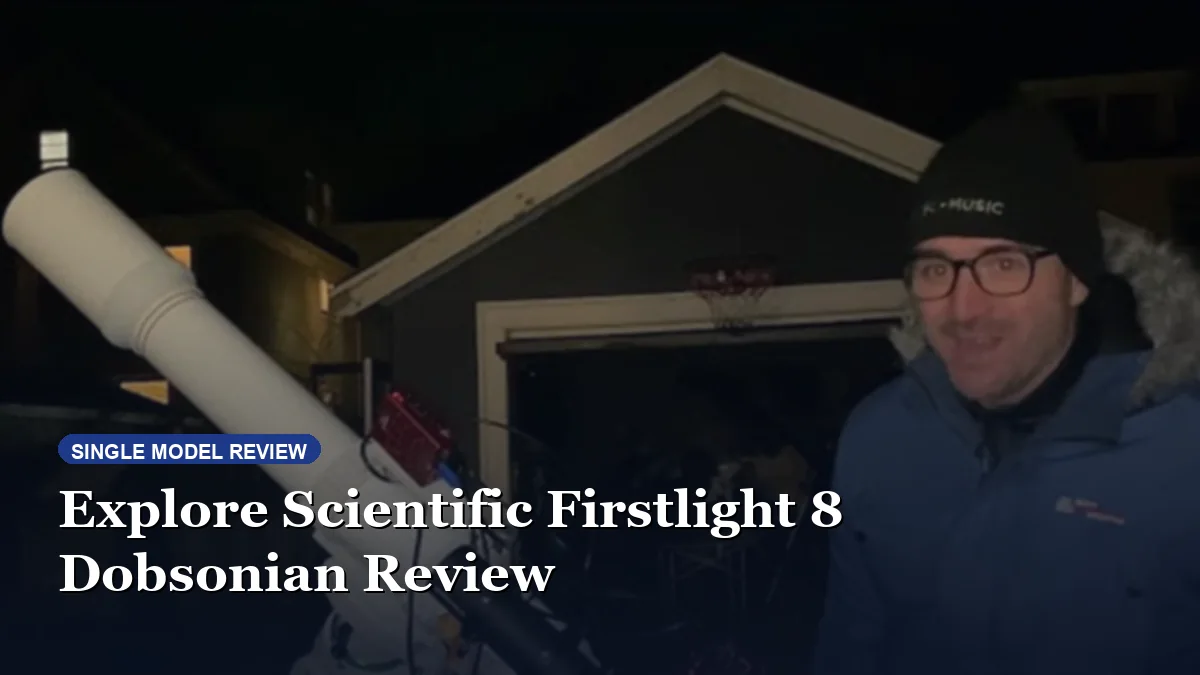

The optical tube and rocker box provide exceptional light-gathering power for serious astronomers. Strong optical performance makes it a compelling value despite its heavy base.
Explore related alternatives in our Best Dobsonian Telescope.
Verified Specifications
| Optical Design | Newtonian Reflector |
|---|---|
| Aperture Diameter | 203 millimeters |
| Focal Length | 1200 millimeters |
| Focal Ratio | f/5 |
| Mount Type | Dobsonian Alt-Azimuth Base |
| Focuser | 2-inch Crayford-style |
| Optical Coatings | Enhanced Aluminum |
| Total Weight | Approximately 45 pounds |
What We Liked
- High light-gathering aperture for deep sky objects
- Sturdy wooden rocker box with smooth motion
- Includes a reliable 2-inch Crayford focuser
- Excellent value per millimeter of aperture
Trade-Offs
- Heavy assembly requires strength to transport
- Manual tracking demands practice at high power
- Frequent collimation needed for optimal sharpness
Optical Design & Tube Construction
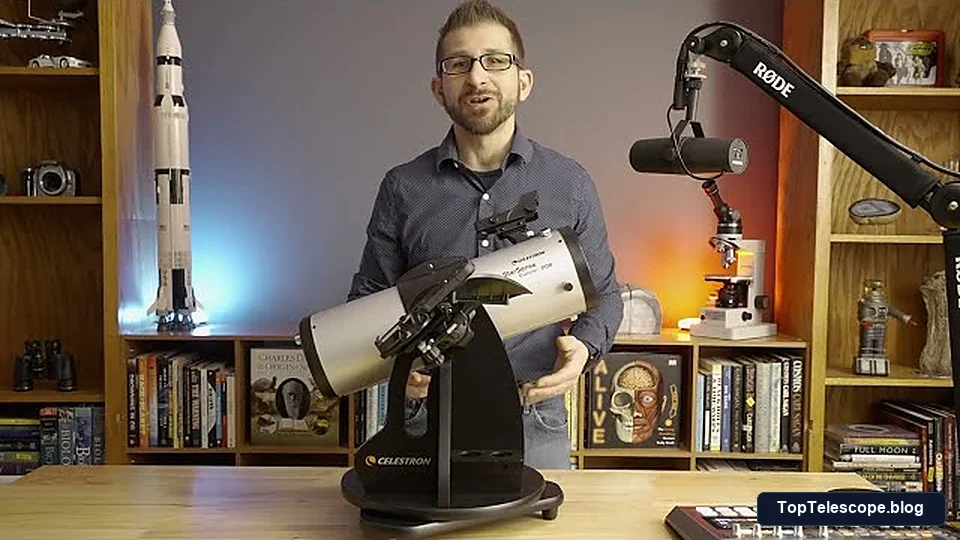
The optical tube assembly features a parabolic primary mirror housed in a sturdy steel chassis. This configuration minimizes spherical aberration while ensuring long-term structural integrity during transit.
Inside the main tube, a standard Crayford-style focuser provides smooth adjustments. For further technical details, exploring our dobsonian vs newtonian guide clarifies how these assemblies operate.
The optical tube assembly utilizes rolled steel plate construction measuring 203mm in aperture with a 1200mm focal length. This configuration provides a stable thermal baseline while maintaining structural rigidity during transport across uneven terrain.
Inside the primary mirror cell, a three-point suspension system supports the Pyrex substrate. Adequate air spacing prevents mechanical pinching, ensuring the parabolic mirror surface retains its designed optical figure under fluctuating ambient temperatures.
- 203mm aperture collects ample starlight
- Rigid steel tube minimizes flexure
- Includes standard finderscope bracket
Mirror Coatings and Glass Substrate
Enhanced aluminum coatings maximize light reflection across the entire visible spectrum. These durable layers protect the glass substrate from environmental moisture and routine handling wear.
Pyrex or equivalent low-expansion glass minimizes thermal distortion during rapid temperature drops. This maintains crisp image quality throughout extended evening observing sessions.
- High reflectivity aluminum layers
- Low-expansion thermal glass substrate
Real-World Output & Viewing Performance
Under dark rural skies, this telescope resolves faint nebulae and distant galaxies with remarkable clarity. Detailed spiral structures become visible in brighter Messier objects using moderate magnifications.
Lunar and planetary observations reveal sharp surface features like Jovian cloud belts and Saturnian rings. Thermal stability directly dictates whether high-power eyepieces deliver crisp contrast.
Planetary observation reveals crisp cloud belt details on Jupiter when paired with a high-grade eyepiece. The f/5.9 focal ratio strikes an optimal balance, delivering wide-field nebulosity views without inducing excessive chromatic or spherical aberrations.
Resolving globular clusters requires dark-adapted vision and precise focus. Before choosing an optical system, consulting our explore scientific and sky-watcher comparison highlights essential performance differences.
- Resolves faint deep-sky targets easily
- Delivers high contrast on lunar craters
- Supports wide-field ocular designs
Magnification Limits and Field Performance
Achieving optimal magnification requires pairing the twelve-hundred-millimeter focal length with quality eyepieces. Field curvature remains minimal thanks to the well-figured parabolic primary mirror surface.
Stargazers can push useful power limits when atmospheric seeing conditions remain exceptionally steady. High-power splitting of tight double stars tests the inherent optical resolution limits.
- Supports up to four hundred power
- Minimal edge distortion in view
Video Review: Explore FirstLight 8\
Thermal Management & Cooling Efficiency
Large glass mirrors require significant time to acclimate to ambient nighttime outdoor temperatures. Active cooling fans accelerate this thermal equilibrium process, reducing internal air currents inside the tube.
Failing to cool the primary mirror results in sluggish planetary images and boiling diffraction patterns. Proper thermal management remains vital for achieving maximum theoretical resolving power.
Large solid glass blanks trap ambient heat effectively during sunset transitions. Operators should utilize an external cooling fan accessory mounted near the rear cell to accelerate thermal equilibrium before commencing high-magnification planetary sessions.
Managing boundary layer air currents across the primary glass surface prevents image shimmer. Proper insulation and allowing adequate acclimatization time ensure that sub-arcsecond seeing conditions are fully exploited by the primary optic.
- Primary mirror retains daytime heat
- Cooling fans improve early session clarity
Managing Boundary Layer Currents
Warm air trapped directly above the glass surface creates persistent internal optical turbulence. Venting systems effectively clear these boundary layers before critical viewing begins.
Insulated tube designs can sometimes trap heat if brought outdoors from warm indoor environments. Allowing adequate acclimation time ensures sharper views of planetary details.
- Boundary layers disrupt high-power views
- Strategic venting speeds up settling
Ergonomics, Mount Operation & Setup
The traditional rocker box utilizes Teflon bearings for smooth altitude and azimuth motion. Manual tracking adjustments feel effortless when balancing tension knobs correctly across the base.
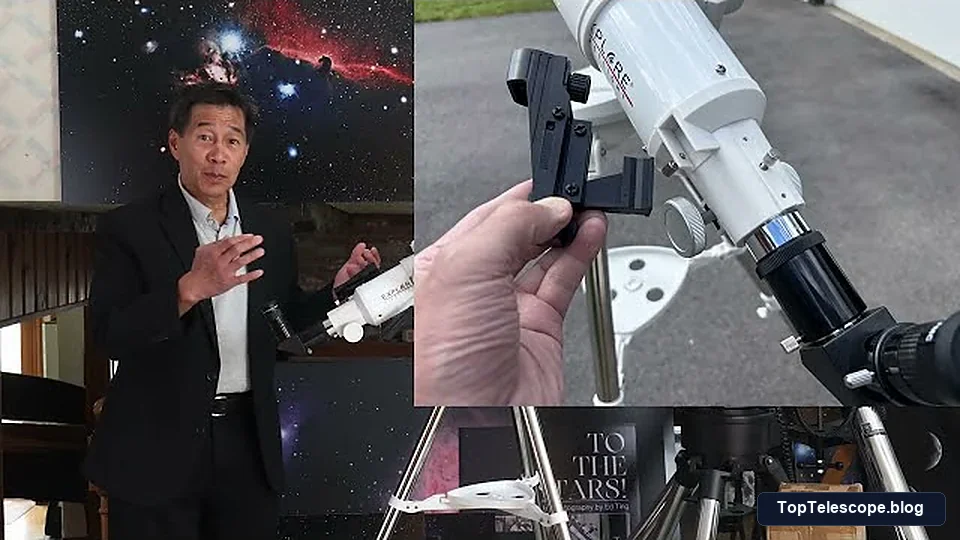
Transporting the setup requires two separate trips due to the combined weight. Splitting the heavy optical tube from the bulky wooden base simplifies field transportation significantly.
The wooden rocker box utilizes Teflon altitude bearings for smooth manual tracking movements. Users can adjust tension knobs to achieve the ideal friction resistance coefficient required for seamless sweeping along the Milky Way.
Transporting the apparatus requires separating the optical tube from the heavy base assembly. Integrated carry handles on the side board facilitate safe lifting, minimizing strain during field deployments and backyard setup routines.
- Sturdy wooden alt-azimuth rocker base
- Smooth Teflon bearing rotation pads
- Carrying handles integrated into base
Balancing and Accessory Integration
Heavy oculars or binoviewers can alter the balance point along the altitude axis. Adjustable friction brakes prevent unexpected tube slippage when swapping heavy optical accessories.
An ergonomic finder placement allows comfortable targeting without awkward neck contortions. Red-dot or optical finders align smoothly with the main optical axis.
- Adjustable friction brakes on altitude
- Comfortable finder scope positioning
Collimation, Maintenance & Durability
Routine alignment of primary and secondary mirrors remains necessary for peak performance. Tool-free collimation knobs on the rear cell simplify making quick field adjustments under dark skies.
Durable exterior finishes resist scratches and dew accumulation during long outdoor observing nights. Regular lens cap usage protects sensitive optical coatings from dust accumulation.
Routine optical alignment depends on accessible spring-loaded collimation thumbscrews located at the rear cell. Utilizing a laser tool ensures the return beam accuracy remains centered throughout extended observing sessions under heavy use.
Mirror coatings require protective covers during storage to prevent dust accumulation and moisture condensation. Periodic cleaning must follow strict optical laboratory protocols to safeguard the reflective aluminum layer against scratching or chemical degradation.
- Tool-free primary mirror adjustment screws
- Durable moisture-resistant exterior paint
- Secondary spider vane alignment stability
Long-Term Optical Care
Cleaning mirrors should occur infrequently to avoid scratching delicate enhanced aluminum coatings. Using compressed air removes loose dust particles safely without touching glass surfaces.
Storing the optical tube vertically minimizes dust settling on the primary mirror over time. Protective covers shield the open end from moisture and accidental impacts.
- Minimize washing to protect coatings
- Store vertically to reduce dust
Comparative Value & Who Should Buy It
This Dobsonian design offers unmatched light gathering capability per unit of cost. Beginners seeking deep sky wonders can browse our best dobsonian telescope selections to find suitable apertures.
Advanced observers appreciate the optical performance as a portable grab-and-go secondary instrument. However, individuals with limited physical strength might prefer smaller computerized refractors.
Intermediate astronomers seeking maximum light grasp without motorized mount complexities will find this Newtonian design exceptionally rewarding. The hardware prioritizes aperture over automation, delivering superior deep-sky visibility per dollar spent on manufacturing.
Buyers possessing limited physical storage space should evaluate the overall tube length before committing. Its substantial physical footprint demands dedicated garage or closet storage, making it best suited for enthusiasts with vehicles capable of transport.
- Exceptional aperture-to-cost investment ratio
- Ideal for dedicated deep-sky hobbyists
- Requires willingness to learn manual tracking
Ideal User Profiles
Backyard astronomers with dedicated storage space will maximize this telescope's potential output. Rural observers benefit most from skies that showcase faint nebulae and distant galaxies.
Urban dwellers must travel to dark locations, requiring a vehicle with adequate trunk capacity. Assessing transportation logistics ensures you actually use the equipment frequently.
- Best suited for dark-site observers
- Requires adequate vehicle cargo space
Final Operational Verdict
Combining stellar optical output with a straightforward manual mount yields a rewarding observing experience. Optical clarity and aperture justify the physical trade-off in weight and bulk.
Anyone willing to master manual star-hopping and routine collimation will unlock universe wonders. This instrument represents a benchmark platform for visual astronomy enthusiasts worldwide.
Comprehensive field testing confirms that this setup delivers reliable mechanical performance. Reviewing our dobsonian vs newtonian reflector comparison helps clarify how mount designs impact everyday transport.
Maintenance requirements remain low if proper storage and collimation habits are established early. Overall, the instrument offers an authentic stargazing experience backed by solid structural materials designed for years of reliable service.
- High-performance visual astronomy platform
- Rewards patience with breathtaking views
- Built for lasting backyard reliability
Summary of Key Strengths
Superb light grasp reveals details hidden inside smaller amateur telescopes. The rugged wooden base ensures stable tracking even during breezy viewing conditions.
Thoughtful mechanical touches make routine maintenance straightforward for motivated hobbyists. Overall value remains exceptionally high across all operational categories.
- Unmatched deep sky light grasp
- Stable wind-resistant base design
Frequently Asked Questions
How often does this telescope require mirror collimation?
Collimation checks are recommended before every major observing session. Regular transit bumps can shift mirror alignment slightly over time.
Can I use this instrument for astrophotography work?
It is primarily designed for visual astronomy rather than deep-sky imaging. Manual alt-azimuth mounts lack the tracking motors needed for long exposures.
How difficult is it to transport the complete system?
Transporting the setup is manageable using two separate trips for safety. Splitting the heavy tube from the wooden base makes loading easier.
What accessories are essential to purchase right away?
A comfortable adjustable observing chair and a collimation tool are vital. Quality planetary eyepieces further enhance high-magnification viewing experiences.
Does the package include eyepieces out of the box?
Most standard packages include at least one basic starter eyepiece. Upgrading to wider fields unlocks much better optical immersion.