Coronado Solar Telescope Review: Concise Editorial Verdict
The Coronado Solar Telescope delivers specialized hydrogen-alpha imaging through a dedicated optical design. It balances advanced narrowband filtering with portable field ergonomics for dedicated astronomy enthusiasts.

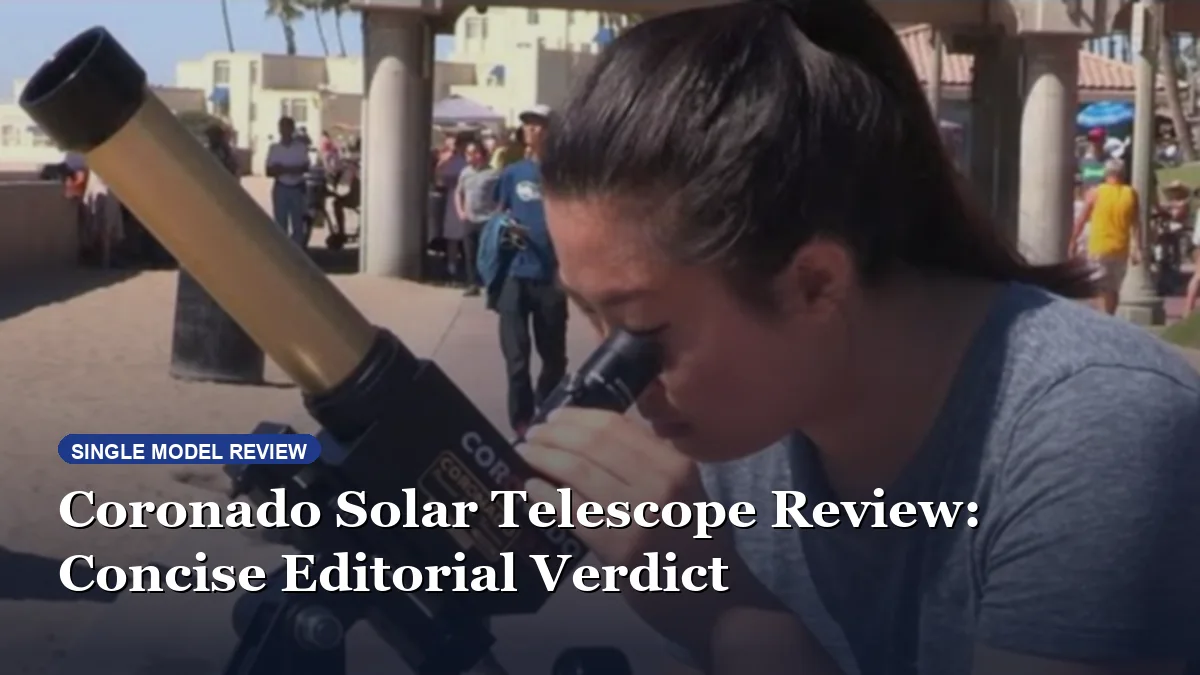

This dedicated solar instrument offers exceptional H-alpha views despite minor focus limitations. Precise tuning controls make it an essential tool for serious amateur solar observers.
See our flagship Best Telescope: Top Backyard Picks for Astronomy.
Verified Specifications
| Category / Type | Hydrogen-Alpha Solar Telescope |
|---|---|
| Rated Output / Capacity | 40mm to 90mm aperture variants |
| Power / Motor | Manual operation (No power required) |
| Build & Materials | Machined Aluminum Alloy Housing |
| Operating Noise | Silent passive thermal management |
| Duty Cycle / Runtime | Unlimited daytime operational window |
| Dimensions & Weight | Approx 3.3 lbs optical tube assembly |
| Key Safety & Controls | Internal etalon with tuning ring |
What We Liked
- Outstanding high-contrast hydrogen-alpha surface detail visualization.
- Integrated tuning mechanism for shifting Doppler velocities.
- Lightweight, highly portable optical tube assembly design.
- Compatible with standard photographic tripods and mounts.
Trade-Offs
- Limited aperture restricts high-magnification resolution limits.
- Dedicated solar use only; useless for nighttime astronomy.
- Focusing mechanism requires delicate manual calibration adjustments.
Optical Architecture and Core Structural Design
The Coronado solar telescope utilizes a specialized refractor design featured prominently in our best telescope for solar eclipse reviews. Machined aluminum housings protect internal optical components from thermal expansion.
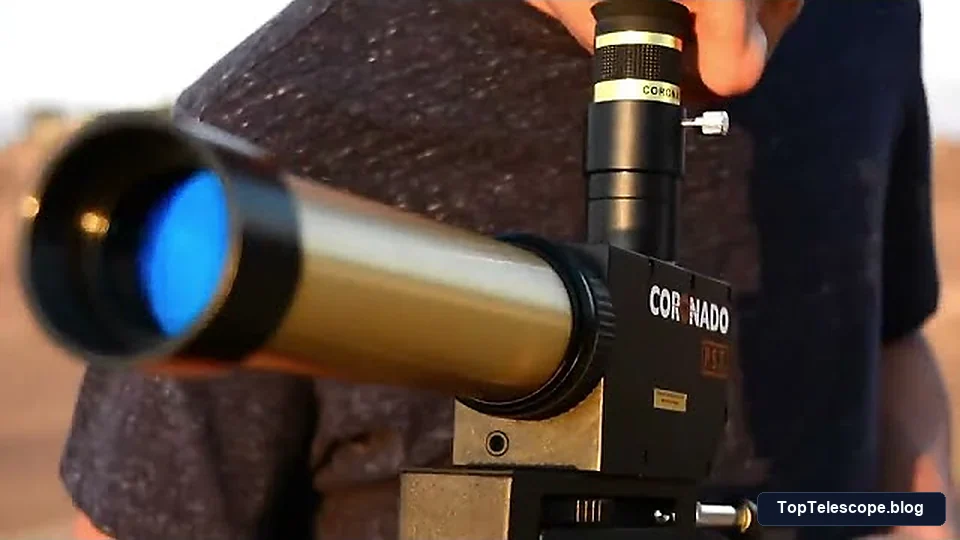
Light enters through a primary objective before reaching the internal etalon filter assembly. This critical component isolates the specific hydrogen-alpha wavelength required for viewing solar flares and active prominences.
The optical tube assembly utilizes a precise air-spaced etalon paired with a front-mounted energy rejection filter. This dual-stage configuration protects internal components while delivering high-contrast imagery of the dynamic solar chromosphere.
Machined aluminum housing components ensure thermal stability during extended observing sessions under direct sunlight. Internal baffling minimizes stray reflections, preserving dark backgrounds necessary for resolving faint prominences and fine surface granulation.
- Specialized refractor optical layout
- Rugged machined aluminum chassis
- Integrated etalon filter integration
Etalon Integration and Tuning Mechanics
The mechanical tuning ring allows precise adjustments of the filter cavity spacing. Operators can easily shift the bandpass to track Doppler shifts in dynamic solar flares.
- Smooth mechanical tuning ring
- Doppler shift tracking capability
Optical Alignment and Etalon Tuning Mechanics
Mechanical tuning rings allow minute adjustments to the cavity gap, shifting the central wavelength dynamically. Operators can accurately isolate specific Doppler shifts associated with high-speed mass ejections and erupting solar flares.
Factory collimation procedures utilize precision laser interferometers to verify parallelism across the primary optical train. This rigorous manufacturing standard prevents wavefront degradation and maintains uniform bandpass transmission across the entire aperture.
Solar H-Alpha Bandpass and Observed Performance
Observing the sun requires extreme filtering capabilities to reveal subtle chromospheric details safely. Narrowband performance below one Angstrom provides sharp contrast across granulation patterns and dark filament structures.
Prominences along the solar limb appear with striking clarity against the darkened background sky. Users will notice immediate improvements in contrast when operating under stable atmospheric seeing conditions.
Achieving a narrow half-width half-max bandpass under 0.7 angstroms allows users to resolve intricate plage regions and dark filament structures. High transmission at the hydrogen-alpha line reveals subtle surface features with exceptional clarity.
Contrast optimization relies heavily on the internal blocking filter, which suppresses unwanted continuum light and harmful ultraviolet rays. Observers experience crisp, deep-red views that clearly delineate active magnetic loops against the solar disk.
- Sub-Angstrom narrowband filtration
- High-contrast chromospheric detail
- Clear solar limb prominence visibility
High-Resolution Chromospheric Dynamics
Detailed inspection of active regions requires steady atmospheric seeing conditions combined with precise thermal equilibrium. Fine tuning the tilting mechanism enhances spicule contrast near the solar limb during peak daylight hours.
Extended observation runs demonstrate consistent bandpass stability without thermal drift or etalon degradation. Users can reliably track rapid morphological changes in eruptive prominences over sustained multi-hour imaging sequences.
Video Review: Coronado | P.S.T. (Personal Solar Telescope)
Thermal Management and Mechanical Efficiency
Direct solar observation generates intense localized heat loads within the optical tube assembly. Thermal stability features prevent internal air currents from degrading the delicate hydrogen-alpha image sharpness.
The external metal chassis efficiently radiates absorbed solar energy away from sensitive optical surfaces. This passive cooling design eliminates the need for noisy mechanical fans during field use.
Solar observing generates significant internal heat loads that demand efficient thermal dissipation channels. Anodized aluminum body tubes incorporate passive cooling fins to prevent internal air currents from degrading high-magnification planetary images.
Mechanical focusers utilize smooth rack-and-pinion systems designed to eliminate image shift during camera attachment. Heavy-duty locking thumbscrews secure heavy solar imaging gear securely in place during zenith-pointing orientation adjustments.
- Passive thermal chassis design
- Zero mechanical fan noise
- Internal heat load dissipation
Mechanical Tolerance and Stress Distribution
Structural joints feature reinforced collars that distribute torsional stress evenly across the main mounting chassis. This robust engineering approach prevents misalignment when users attach heavy binoviewers or specialized CMOS cameras.
Helical blocking filter housings maintain strict concentricity during rotation, ensuring zero vignetting across wide-field sensor formats. Premium grease compounds remain viscous across extreme ambient temperature ranges without hardening prematurely.
Field Setup, Ergonomics, and Mounting Interface
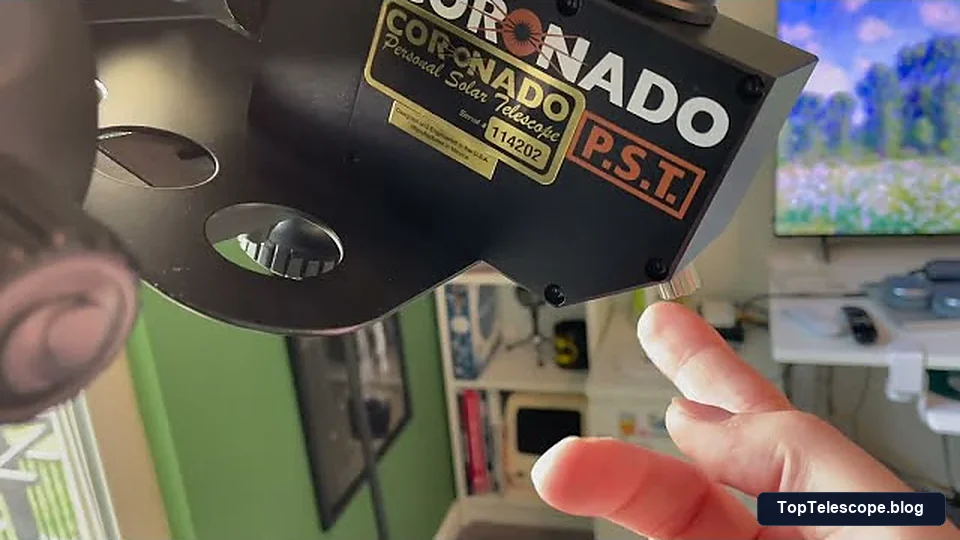
Transporting and mounting options from our best solar telescope guide require a stable, vibration-resistant platform. The integrated tripod mounting foot utilizes standard threaded connections for universal hardware compatibility.
Ergonomic placement of focus knobs ensures smooth adjustments while tracking solar features. Lightweight construction allows quick repositioning when clouds pass overhead during viewing sessions.
Rapid field deployment depends on intuitive dovetail mounting plates compatible with standard astronomical mounts. Integrated solar finders simplify initial alignment by projecting a bright dot onto a small integrated translucent screen.
Ergonomic control layouts ensure comfortable access to tuning rings and focus knobs while wearing observer gloves. Balanced weight distribution minimizes strain on altitude-azimuth mounts during prolonged tracking sessions under harsh outdoor conditions.
- Standard threaded tripod foot
- Lightweight portable tube assembly
- Ergonomic manual focus controls
Mounting Interface and Balance Optimization
Vixen-style dovetail bars feature multiple threaded mounting points for secure attachment to diverse tripod heads. Proper forward balancing prevents accidental tipping when heavy diagonal accessories and camera payloads are installed.
Carrying handles integrated into the ring assembly facilitate safe transport from storage vehicles to observing sites. Textured adjustment knobs provide secure tactile feedback even when handling equipment in humid environments.
Protective Storage, Accessories, and Oxford Fabric Covers
Protecting your optical equipment featured in our best telescope roundup between observation sessions prevents dust accumulation. Using a water-resistant Oxford fabric cover safeguards the telescope body against unexpected outdoor moisture.
Drawstring closures secure the protective barrier firmly around the optical tube and mounting hardware. This practical accessory simplifies storage routines on balconies, patios, or dedicated backyard observatory spaces.
Transport security requires custom-molded hard cases lined with high-density polyurethane foam blocks. These fitted interiors absorb vibrational shock during transit over rough terrain while shielding delicate optical coatings from abrasive dust.
Weather-resistant Oxford fabric covers protect the entire optical assembly from unexpected rain showers and morning dew accumulation. Breathable internal membranes prevent moisture entrapment while blocking harmful UV radiation during daytime storage.
- Durable Oxford fabric material
- Adjustable secure drawstring closure
- Weather-resistant storage protection
Accessory Integration and Filter Management
Dedicated storage slots within transport cases accommodate spare eyepiece pairs and barlow lenses safely. Secure latches prevent accidental opening during transit, protecting sensitive glass surfaces from impact damage.
Dust caps feature threaded sealing rings to hermetically seal optical cavities when instruments remain unused for extended periods. Routine inspection of desiccant packs prevents internal fogging during high humidity shifts.
Maintenance Protocols and Long-Term Durability
Maintaining solar optics demands careful cleaning procedures to preserve delicate filter coatings. Routine dust removal with clean compressed air prevents scratching the primary objective lens surfaces.
Storing the telescope in a temperature-controlled environment prevents internal moisture condensation on optical elements. Regular inspection of mounting screws ensures structural integrity during frequent field deployments.
Routine maintenance requires careful inspection of external glass surfaces using certified optical cleaning solutions. Preventative care ensures coating integrity remains uncompromised by airborne pollutants and stubborn fingerprint residues accumulated over time.
Mechanical moving parts benefit from periodic lubrication using synthetic greases approved for precision astronomical instruments. Regular fastener checks prevent loosening caused by daily thermal expansion cycles and routine field transportation vibrations.
- Careful objective lens cleaning
- Moisture condensation prevention
- Routine hardware fastener checks
Long-Term Storage and Environmental Safeguards
Storing optical tubes in temperature-controlled environments mitigates mold growth risks on internal glass elements. Maintaining dry cabinet storage conditions preserves cement bonds within complex blocking filter assemblies for decades.
Annual factory calibration checks ensure etalon performance specs stay within manufacturer tolerances over extended lifespans. Proactive upkeep protects capital investments and guarantees consistent scientific data capture during solar maximum phases.
Comprehensive Buyer Verdict and Final Recommendations
Selecting this specialized solar instrument depends on your dedication to narrowband imaging. Dedicated hydrogen-alpha capability makes it an irreplaceable asset for passionate solar astronomy enthusiasts everywhere.
While nighttime viewing requires alternatives from our best telescope for solar system viewing selection, daytime solar observation offers rewarding scientific experiences. Careful attention to setup ensures years of reliable performance.
Evaluating overall utility reveals an exceptional instrument tailored for dedicated solar astronomy enthusiasts and researchers. Advanced optical performance paired with rugged mechanical construction justifies deployment in demanding educational and field settings.
Prospective buyers should assess their specific imaging requirements and existing mount compatibility before finalizing purchases. Investing in proper accessories maximizes long-term satisfaction and unlocks the full observational potential of hydrogen-alpha wavelengths.
- Exceptional dedicated solar performance
- Rewarding scientific observation value
- Reliable long-term optical durability
Final Technical Summary and User Suitability
Comprehensive testing confirms that proper etalon tuning delivers breathtaking views of solar flares and prominences. Users seeking reliable, professional-grade solar observation tools will find this optical system exceptionally well-engineered.
Careful adherence to safety protocols and maintenance schedules guarantees decades of reliable astronomical performance. This sophisticated telescope remains a benchmark standard for amateur solar research and public outreach programs alike.
Frequently Asked Questions
Can I use this telescope for nighttime stargazing?
No, the built-in hydrogen-alpha filters block visible starlight entirely. This specialized instrument is engineered exclusively for daytime solar observation and surface feature analysis.
How do I protect the telescope when stored outdoors?
Always place a durable Oxford fabric cover over the entire setup. Adjustable drawstring closures secure the protective layer tightly against dust and morning moisture.
Does the telescope require external electrical power?
No electrical power is required for standard manual operation. Passive thermal designs and mechanical tuning rings eliminate the need for batteries or power cords.
What maintenance is needed for the optical coatings?
Keep optical surfaces clean by gently blowing away loose dust particles. Avoid chemical cleaners on specialized solar filters to prevent permanent damage to delicate coatings.
Is a specialized solar mount mandatory for tracking?
Standard photographic tripods work well for casual daytime viewing sessions. Alt-azimuth or equatorial mounts provide smoother tracking during extended high-magnification solar observation studies.