Celestron StarSense Explorer DX 130AZ Review
This Newtonian reflector pairs smartphone plate-solving technology with capable optics. Users gain instant sky navigation despite a manual mount setup.

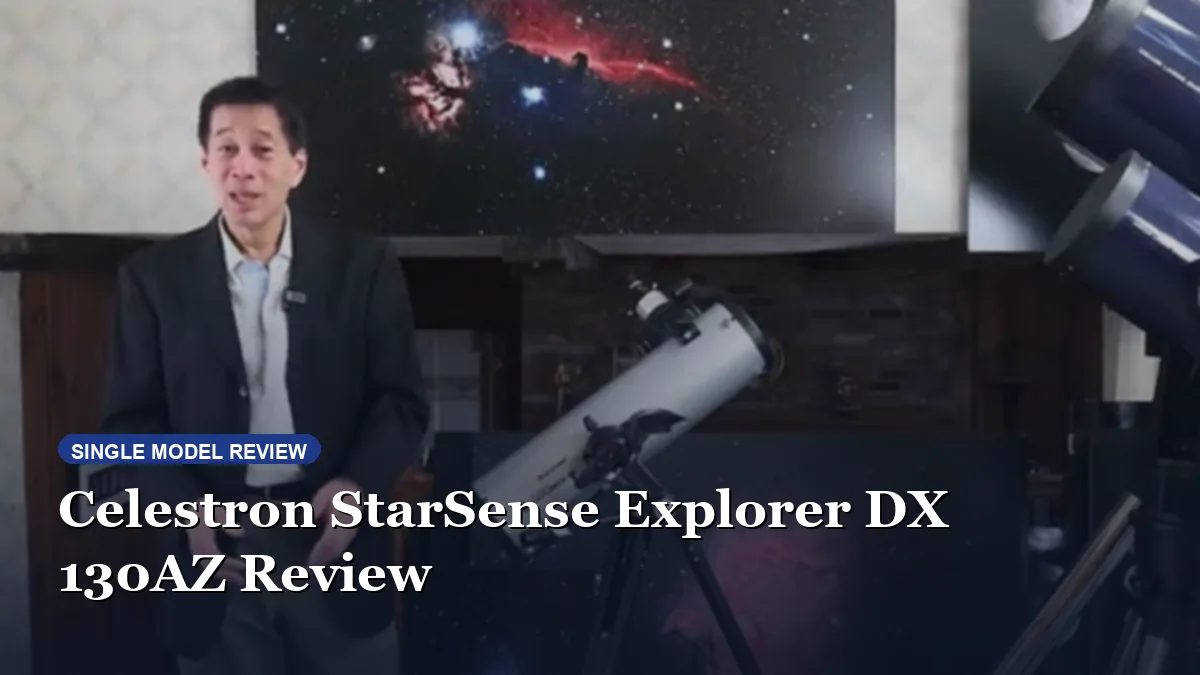

The StarSense Explorer DX 130AZ revolutionizes beginner astronomy by replacing complex star-hopping with intuitive app guidance. Its 130mm optical tube delivers bright, clear views of planetary and deep-sky targets.
See our flagship Best Telescope: Top Backyard Picks for Astronomy.
Verified Specifications
| Category / Type | Newtonian Reflector Telescope |
|---|---|
| Rated Output / Capacity | 130mm Aperture Light Gathering |
| Power / Motor | Manual Altazimuth with Slow-Motion Rods |
| Build & Materials | Aluminum Tripod and Steel Optical Tube |
| Operating Noise | Silent Manual Operation |
| Duty Cycle / Runtime | Unlimited Visual Observing Time |
| Dimensions & Weight | 13.6 lbs Total Assembled Weight |
| Key Safety & Controls | StarPointer Red Dot Finderscope |
What We Liked
- Innovative StarSense app makes target location effortless for novices.
- Generous 130mm aperture gathers enough light for faint deep-sky objects.
- Sturdy metal tripod provides superior stability compared to lighter alternatives.
- Includes essential starter eyepieces and a red dot finderscope.
Trade-Offs
- Manual altazimuth mount lacks motorized tracking capabilities for long exposures.
- Newtonian reflectors require periodic mirror collimation maintenance.
- App reliance means dead smartphone batteries halt automated navigation.
Optical Architecture and Mirror Specifications
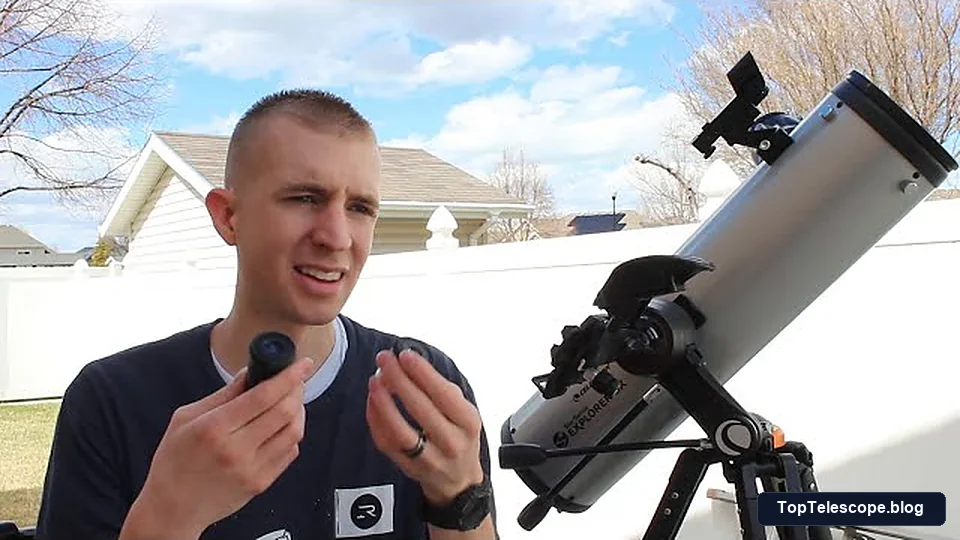
The optical tube assembly features a 130mm parabolic primary mirror designed to minimize spherical aberration. This aperture size collects ample light, resolving faint lunar details and bright Messier objects with impressive clarity during clear nights.
Operating at a fast focal ratio of f/5, the system provides wide fields of view. Consult our Celestron StarSense Explorer LT 114AZ guide for setup tips to maximize optical performance.
The 130mm parabolic primary mirror effectively eliminates spherical aberration, delivering crisp visual edges across wide stellar fields while gathering ample light for deep-sky observations under dark skies.
Featuring a 650mm focal length, obstructions remain minimal as this Newtonian reflector operates at a fast f/5 focal ratio, producing generously wide views for scanning galactic structures.
- Parabolic primary mirror design controls optical aberrations effectively.
- Fast f/5 focal ratio yields expansive deep-sky views.
- Glass substrate features highly reflective aluminum coatings.
Focal Length and Magnification Limits
Delivering a 650mm focal length, this Newtonian telescope balances wide-angle capabilities with useful planetary magnification. Users can easily scale powers using standard 1.25-inch eyepieces to inspect tight lunar craters and Saturn rings.
- Supports standard 1.25-inch accessories.
- Maximum practical magnification reaches roughly 306x under ideal seeing conditions.
Smartphone Integration and Plate-Solving Software
Celestron replaces traditional GoTo electronics with a smartphone docking mechanism. Read our Celestron StarSense Explorer LT guide to understand how the StarSense app performs instant plate-solving.
Beginners simply mount their device, align the optics using the onscreen instructions, and follow directional arrows. This clever technology removes the steep learning curve traditionally associated with manual star-hopping across unfamiliar constellations.
The proprietary StarSense app utilizes your phone camera to capture star patterns, executing internal plate-solving algorithms without requiring cellular data connections during rural night sky sessions.
Proper alignment of the mirror assembly with the phone dock ensures high pointing accuracy, letting beginners locate elusive Messier objects within seconds of completing initial setup routines.
- Uses smartphone camera for real-time plate solving.
- Eliminates complex star alignment procedures for novices.
- App generates dynamic lists of tonight's best targets.
Software Compatibility and Operational Requirements
The navigation software runs smoothly on most modern iOS and Android smartphones without requiring cellular data. Battery drain remains minimal, though users should ensure their mobile devices are fully charged before long sessions.
- Works offline using internal star databases.
- Compatible with most mainstream smartphone dimensions.
Video Review: Celestron StarSense Explorer DX 130AZ | High Point Scientific
Mount Mechanics and Structural Ergonomics
The telescope utilizes a manual altazimuth mount equipped with a smooth slow-motion rod. Review our Celestron StarSense Explorer 8 vs Apertura AD8 comparison to evaluate mounting stability differences.
Resting upon an adjustable aluminum tripod, the entire assembly maintains solid rigidity during focusing. While lacking motorized tracking motors, the manual ergonomics feel intuitive, responsive, and mechanically reliable for backyard astronomy sessions.
The lightweight altazimuth mount incorporates slow-motion control cables on both axes, permitting smooth manual adjustments when tracking celestial targets at high magnification power levels.
Constructed with aluminum legs, the adjustable tripod provides sturdy foundational support while dampening vibrations efficiently during wind gusts or accidental contact with the equipment setup.
- Altazimuth design provides straightforward vertical and horizontal movement.
- Altitude slow-motion rod permits fine-tuning adjustments.
- Accessory tray stabilizes the sturdy aluminum tripod legs.
Weight Distribution and Portability
Weighing approximately thirteen pounds completely assembled, the telescope is remarkably portable. Astronomers can easily carry the entire unit outside in one single trip, making impromptu stargazing sessions much more frequent and accessible.
- Lightweight frame suits mobile astronomy trips.
- Integrated carry handle simplifies transport tasks.
Field Performance and Visual Target Resolution
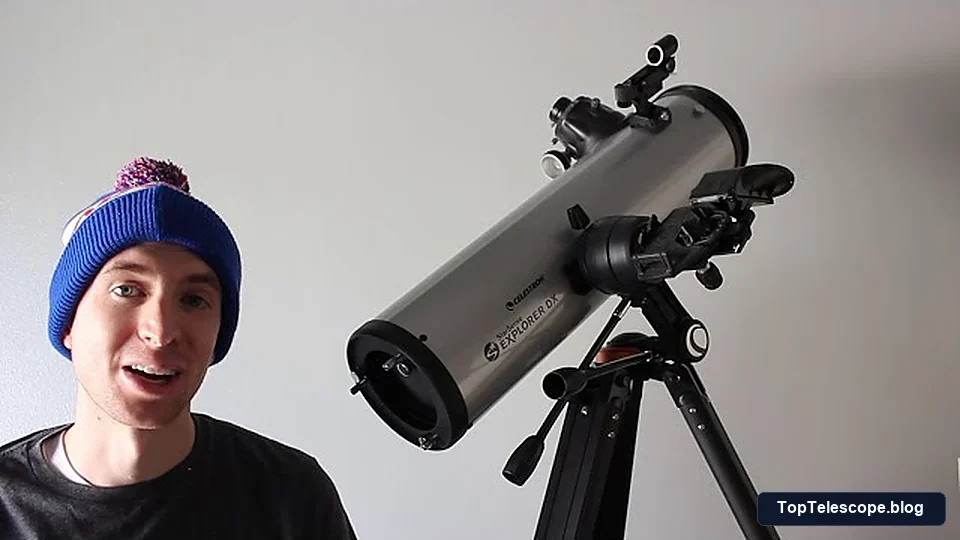
Under dark suburban skies, the 130mm optical aperture reveals impressive planetary surface features. Jupiter displays distinct cloud belts and four Galilean moons, while Saturn exhibits its prominent ring system alongside Titan.
Venturing beyond our solar system, observers can resolve bright star clusters and diffuse nebulae. The Orion Nebula shows intricate wisps of gas, and the Andromeda Galaxy appears as an elongated glowing oval core.
Planetary observers will appreciate sharp details on Jupiter's cloud belts and Saturn's ring system when utilizing quality eyepieces that exceed standard stock accessories included in packages.
Faint nebulae and globular clusters emerge with distinct structures under dark rural skies, though urban light pollution demands narrowband filters to enhance background contrast levels.
- Resolves major planetary cloud belts and moon details.
- Exposes bright Messier catalog deep-sky objects clearly.
- Delivers high contrast for lunar crater shadow viewing.
Eyepiece Pairing and Field of View
Included twenty-five millimeter and ten millimeter eyepieces provide low and medium magnifications out of the box. Adding a quality two-times Barlow lens effectively doubles those magnification steps for planetary viewing sessions.
- Bundled eyepieces cover basic magnification needs.
- Standard 1.25-inch barrel accepts aftermarket upgrades.
Thermal Equilibrium and Collimation Maintenance
Newtonian reflectors require thermal acclimatization to prevent internal air currents from degrading image sharpness. Leaving the optical tube outside for thirty minutes before viewing allows the primary mirror to match ambient temperatures.
Transporting the telescope can occasionally knock the mirrors slightly out of alignment over time. Regular optical collimation using simple tools ensures sharp focus and maintains peak performance across high-magnification planetary viewing targets.
Allowing the optical tube assembly thirty minutes to reach thermal equilibrium prevents internal air currents from degrading planetary sharpness during high magnification viewing sessions outdoors.
Routine inspection of the primary and secondary mirrors ensures precise optical alignment, which is easily maintained using standard adjustment screws located at the rear mirror cell housing.
- Requires brief thermal acclimation before critical viewing.
- Primary and secondary mirrors feature user-adjustable collimation screws.
- Periodic optical alignment preserves maximum image contrast.
Dust Mitigation and Optical Care
Keeping protective dust caps on the optical tube when stored prevents particulate accumulation on mirrors. Avoid touching optical surfaces directly to maintain mirror coatings and extend the lifespan of your telescope system.
- Dust caps protect sensitive optical coatings.
- Clean mirrors only when absolutely necessary using proper techniques.
Setup Workflow and Usability Considerations
Assembling the telescope requires no specialized tools, following a straightforward mechanical process that takes under ten minutes. The smartphone dock aligns quickly with the optical axis using a simple calibration routine.
Beginners will appreciate the comprehensive instruction manual and included starter accessories like the red dot finderscope. This thoughtful ecosystem ensures new astronomers achieve successful target acquisition during their very first outing.
Assembling the entire apparatus requires minimal tools, letting users transition from storage bags to fully operational stargazing configurations in less than ten minutes of careful preparation.
Maintaining battery charge on your mobile device is essential, so packing an external power bank prevents unexpected interruptions during extended astronomical imaging or visual tracking runs.
- Rapid tool-free assembly takes approximately ten minutes.
- StarPointer finder aids initial manual alignment steps.
- Clear user manual guides first-time setup procedures.
Environmental Factors and Viewing Location
Selecting a dark observing site away from intense streetlights significantly improves deep-sky target visibility. Atmospheric stability, or seeing conditions, dictates whether high magnifications will yield sharp planetary details during sessions.
- Dark skies maximize deep-sky contrast.
- Stable atmospheric seeing enhances high-power resolution.
Comprehensive Buyer Summary and Verdict
You can easily follow our Celestron StarSense Explorer DX 130AZ guide to master app alignment, calibrate the mirror optics, and optimize viewing sessions under dark skies.
While manual tracking and routine mirror collimation require minor effort, the overall value remains stellar. Anyone seeking an engaging, frustration-free introduction to stargazing will find this well-engineered telescope bundle immensely satisfying.
This reflector telescope successfully bridges the gap between complex computerized mounts and traditional manual scopes, offering an intuitive smartphone interface for modern backyard astronomers everywhere.
Balancing optical aperture with portability, the instrument delivers reliable performance that satisfies intermediate hobbyists seeking an accessible gateway into deep-space observation and planetary study sessions.
- Blends optical power with smart app navigation.
- Ideal balance of aperture and physical portability.
- Exceptional value for beginning backyard astronomers.
Final Recommendation for Enthusiasts
This telescope represents a brilliant compromise between automated GoTo systems and purely manual setups. It delivers rewarding visual experiences without demanding extensive technical expertise from users exploring the night sky.
- Bridges manual setups and computerized systems.
- Recommended for enthusiastic beginners and families.
Frequently Asked Questions
How does the StarSense app work without internet?
The mobile application utilizes your high-resolution smartphone camera to photograph overhead star patterns, allowing sophisticated internal software algorithms to perform reliable offline plate solving instantly.
This clever navigation process matches celestial constellations directly against comprehensive onboard databases without ever requiring an active cellular data connection during your remote outdoor stargazing sessions.
Is collimation difficult for beginner telescope owners?
Routine mirror alignment requires only basic adjustment screws located securely at the rear of the optical tube assembly, ensuring optimal performance over time.
Following straightforward manufacturer instructions or helpful online tutorials makes mastering this essential optical maintenance procedure remarkably easy for any enthusiastic novice astronomer.
Can I connect a camera for deep-sky astrophotography?
While the manual altazimuth mount cannot track celestial rotation for long photographic exposures, you can still successfully capture stunning images of the Moon and bright planets.
Utilizing a standard smartphone adapter allows you to photograph lunar craters and bright planetary disks directly through the eyepiece with satisfying clarity.
What smartphone models are compatible with the app?
The dedicated StarSense Explorer application supports most modern Apple iOS devices running recent operating system versions alongside a wide array of mainstream Android smartphones.
Checking the official manufacturer compatibility list before purchasing ensures your specific mobile device dimensions fit securely inside the included adjustable optical dock.
How do I store and maintain my telescope?
Always store your optical tube and tripod in a dry, temperature-controlled environment indoors to prevent humidity damage and corrosion over time.
Keeping protective dust caps securely attached on all exposed glass surfaces preserves your investment and guarantees long-term optical performance during future observing sessions.