Celestron StarSense Explorer DX 130AZ Reflector Review
This Newtonian reflector pairs large aperture optics with innovative smartphone plate-solving. It offers rapid target acquisition despite minor mechanical compromises.

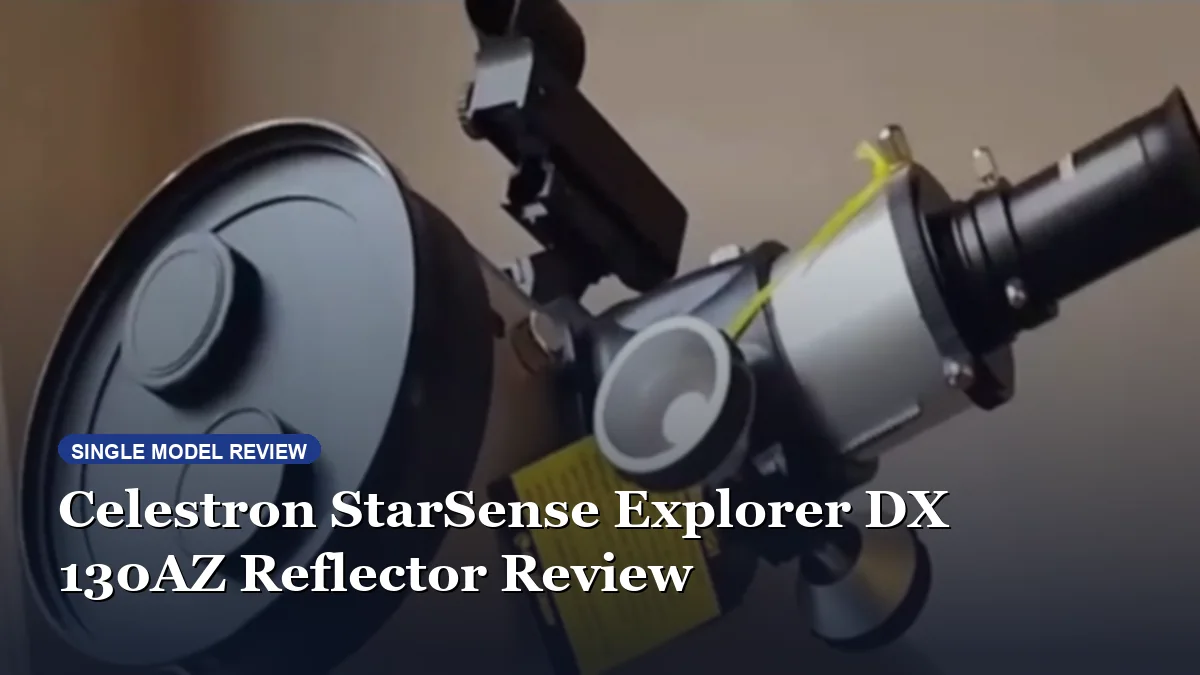

The StarSense Explorer DX 130AZ transforms amateur stargazing through automated app alignment. Beginners will enjoy effortless navigation to deep-sky objects despite manual altazimuth tracking.
See our flagship Best Telescope: Top Backyard Picks for Astronomy.
Verified Specifications
| Category / Type | Newtonian Reflector Telescope |
|---|---|
| Rated Output / Capacity | 130mm primary mirror aperture |
| Power / Motor | Manual Altazimuth with slow-motion cables |
| Build & Materials | Aluminum optical tube and steel tripod legs |
| Operating Noise | Silent manual operation with app audio cues |
| Duty Cycle / Runtime | Unlimited session runtime via smartphone sync |
| Dimensions & Weight | 650mm optical tube length, 13.8 lbs total |
| Key Safety & Controls | StarSense dock with internal camera mirror |
What We Liked
- Generous 130mm light-gathering primary mirror
- Innovative StarSense smartphone alignment app
- Sturdy steel leg tripod platform
- Smooth slow-motion altitude adjustment rod
- Comprehensive beginner eyepiece bundle included
Trade-Offs
- Manual tracking requires constant user input
- Plastic focusing knob exhibits minor backlash
- Collimation needed after transport bumps
- App requires clear smartphone camera view
Optical Architecture and Primary Mirror Assembly
The optical tube features a parabolic 130mm primary mirror engineered to gather ample light. This focal configuration delivers bright planetary views and faint deep-sky nebulae.
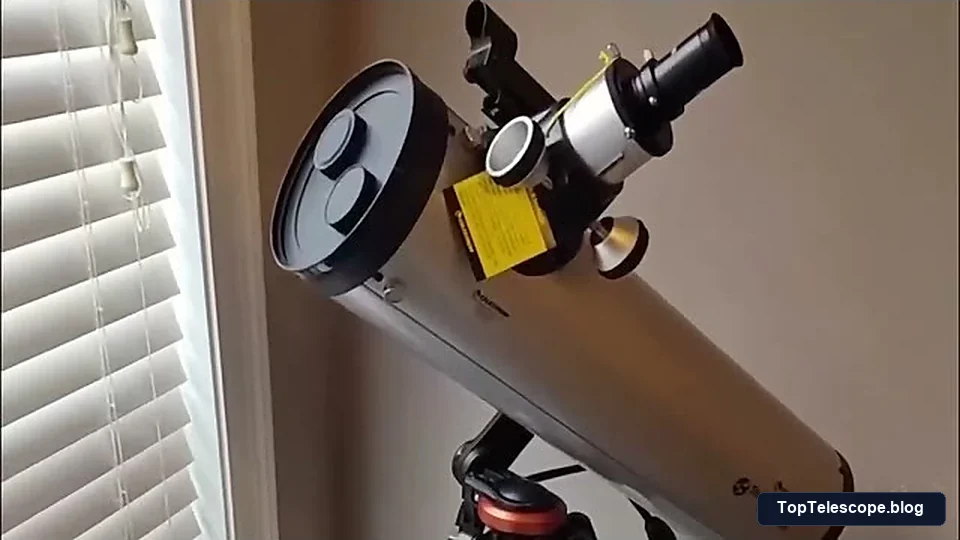
Precision optical coatings enhance reflectivity across the visible spectrum. Users will appreciate the sharp contrast when observing lunar craters and distant stellar nurseries.
The open-ended Newtonian design optimizes thermal dissipation during evening cooling cycles. Proper alignment ensures minimal optical aberration across the wide field.
The 130mm parabolic primary mirror delivers a fast f/5 focal ratio, yielding a 650mm focal length optimized for wide-field deep-sky observation and bright lunar vistas under dark skies.
Reviewing celestron starsense explorer lt guide, low-expansion glass substrates feature a protective aluminum silicon dioxide overcoat designed to resist atmospheric degradation and maintain reflective efficiency during intensive field use.
The secondary mirror sits inside a sturdy four-vane spider assembly, utilizing thin stainless steel vanes to minimize diffraction spikes while keeping optical alignment stable during transport across rough terrain.
- 130mm aperture gathers substantial starlight
- Parabolic primary mirror minimizes spherical distortion
- Multicoated glass elements maximize light transmission
- 650mm focal length balances wide and high power
Primary Mirror Coatings and Collimation
Protective overcoats shield the delicate aluminum mirror surface from oxidation. Routine collimation maintains optimal optical alignment for crisp high-magnification viewing sessions.
Adjustment screws on the cell rear simplify user calibration routines. Always verify alignment before targeting faint planetary details.
- Aluminum reflective coatings with protective quartz
- User-adjustable rear cell collimation screws
Smartphone Integration and StarSense Plate-Solving Mechanics
Integration with mobile devices redefines traditional star-hopping hurdles. The patented StarSense dock utilizes your phone camera to photograph the night sky directly.
Proprietary algorithms analyze star patterns instantly against an internal database. This plate-solving technique calculates exact coordinates without requiring complex GPS sensors.
On-screen directional arrows guide manual adjustments until target alignment completes. A green bullseye indicates precise centering within the accompanying eyepiece field.
Consulting our celestron starsense explorer dx 130az guide, you discover how the mobile app captures sky images, applying advanced plate-solving algorithms to calculate your exact telescope orientation instantly.
A precision mirror and lens assembly directs light from the starfields directly into your smartphone camera, bypassing the need for complex internal GPS hardware or tedious star alignment procedures.
The software interface displays intuitive directional arrows, guiding you smoothly until your target object centers perfectly inside the low-power eyepiece for immediate and satisfying astronomical viewing sessions.
- Patented dock securely holds various smartphone models
- App plate-solving calculates telescope coordinates fast
- No internet connection required for field operation
- Curated target lists adapt to local viewing times
App Usability and Database Performance
The software interface presents intuitive menus highlighting prominent seasonal constellations. Beginners can navigate complex celestial catalogs without prior astronomy knowledge.
Audio descriptions provide fascinating educational context for observed targets. Night-vision red mode preserves dark adaptation during extended sessions.
- Extensive object database with detailed descriptions
- Red screen mode protects night-adapted human vision
Video Review: Celestron StarSense Explorer DX 130AZ | High Point Scientific
Mechanical Mount, Slow-Motion Controls, and Field Ergonomics
Through our starsense vs apertura guide, the altazimuth mount supports steady positioning while a sliding altitude rod provides smooth tracking during high-power observations.
Sturdy steel tripod legs dampen environmental vibrations efficiently outdoors. Center accessory trays secure extra eyepieces and prevent field misplacement.
Ergonomic locking levers allow quick adjustments without tools. The overall assembly balances structural rigidity with manageable transport weight.
The altazimuth mount features an adjustable aluminum tripod with sturdy accessory trays, providing a stable platform that dampens wind vibrations effectively during outdoor observation sessions.
Integrated slow-motion control cables attach securely to both altitude and azimuth axes, allowing minute manual adjustments to track celestial objects smoothly at high magnifications without sudden jerks.
Ergonomic tension clutches on each axis let you switch quickly between free-swiveling movements for broad sky sweeps and locked tracking modes for detailed planetary inspection.
- Altazimuth mount ensures intuitive up-down directional control
- Sliding altitude rod allows micro-positioning adjustments
- Adjustable steel tripod legs suppress ground vibrations
- Accessory tray adds stability and storage space
Tripod Rigidity and Vibration Damping
Heavy-duty steel construction resists wind gusts during outdoor observations. Rubber feet isolate the chassis from hard pavement vibrations.
Fasteners must remain firmly tightened to prevent unwanted optical drift.
- Steel leg diameter enhances torsional rigidity
- Rubber isolation feet minimize ground tremor transfer
Thermal Equilibrium, Efficiency, and Optical Performance
Reaching thermal equilibrium is vital for sharp planetary imaging. Allowing the optical tube to acclimate outdoors eliminates internal air currents.
Light throughput remains high thanks to minimal internal baffling reflections. Contrast levels easily reveal Jupiter atmospheric belts and Saturn rings.
Thermal management directly impacts maximum useful magnification limits. Users should budget thirty minutes for ambient temperature equalization.
Reflective Newtonian systems require adequate thermal acclimatization, so letting the optical tube rest outside for thirty minutes ensures heat trapped inside dissipates before critical viewing.
The generous 130mm aperture gathers substantial light, resolving fine lunar craters, distinct planetary cloud bands, and numerous Messier catalog deep-sky clusters with impressive visual brightness.
Field curvature remains minimal across wide-field eyepieces, though noticing slight coma at extreme edges is normal for fast parabolic Newtonian designs operating without a corrector lens.
- Open tube design accelerates thermal equalization
- Internal baffling suppresses stray light reflections
- Sharp contrast reveals subtle lunar surface shadows
Magnification Limits and Eyepiece Pairing
Included eyepieces offer versatile magnification steps for various targets. Adding a barlow lens doubles focal lengths for high-power lunar studies.
Exceeding theoretical magnification limits results in dim imagery.
- Standard 25mm and 10mm glass eyepieces
- Compatible with standard 1.25-inch accessories
Assembly, Setup Workflow, and Routine Maintenance Protocols
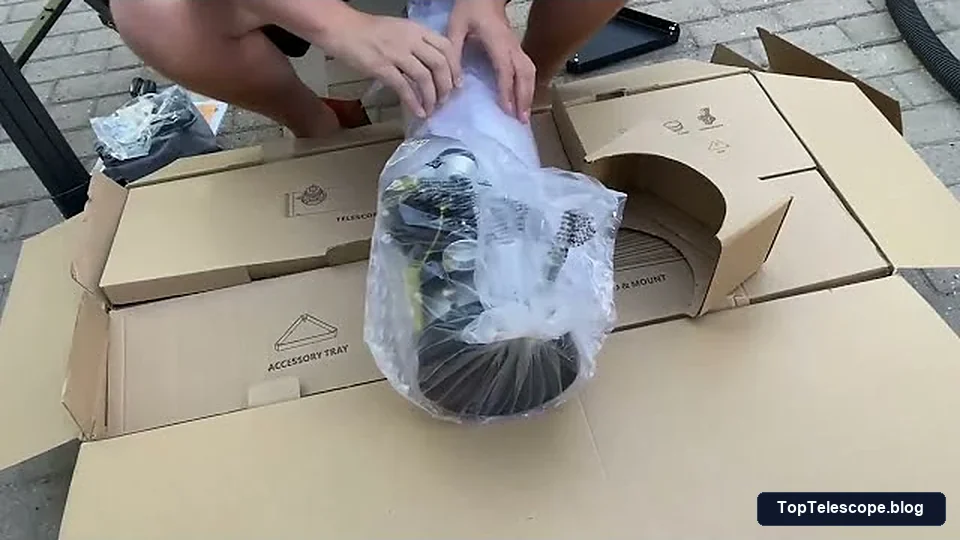
Initial assembly requires minimal tools and straightforward hardware steps. Clear manuals guide users through mounting the optical tube assembly safely.
Routine maintenance involves dusting exterior lenses and mirror surfaces. Keeping optical components clean preserves light gathering efficiency over years.
Storage bags protect vulnerable components from dust during transport. Always secure protective caps when breaking down equipment.
Assembling the tripod and optical tube requires basic hardware handling, utilizing thumbscrews for tool-free setup in the field while ensuring all structural connections remain firmly tightened.
Periodic collimation adjustments using a simple cap or laser tool ensure the primary and secondary mirrors stay aligned, maximizing image sharpness during high-magnification planetary observations.
Store the optical tube vertically with dust caps securely attached in a climate-controlled room to prevent dust accumulation and moisture condensation on fragile mirror coatings.
- Tool-free accessory mounting speeds up field setup
- Clear instructional manual with photographic guides
- Simple cleaning protocols protect fragile mirror coatings
Storage Guidelines and Field Transport
Store optical tubes vertically in temperature-controlled indoor environments. Prevent moisture accumulation by leaving storage caps off temporarily after heavy dew.
Padded cases safeguard delicate mounts during car transit.
- Climate-controlled storage prevents optical fungus
- Padded transport protects alignment integrity
Comparative Value, Target Audience, and Final Verdict
This telescope targets enthusiastic beginners seeking immediate celestial success. Combining optical aperture with smartphone guidance removes traditional amateur learning curves.
While manual tracking lacks motorized tracking convenience, the system price point remains highly accessible. Advanced users might miss equatorial tracking motors.
Ultimately, this reflector delivers exceptional educational value and stargazing enjoyment. Smartphone alignment technology completely revitalizes traditional backyard astronomy.
This Newtonian reflector bridges the gap between manual beginner scopes and computerized GoTo setups, offering a smart hybrid approach that relies on modern smartphone processing power.
As detailed in our starsense explorer 114az guide, dedicated beginners appreciate the intuitive navigation system, which eliminates frustrating star-hopping sessions and accelerates seasonal constellation learning patterns.
Delivering robust optical performance paired with innovative app integration, it stands out as a reliable, highly educational tool for exploring deep-space wonders from your backyard.
- Ideal entry point for beginner backyard astronomers
- App guidance eliminates frustrating manual star searches
- Strong balance of optical aperture and portability
Who Should Buy Versus Who Should Skip
Beginners craving instant celestial gratification will love this setup. Astrophotographers requiring deep-sky tracking motors should explore equatorial alternatives.
Evaluate your patience for manual altitude adjustments before purchasing.
- Recommended for tech-savvy stargazing beginners
- Skip if motorized equatorial tracking is required
Frequently Asked Questions
Do I need internet access for the StarSense app to function outdoors?
No internet connection is required during your observing session. The app relies entirely on offline plate-solving using your phone camera.
Can I attach my digital camera for serious deep-sky astrophotography?
The included adapter is designed for smartphones to capture bright planets and the Moon. Long-exposure deep-sky imaging requires motorized equatorial tracking mounts.
How often does the primary mirror require optical collimation?
Collimation frequency depends on transport bumps and temperature shifts. Always check alignment when you notice declining image sharpness at high magnifications.
What is the maximum useful magnification for this 130mm reflector?
The maximum practical magnification is roughly three hundred times under ideal atmospheric seeing conditions. Most deep-sky viewing works best at lower powers.
Are batteries required for the telescope mount or finderscope?
The manual altazimuth mount requires zero electrical power during operation. The StarPointer red dot finderscope requires two user-supplied AAA batteries.