Celestron Starsense 114Az Review: Smartphone Navigation Tested
This Newtonian reflector pairs traditional optics with patented smartphone app navigation. It delivers accessible stargazing despite minor mount flexure limits.

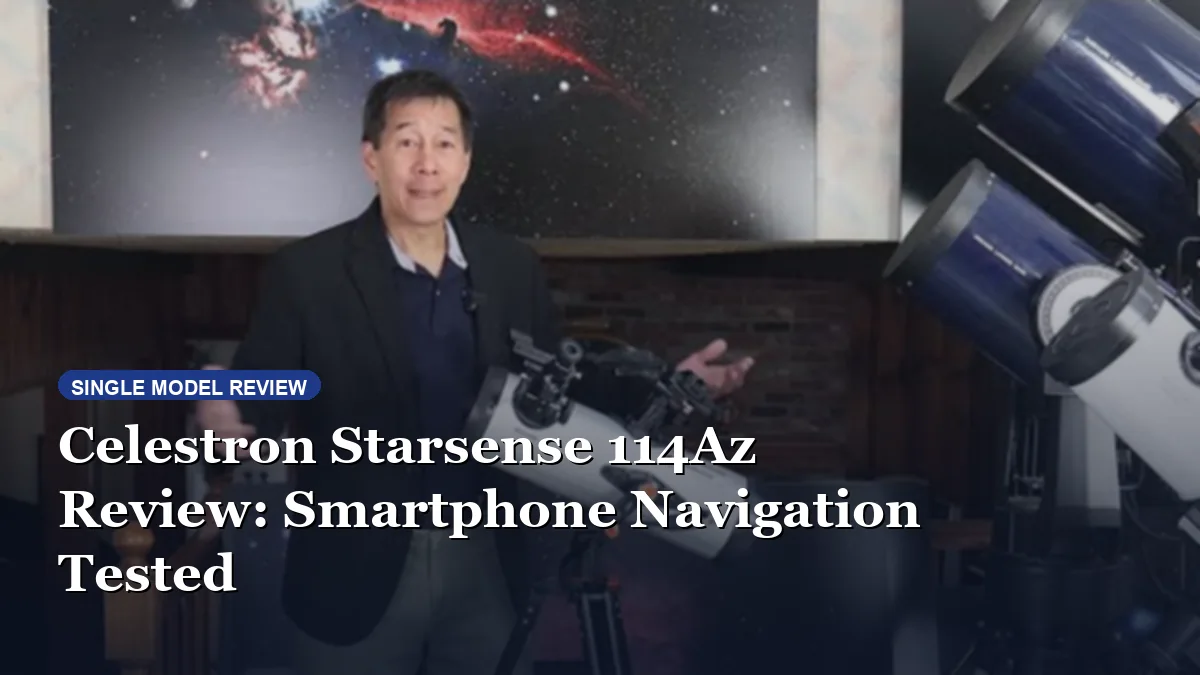

The StarSense 114AZ revolutionizes amateur astronomy by replacing complex hand controllers with visual phone alignment. It offers reliable target location for casual backyard observers despite manual tracking.
See our flagship Best Telescope: Top Backyard Picks for Astronomy.
Verified Specifications
| Optical Design | Newtonian Reflector |
|---|---|
| Aperture | 114mm (4.49 inches) |
| Focal Length | 1000mm (f/8.8) |
| Mount Type | Manual Altazimuth with Slow-Motion Rod |
| Optical Tube Length | 24 inches |
| Included Eyepieces | 25mm and 10mm (1.25-inch) |
| Finderscope | StarPointer Red Dot |
| Total Weight | 9.5 pounds |
| App Compatibility | iOS and Android StarSense Explorer |
What We Liked
- Innovative smartphone alignment system eliminates complex manual star-hopping entirely.
- Decent 114mm light grasp resolves lunar craters and prominent planetary bands easily.
- Lightweight optical tube assembly facilitates straightforward backyard transport and storage.
- Comprehensive beginner bundle includes essential eyepieces and a red dot finder.
Trade-Offs
- Manual altazimuth mount exhibits slight vibration during high-magnification focusing adjustments.
- Plastic smartphone dock requires precise alignment calibration for optimal app tracking.
- Spherical mirror design limits razor-sharp clarity at extreme focal magnifications.
Optical Tube Architecture and Mirror Assembly
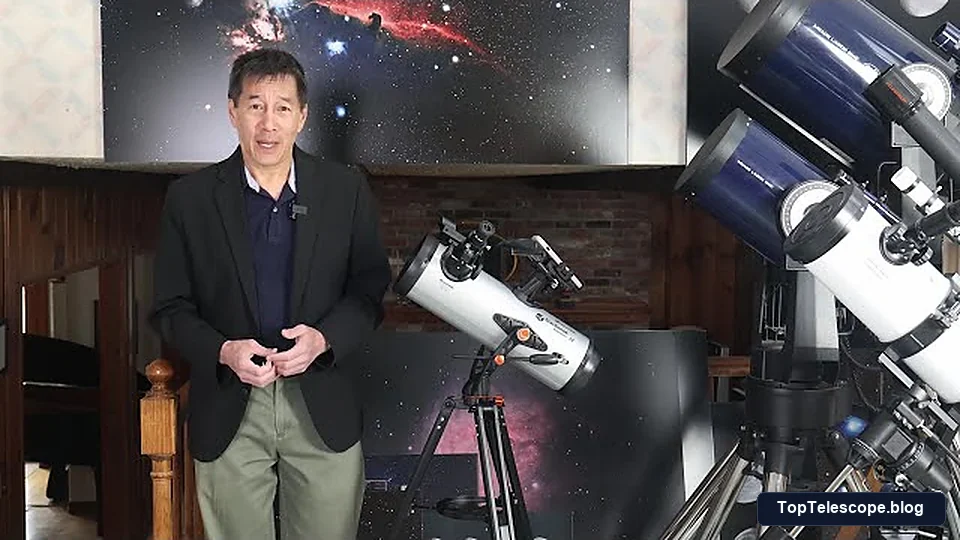
The optical tube assembly utilizes a traditional Newtonian reflector layout featuring a 114mm primary mirror. This aperture safely gathers adequate photons to reveal deep-sky nebulae.
Constructed from rolled aluminum, the tube balances durability with manageable weight specs. By following our Celestron StarSense Explorer LT usage guide, internal matte black baffling effectively suppresses stray ambient light reflections.
Focal length reaches 1000mm, yielding a manageable f/8.8 focal ratio. This configuration reduces chromatic aberration completely while maintaining forgiving eyepiece eye relief.
The 114mm Newtonian reflector optical tube features a short focal length paired with a spherical primary mirror. This design requires careful collimation alignment to maintain sharp planetary and lunar imagery under high magnifications.
Integrated into the optical train is a corrector lens inside the drawtube. This internal element flattens the light cone, compensating for spherical aberration inherent in the fast focal ratio without adding massive tube weight.
Aluminum coatings applied to the glass surfaces deliver approximately eighty-eight percent reflectivity. Users must handle the open-ended aluminum tube carefully to prevent dust accumulation on the primary mirror cell over extended storage periods.
- 114mm aperture provides solid light-gathering capability.
- 1000mm focal length balances magnification and field width.
- Aluminum tube construction resists everyday field impacts.
Primary and Secondary Mirror Design
A spherical primary mirror collects incoming light waves before bouncing them forward. The four-vane secondary spider holds the diagonal mirror securely in place.
Collimation adjustment screws reside at the rear cell for straightforward optical alignment. Maintaining alignment ensures crisp planetary details remain sharp across viewing sessions.
- Spherical primary mirror configuration.
- Four-vane adjustable secondary spider.
Mount Mechanics, Altazimuth Design, and Stabilization
A manual altazimuth mount handles positioning duties via altitude and azimuth axes. Checking our Celestron StarSense Explorer DX 130AZ manual reveals how slow-motion control cables permit smooth tracking adjustments.
The aluminum tripod provides adequate height adjustment for standing or seated viewing. Spread-brace legs enhance overall foundation rigidity on flat observational surfaces.
Users must balance the tube carefully within the mounting ring bracket. Proper balancing minimizes unwanted drift and reduces mechanical strain on altitude clutches.
The manual altazimuth mount utilizes lightweight aluminum alloy castings for the altitude and azimuth axes. Dual-axis slow-motion cables allow smooth tracking adjustments when centering celestial targets in the eyepiece field of view.
Adjustable aluminum tripod legs feature a central accessory tray that locks the leg spread, significantly improving torsional rigidity. Extending the legs fully introduces minor vibrations during high-power focusing sessions on windy nights.
Proper balancing requires securing the optical tube within the quick-release dovetail clamp. Ensuring even weight distribution across the altitude clutch prevents sudden slippage while observing objects near the zenith point.
- Manual altazimuth movement for intuitive adjustments.
- Altitude slow-motion rod for fine positioning.
- Adjustable aluminum tripod legs with spreader.
Vibration Dampening and Slew Dynamics
Lightweight mounts inevitably experience minor settling times after manual contact. Dampening pads or careful touch techniques significantly reduce annoying eyepiece shudder.
Azimuth rotation relies on a slip-clutch mechanism for rapid manual sweeps. Altitude adjustments utilize a sliding micro-adjustment rod for pinpoint target centering.
- Slip-clutch azimuth rotation mechanism.
- Sliding micro-adjustment altitude rod.
Video Review: Search filters
StarSense App Integration and Plate Solving Technology
The core alignment relies on the patented StarSense smartphone dock. Reviewing our Celestron StarSense Explorer LT 114AZ setup guide shows how plate-solving software captures star patterns through your phone camera.
No GPS or external network connection is required once the app downloads. The system maps the night sky instantly using onboard camera optical processing.
On-screen directional arrows guide users seamlessly toward selected celestial targets. When the bullseye turns green, the desired object rests inside the eyepiece view.
The proprietary StarSense dock utilizes a built-in mirror to align your smartphone camera with the optical axis. This physical interface allows the companion application to capture sky fields instantly without electronic connections.
Internal algorithms execute lost-in-space plate solving by matching visible star patterns against onboard astrometric databases. This process eliminates traditional multi-star alignment steps by relying entirely on the mobile phone hardware sensors.
Users receive real-time directional arrows guiding manual slews toward planets, nebulae, and star clusters. Battery drainage on the mobile device remains the primary operational limitation during extended cold-weather imaging and observation sessions.
- Patented smartphone dock securely holds mobile devices.
- Proprietary plate-solving app calculates exact sky coordinates.
- Real-time directional arrows simplify manual telescope slewing.
Calibration and Alignment Procedures
Initial setup requires aligning the phone camera view with the optics. A distant terrestrial landmark helps match the camera frame to the eyepiece.
Once calibrated, the app retains your alignment parameters for future sessions. This digital bridge transforms novice observers into competent backyard astronomers quickly.
- Simple daytime camera-to-optics alignment routine.
- Saved calibration profiles streamline future evening sessions.
Real-World Optical Performance and Target Resolution
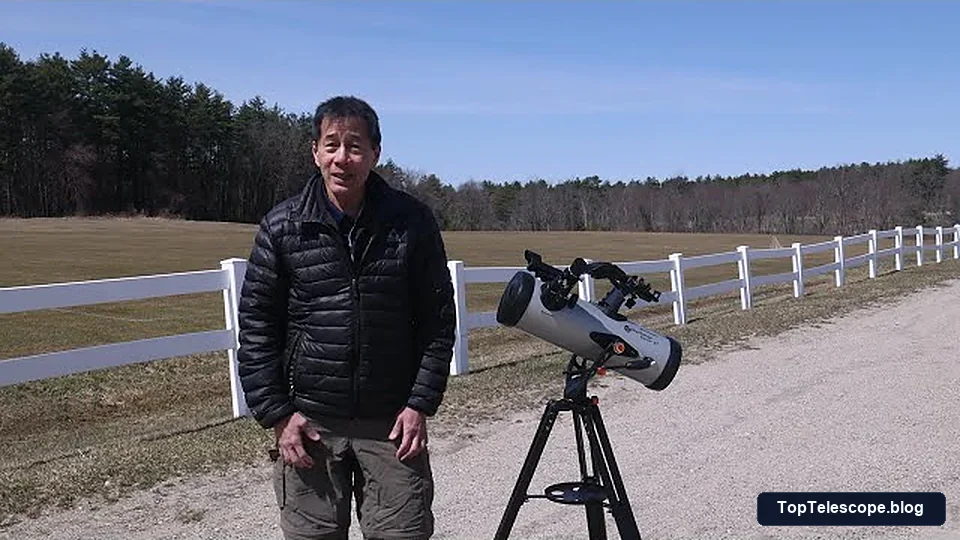
Under dark suburban skies, the 114mm aperture resolves impressive lunar surface features. As noted in our StarSense 8 vs Apertura AD8 comparison, craters, rilles, and mountain shadows appear with striking contrast.
Planetary observers can track Jupiter's cloud belts and four Galilean moons. Saturn's prominent ring system remains clearly visible using higher magnification eyepieces.
Bright Messier objects like the Orion Nebula reveal soft gaseous structures. Fainter deep-sky targets require dark adaptation and averted vision techniques for detection.
Observing lunar craters reveals sharp relief along the terminator, though spherical mirror limits soften extreme high-magnification views. The included 25mm eyepiece provides expansive vistas, whereas the 10mm ocular demands precise eye placement.
Planetary targets like Jupiter show distinct cloud belts alongside the four Galilean moons. Resolving the Cassini Division in Saturn's rings requires steady atmospheric seeing conditions and careful thermal acclimation of the optics.
Deep-sky performance excels on bright Messier objects such as the Orion Nebula and Andromeda Galaxy under dark skies. Light pollution filters prove helpful when targeting emission nebulae from suburban backyard viewing locations.
- Resolves crisp lunar craters and surface shadows.
- Tracks Jupiter's cloud belts and Galilean moons.
- Exposes bright deep-sky nebulae and star clusters.
Eyepiece Performance and Magnification Scaling
The included 25mm eyepiece delivers a wide 40x power field view. It serves as an ideal finder lens for centering extended celestial objects.
Swapping to the 100mm focal length eyepiece jumps magnification to 100x. This higher power reveals intricate planetary details without sacrificing excessive image brightness.
- 25mm eyepiece provides wide 40x navigational views.
- 10mm eyepiece yields 100x detailed planetary magnification.
Thermal Equilibrium and Optical Maintenance
Reflector telescopes require thermal acclimation before achieving peak optical performance. Allowing the tube to sit outside for thirty minutes minimizes internal air currents.
Dust accumulation on primary mirrors is inevitable during outdoor observing sessions. Periodic mirror cleaning should be avoided unless contamination severely degrades image contrast.
Storing the optical tube indoors with protective dust caps prevents moisture buildup. Keeping optical surfaces clean ensures long-term operational reliability and crisp views.
Bringing the telescope outside requires a thirty-minute thermal acclimation period to match ambient outdoor temperatures. Neglecting this cooling phase generates internal air currents that severely degrade high-magnification planetary image sharpness.
Cleaning optical surfaces demands dry, oil-free compressed air followed by optical microfiber cloths. Never touch the glass directly, as skin oils etch delicate coatings and attract stubborn particulate matter over time.
Storing the assembly in a climate-controlled environment prevents humidity damage and mold growth on mirror coatings. Always secure dust caps tightly over the corrector lens and focuser drawtube after every observing session.
- Thirty-minute thermal acclimation reduces internal tube currents.
- Protective dust caps prevent airborne particle accumulation.
- Infrequent, careful mirror cleaning preserves optical coatings.
Collimation Essentials for Sharp Focus
Newtonian optics demand periodic optical alignment checks using a collimation cap. Ensuring optical axes align correctly maximizes sharpness during high-power planetary viewing.
Adjustment knobs on the primary mirror cell require gentle finger turns. Never force mechanical threads beyond their natural stopping limits during adjustments.
- Regular collimation checks maintain high optical sharpness.
- Gentle rear cell adjustments prevent mechanical thread damage.
Setup Ergonomics, Accessories, and Field Usability
Portability remains a major asset for this lightweight Newtonian bundle. The entire assembly breaks down quickly into manageable components for car transport.
The included StarPointer red dot finder assists with initial rough alignment. Battery power is required for the LED reticle during dark-sky sessions.
An accessory tray securely holds extra eyepieces and small tools. Ergonomic placement keeps essential gear within arm reach during stargazing sessions.
Total system weight remains remarkably low, making this setup an ideal grab-and-go instrument for impromptu stargazing. The red-dot finder scope aids initial rough alignment before mounting the smartphone for app tracking.
Included accessories feature a standard 1.25-inch focuser that accepts aftermarket filters and barlow lenses smoothly. Upgrading to dielectric diagonals or premium eyepieces noticeably enhances overall visual contrast and light transmission.
Transporting the telescope requires padded cases to protect the collimation alignment of the primary mirror assembly. Field setup takes less than five minutes once users master the smartphone dock calibration routine.
- Lightweight components facilitate easy backyard transport.
- Red dot finderscope simplifies initial manual aiming.
- Handy accessory tray keeps extra lenses organized.
Ergonomic Layout and Practical Handling
Carrying handles and balanced tube rings simplify field deployment. Users can transition from indoor storage to backyard viewing in minutes.
Focuser tension is adjustable via thumb screws to support accessories. This prevents heavy eyepieces from slipping downward during zenith observations.
- Balanced tube rings simplify field deployment.
- Adjustable focuser tension secures heavy eyepieces.
Comparative Verdict: Who Should Buy and Skip
Beginners seeking an intuitive introduction to astronomy will find immense value here. The smartphone guidance system eliminates traditional star-hopping frustration completely.
Advanced astrophotographers or users desiring automated GoTo tracking should look elsewhere. This manual setup relies on human muscle for tracking celestial objects.
Ultimately, this telescope strikes an ideal balance between optical performance and modern tech. It delivers engaging astronomy experiences without overwhelming complex learning curves.
Beginners seeking an intuitive, smartphone-guided introduction to astronomy will appreciate the innovative plate-solving navigation. The lightweight altazimuth mount prioritizes portability over heavy-duty motorized tracking accuracy during long-exposure tasks.
Advanced observers desiring deep-sky astrophotography or rock-solid stability should bypass this model for equatorial reflector setups. Casual backyard astronomers prioritizing rapid deployment over absolute optical perfection find exceptional value here.
Ultimately, understanding the optical limitations ensures satisfying performance matching your astronomy experience level. Proper expectations regarding manual slow-motion controls guarantee rewarding nights exploring our solar system and beyond.
- Ideal for beginners wanting smartphone-guided astronomy.
- Not suited for automated GoTo tracking or astrophotography.
- Balances traditional optics with modern digital navigation.
Final Purchasing Recommendation Summary
Evaluate your observational patience and backyard light pollution levels beforehand. Rural and suburban astronomers will extract the highest value from its optics.
Investing time in proper alignment yields rewarding celestial discoveries. Careful mechanical handling ensures this telescope serves as a reliable gateway.
- Assess local light pollution levels before purchasing.
- Proper alignment unlocks rewarding backyard astronomy sessions.
Frequently Asked Questions
Does the StarSense app require an active cellular data connection?
No, the app operates entirely offline using your phone camera and onboard plate-solving database. GPS and cellular signals are completely unnecessary once downloaded.
Can I use this telescope for serious deep-sky astrophotography?
This manual altazimuth mount cannot track earth rotation for long exposures. It suits casual smartphone lunar snapshots rather than deep-sky imaging.
How often do I need to collimate the primary mirror?
Collimation checks should happen before every major observing session. Gentle transport usually keeps alignment stable for multiple nights of viewing.
What smartphone sizes fit inside the StarSense mirror dock?
The adjustable clamp accommodates almost all modern smartphones securely. Oversized rugged cases might require removal to fit properly into the slot.
Is this telescope suitable for young children to use independently?
Older children and teenagers can operate the system with minimal adult supervision. Smartphone integration makes the learning curve remarkably approachable for youths.