Celestron Powerseeker 127 Technical Review
This entry-level Newtonian reflector combines a 127mm aperture with a manual equatorial mount. It offers high light gathering capacity alongside notable mechanical setup learning curves.

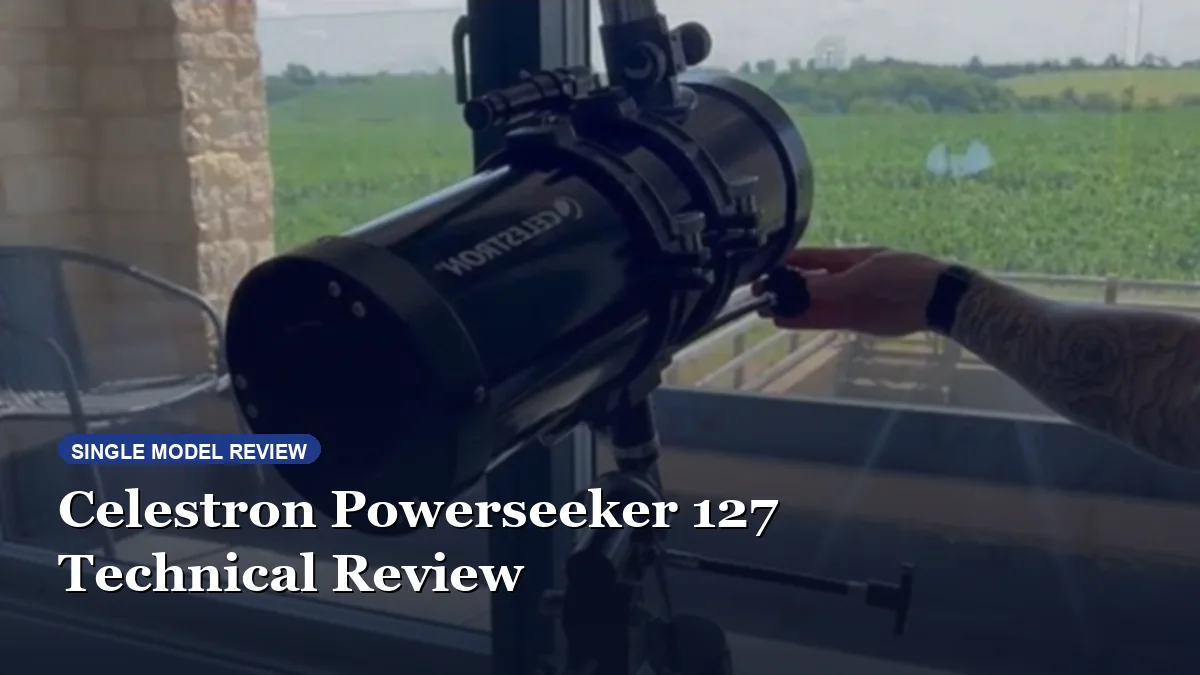

The optical tube delivers surprisingly bright lunar views, but the lightweight mount requires patience. It remains a viable budget gateway instrument for dedicated hobbyists.
See our flagship Best Telescope: Top Backyard Picks for Astronomy.
Verified Specifications
| Category / Type | Newtonian Reflector |
|---|---|
| Rated Output / Capacity | 127mm Aperture |
| Power / Motor | Manual Operation |
| Build & Materials | Aluminum tube and plastic mount components |
| Operating Noise | Silent manual operation |
| Duty Cycle / Runtime | Unlimited visual observing |
| Dimensions & Weight | 33D x 33W x 54H inches |
| Key Safety & Controls | Manual slow-motion cables |
What We Liked
- Substantial 127mm light grasp reveals lunar craters and bright Messier objects clearly.
- Included 3x Barlow lens and dual eyepieces provide a versatile magnification spread out of the box.
- Lightweight aluminum tripod collapses easily for transport to remote dark sky observing locations.
- Manual slow-motion cables allow precise tracking adjustments along the celestial coordinate axes.
Trade-Offs
- Included 4mm eyepiece offers excessive magnification that severely strains optical resolution limits.
- Equatorial mount utilizes plastic components that can introduce tracking backlash during heavy wind.
- Internal spherical mirror design limits sharp high-power focus compared to parabolic alternatives.
Optical Architecture and Primary Mirror Engineering
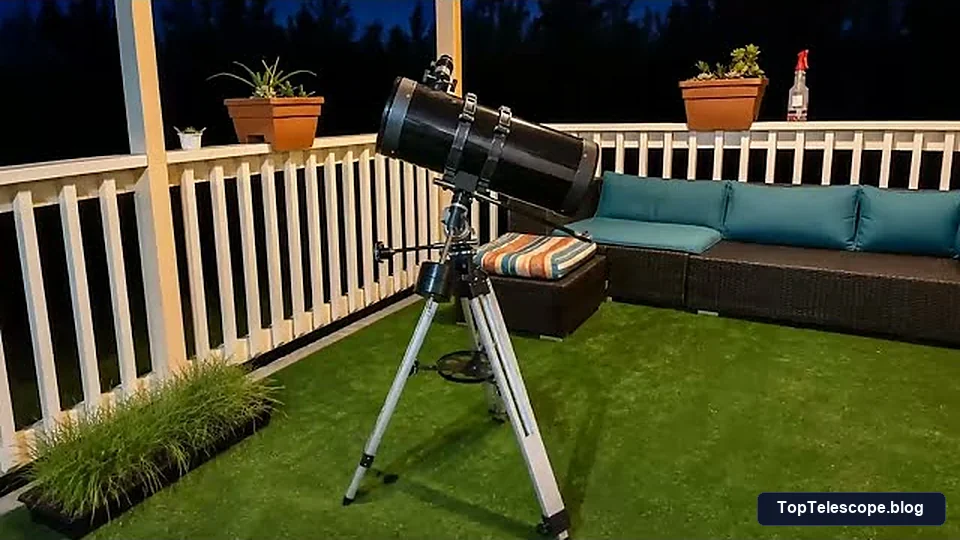
The optical tube assembly features a 127mm primary mirror housed inside a compact aluminum chassis. This aperture collects sufficient photons for viewing lunar topography and major planetary conjunctions.
Engineers utilize a spherical mirror design paired with an internal corrector lens to manage focal length. This configuration achieves a 1000mm focal length within a shortened physical tube profile.
The spherical primary mirror measures 127mm in aperture, gathering adequate light for lunar and bright planetary observation. However, spherical surfaces inherently suffer from spherical aberration at shorter focal ratios.
To manage this, an internal corrector lens is mounted inside the drawtube. This lens extends the effective focal length to 1000mm, altering the native optical train significantly.
- Aperture diameter measures precisely 127mm for enhanced light gathering.
- Focal length reaches 1000mm using a specialized internal corrector lens.
- Glass surfaces feature protective aluminum and silicon dioxide coatings.
Evaluating the Internal Corrector Lens
Integrating a corrector lens inside the drawtube simplifies manufacturing but introduces specific optical challenges. Users must understand that this element affects sharp edge-to-edge field definition during observations.
Maintaining clean corrector optics requires careful handling during routine maintenance, much like evaluating options in our best celestron telescope for beginners guide. Avoiding dust accumulation preserves the overall contrast transfer function.
- Corrector lens balances the spherical primary mirror system.
- Regular cleaning prevents permanent optical surface degradation.
Corrector Lens Alignment and Spherical Aberration
Factory alignment of the internal corrector requires careful verification during initial assembly. Misalignment introduces astigmatism, degrading image contrast across wide fields of view.
Users must inspect the collimation cap and ensure optical components remain securely seated within the stamped aluminum telescope tube housing.
Mechanical Rigidity and Equatorial Mount Mechanics
Setting up the manual equatorial mount demands careful latitude adjustments, a process detailed in our celestron nexstar 6se vs 8se comparison. The cast metal housing provides stable support while maintaining a manageable system weight.
Slow-motion control cables facilitate smooth tracking adjustments as targets drift across the night sky. However, users should minimize heavy touches to prevent undesirable image vibration during high magnification.
The German equatorial mount relies heavily on cast aluminum housing components to support the optical tube assembly. Setting circles are included for coordinate tracking, though manual polar alignment remains necessary.
Flexible slow-motion cables allow precise target tracking along both axes. Operators must balance the load carefully to minimize gear backlash and prevent sudden mechanical slippage during extended viewing sessions.
- Manual slow-motion cables attach securely to both altitude and azimuth axes.
- Aluminum tripod legs extend smoothly with secure clamping thumb screws.
- Counterweight balance remains critical for protecting internal gear teeth longevity.
Tripod Stability and Damping Times
The lightweight aluminum leg structure prioritizes portability over heavy-duty rigidity. Observers will notice typical damping times of three to four seconds after touching the focus knobs.
Hanging a moderate weight from the center accessory tray can improve overall ground coupling. This technique dampens ambient wind vibrations during extended evening astrophotography and visual sessions.
- Aluminum legs feature standard bracing spreader plates.
- Weight bags improve high-wind stability on soft ground.
Tripod Stability and Weight Distribution
The lightweight aluminum tripod features adjustable legs, yet high-magnification viewing reveals noticeable damping times. Securing the accessory tray adds structural rigidity and reduces unwanted ground vibrations.
Field technicians recommend tightening all connection hardware regularly to compensate for metal fatigue induced by frequent transport and thermal expansion cycles.
Video Review: Celestron PowerSeeker 127EQ Reflector Telescope - Review 2026
Practical Usability, Ergonomics, and Field Setup
Transporting this compact Newtonian reflector requires minimal storage space in vehicle trunks, much like units recommended in our best celestron telescope for astrophotography review. The assembly breaks down for spontaneous stargazing sessions.
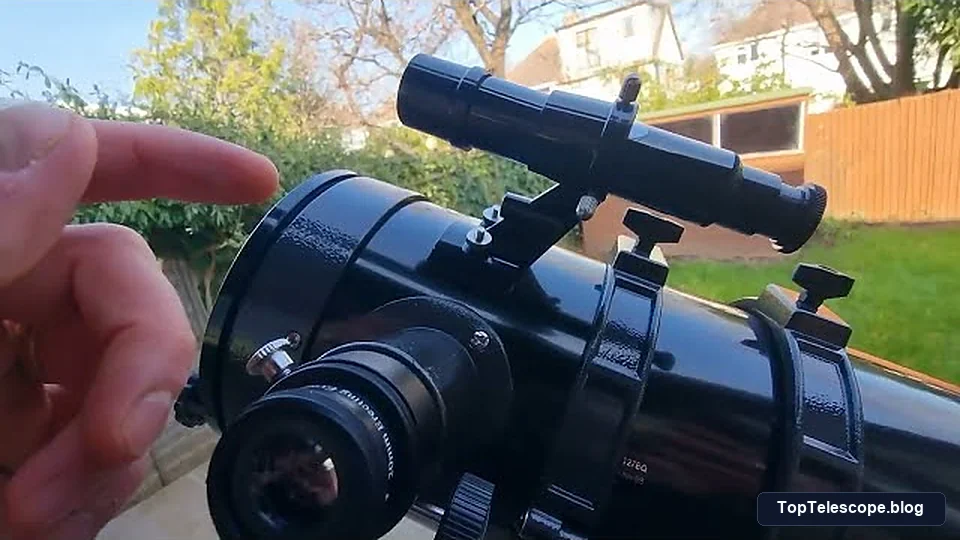
Aligning the red dot finderscope during daylight hours ensures quick target acquisition after dark. Beginners will appreciate the intuitive nature of this sighting tool for locating bright planets.
Setting up in the dark requires intuitive design, yet the equatorial head demands patience from novice users. Balancing counterweights properly prevents undue strain on the internal worm gears.
Included eyepieces typically consist of standard Kellner designs, offering narrow apparent fields of view. Upgrading to wider plössl optics drastically improves user comfort and target acquisition ease.
- Red dot finderscope operates on a standard lithium coin battery.
- Focus knob features a ribbed texture for easy cold-weather gripping.
- Dovetail mounting bar allows rapid optical tube attachment and removal.
Finder Scope Alignment Procedures
Aligning the optical finder scope demands daylight calibration against distant terrestrial landmarks. Securing the thumbscrews tightly ensures the alignment holds during transport to dark sky sites.
Proper eye relief on the finder scope prevents eye fatigue while centering faint celestial targets before transitioning to high-magnification eyepieces.
Optical Performance Across Planetary and Deep-Sky Targets
Lunar observations reveal crisp crater walls when utilizing the bundled 20mm glass eyepiece. Jupiter cloud belts and Saturn rings appear distinctly visible under steady atmospheric seeing conditions.
Deep-sky performance remains constrained by the spherical mirror design and light pollution limits. Brighter Messier objects like the Orion Nebula emerge as faint, glowing gas patches.
Planetary targets like Jupiter and Saturn reveal primary cloud belts and rings when atmospheric seeing conditions remain optimal. The 1000mm focal length delivers useful magnifications for detailed planetary studies.
Deep-sky performance remains limited by the aperture size and central obstruction. Faint nebulae and distant galaxies appear as dim smudges rather than highly structured, resolved formations.
- The 20mm eyepiece delivers a comfortable 50x magnification factor.
- The 4mm eyepiece pushes magnification to 250x, exceeding practical limits.
- Stellar point sources show slight aberration near the extreme outer field.
High-Magnification Limitations and Seeing Conditions
Pushing magnification past 200x exposes optical limitations inherent in the corrector lens design. Atmospheric turbulence further degrades image sharpness at higher power settings.
Observers achieve best results by sticking to moderate magnifications that preserve exit pupil brightness and overall image contrast across star clusters.
Thermal Equilibrium, Collimation, and Maintenance Routines
Newtonian reflectors require adequate thermal acclimation time before delivering optimal high-power images. Allowing the optical tube to sit outside for thirty minutes ensures stable internal air temperatures.
Periodic mirror alignment, known as collimation, maintains sharp focusing capabilities over extended use, as outlined in our celestron starsense explorer lt guide. Users should master the rear screws to keep the optical axis centered.
Achieving thermal equilibrium requires allowing the enclosed optical tube time to adjust to ambient outdoor temperatures. Trapped heat currents inside the tube severely distort wavefront accuracy.
Collimating the primary mirror involves adjusting rear alignment screws while observing an artificial star. Maintenance also includes keeping optical surfaces free from dust accumulation.
- Thermal stabilization prevents internal air currents from degrading image quality.
- Collimation caps assist with basic mirror alignment verification procedures.
- Dust covers protect exposed glass elements during indoor storage periods.
Dust Mitigation and Cleaning Protocols
Cleaning coated optics demands specialized microfiber cloths and optical cleaning solutions to prevent scratching delicate glass surfaces. Compressed air safely removes loose particulate debris first.
Storing the optical tube with dust caps attached prevents moisture condensation and protects internal mirrors from airborne contaminants between observing sessions.
Comparative Value and Target Audience Breakdown
This instrument targets budget-conscious beginners seeking genuine aperture for exploring deep space. Experienced astronomers might find the mechanical tolerances frustrating, but novices receive an accessible introductory platform.
Weighing the optical benefits against the lightweight mount helps determine appropriate user expectations. Dedicated hobbyists willing to practice manual tracking will unlock substantial observing satisfaction over time.
This Newtonian reflector targets budget-conscious beginners seeking an introduction to manual equatorial tracking mechanics. The unique optical layout offers a compact physical length despite long reach.
Experienced astronomers may find the mechanical tolerances and corrector lens constraints frustrating for advanced imaging. Beginners willing to learn polar alignment gain foundational astronomical skills.
- Offers high light-gathering capacity relative to typical entry-level refractors.
- Requires patience with mechanical setup and manual polar alignment steps.
- Serves as an educational gateway into equatorial mount operation principles.
Ideal User Profiles and Skill Progression
Aspiring hobbyists interested in learning manual tracking find adequate mechanical challenges within this system. Transitioning to sturdier mounts often occurs as observation skills advance.
Educational institutions appreciate the manageable weight and straightforward setup routine when introducing basic astronomy optics principles to students outdoors.
Frequently Asked Questions
Can I use this telescope for astrophotography?
This telescope is primarily engineered for visual astronomy rather than advanced long-exposure deep-sky imaging. While users can easily capture casual lunar snapshots using a smartphone adapter, the manual equatorial mount lacks the automated tracking motors required for sustained astrophotography sessions.
Therefore, buyers should manage their imaging expectations accordingly and focus primarily on enjoying live visual observations of celestial targets.
How do I align the finderscope properly?
Aligning the red dot finderscope is best performed during daylight by pointing the main optical tube at a distant terrestrial landmark like a telephone pole.
Once centered in your eyepiece, adjust the bracket thumbscrews until the red dot rests directly on that same point, ensuring reliable nighttime target acquisition for all your upcoming stargazing sessions.
Why does the 4mm eyepiece make images blurry?
The included 4mm eyepiece yields an extreme two-hundred-fiftyfold magnification that frequently surpasses local atmospheric seeing conditions. Furthermore, this high magnification level pushes the optical limits of the spherical mirror design, resulting in dim and unsharp views.
Beginners achieve much clearer and more satisfying results by sticking to lower power lenses like the bundled 20mm glass eyepiece.
Does the telescope require regular collimation?
Yes, Newtonian reflectors can experience slight mirror misalignment during transport or regular handling over time. Performing routine collimation using the rear adjustment screws ensures that light rays converge properly to maintain maximum image sharpness.
Mastering this straightforward maintenance task is an essential skill for getting the best possible optical performance from your reflector.
Is this setup suitable for young children?
While younger children can certainly enjoy viewing the Moon and bright planets with adult supervision, the manual equatorial mount involves a steep learning curve. Kids often struggle with polar alignment and coordinate tracking knobs without constant guidance.
Families should view this instrument as a collaborative project rather than an independent toy for young children.