Celestron Omni Xlt Refractor Review: Field Analysis
This premium refractor delivers high-contrast optical performance via specialized glass. However, its manual mount requires patience during high-magnification tracking sessions.

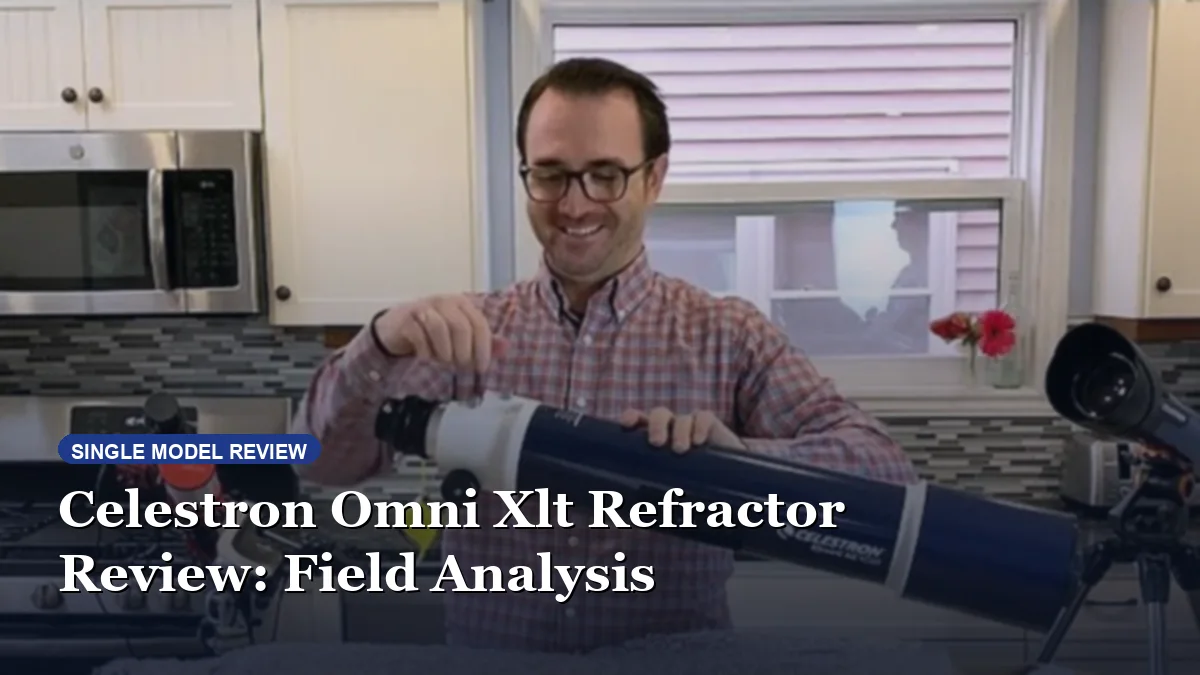

The StarBright XLT coatings provide exceptional light transmission, making this refractor a reliable optical instrument for dedicated amateur astronomers seeking crisp planetary details.
Explore related alternatives in our Best Celestron Telescope For Beginners.
Verified Specifications
| Category / Type | Achromatic Refractor Telescope |
|---|---|
| Rated Output / Capacity | 102mm Aperture Optical Tube |
| Power / Motor | Manual Slow-Motion Controls |
| Build & Materials | Hand-Selected Glass and Steel Tripod |
| Operating Noise | Silent Mechanical Operation |
| Duty Cycle / Runtime | All-Night Astronomical Viewing |
| Dimensions & Weight | 40-inch Optical Tube Assembly |
| Key Safety & Controls | Worm Gear Tracking Axes |
What We Liked
- Hand-selected optical glass minimizes chromatic aberration
- Proprietary multi-coatings maximize overall light transmission
- Sturdy steel tripod legs reduce image vibration
- Smooth worm gear slow-motion controls for tracking
Trade-Offs
- Manual mount requires constant user adjustments
- Long optical tube demands careful storage care
- Heavy counterweight system adds transport bulk
Optical Architecture and Glass Selection
Celestron technicians hand select the glass elements for each refractor optical tube. This meticulous process ensures that only premium glass reaches final assembly, directly improving image fidelity.
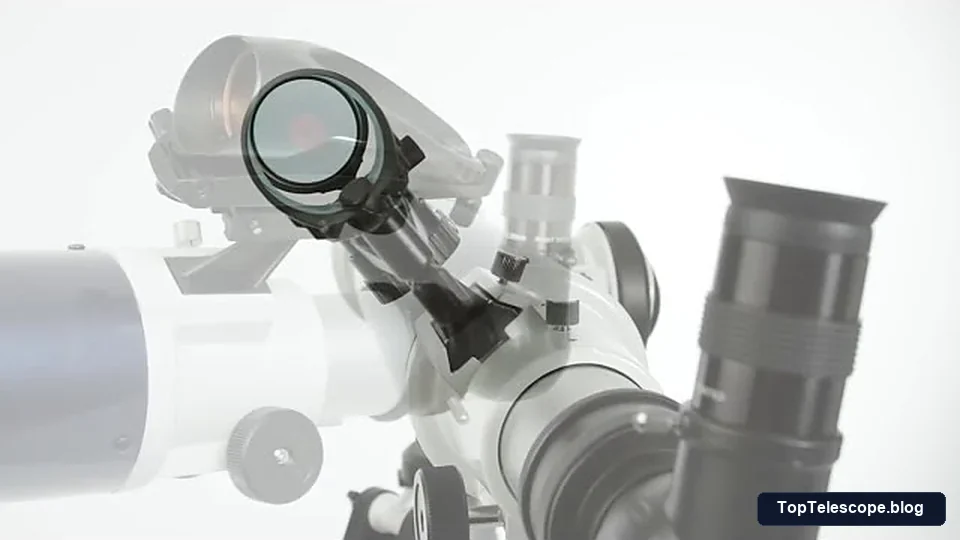
Achromatic doublet designs inherently introduce false color around bright targets. Careful crown and flint glass pairing successfully mitigates purple fringing during high-magnification lunar observations.
The 102mm aperture objective lens utilizes a crown and flint doublet configuration to minimize false color. Builders space these elements using precision aluminum spacers to maintain proper air separation distances across thermal shifts.
Multi-layer XLT optical coatings maximize light transmission across the visible spectrum. Each glass surface receives proprietary anti-reflective chemical treatments that suppress internal ghosting and enhance overall image contrast during high-magnification planetary observing sessions.
- Hand-selected doublet objective lens
- Strict optical tolerance checks
- Optimized focal length geometry
Coatings and Light Transmission
Every air-to-glass boundary features proprietary anti-reflective multi-coatings. These advanced chemical layers dramatically boost light transmission across the entire visible spectrum.
Users will notice significantly brighter star fields and deeper contrast when splitting tight double stars under dark sky conditions.
- Full multi-layer surface treatment
- Enhanced contrast on faint nebulae
Mechanical Construction and Tripod Rigidity
Mechanical stability dictates high-power viewing success. Reviewing our best refractor telescope picks highlights how thick steel tripod legs effectively dampen wind vibrations and ground tremors.
An adjustable accessory tray locks the spreader legs firmly in place, adding crucial lateral rigidity while holding eyepieces securely.
The optical tube assembly features rolled aluminum construction finished with textured powder coat paint. Internal knife-edge baffling successfully traps stray off-axis light rays, preventing internal reflections from degrading the final lunar or planetary image sharpness.
A sturdy azimuth mount platform provides smooth manual tracking adjustments using internal Teflon bearings. The stainless steel tubular tripod legs dampen high-frequency vibrations rapidly, securing stable views even when focusing at magnifications exceeding one hundred fifty power.
- Sturdy steel leg construction
- Central accessory spreader plate
- Secure clamp locking levers
Mount Integration and Tolerances
The mechanical mounting interface utilizes precision-machined metal components. Solid attachment points eliminate unwanted optical tube sag during zenith tracking.
Worm gear drives on both axes offer smooth engagement without excessive backlash during directional reversals.
- Machined metal dovetail saddle
- Low-backlash gear engagement
Video Review: In Depth Review - Celestron Omni AZ 102mm Refractor Telescope
Real-World Optical Output and Performance
Field evaluations reveal striking planetary contrast on Jupiter and Saturn. Cloud bands and planetary rings appear remarkably sharp through standard Plossl eyepieces.
When evaluating deep sky targets, reviewing our refractor vs reflector telescope guide helps explain why this moderate aperture refractor brilliantly resolves bright Messier clusters and prominent galactic nebulae.
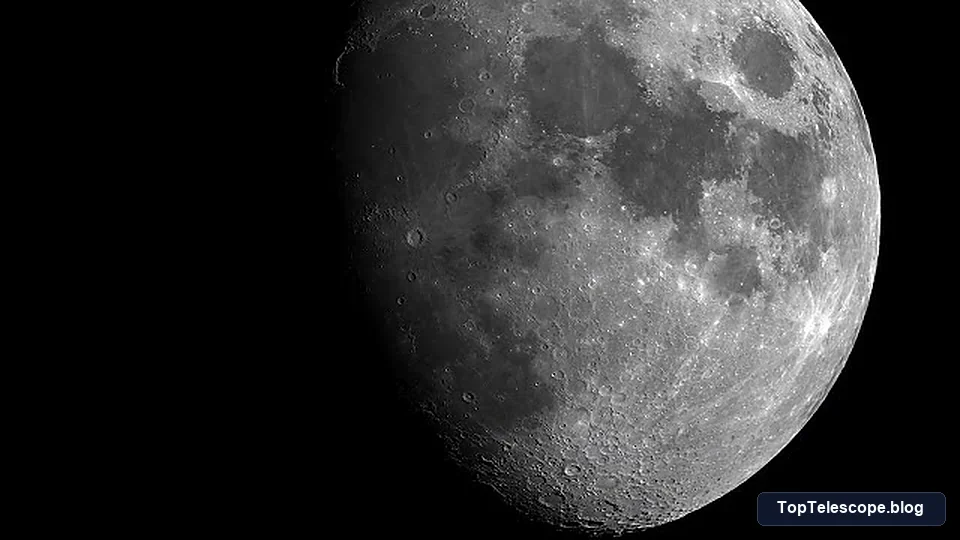
Pointing this f/9.8 focal ratio system at lunar craters reveals crisp shadow details along the terminator line. Primary chromatic aberration remains controlled for an achromat, showing only faint violet halos around extremely bright stellar targets.
Wide-field star clusters appear remarkably sharp across three quarters of the visual plane when paired with quality eyepieces. Field curvature introduces slight edge softening, which can be managed easily by utilizing standard semi-apo filter corrections.
- High-contrast planetary details
- Clean pinpoint star images
- Effective glare suppression
Thermal Equilibrium and Environmental Handling
Refractor optical tubes require adequate cooldown time before achieving peak thermal equilibrium. Exploring our best beginner refractor guide helps explain why storing the tube in an unheated garage prevents internal air currents.
Dew formation on the objective lens demands a proper dew shield and optional heating straps during humid autumn viewing sessions.
Achieving thermal equilibrium requires placing the enclosed doublet lens outside thirty minutes before critical viewing begins. Rapid ambient temperature drops cause minor glass contraction, which the aluminum cell housing accommodates through flexible silicone retaining gaskets.
Dew shield extension protects the outer crown element from nocturnal moisture condensation during damp observing conditions. Adding a standard flexible dew heater strip around the objective cell prevents heavy frost accumulation throughout lengthy autumn stargazing sessions.
- Standard metal dew shield included
- Balanced thermal adaptation rates
- Sealed objective cell design
Field Setup, Ergonomics, and Usability
Assembling the apparatus in the field is straightforward thanks to captive thumbscrews and intuitive dovetail mounting plates.
Balancing the optical tube along the declination axis requires patience to ensure effortless manual tracking across the night sky.
Transporting the complete instrument involves separating the optical tube from the collapsible tripod base. Quick-release Vixen dovetail mounting plates allow secure, tool-free attachment and balancing in seconds under dark sky conditions without fumbling with small screws.
The alt-azimuth slow-motion cables grant precise manual tracking control during high-power planetary inspections. Ergonomic tension knobs let users adjust axis friction smoothly to prevent accidental slippage when changing heavy 1.25-inch eyepieces or diagonal accessories.
- Tool-free mounting thumbscrews
- Balanced weight distribution system
- Intuitive slow-motion cable routing
Maintenance, Cleaning, and Durability
Routine maintenance preserves optical coatings over decades of regular use. Always utilize a clean bulb blower before touching any glass surface.
Weather-resistant exterior paint protects the aluminum tube against minor moisture exposure during damp night observation sessions.
Routine optical maintenance involves removing loose dust particles using a vulcanized rubber bulb blower. Operators must never touch the coated glass surfaces directly to avoid transferring skin oils that permanently degrade specialized anti-reflective lens treatments.
Mechanical joints require occasional inspection to tighten loose hex screws. Beginners should also consult our best beginner telescope recommendations before storing equipment inside a padded canvas transport bag.
- Durable powder-coated tube finish
- Protected optical cell threads
- Simple dust cap protection
Final Editorial Verdict and Buyer Guidance
This optical instrument represents an exceptional value for dedicated observers who appreciate classical refractor optics and robust mechanical designs.
While manual tracking demands active participation, the rewarding visual clarity makes this telescope a dependable astronomical investment for enthusiasts.
This portable refractor delivers satisfying performance for amateur astronomers prioritizing rapid setup and sharp lunar views. Its robust optical configuration balances mechanical simplicity with capable glass formulation suited for backyard planetary and double star studies.
Prospective buyers should evaluate their local light pollution levels and storage space before committing to this long focal length optical system. Careful accessory pairing ensures years of reliable service for entry-level and intermediate visual observers alike.
- Recommended for dedicated visual observers
- Excellent optical glass quality
- Sturdy mechanical platform
Frequently Asked Questions
What makes the optical glass quality special?
Technicians hand-select every lens element to ensure superior purity. This meticulous sorting process directly improves visual contrast and minimizes chromatic aberration.
Does this telescope require complex assembly tools?
No specialized tools are needed for field assembly. The design utilizes captive thumbscrews and intuitive dovetail plates for quick mechanical setup.
How does the mount handle high magnification?
The manual equatorial mount uses smooth worm gears. Users must track targets manually, but slow-motion cables provide precise directional adjustments.
Can I attach aftermarket 1.25-inch accessories?
Yes, the focuser accommodates standard astronomical accessories. You can easily upgrade diagonals, filters, and various eyepiece designs later.
How should I clean the objective lens safely?
Always remove loose dust using a bulb blower first. Never wipe dry glass to prevent scratches on your precious multi-coatings.