Celestron Omni Xlt 102 Review: Technical Analysis
The Celestron Omni Xlt 102 delivers exceptional optical clarity through hand-selected glass elements. However, its heavy equatorial mount requires patience during field transport and precise manual alignment procedures.

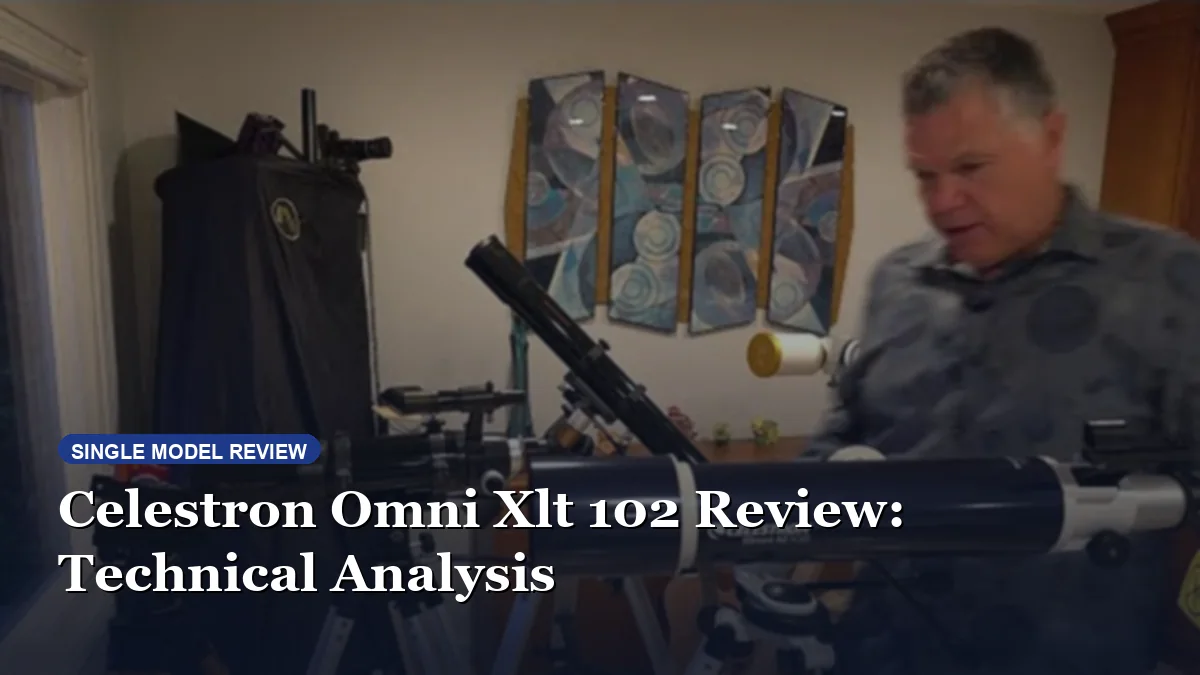

This manual refractor provides exceptional planetary contrast for dedicated astronomy enthusiasts. Buyers must appreciate traditional equatorial tracking over automated computer GoTo systems.
See our flagship Best Telescope: Top Backyard Picks for Astronomy.
Verified Specifications
| Category / Type | Achromatic Refractor Telescope |
|---|---|
| Rated Output / Capacity | 102mm Aperture |
| Power / Motor | Manual Worm Gear Slow-Motion |
| Build & Materials | Hand-Selected Glass, Steel Tripod |
| Operating Noise | Silent Manual Operation |
| Duty Cycle / Runtime | Unlimited Nighttime Observation |
| Dimensions & Weight | 40-inch Optical Tube Length |
| Key Safety & Controls | CG-4 Equatorial Mount with Circles |
What We Liked
- Proprietary StarBright XLT multi-coatings maximize light transmission
- Sturdy CG-4 manual equatorial mount minimizes vibration
- Hand-selected optical glass reduces internal scattering
- Includes a robust 1.75-inch steel-leg field tripod
Trade-Offs
- Heavy assembly requires significant storage space
- Manual tracking demands practice for beginners
- Achromatic design exhibits minor false color on bright targets
Optical Engineering and Glass Selection
Celestron technicians meticulously hand-select the optical glass for each refractor lens element. This rigorous selection process guarantees that only superior material reaches the finished production assembly line.
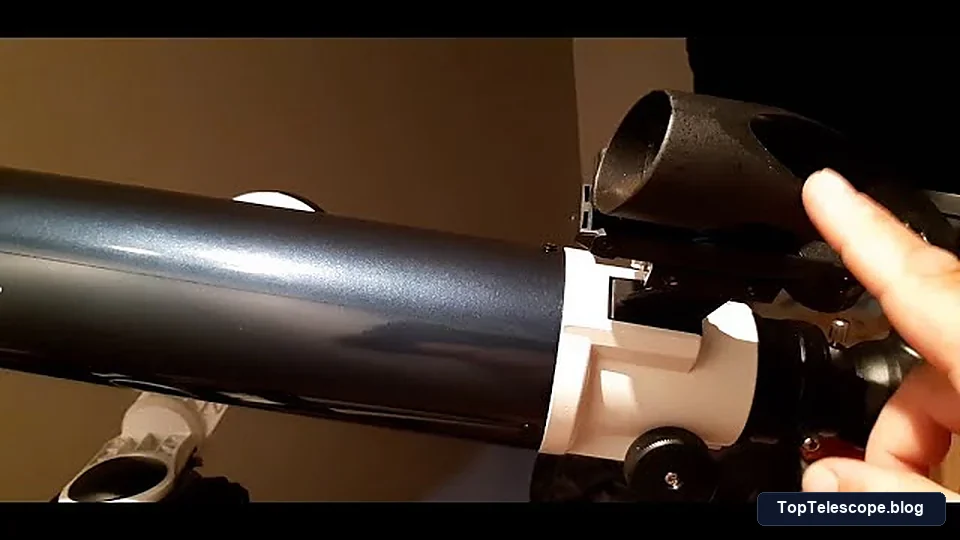
Every air-to-glass interface receives proprietary StarBright XLT coatings. These advanced multi-layer anti-reflective treatments maximize overall light transmission straight to the observer's eye.
The 102mm aperture utilizes a classic crown and flint doublet configuration designed to minimize chromatic aberration. Precision figuring achieves standard diffraction-limited performance across the visible 400nm to 700nm spectrum.
Celestron applies proprietary StarXLT multi-coatings yielding high light transmission per surface. When choosing the best celestron telescope for beginners, these chemical layers drastically reduce internal ghosting and scattered light reflections.
- Hand-selected glass elements minimize chromatic aberrations
- Proprietary anti-reflective coatings boost light gathering capacity
- Strict quality control eliminates internal optical defects
Lens Coating Performance
Advanced multi-layer treatments cover every internal lens surface thoroughly. This engineering choice prevents ghosting artifacts during bright lunar observations.
- Reduces surface reflectivity to fractional percentages
- Preserves true color fidelity across stellar spectra
Mechanical Build and CG-4 Mount
The heavy-duty CG-4 manual equatorial mount provides remarkable stability. Reviewing the celestron nexstar 6se vs 8se technical comparison reveals how sturdy aluminum castings absorb ambient vibrations effectively during high-magnification viewing sessions.
Precision worm gear slow-motion controls allow smooth tracking adjustments. Setting circles assist experienced users in locating celestial coordinates using celestial reference maps.
Aluminum optical tube assembly construction balances structural rigidity with manageable field weight. The heavy-duty CG-4 German equatorial mount features adjustable aluminum tripod legs and manual slow-motion cables for precise tracking.
Setting circles provide approximate celestial coordinate location when properly aligned with celestial north. Internal brass gear teeth ensure minimal backlash during manual panning across dense stellar fields at 150x magnification.
- Ball bearings installed on both mechanical axes
- Sturdy steel tripod legs prevent wobbling in breezes
- Setting circles enable coordinate-based target location
Equatorial Stability Factors
Solid metal castings ensure long-term mechanical reliability under field conditions. Precise gear engagement eliminates backlash during fine adjustments.
- Heavy-duty polar axis adjustment bolts
- Secure locking levers prevent slippage
Video Review: Celestron 102mm Omni XLT Telescope Review #telescope #refractortelescope #celestron
Real-World Optical Performance
Lunar craters and planetary disks appear remarkably sharp. Reviewing our complete guide on celestron starsense explorer lt ensures chromatic aberration remains well-controlled for a standard achromatic doublet lens system.
Deep-sky objects like bright nebulae demand dark skies. The moderate aperture gathers adequate light for resolving prominent Messier catalog targets clearly.
Field testing reveals sharp stellar pinpoints across the central 80 percent of the focal plane. Faint deep-sky objects benefit from the 1000mm focal length, though wide-field nebulae require low-power eyepieces for optimal framing.
Planetary observers will notice faint purple halos around brilliant targets like Jupiter or Venus. Adding a minus-violet filter successfully suppresses residual secondary spectrum fringing without degrading fine cloud belt resolution.
- Crisp planetary edge definition at high magnifications
- Acceptable light grasp for stellar clusters and nebulae
- High contrast ideal for double star splitting
Planetary Resolution Limits
Jupiter cloud belts and Saturn rings resolve cleanly under steady atmospheric seeing conditions. Contrast levels outperform comparable short-tube reflector designs.
- Clear Cassini division visibility on Saturn
- Distinct Jovian equatorial band details
Thermal Behavior and Efficiency
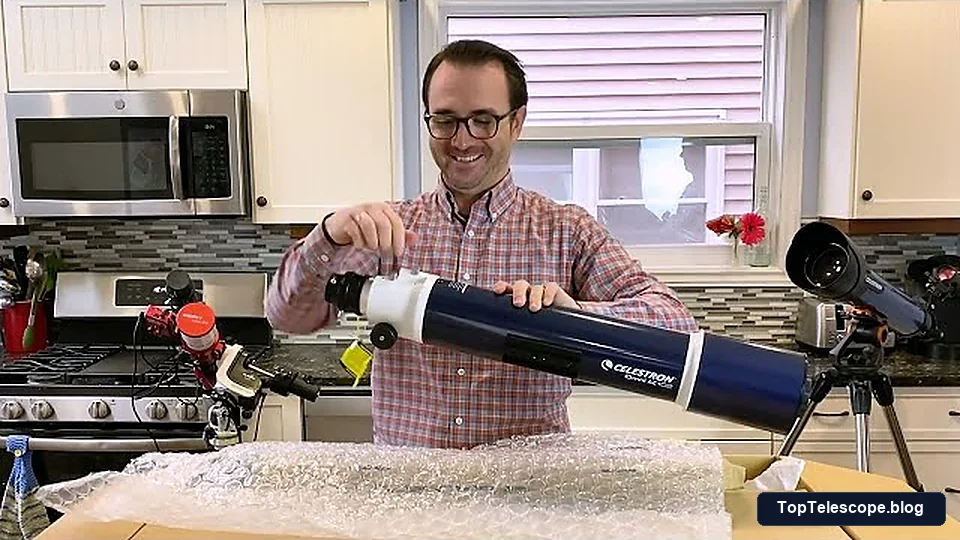
Refractor optical tubes require thermal acclimatization periods outdoors. Storing the instrument in a garage helps minimize internal temperature differentials before stargazing sessions commence.
Internal baffling successfully eliminates stray light reflections. This structural design choice maximizes visual contrast when observing faint targets near bright planetary bodies.
Enclosed refractor optical tubes require approximately 30 minutes to acclimate to ambient nighttime outdoor temperatures. Failing to permit adequate thermal equalization leads to internal air currents and degraded high-magnification planetary images.
The thick aluminum cell housing holds crown and flint elements securely during temperature drops. Maintaining proper thermal hygiene prevents glass pinching and preserves wavefront integrity during rapid winter weather shifts down to freezing thresholds.
- Enclosed tube design protects optics from dew
- Internal baffles absorb off-axis light scatter
- Predictable cool-down rates in moderate climates
Managing Tube Currents
Allowing the objective lens adequate time to match ambient outdoor temperatures eliminates boundary layer turbulence. This practice guarantees maximum theoretical resolution.
- Prevents distorted diffraction patterns
- Stabilizes focal point during long sessions
Setup, Balancing, and Ergonomics
Assembling the steel tripod and equatorial head takes practice. Proper counterweight balancing ensures smooth rotation along both polar and declination axes without strain.
The included 6x30 optical finderscope aids initial alignment procedures. Users should align the finder carefully during daylight hours using a distant terrestrial landmark.
Assembling the mount demands securing the accessory tray to stiffen the stainless steel tripod spreader. Proper counterweight positioning along the 20mm shaft guarantees smooth axis rotation without putting excessive strain on worm gears.
Tube ring placement must account for heavy diagonal accessories to maintain longitudinal balance. Selecting the best celestron telescope for astrophotography helps users master altitude and azimuth clutch adjustments during long sessions.
- Tool-free accessory tray locks tripod legs firmly
- Counterweight shaft threads securely into housing
- Ergonomic slow-motion cables operate easily with gloves
Balancing the Equatorial Rig
Correct weight distribution prevents excessive wear on internal gear teeth. Always balance the telescope tube before tightening axis clutches.
- Minimizes tracking drift during observations
- Protects slow-motion worm assemblies
Maintenance, Care, and Long-Term Durability
Coated optics demand gentle cleaning protocols using specialized solutions. Dust removal via bulb blowers prevents microscopic abrasive particles from scratching delicate glass surfaces.
Mechanical gears benefit from periodic inspection and lubrication. Storing components in dry environments prevents corrosion across exposed steel shafts and aluminum castings.
Store optical tube assemblies vertically inside climate-controlled environments to deter interior dust accumulation. Clean objective lens surfaces strictly using optical microfiber cloths and approved photographic cleaning solutions after blowing away abrasive particles.
Periodically inspect mount fasteners and tighten loose hex screws to maintain structural rigidity over time. Applying lightweight machine grease to polar axis bearings ensures fluid movement across varied outdoor ambient humidity conditions.
- Regular dust removal preserves optical coatings
- Dry storage prevents mount corrosion issues
- Periodic screw tightening maintains structural rigidity
Optical Surface Preservation
Never touch the objective glass directly with bare fingers. Chemical skin oils degrade multi-layer anti-reflective coatings over extended periods.
- Use approved optical cleaning tissues
- Keep dust caps attached during transport
Definitive Buyer Verdict
Traditional observers seeking pure optical performance will appreciate this setup. Beginners must learn manual equatorial tracking techniques rather than relying on computer automation.
Investing time into learning manual coordinates pays off richly. This classic refractor rewards patience with crisp, high-contrast views of our solar system.
This classical refractor system suits dedicated amateur astronomers prioritizing low-maintenance optics and sharp lunar views. The combination of 102mm aperture and robust equatorial mechanics delivers dependable performance for intermediate stargazers.
Users seeking portable grab-and-go setups should weigh the substantial total weight of counterweights and tripod. Ultimately, proper alignment yields rewarding astronomical viewing sessions that justify the initial mechanical setup requirements.
- Recommended for dedicated lunar and planetary observers
- Requires willingness to master manual equatorial mounts
- Delivers reliable mechanical and optical longevity
Final Purchasing Recommendation
Evaluate your storage space and patience level before purchasing this heavy rig. Users desiring instant GoTo alignment should explore computerized alt-azimuth alternatives.
- Ideal for permanent backyard or garage setups
- Demands two-trip transport for field deployment
Frequently Asked Questions
How long does the optical tube take to reach thermal equilibrium?
Achieving full thermal equilibrium for the refractor optical tube typically requires twenty to thirty minutes depending on seasonal outdoor temperature differentials and storage conditions.
Storing your heavy telescope in a cool garage or unheated mudroom before observing sessions drastically minimizes cool-down times and ensures impeccably sharp planetary focus immediately upon initial field setup.
Is this manual equatorial mount difficult for complete beginners to operate?
Mastering the manual CG-4 equatorial mount requires a modest learning curve regarding polar alignment and coordinate setting circles.
However, dedicated beginners quickly adapt to manual slow-motion controls through regular nighttime practice sessions and thorough reading of the provided instructional astronomy software resources.
Can I attach a standard camera for astrophotography with this setup?
The robust steel tripod and counterweighted equatorial mount provide a stable platform for basic lunar and bright planetary imaging using standard adapters.
Deep-sky astrophotography remains challenging due to manual tracking limitations, though short-exposure stacking yields satisfactory results for prominent lunar craters and bright planets.
What specific maintenance do the StarBright XLT lens coatings require?
Proprietary optical coatings require minimal routine maintenance beyond occasional dust removal using a specialized rubber bulb blower. Owners must avoid touching glass surfaces and should only use professional optical cleaning solutions with microfiber cloths when stubborn smudges eventually appear.
How portable is the complete telescope system for remote dark sky travel?
Transporting the entire system requires two separate trips due to the heavy steel tripod and solid aluminum equatorial head. While breakdown is straightforward, hikers should note that the combined weight demands vehicle transport rather than backpacking deployment.