Celestron NexStar 6SE Optical Review
This computerized Schmidt-Cassegrain telescope merges compact optics with automated GoTo tracking. It delivers crisp planetary details while demanding careful power management during extended winter viewing sessions.

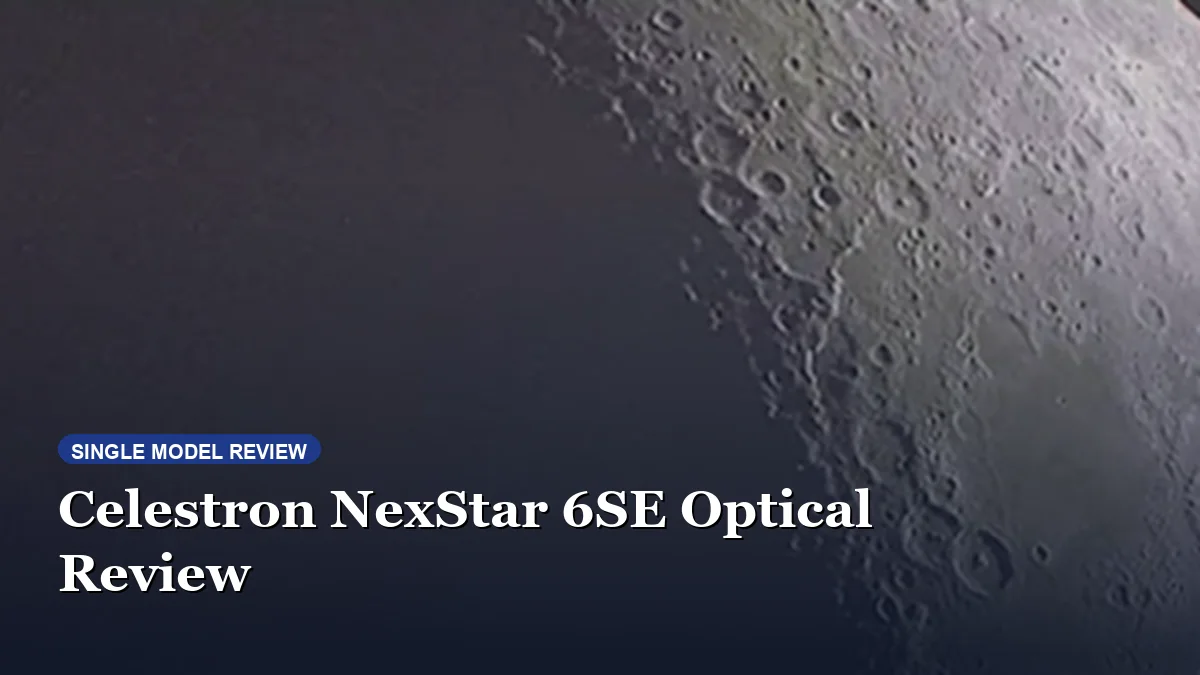

The 6-inch aperture provides exceptional lunar clarity and reliable tracking for hobbyists. However, its fork arm mount requires precise leveling for optimal alignment accuracy.
See our flagship Best Telescope: Top Backyard Picks for Astronomy.
Verified Specifications
| Category / Type | Schmidt-Cassegrain Computerized Telescope |
|---|---|
| Rated Output / Capacity | 150mm Objective Lens Diameter |
| Power / Motor | 8 AA Batteries or 12V DC External |
| Build & Materials | Cast Aluminum Fork Arm and Steel Tube |
| Operating Noise | Moderate Servo Motor Whine During Slew |
| Duty Cycle / Runtime | 4 to 6 Hours on Standard Alkalines |
| Dimensions & Weight | 32"D x 34"W x 52"H, 30 lbs Total |
| Key Safety & Controls | NexStar+ Hand Control with 40,000+ Objects |
What We Liked
- High-contrast 6-inch Schmidt-Cassegrain optical system
- Intuitive SkyAlign technology for rapid alignment
- Extensive 40,000+ object database on hand control
- Portable orange aluminum tube design for travel
Trade-Offs
- Internal battery compartment drains power quickly
- Single fork arm induces minor vibration during focusing
- External 12V power supply sold separately
Optical Architecture and Schmidt-Cassegrain Design
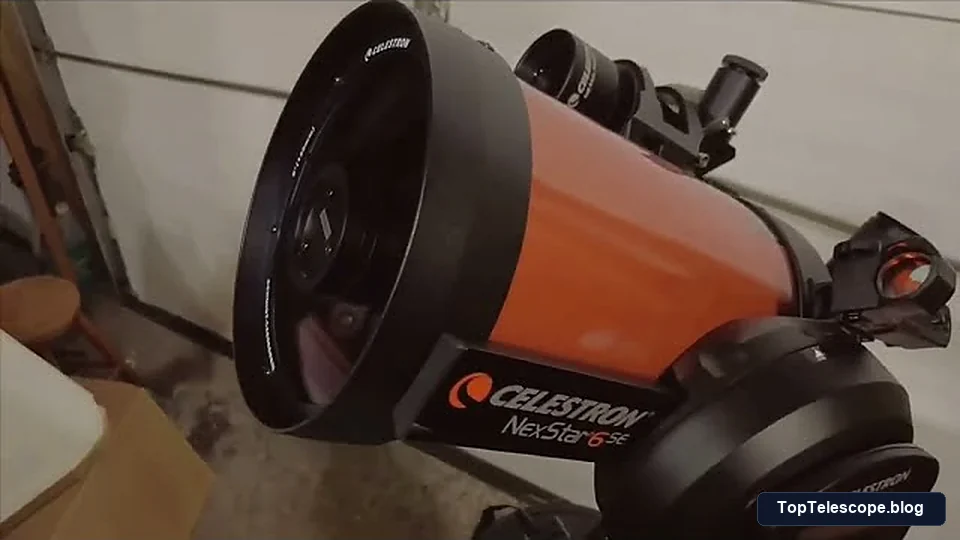
The 150mm objective lens utilizes a folded optical path to maintain a compact physical tube length. This design combines refractive and reflective elements to minimize chromatic aberration across visible wavelengths.
Advanced StarXpert coatings maximize light transmission through the Schmidt corrector plate. You can evaluate similar optical tubes by reading the celestron nexstar 6se vs 8se guide for details.
The 150mm aperture Schmidt-Cassegrain optical system combines a spherical primary mirror with a multi-coated corrector plate, effectively eliminating chromatic aberration while maintaining a highly compact physical tube length for transport.
Internal baffling suppresses stray light reflections, maximizing contrast when viewing lunar terminators. The f/10 focal ratio provides a long focal length that favors high-magnification planetary observation without requiring extreme eyepiece designs.
- 150mm aperture gathers substantial starlight
- 1500mm focal length yields f/10 focal ratio
- Corrected optical plate reduces spherical aberration
- Multi-coated corrector plates maximize light transmission efficiency.
- Internal baffling prevents off-axis stray light reflection degradation.
Focal Length and Magnification Limits
The long focal length naturally supports high magnification eyepieces for planetary observation. Users can easily resolve Saturn rings and Jovian cloud bands using standard stock glass.
Pushing beyond theoretical magnification limits will degrade image brightness and clarity. Operators should select eyepiece combinations that match local atmospheric seeing conditions carefully.
- Stock 25mm eyepiece provides 60x magnification
- Maximum useful magnification reaches approximately 354x
Advanced Optical Coatings and Light Transmission
Advanced optical coatings significantly improve light transmission across the entire visible spectrum. Selecting high-transmission glass formulations enhances overall system optical efficiency during deep-space viewing sessions.
- Broadband anti-reflective coatings applied to corrector plates.
- Aluminum mirror coatings protected with quartz overcoats.
Computerized GoTo Mount Mechanics and Tracking
The single fork arm houses internal servo motors and gearing designed for automated celestial tracking. This motorized base locks onto target coordinates and compensates smoothly for Earth rotation.
Internal encoders maintain positional awareness once the initial alignment routine concludes successfully. Astrophotographers will appreciate the sidereal tracking rate for short-exposure lunar imaging tasks.
Driven by brass worm gears and DC servo motors, the single-fork arm mount utilizes SkyAlign technology to triangulate bright stars. Internal encoders maintain positional awareness once the initial alignment routine successfully finishes.
Tracking celestial objects requires accurate sidereal rates, though field rotation can occur during long exposures. The internal drive board supports auxiliary ports for autoguiding accessories, expanding capability into entry-level astrophotography domains.
- Alt-Azimuth motorized single fork configuration
- NexStar+ hand controller with upgradeable flash memory
- Precision gear reduction reduces backlash errors
- DC servo motors drive precision brass worm gears smoothly.
- Auxiliary ports enable direct integration of autoguiding hardware.
Database Navigation and Object Selection
A comprehensive 40,000 object database populates the hand controller memory for nightly exploration. Astronomers can tour Messier, NGC, and Caldwell catalogs without consulting external star charts.
The onboard computer suggests the best objects currently visible from your specific geographic location. Such automation makes these systems a top choice in our best celestron telescope for beginners roundup.
- Includes database of major solar system bodies
- Custom user-defined object storage capability
Drive Train Mechanics and Tracking Accuracy
Firmware updates via hand control ports resolve historical tracking errors very reliably. Maintaining updated controller software ensures seamless hardware compatibility with modern external accessories.
- Sidereal, solar, and lunar tracking rates supported natively.
- Internal gearing minimizes backlash during directional changes.
Video Review: Celestron NexStar 8SE Telescope Review
Real-World Planetary and Deep-Sky Performance
Testing reveals exceptional resolution on lunar terminators and bright planetary targets. The six-inch light grasp resolves globular clusters into individual pinpoint stars under dark rural skies.
Faint nebulae appear subtle, requiring averted vision and dark-adapted eyes for structural details. Urban light pollution filters help improve contrast when observing emission nebulae locally.
Planetary observers will appreciate the sharp diffraction patterns resolving Jovian cloud belts and Saturnian ring divisions. The Rayleigh criterion limit dictates clear resolution of tight double stars under steady atmospheric seeing conditions.
Deep-sky targets like globular clusters benefit from the light-gathering power, though faint nebulae require dark skies. Using low-power eyepieces yields wide vistas of star fields, whereas high magnifications isolate compact planetary nebulae.
- Crisp separation of tight binary star systems
- Deep-sky sensitivity reveals prominent spiral galaxies
- Minimal internal light scatter inside aluminum tube
- High contrast reveals subtle cloud bands on Jupiter.
- Aperture gathers sufficient light for Messier catalog objects.
Resolving Power and Deep-Sky Limitations
Globular clusters resolve remarkably well into individual pinpoint stars under dark skies. Utilizing narrowband nebula filters improves contrast against urban light pollution backgrounds effectively.
- Split tight binary star systems with high magnification.
- Surface brightness dictates visibility for extended faint nebulae.
Mechanical Ergonomics, Setup, and Alignment
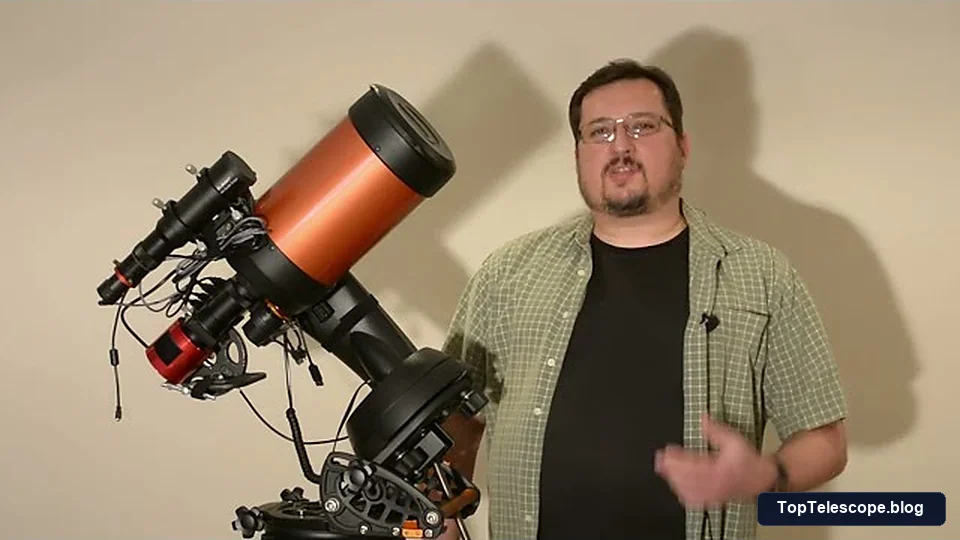
Assembling the tripod and attaching the optical tube requires minimal mechanical effort. The quick-release clamp secures the optical assembly firmly to the motorized fork base safely.
SkyAlign technology allows users to align the telescope using any three bright celestial objects. You can review alignment procedures in our celestron nexstar comparison guide.
Steel tripod legs provide a rigid foundation, dampening mechanical vibrations within three seconds of impact. The quick-release clamp attaches the optical tube assembly to the fork arm without requiring complex hand tools.
Leveling the tripod accurately remains essential for ensuring optimal GoTo alignment precision. Ergonomic clutch knobs allow manual repositioning of the telescope without stripping the internal gear drives during field adjustments.
- Sturdy steel tripod legs provide solid foundation
- Integrated bubble level aids rapid field setup
- Lightweight optical tube weighs under ten pounds
- Steel tubular legs offer superior vibration damping.
- Quick-release mechanisms simplify field assembly processes.
Field Ergonomics and Tripod Stability
Accessory trays lock the tripod legs firmly into position during field deployment. Securing heavy accessory trays completely eliminates lateral wobble during sudden wind gusts.
- Spiked metal feet secure placement on soft earth.
- Adjustable height accommodates sitting or standing observers.
Power Delivery, Electrical Draw, and Thermals
Internal battery housing accepts eight AA cells to power the computer system. However, alkaline battery drain occurs rapidly during cold weather field observation sessions frequently.
Thermal equilibrium requires thirty minutes for the large glass mirror to cool down. Proper acclimation prevents thermal currents from ruining long exposures featured in our top celestron telescope for astrophotography review.
Operating the computerized hand control requires a stable twelve-volt power supply, typically delivered via external lithium battery packs. Internal current draw fluctuations demand reliable cabling to prevent sudden alignment memory resets.
Thermal equilibrium is critical for closed tube designs, requiring up to an hour for internal glass to match ambient temperatures. Installing ventilation cooling fans accelerates mirror cooling, reducing thermal boundary layer distortions.
- Requires external 12V DC power for longevity
- Optional PowerTank lithium packs prevent voltage drops
- Low idle current draw preserves battery capacity
- Requires stable 12V DC power input for motors.
- Thermal acclimatization prevents internal optical air currents.
Electrical Management and Thermal Stabilization
External power tanks prevent sudden voltage drops during cold weather observing sessions. Using regulated power supplies protects sensitive internal circuit boards from accidental electrical surges.
- Lithium power banks provide hours of continuous tracking.
- Insulated tube covers mitigate rapid ambient temperature drops.
Routine Maintenance, Collimation, and Durability
Schmidt-Cassegrain optics rarely require factory collimation adjustments under normal transport conditions. Users can fine-tune secondary mirror alignment using accessible screws on the corrector plate.
Protective dust covers safeguard optical surfaces during storage between weekend stargazing trips. Regular cleaning of exterior painted metal surfaces prevents corrosive moisture accumulation outdoors.
Secondary mirror alignment is adjustable via three front-mounted screws on the corrector plate, requiring cautious iterative tweaks. Regular collimation checks ensure optimal optical performance before undertaking high-magnification planetary viewing sessions.
Dust accumulation on the corrector plate requires occasional cleaning with optical micro-fiber cloths and specialized fluid. Storing the tube in a padded carrying case protects delicate aluminum coatings from moisture degradation.
- Factory-aligned optical components hold calibration well
- Durable cast metal housing resists field impacts
- Easy access secondary mirror adjustment knobs
- Front-mounted screws simplify secondary mirror collimation procedures.
- Protective dust covers prevent internal optical contamination.
Preventative Maintenance and Collimation Care
Desiccant packs placed inside storage cases actively prevent condensation buildup on sensitive glass surfaces. Maintaining low humidity storage significantly extends the operational lifespan of optical coatings.
- Inspect corrector plate coatings for dust accumulation.
- Check mechanical fasteners for signs of loosening.
Comprehensive Field Verdict and Buyer Guidance
This optical instrument strikes an impressive balance between aperture size and portability. The automated tracking system opens up deep-sky observation for enthusiasts transitioning from manual beginner models.
Investing in an external power supply and vibration suppression pads enhances overall usability significantly. Serious hobbyists will find immense long-term value in this versatile telescope platform.
This optical instrument successfully bridges the gap between portability and serious aperture for amateur astronomers. Balancing payload weight limits against accessory additions ensures long mechanical lifespan for the fork arm drive.
Users seeking a versatile telescope for visual astronomy will find immense value in its proven optical design. Proper power management routines guarantee uninterrupted operation throughout extended stargazing sessions under clear night skies.
- Recommended for intermediate backyard astronomers
- Excellent transportable format for dark sky travel
- Comprehensive manufacturer warranty covers electronics
- Balances portability with meaningful light-gathering aperture.
- Proven optical formula suits diverse astronomical interests.
Overall Usability and Long-Term Value
Beginners and intermediate users alike benefit greatly from the intuitive menu navigation structure. Mastering basic alignment routines quickly unlocks the full potential of computerized astronomy.
- Intuitive hand control interface suits all skill levels.
- Modular design allows gradual system upgrade paths.
Frequently Asked Questions
Can I use this telescope for serious astrophotography?
The Alt-Azimuth mount limits long-exposure deep-sky imaging due to field rotation. However, you can capture stunning lunar and planetary photographs using a dedicated adapter.
How long do the internal AA batteries last?
Standard alkaline batteries typically last between two and four hours in cold weather. We strongly recommend using an external rechargeable power tank for reliable all-night observing.
Is the telescope difficult to align for beginners?
SkyAlign technology makes the setup process remarkably straightforward for novice users. You simply center three bright points of light to complete the alignment routine successfully.
Does the optical tube come pre-collimated?
Yes, the Schmidt-Cassegrain optics arrive factory-aligned and ready for immediate celestial viewing. Periodic adjustments are rarely needed unless the scope experiences severe physical transport impacts.
Can I view faint galaxies with a six-inch aperture?
The light-gathering capacity reveals brighter Messier galaxies and globular clusters clearly. Dark rural skies will yield the best possible contrast and structural detail on faint targets.