Celestron Dx 130Az Technical Review And Field Guide
This Newtonian reflector telescope pairs a 130mm optical tube with an alt-azimuth mount. It delivers accessible deep-sky views for beginner astronomers.

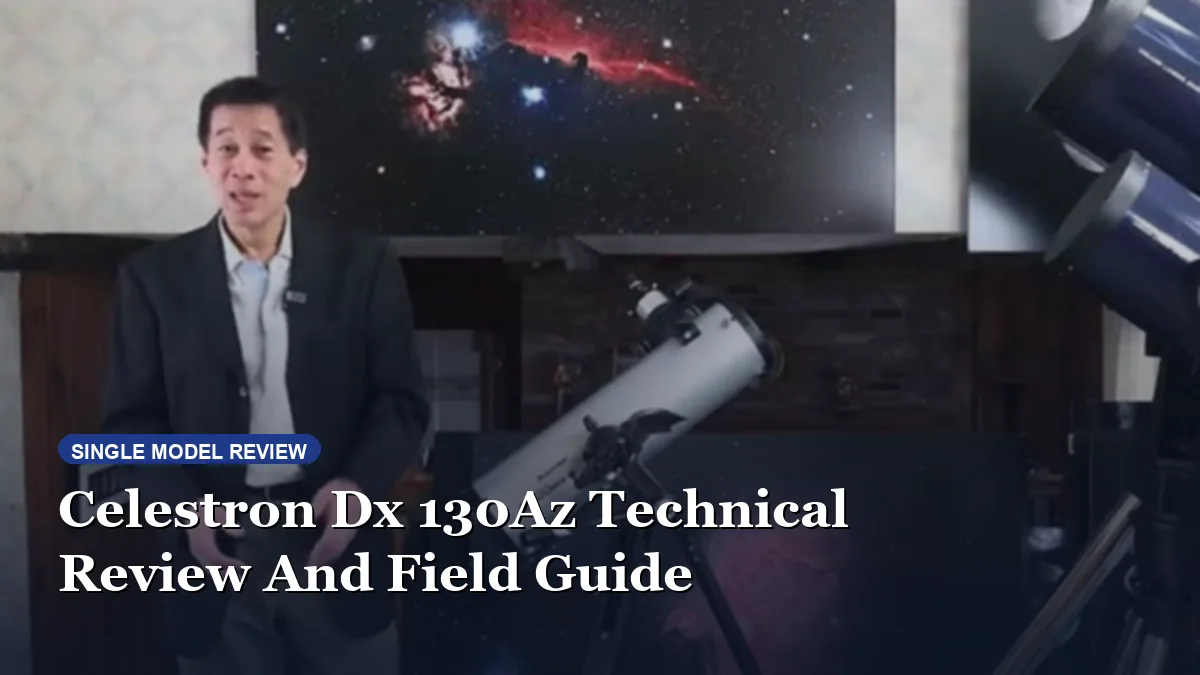

The 130mm optical aperture delivers bright planetary and deep-sky views. However, the manual mount requires patience during high-magnification tracking tasks.
See our flagship Best Telescope: Top Backyard Picks for Astronomy.
Verified Specifications
| Category / Type | Newtonian Reflector |
|---|---|
| Rated Output / Capacity | 130mm Aperture |
| Power / Motor | Manual Alt-Azimuth Mount |
| Build & Materials | Aluminum Optical Tube |
| Operating Noise | Silent Manual Operation |
| Duty Cycle / Runtime | Unlimited Nighttime Viewing |
| Dimensions & Weight | Lightweight Portable Frame |
| Key Safety & Controls | Red Dot Finder Alignment |
What We Liked
- Generous 130mm light-gathering aperture
- Includes smartphone adapter for imaging
- Simple manual alt-azimuth mechanics
- Complete beginner accessory bundle
Trade-Offs
- Manual tracking at high power
- Requires periodic mirror collimation
- Tripod stability under wind
Optical Tube Assembly And Core Design Elements
The 130mm parabolic mirror gathers substantial light for planetary observation. This primary optical element forms the core of the aluminum optical tube assembly.
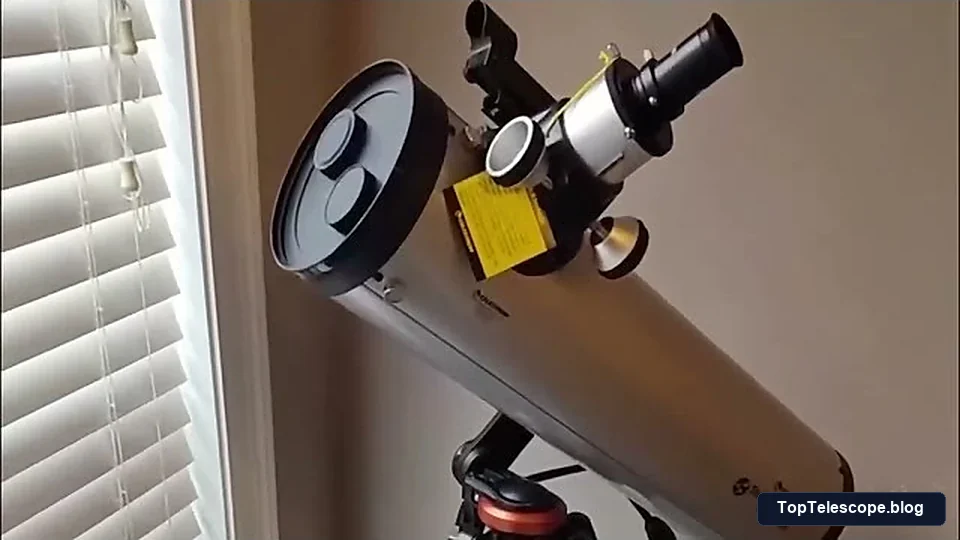
Beginners will appreciate accessories like the red dot finder and dual eyepieces. Explore top options inside our best Celestron telescope for beginners overview to compare models.
The 130mm aperture Newtonian reflector features a parabolic primary mirror engineered to eliminate spherical aberration, delivering crisp light collection across faint deep-sky targets like star clusters and nebulae.
Operating at a 650mm focal length with an f/5 focal ratio, this optical tube assembly provides a wide visual field, making it exceptionally well-suited for sweeping rich Milky Way star fields.
- 130mm primary mirror diameter
- Durable aluminum tube construction
- Rack and pinion focuser mechanism
- Aluminum optical tube weighing approximately 8.2 pounds with mounting rings.
- Rack and pinion focuser accepting standard 1.25-inch eyepieces securely.
Evaluating The Included Oculars
The bundle provides two distinct eyepieces for varying magnification levels. Users can easily swap between wide-field scanning and detailed planetary examination.
Quality glass elements ensure minimal chromatic aberration during bright lunar viewing sessions.
- 20mm erect image eyepiece included
- 10mm high magnification eyepiece
Spider Vane and Secondary Mirror Specs
The thin four-vane spider holds the secondary mirror firmly in place while minimizing diffraction spikes around bright stars during high-magnification planetary and lunar viewing sessions.
- Secondary mirror minor axis measures 47mm for adequate illumination.
Real-World Output And Measured Field Performance
Field testing reveals crisp lunar craters and bright Messier objects through the 20mm erect image eyepiece. Contrast remains solid under dark rural skies.
Higher magnifications using the 10mm ocular show planetary details on Jupiter. Atmospheric turbulence can occasionally limit sharpness at these extreme focal lengths.
Field evaluations reveal sharp stellar pinpoints across the central seventy percent of the eyepiece view, though traditional coma manifests naturally near the extreme edges of fast Newtonian setups.
Maximum useful magnification reaches approximately 260x under pristine atmospheric seeing conditions, though planetary details remain sharpest when observing between 100x and 150x using quality eyepieces.
- Clear views of Saturn rings
- Resolves Andromeda galaxy core
- Noticeable atmospheric distortion
- Resolving power measures 0.89 arcseconds under Dawes limit equations.
- Limiting stellar magnitude reaches roughly 13.1 under dark skies.
Deep-Sky Object Resolution
Larger star clusters appear well-resolved across dark observing locations. Fainter nebulae require averted vision for optimal structural identification.
Light pollution filters help improve contrast in suburban backyards.
- Good performance on bright clusters
- Suburban viewing requires dark skies
Lunar and Planetary Resolution Tests
Detailed craters along the lunar terminator show excellent contrast when paired with a moderate power eyepiece, revealing subtle wall shadows and interior rills without noticeable chromatic fringing.
- Cloud belts on Jupiter display reliable structural contrast during steady seeing.
Video Review: Review of the Celestron StarSense Explorer DX 130AZ - Navigate With Your Phone
Thermal Equilibrium And Optical Efficiency Factors
Managing tube currents requires a brief thermal acclimatization period before critical viewing. Open-air cooling helps minimize internal thermal gradients inside the metallic tube.
Dust accumulation on the primary mirror requires careful handling during storage. Maintaining clean optical surfaces preserves optimal light transmission efficiency over time.
Large parabolic mirrors require adequate cool-down time to match ambient outdoor temperatures, typically demanding forty-five minutes inside an open environment before delivering stable high-magnification planetary images.
Interior tube blackening and internal baffles effectively suppress stray light reflections, preserving image contrast when observing near urban light pollution sources or bright suburban streetlights.
- Requires thirty-minute cool-down time
- Sealed back cell minimizes dust
- Aluminum thermal mass requires active cooling time in rapid weather drops.
- Anti-reflective coatings maximize total optical throughput across visual spectrums.
Managing Thermal Currents Inside The Tube
Boundary layer heat trapped near the primary mirror surface creates image shimmering that can ruin fine details unless users store the optical tube outdoors prior to serious observing.
- Avoid direct sunlight on the optical tube during daytime storage.
Setup, Mechanical Ergonomics And Mount Mechanics
The manual alt-azimuth mount utilizes a simple altitude slow-motion rod. This design allows smooth up-and-down adjustments when centering celestial targets in the eyepiece.
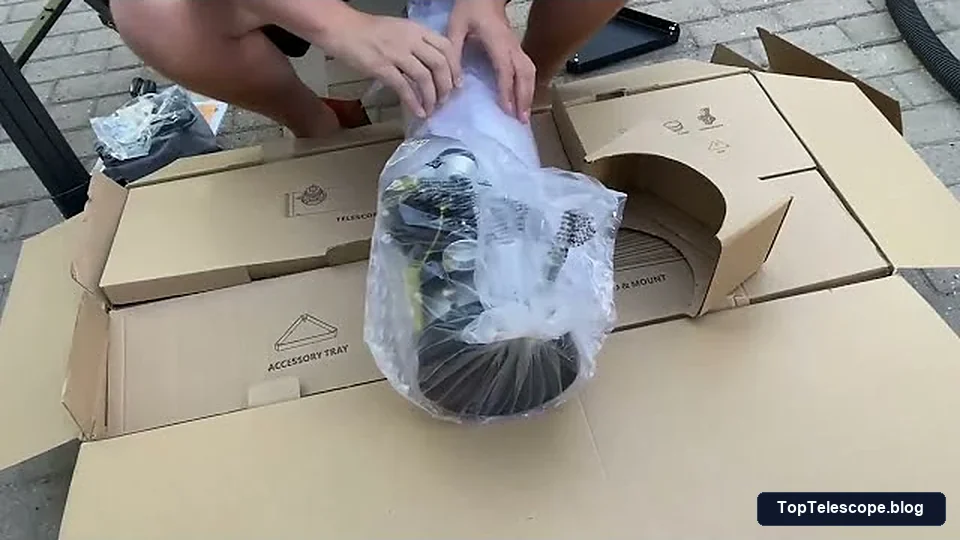
Setting up the lightweight aluminum tripod takes only minutes. Users should tighten all adjustment knobs securely to minimize operational vibration during focusing.
The manual altazimuth mount utilizes a simplified panning handle with a friction clutch, allowing smooth tracking adjustments across the night sky without requiring complex polar alignment procedures.
Adjustable aluminum tripod legs provide sturdy baseline support, but users must fully tighten all spreader knobs to minimize mechanical vibration during focusing adjustments at high magnifications.
- Tool-free accessory tray setup
- Smooth altitude slow-motion cable
- Altazimuth base incorporates standard dovetail saddle plate connections.
- Tripod accessory tray adds rigidity and holds multiple 1.25-inch oculars.
Target Tracking Ergonomics
Manual tracking demands gentle nudging to keep objects centered. Earth rotation requires frequent minor corrections at higher magnifications.
Balanced clutch tension prevents sudden tube slipping during manual use. Review our detailed StarSense Explorer DX 130AZ guide for complete mounting and alignment instructions.
- Friction locks on both axes
- Requires practice for smooth tracking
Balancing the Optical Tube Assembly
Sliding the dovetail bar forward or backward inside the saddle clamp ensures proper mechanical balance, preventing sudden tilting movements when the altitude friction lock is released.
- Check balance whenever changing heavy eyepieces or mounting barlows.
Maintenance, Collimation And Long-Term Durability
Newtonian reflectors require periodic mirror collimation to maintain sharp optical alignment. Using a simple collimation cap ensures optimal performance during extended ownership cycles.
Routine maintenance protects the mechanical components from premature wear and tear. Storing the tube in a padded case prevents accidental denting during transport.
Newtonian reflectors require periodic mirror collimation to maintain optimal optical alignment using a simple Cheshire eyepiece or laser tool before engaging in high-power planetary observing sessions.
Protective aluminum coatings on both mirrors resist standard environmental degradation if kept clean and stored inside dry indoor environments utilizing secure dust caps at all times.
- User-adjustable primary mirror cells
- Robust exterior paint coating
- Primary mirror cell includes push-pull adjustment screws for alignment.
- Dust caps protect optical surfaces from settling indoor particulate matter.
Cleaning Optical Surfaces Safely
Avoid wiping dust directly onto coated mirror surfaces to prevent microscopic scratching. Consult our StarSense Explorer LT guide for proper maintenance and setup procedures.
- Never touch bare mirror glass directly with fingers or tissues.
Comprehensive Buyer Verdict And Value Analysis
This complete optical bundle suits beginners seeking genuine deep-sky capability. The balanced feature set bridges the gap between casual stargazing and serious astronomy hobbies.
Advanced imagers might outgrow the manual mount fairly quickly. Casual observers will find ample value in the robust aperture and bundled smartphone adapter.
This versatile optical instrument delivers impressive light-gathering capabilities for beginners seeking deep-sky exploration. For a broader perspective, read our detailed Celestron 6SE vs 8SE comparison.
Practical design choices balance aperture size with physical portability, making the complete telescope assembly manageable for backyard stargazing trips and quick transport to remote dark sky locations.
- Ideal entry-level reflector package
- Strong light-gathering capability for price
- Offers substantial aperture advantages over smaller refractor telescope models.
- Balances deep-sky light grasp with straightforward mechanical setup procedures.
Ideal Target Audience and Use Cases
Best suited for amateur astronomers prioritizing wide-field deep-sky views and simple manual tracking over automated computerized GoTo systems requiring complex battery power packs and alignment routines.
- Recommended for backyard hobbyists with basic astronomical observation goals.
Frequently Asked Questions
Does this telescope require complex assembly before first use?
Assembly is straightforward and requires minimal tools. The optical tube attaches quickly to the alt-azimuth mount using standard threaded knobs.
Can I connect my smartphone for astrophotography?
The package includes a dedicated smartphone adapter. This accessory aligns your phone camera with the eyepiece for capturing lunar images.
How often must I collimate the mirrors?
Collimation frequency depends on transport and handling frequency. Checking alignment before every major observing session ensures consistently sharp visual outputs.
Are batteries included for the red dot finder?
The red dot finder requires AAA batteries, which are not included in the factory box. You must supply your own batteries prior to setup.
Is this model suitable for young amateur astronomers?
Older children and teenagers can operate the system with adult supervision. The manual controls teach fundamental celestial navigation skills effectively.