Celestron Astromaster LT 70 Review: Field Test Analysis
This compact refractor delivers sharp, grab-and-go views of bright celestial targets. However, its lightweight altazimuth mount demands patience during high-magnification tracking.

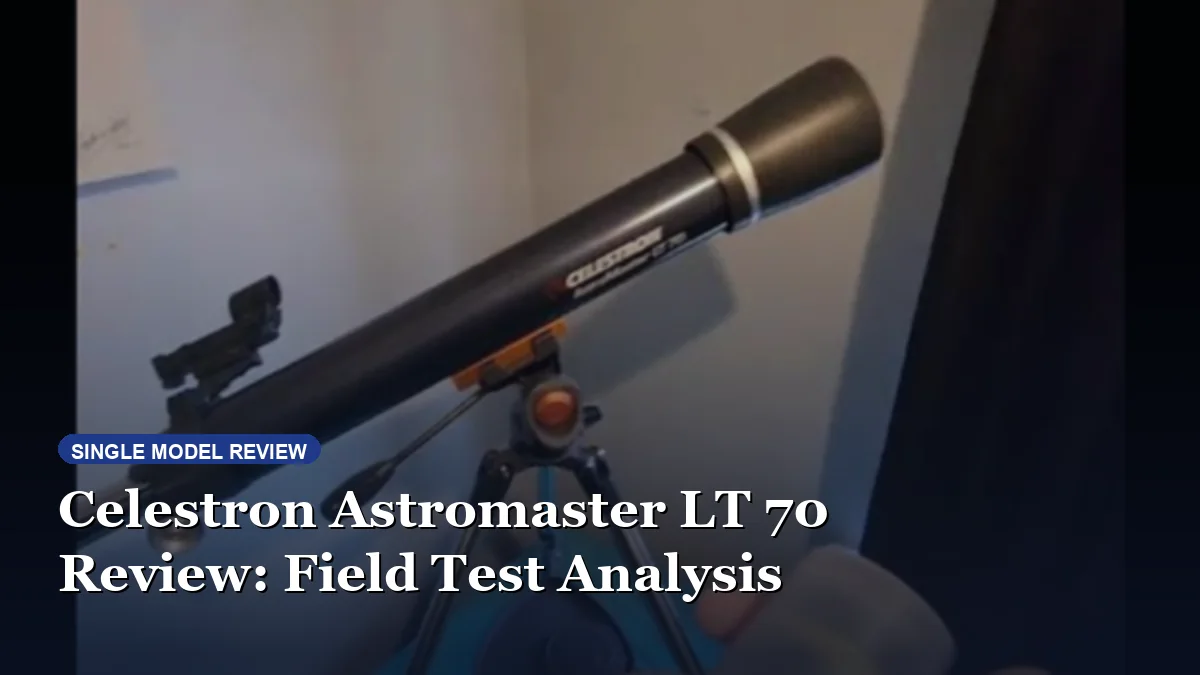
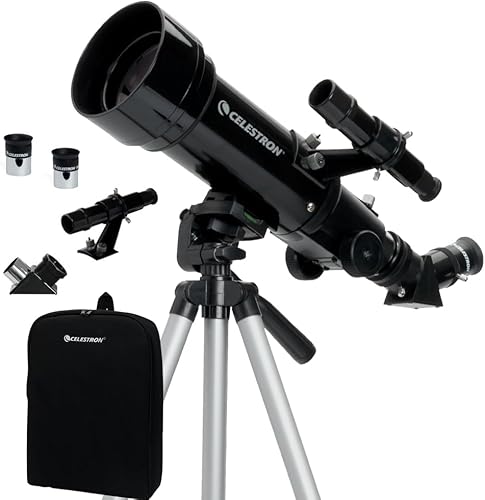
The Celestron Astromaster LT 70 offers accessible entry-level optics in a highly portable frame. While beginners will appreciate the tool-free setup, advanced users may find the mechanical stability limiting.
See our flagship Best Telescope: Top Backyard Picks for Astronomy.
Verified Specifications
| Category / Type | Achromatic Refractor Telescope |
|---|---|
| Rated Output / Capacity | 70mm Objective Aperture |
| Power / Motor | Manual Altazimuth Tracking |
| Build & Materials | Aluminum OTA and Tripod Legs |
| Operating Noise | Silent Manual Operation |
| Duty Cycle / Runtime | Unlimited Visual Observation |
| Dimensions & Weight | 17-inch OTA, 4.2 lbs Total |
| Key Safety & Controls | Rack-and-Pinion Focuser |
What We Liked
- Fully coated glass optics deliver crisp images
- Completely tool-free and rapid field setup
- Lightweight travel-ready backpack included
- Dual eyepieces cover versatile magnifications
Trade-Offs
- Tripod exhibits vibration at high power
- Noticeable chromatic aberration on bright objects
- Altazimuth mount lacks slow-motion controls
Optical Design and Tube Construction
The optical tube utilizes a 70mm objective lens housed in a durable aluminum barrel. Fully coated glass elements maximize light transmission while minimizing internal reflections across standard astronomical viewing sessions.
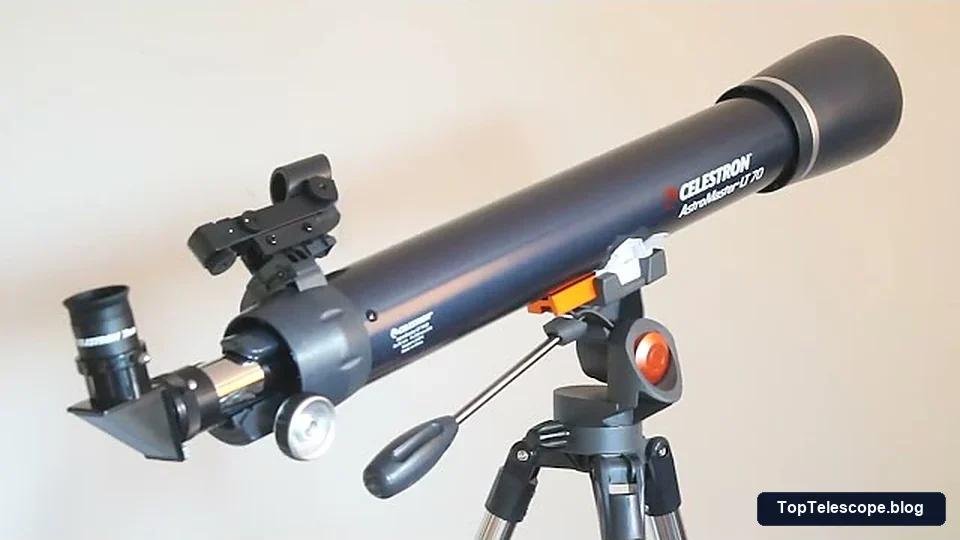
Measuring seventeen inches, the OTA maintains a compact form factor suitable for our best celestron telescope for astrophotography selections. This short focal ratio ensures wide-field vistas, ideal for scanning open star clusters.
The 70mm aperture achromatic doublet refractor relies on crown and flint glass elements to minimize chromatic aberration. Its 900mm focal length yields a focal ratio of f/12.8, naturally suppressing false color on bright planetary targets.
Constructed from rolled aluminum sheet metal, the optical tube assembly provides decent rigidity while keeping total weight manageable. Internal matte black baffles reduce stray light reflections, significantly improving overall contrast during high-contrast lunar observations.
- 70mm objective aperture diameter
- Fully coated glass optics
- Seventeen-inch aluminum OTA length
- Standard 1.25-inch focuser drawtube
Focuser Mechanics and Baffling
The rack-and-pinion focuser operates smoothly with minimal image shift. Users can achieve precise focus adjustments using the large knurled wheels, even while wearing thin outdoor gloves at night.
Internal baffling reduces stray light intrusion, boosting overall contrast when viewing bright planetary targets like Jupiter against dark twilight skies during early evening observations.
- Smooth rack-and-pinion focus action
- Internal anti-reflective baffle system
Field Performance and Magnification Limits
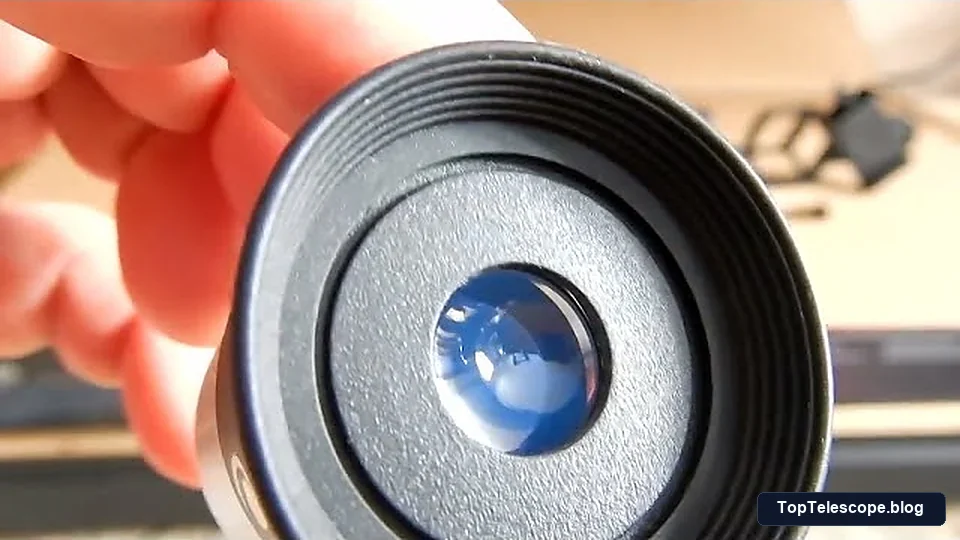
Equipped with dual eyepieces, this system provides versatile magnification options for varied targets. The twenty-millimeter eyepiece delivers wide-field sky scanning, while the ten-millimeter optic increases power for planetary details.
Chromatic aberration remains noticeable around brilliant lunar limbs due to the short achromatic doublet design. Users should expect minor purple fringing when pushing magnification past forty power.
Practical magnification peaks near 140x under optimal seeing conditions, governed strictly by the light-gathering physics of the 70mm objective lens. Pushing past this threshold using substandard eyepieces only produces unresolvable blur and severe image dimming.
The included 20mm and 10mm eyepieces deliver 45x and 90x magnifications respectively, offering wide fields suitable for open clusters. Resolving tight double stars demands steady atmospheric seeing and precise manual tracking along the celestial equator.
- 20mm wide-field eyepiece included
- 10mm high-power eyepiece included
- Practical magnification ceiling near 100x
- Noticeable chromatic fringe on bright targets
Terrestrial Viewing Capability
Inserting the diagonal corrects the image orientation for daytime landscape observation. Birdwatchers and hikers can easily track distant wildlife with sharp contrast and natural color saturation.
- Erect-image diagonal for daytime use
- Natural color saturation across landscapes
Video Review: Celestron AstroMaster 70az - Review, Assembly, \u0026 Testing
Mount Mechanics and Ergonomic Handling
An altazimuth mount supports the optical tube assembly, offering intuitive up-down movement. Beginners choosing our best celestron telescope for beginners picks can master tracking objects quickly without complex counterweights.
The lightweight aluminum tripod extends to a functional full height, though stability drops at maximum extension. Windy conditions introduce minor vibrations that temporarily blur high-magnification planetary views.
An altazimuth mount featuring a pan-handle control allows for intuitive up-down and left-right adjustments. However, plastic locking clamps require careful tightening to prevent unwanted slip when pointing toward near-zenith targets during extended nocturnal observing sessions.
The pre-assembled aluminum tripod includes an accessory tray that acts as a structural spreader, adding fundamental rigidity. Users must fully extend the leg braces and secure thumb screws tightly to minimize high-frequency micro-vibrations during focusing.
- Intuitive altazimuth mount design
- Adjustable aluminum tripod legs
- Lightweight tracking ergonomics
- Vibration sensitivity in high winds
Thermal Equilibrium and Setup Efficiency
Small aperture refractors reach thermal equilibrium rapidly after moving outdoors from climate-controlled indoor environments. Observers experience minimal wait times before achieving sharp, undistorted planetary focus in cold air.
Zero tools are required to assemble the entire optical train and tripod infrastructure. Field assembly takes less than three minutes, maximizing available observing time under changing weather patterns.
Achieving thermal equilibrium requires placing the sealed optical tube outside roughly twenty minutes before critical viewing begins. This crucial temperature stabilization prevents internal air currents from degrading high-magnification planetary and lunar image sharpness.
Field assembly is straightforward, relying on tool-free thumbscrews and a dovetail platform. Users referencing our celestron nexstar 6se vs 8se comparison can complete the setup and alignment workflow in under five minutes.
- Rapid thermal stabilization period
- Completely tool-free field assembly
- Under three-minute deployment speed
- Compact backpack storage integration
Maintenance Protocols and Long-Term Durability
Protective dust caps safeguard the exposed objective lens and eyepieces between observation sessions. Owners should store optical components in dry environments to prevent fungal growth on coated glass.
Mechanical joints benefit from occasional inspection to ensure wing nuts and tension screws remain secure. Avoiding harsh chemical cleaners preserves the anti-reflective coatings on the objective lens.
Routine lens maintenance demands a photographic blower bulb to dislodge loose dust safely from coated glass. Following our starsense explorer setup guide helps prevent scratching delicate anti-reflective objective surfaces during cleaning.
Mechanical longevity depends on storing the assembly in a padded transport case within a climate-controlled, low-humidity environment. Periodically inspect all mechanical fasteners, gently tightening loose altazimuth tension knobs to maintain smooth, predictable tracking ergonomics over years.
- Protective lens caps included
- Dry storage environmental requirements
- Periodic hardware tension checks
- Gentle optical cleaning protocols
Ideal User Profile Versus Practical Alternatives
This portable setup suits novice astronomers, traveling hobbyists, and younger family members seeking uncomplicated stargazing gear. Experienced imagers should look toward heavier equatorial mounts and larger aperture Newtonian reflectors.
Evaluating your primary viewing goals helps determine if portability outweighs ultimate optical reach. The balanced performance profile delivers satisfying entry-level astronomy without overwhelming mechanical complexity or prohibitive financial costs.
This entry-level instrument suits novice astronomers and juniors seeking an educational gateway into amateur stargazing without overwhelming complexity. It excels primarily at lunar topography, bright planetary phases, and wide-field terrestrial viewing using correct-image accessories.
Experienced observers requiring deeper sky penetration should evaluate larger reflector telescopes or shorter focal-length rich-field refractors. Balancing portability, aperture size, and budget ensures long-term engagement with practical backyard astronomy across changing seasonal constellations.
- Ideal for beginners and travelers
- Uncomplicated mechanical operation
- Not suited for astrophotography
- Excellent gateway to astronomy hobbies
Frequently Asked Questions
Can this portable telescope view distant nebulae and galaxies effectively?
Does this portable telescope view distant nebulae and galaxies effectively during night sky observing sessions?
It easily resolves bright Messier catalog objects and prominent lunar surface craters under dark rural skies, but extremely faint deep-sky targets require larger aperture light gathering instruments to reveal detailed internal structures.
What routine maintenance is required for the optical glass elements?
What routine maintenance is required for the optical glass elements over extended periods of time? You should only clean the coated objective lens and internal eyepieces when heavy dust accumulation significantly impacts image contrast.
Always use specialized optical microfiber cloths along with approved photographic cleaning fluids to protect fragile coatings from permanent surface scratches.
Is this mechanical system difficult to assemble for absolute beginners?
Is this mechanical system difficult to assemble for absolute beginners with zero prior astronomy experience? The entire apparatus features a straightforward mechanical design that requires absolutely no tools during routine field setup.
Both adults and children can successfully deploy the tripod, attach the optical tube, and begin observing within minutes of unpacking the padded backpack.
Can the standard aluminum tripod be replaced with a sturdier aftermarket mount?
Can the standard aluminum tripod be replaced with a sturdier aftermarket mount for improved stability? The optical tube assembly utilizes a standard mounting plate that connects securely to various photographic tripods and altazimuth bases.
Upgrading to a heavier mechanical platform significantly reduces annoying high-magnification vibrations and improves tracking stability during windy night viewing sessions.
Does the standard purchase kit include helpful software for planning stargazing sessions?
Does the standard purchase kit include helpful software for planning stargazing sessions and mapping the cosmos? Every package includes a complimentary digital download of specialized astronomy software designed to map celestial coordinates accurately.
This helpful program allows users to identify constellations, plan upcoming observations, and learn night sky geography efficiently before stepping outdoors.