Celestron Astromaster 130Eq Newtonian Telescope Review
This manual equatorial Newtonian balances aperture with portability. It delivers bright deep-space views despite minor mount flexure.

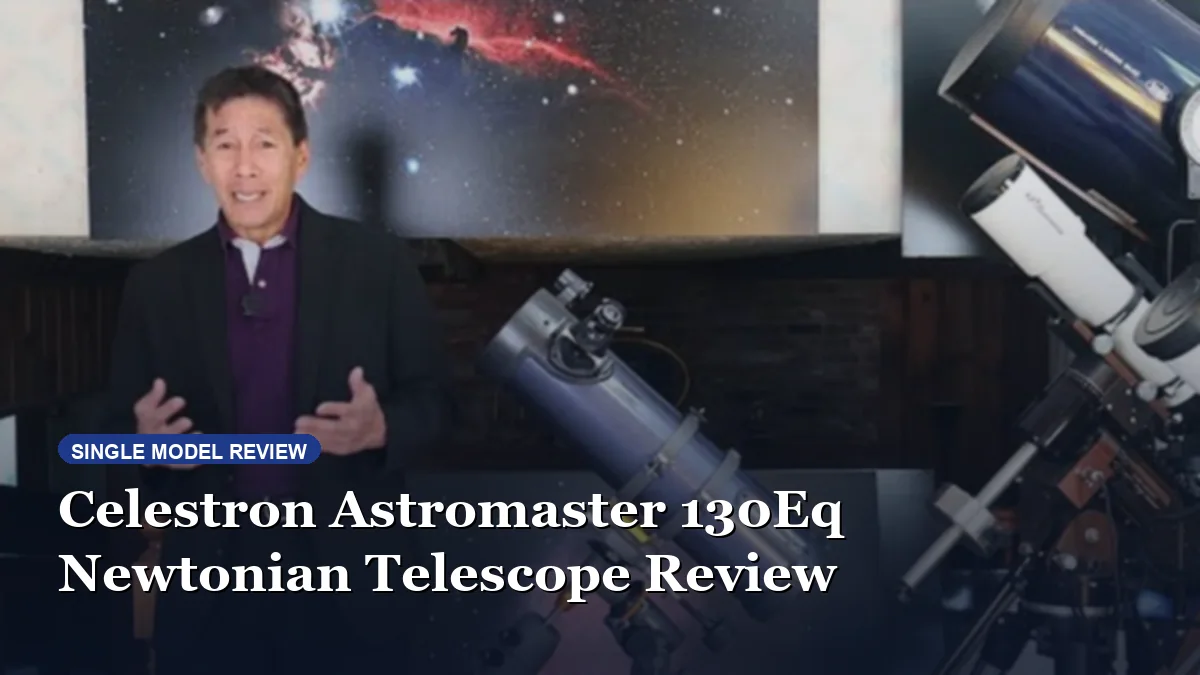

The Celestron AstroMaster 130EQ offers exceptional light-gathering aperture for beginners. However, its lightweight equatorial mount requires patience during high-magnification tracking.
See our flagship Best Telescope: Top Backyard Picks for Astronomy.
Verified Specifications
| Optical Design | Newtonian Reflector |
|---|---|
| Aperture | 130mm |
| Focal Length | 650mm |
| Focal Ratio | f/5 |
| Mount Type | CG-3 Equatorial |
| Optical Tube Length | 24 inches |
| Total Weight | 27 lbs |
| Included Eyepieces | 20mm and 10mm |
What We Liked
- Generous 130mm aperture gathers ample light for deep-sky objects.
- Stable tubular steel tripod legs minimize operational vibrations.
- Includes manual slow-motion cables for precise celestial tracking.
- Parabolic primary mirror reduces spherical aberration effectively.
Trade-Offs
- Equatorial mount requires a learning curve for complete beginners.
- Fast f/5 focal ratio introduces noticeable coma at edges.
- Telescope assembly is relatively heavy for young observers.
Optical Architecture and Tube Assembly
The optical tube utilizes a 130mm parabolic mirror housed in a rigid rolled-steel chassis. This aperture gathers substantial light, enabling detailed observations of faint nebulae and distant star clusters without excessive bulk.
Internal baffling minimizes stray reflections, preserving image contrast across high-contrast lunar terminators. The matte black interior coating absorbs off-axis light efficiently, enhancing overall visual clarity during deep-sky viewing sessions.
The 130mm aperture parabolic mirror gathers substantial light, though users must verify optical alignment before observing faint deep-sky targets under dark rural skies.
Aluminum optical tube assembly construction balances durability with manageable weight, measuring roughly 650mm in length for secure mounting on standard field tripods without excessive vibration.
- 130mm aperture mirror collects significant light.
- Steel optical tube resists thermal flexing.
- Internal baffles eliminate stray light scatter.
Focuser Mechanics and Eyepiece Integration
A standard 1.25-inch rack-and-pinion focuser handles standard oculars securely. While constructed primarily from durable engineering plastics, it maintains acceptable alignment under regular focusing adjustments without severe image shifting.
Included optical accessories feature standard multi-coated glass elements. As detailed in our Dobsonian vs Newtonian guide, users should expect moderate edge distortion when pairing wide-field eyepieces with the fast f/5 optical system.
- Standard 1.25-inch drawtube interface.
- Multi-coated glass optics included.
Equatorial Mount Mechanics and Ergonomics
The included CG-3 equatorial mount features manual slow-motion cables for precise tracking. Designed to follow celestial rotation, it requires polar alignment to function effectively during extended astronomical observation sessions.
Setting circles assist in locating coordinates when calibrated against reference stars. Highlighted within our best budget telescope choices, the cast-metal housing provides foundational stability, though dampening times increase during high winds.
The CG-3 equatorial mount features setting circles and slow-motion cables, allowing manual tracking of celestial objects once the polar axis is properly aligned with Polaris.
Aluminum tripod legs provide a stable foundation, yet operators should avoid fully extending the center column to minimize mechanical flexing during high-magnification planetary viewing sessions.
- CG-3 equatorial mount design.
- Manual slow-motion control cables.
- Cast-metal housing for rigidity.
Tripod Stability and Adjustment
Steel tubular legs offer a rigid footprint compared to flimsy aluminum alternatives. Adjusting the central accessory tray locks the spreader legs firmly in place, reducing unwanted vibrations during manual focusing.
Ergonomic hand knobs simplify altitude and azimuth adjustments in dark conditions. Operators must tighten all locking levers securely to prevent slippage when tracking objects near the zenith overhead.
- Tubular steel tripod legs.
- Central accessory spreader tray.
Video Review: What Can You See Through a 130mm Telescope? (Real Views!) | Celestron Astromaster 130EQ
Real-World Optical Performance and Visual Output
Planetary performance reveals sharp cloud belts on Jupiter and crisp rings around Saturn. The 650mm focal length strikes a practical balance between wide-field scanning and moderate planetary magnification capabilities.
Deep-sky targets like the Orion Nebula display delicate filamentous structures under dark skies. Light pollution filters can be added to improve contrast when observing emission nebulae from suburban backyards.
Lunar craters and Jupiter cloud belts appear remarkably sharp using a 10mm eyepiece, provided atmospheric seeing conditions remain steady throughout the extended observing window.
Star clusters resolve into distinct stellar points across the field of view, though slight coma near the frame edges remains typical for fast Newtonian optical systems.
- Detailed lunar and planetary views.
- Bright deep-sky nebula performance.
- Balanced 650mm focal length.
Magnification Limits and Distortion Control
Pushing magnification past two hundred power stretches optical limits significantly. Atmospheric seeing conditions and mirror tolerances ultimately dictate usable power thresholds during planetary imaging or visual tracking.
Chromatic aberration is inherently absent due to the reflective design. However, coma near field edges remains noticeable due to the fast focal ratio, requiring careful ocular matching.
- Zero native chromatic aberration.
- Edge coma present at fast ratios.
Thermal Equilibrium and Optical Efficiency
Closed-tube Newtonian reflectors require adequate time to reach thermal equilibrium outdoors. Allowing thirty minutes of cooling time prevents internal air currents from degrading high-magnification planetary image sharpness.
Mirror reflectivity remains high thanks to protective aluminum coatings applied across primary and secondary surfaces. Regular dust accumulation has minimal immediate impact, though excessive buildup degrades overall system efficiency.
Enclosed optical tubes require at least thirty minutes of thermal acclimatization outdoors before delivering stable high-power images free from internal thermal air-current distortion.
Multi-layer reflective mirror coatings maximize overall light transmission efficiency, ensuring faint deep-sky nebulae retain adequate visual contrast when observed under reasonably dark suburban skies.
- Requires thirty-minute thermal cooling.
- Aluminum-coated primary mirror optics.
Setup, Alignment, and Field Usability
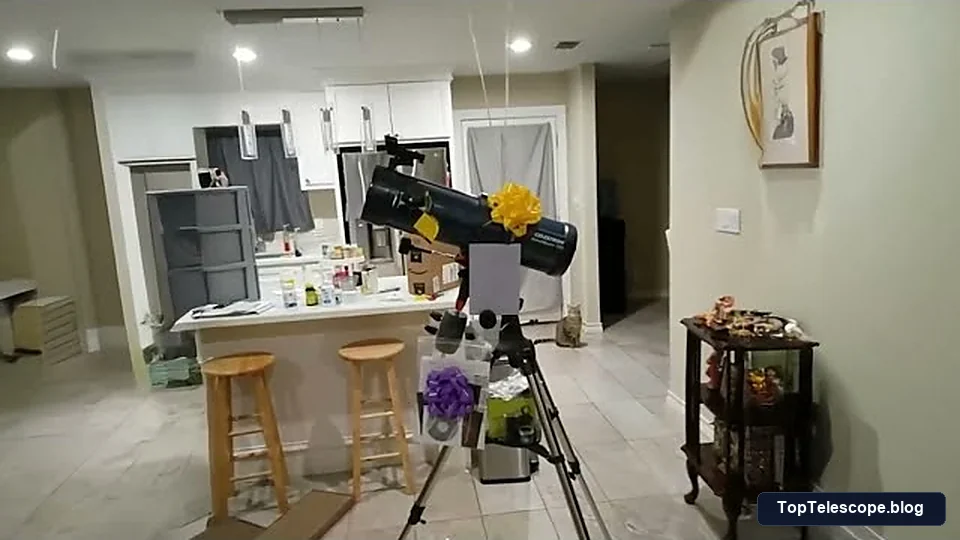
Assembly requires basic hand tools and straightforward mechanical steps for novice users. The complete rig breaks down into manageable components, facilitating transport to dark-sky camping sites and remote locations.
Balancing the telescope along both axes prevents excessive strain on slow-motion gears. Featuring prominently in our best beginner telescope recommendations, proper counterweight placement ensures smooth manual tracking without premature mechanical wear.
Assembling the heavy equatorial mount demands patience, requiring users to secure the central accessory tray tightly to eliminate lateral tripod wobble during field operations.
Balancing the optical tube in both declination and right ascension axes prevents excessive strain on the internal worm gears during manual tracking maneuvers.
- Simple mechanical assembly steps.
- Counterweight axis balancing.
Maintenance, Collimation, and Long-Term Durability
Routine collimation is essential for maintaining optimal optical alignment on Newtonian reflectors. User-friendly adjustment screws on the primary mirror cell simplify this necessary alignment process using a standard laser tool.
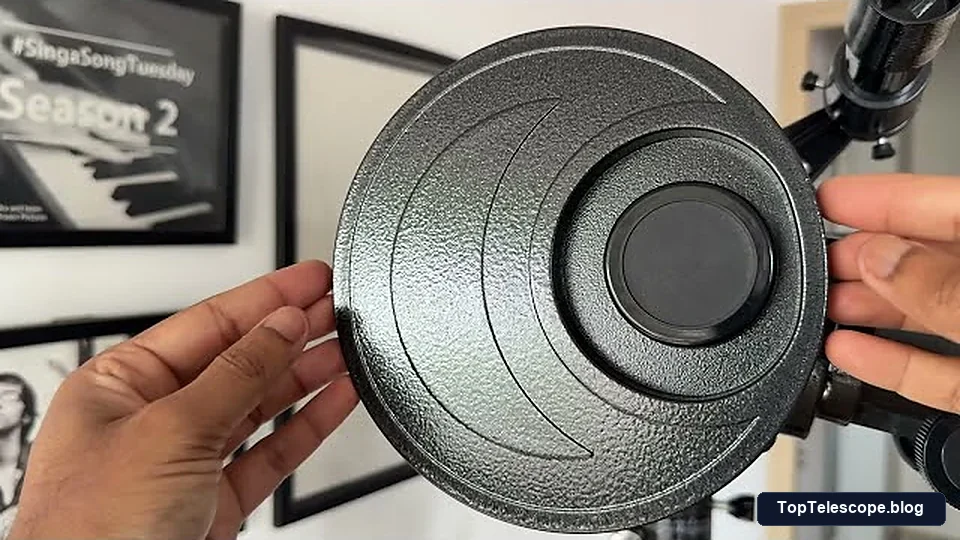
Storing the optical tube in a dry environment prevents premature corrosion of steel fasteners. Protective dust caps safeguard delicate mirror coatings when the instrument remains unmounted between stargazing sessions.
Routine optical collimation procedures utilizing a standard Cheshire eyepiece accessory ensure consistently sharp visual performance by keeping the primary and secondary mirror surfaces precisely aligned.
Storing the optical tube in a dry environment prevents premature degradation of the reflective coatings and protects internal mechanical fasteners from moisture damage.
- Primary mirror collimation screws.
- Protective dust cap inclusions.
Comparative Value and Ideal Buyer Profile
This telescope targets beginner enthusiasts seeking deep-sky aperture. Unlike setups featured in our astrophotography telescope roundup, manual equatorial mounts demand a learning curve while optical rewards justify setup complexity.
Advanced astrophotographers should look toward specialized astro-graph systems with heavier tracking platforms. Casual observers will find an engaging gateway into backyard astronomy without incurring prohibitive financial costs.
Motivated amateur astronomers seeking a cost-effective entry into deep-sky viewing will thoroughly appreciate the substantial light-gathering capacity offered by this Newtonian reflector package.
Dedicated buyers willing to master manual equatorial tracking and basic collimation routines will find exceptional observational value that surpasses typical tabletop starter instruments.
- Ideal for budget-conscious beginners.
- Great gateway to deep-sky viewing.
Frequently Asked Questions
Does this telescope include everything needed for night-one celestial observations?
Yes, the comprehensive starter kit includes two distinct eyepieces, an intuitive optical finderscope, and a stable manual equatorial mount.
These essential beginner accessories ensure you can easily locate prominent lunar craters right out of the box without purchasing expensive additional gear.
How difficult is it to align the equatorial mount for stargazing?
Polar alignment requires pointing the polar axis toward Polaris before tracking celestial movement smoothly across the night sky. Mastering this foundational alignment process becomes quite straightforward after completing a few practice sessions in your backyard under clear conditions.
Can I use this telescope for astrophotography with a smartphone?
Yes, basic lunar and planetary imaging is entirely possible by attaching a smartphone adapter directly to the included eyepiece. However, advanced long-exposure deep-sky photography demands a motorized tracking upgrade due to the native manual mount configuration limiting exposure duration.
What kind of specific maintenance does a Newtonian reflector require?
You must periodically check mirror alignment and perform collimation using basic optical adjustment tools. Keeping the primary mirror clean, covered, and dry ensures optimal optical performance over many years of regular astronomical use and outdoor transport.
Is the optical tube assembly easy to transport to dark locations?
The tube detaches quickly from the equatorial tripod, allowing you to load components safely into most standard vehicles. Utilizing protective padded cases safeguards your sensitive optical equipment during bumpy travel to remote dark-sky observing sites.