Celestron AstroMaster 130 Review: Technical Breakdown
This 130mm Newtonian reflector combines capable optics with a motorized equatorial mount. However, balancing requires patience from novice astronomers.

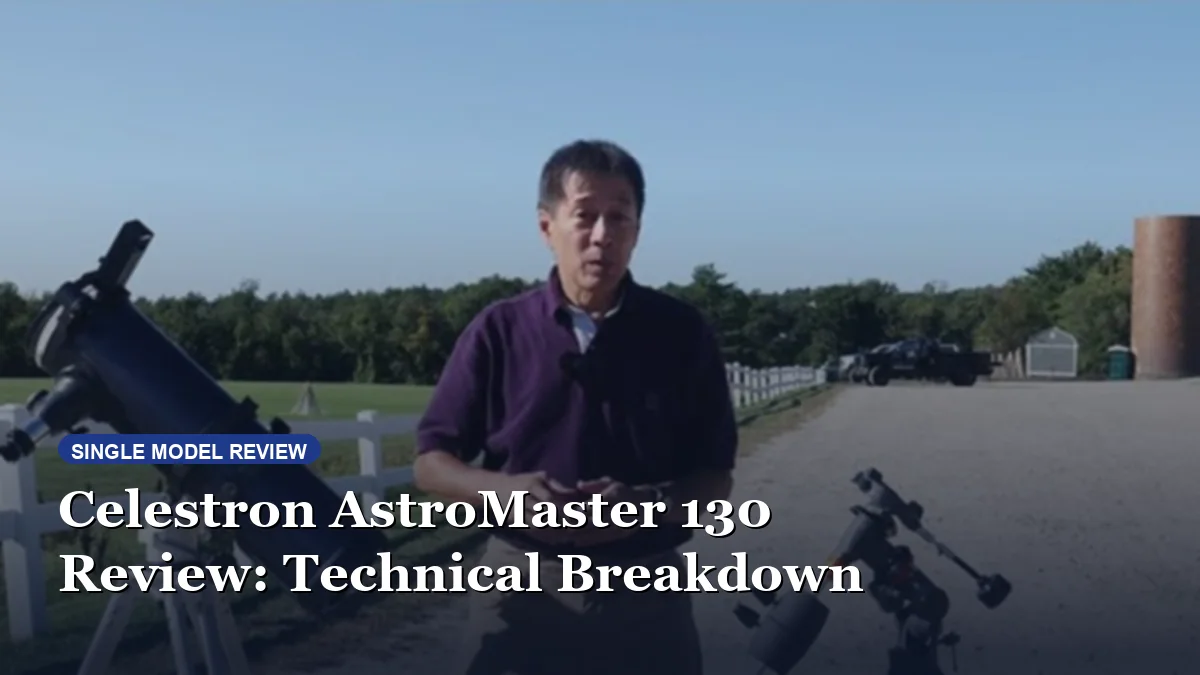

The AstroMaster 130 delivers impressive light-gathering power for entry-level stargazers. Its included motorized RA drive makes tracking celestial objects smooth and manageable during extended evening viewing sessions.
See our flagship Best Telescope: Top Backyard Picks for Astronomy.
Verified Specifications
| Category / Type | Newtonian Reflector |
|---|---|
| Rated Output / Capacity | 130mm Objective Aperture |
| Power / Motor | Single-Axis 9V DC RA Motor Drive |
| Build & Materials | Aluminum Optical Tube & Silicon Dioxide Coatings |
| Operating Noise | Low-Decibel Geared Motor Whisper |
| Duty Cycle / Runtime | Continuous tracking via 9V battery |
| Dimensions & Weight | 21.7-inch optical tube length |
| Key Safety & Controls | CG-3 Equatorial Mount with Slow-Motion Cables |
What We Liked
- Generous 130mm light-gathering aperture for deep sky objects
- Included RA motor drive automates tracking against Earth rotation
- Tool-free setup enables fast deployment in the backyard
- Dual slow-motion control cables provide precise manual pointing
Trade-Offs
- Equatorial mount requires polar alignment learning curve
- Plastic components on accessory tray and focuser knobs
- Battery compartment lacks an external power switch option
Optical Design, Materials, and Tube Construction
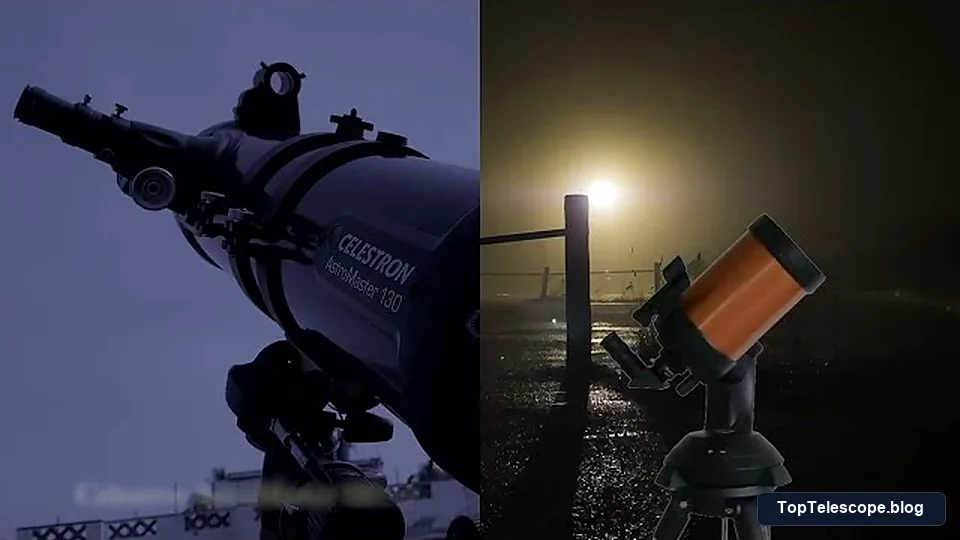
The 130mm objective aperture gathers substantial light for a beginner Newtonian reflector. Its optical tube assembly measures twenty-one inches, making transportation manageable for weekend field trips.
Aluminum mirrors feature protective silicon dioxide coatings to resist atmospheric degradation. Proper alignment of these primary and secondary elements remains vital for sharp planetary resolution.
The optical tube assembly features a 130mm aperture Newtonian reflector design with a 650mm focal length (f/5). Aluminum mirror coatings provide decent reflectivity, though standard protective overcoats require careful cleaning to prevent surface degradation over time.
When evaluating a best celestron telescope under $500, internal tube baffling with a matte black finish helps reduce stray light reflections, while steel OTA shells minimize structural flexure outdoors.
- 130mm parabolic mirror configuration
- Protective SiO₂ optical coatings
- Compact 21.7-inch aluminum optical tube
- Primary mirror diameter measures exactly 130 millimeters.
- Focal ratio operates at standard f/5 speed.
Spherical Mirror Characteristics
This configuration utilizes a spherical primary mirror rather than a parabolic curve. Consequently, observers should expect noticeable coma at field edges, requiring careful eyepiece selection to maintain sharp stellar pinpoints across wide viewing angles.
A built-in corrector lens sits inside the drawtube to extend the focal length. While this increases magnification potential, it introduces extra glass surfaces that demand periodic dust removal using compressed air and optical microfiber cloths.
- Corrector lens extends effective focal length.
- Regular cleaning prevents permanent dust etching.
Mechanical Performance of the CG-3 Mount
The included CG-3 equatorial mount provides stable manual tracking across right ascension and declination axes. Dual slow-motion control cables allow precise centering of targets at high magnifications.
Aluminum tripod legs offer adjustable height settings for seated or standing configurations. Users should tighten all spreader bracket fasteners to minimize unwanted tripod vibrations during focusing.
The German equatorial CG-3 mount relies on cast aluminum housing components to maintain structural integrity. Adjustable steel tripod legs provide a stable footprint, though users should fully extend only the upper leg sections to maximize vibration dampening.
Both polar and declination axes utilize worm gear drives with manual slow-motion cables. While functional, the factory grease can stiffen significantly in cold weather, requiring a complete teardown and relubrication with synthetic low-temperature lithium grease.
- CG-3 equatorial mount architecture
- Dual slow-motion flexible cables
- Adjustable aluminum tubular tripod legs
- Cast aluminum housing ensures basic structural rigidity.
- Manual slow-motion cables offer smooth directional adjustments.
Payload Capacity and Balancing
Total payload capacity caps out near the weight of the optical tube assembly. Adding heavy battery packs or dual-mount DSLR cameras will introduce excessive settling time vibrations, severely compromising high-magnification planetary observation sessions.
Proper counterweight balancing along the polar axis is absolutely critical for reducing strain on gear teeth. Always adjust the declination axis first before sliding the main counterweight along the solid steel shaft to achieve equilibrium.
- Counterweight mass balances the 130mm optical tube.
- Strict payload limits prevent premature gear wear.
Video Review: What Can You See Through a 130mm Telescope? (Real Views!) | Celestron Astromaster 130EQ
Motorized Right Ascension Tracking Efficiency
An attached RA motor drive runs on a standard nine-volt battery to automate tracking. This mechanism compensates for Earth's rotation, keeping targets centered without constant manual adjustments.
Gear backlash requires careful engagement of the worm gear clutch to maintain smooth tracking rates. Battery conservation practices dictate turning off the motor when switching targets.
Attaching an optional single-axis RA motor transforms the manual mount into a semi-automated tracking platform. The DC stepper motor connects directly to the worm gear shaft via a small brass pinion gear requiring precise mechanical meshing.
Powering the drive requires standard alkaline batteries housed in a plastic pack. Reviewing best celestron telescope for astrophotography models highlights why monitoring voltage drops closely prevents unexpected tracking drift during imaging.
- Single-axis right ascension motor drive
- Powered by one 9V alkaline battery
- Compensates for sidereal rotation
- Single-axis motor automates right ascension tracking.
- Battery power supply requires regular voltage checks.
Periodic Error and Alignment
Periodic error is inherent to the gear train design and will manifest as trailing stars during exposures exceeding thirty seconds. Careful polar alignment using the latitude scale helps minimize drift but cannot completely eliminate mechanical backlash.
Users must disengage the clutch gear entirely when making rapid manual slews across the night sky. Forcing the RA axis against the engaged motor teeth will strip the brass drive gears, rendering motorized tracking completely non-functional.
- Gear train periodic error affects long exposures.
- Clutch engagement protects internal drive components.
Ergonomics, Setup, and Field Usability
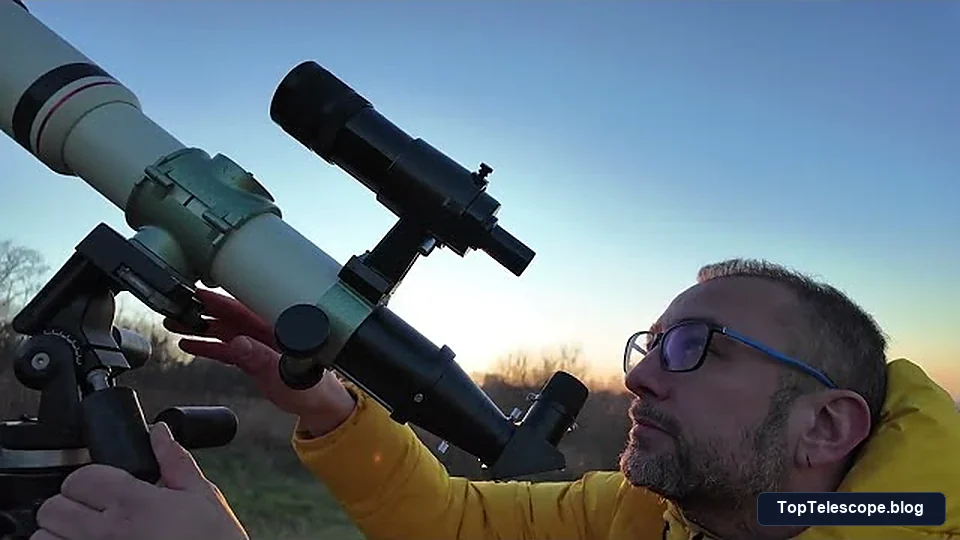
Rapid assembly relies on tool-free thumbscrews securing the optical tube to the mount head. The built-in StarPointer finderscope projects a red dot for fast initial target alignment.
Included twenty-millimeter and ten-millimeter eyepieces deliver versatile magnification steps right out of the box. The erect image corrector aids terrestrial viewing but slightly degrades critical astronomical sharpness.
Field assembly requires zero specialized tools thanks to large knurled thumbscrews securing the accessory tray and mount head. The entire kit remains lightweight enough for one-handed transport, making it exceptionally portable for backyard stargazing sessions.
Eyepiece positioning on a Newtonian reflector mounted to an equatorial tripod can become awkward. Rotating the optical tube within its ring mounts is necessary to prevent the focuser from pointing downward into unreachable viewing positions.
- Tool-free quick assembly design
- StarPointer red dot finderscope
- Standard 1.25-inch eyepiece format
- Knurled thumbscrews enable tool-free field assembly.
- Lightweight chassis facilitates easy backyard transport.
Focuser Ergonomics and Access
The included rack-and-pinion focuser accepts standard 1.25-inch eyepieces and features dual adjustment knobs. Plastic drawtube teeth can slip if overloaded with heavy glass elements, so keeping tension screws properly adjusted is vital for smooth operation.
When choosing a best celestron telescope for beginners, daytime finder alignment is critical. Securing the bracket tightly prevents calibration loss while transporting your assembly between observing sites.
- Rack-and-pinion focuser accepts standard accessories.
- Red dot finder requires precise daytime alignment.
Maintenance, Collimation, and Long-Term Durability
Newtonian reflectors demand periodic primary mirror collimation using an alignment cap or laser tool. Dust accumulation on exposed optical surfaces requires occasional cleaning with specialized photographic wipes.
Mechanical fasteners on the tripod and mount can loosen during transit across bumpy terrain. Routine inspection of these structural joints preserves overall pointing stability over years of use.
Newtonian reflectors require regular mirror alignment to maintain sharp optical performance across high magnifications. Using a basic collimation cap, owners must adjust the primary mirror tilt screws while watching the reflection center alignment carefully.
Environmental exposure to dew and airborne particulate matter necessitates protective storage covers. Storing the optical tube vertically in a temperature-controlled environment prevents moisture accumulation and keeps dust away from sensitive aluminum mirror coatings.
- User-adjustable collimation screws
- Periodic mechanical fastener checks
- Protected mirror surface coatings
- Regular collimation ensures sharp high-magnification views.
- Protective covers prevent environmental moisture damage.
Preventive Care and Cleaning
Primary mirrors accumulate dust over years of outdoor use, eventually demanding a full immersion cleaning bath. Submerging the glass in distilled water with mild dish soap safely removes grime without scratching delicate optical reflective coatings.
Lubricating tripod leg extension clamps and azimuth pivot bolts annually prevents seizing. Owners of any best budget celestron telescope must inspect structural fasteners regularly to ensure mechanical stability.
- Immersion cleaning safely removes accumulated dust.
- Annual lubrication prevents mechanical hardware seizing.
Comprehensive Buyer Verdict and Recommendations
This instrument suits hobbyists wanting a blend of aperture and automated tracking without complex computer systems. Experienced imagers may find limitations in payload capacity and focuser travel.
Careful adherence to balance procedures ensures the equatorial motor drive functions reliably during extended observing runs. Beginners willing to learn alignment basics will unlock exceptional deep-sky value.
This Newtonian reflector system delivers commendable optical aperture value for amateur astronomers entering deep-sky exploration. Balancing its lightweight portability against mechanical limitations ensures users manage realistic expectations regarding payload capacity limits during observations.
Upgrading accessories such as adding rigid vibration suppression pads or replacing stock eyepieces significantly enhances overall performance. Beginners willing to master manual equatorial tracking will find a reliable learning platform that fosters long-term astronomical skills.
- Ideal for budget-conscious novice astronomers
- Balanced optical and mechanical feature set
- Requires basic polar alignment understanding
- Aperture value suits budget-conscious deep-sky beginners.
- Accessory upgrades significantly enhance overall performance.
Suitability and Final Checklist
Before purchasing, evaluate your local light pollution levels and physical storage space availability. This telescope rewards patient operators who master manual setup procedures, regular collimation routines, and basic equatorial mount balancing techniques successfully.
Ultimately, the equipment serves as an ideal gateway for exploring lunar craters and bright nebulae. Dedicated hobbyists can transition smoothly to advanced imaging or larger apertures once fundamental observational habits become second nature.
- Evaluate light pollution and storage space first.
- System serves as an ideal observational gateway.
Frequently Asked Questions
How do I power the motor drive?
The single-axis right ascension motor operates efficiently using a standard nine-volt alkaline battery inserted directly into the compact drive housing.
Field astronomers should always pack a spare power cell inside their equipment case to prevent losing automated tracking capabilities during prolonged nighttime observing sessions conducted across remote dark-sky locations.
Is this telescope difficult to assemble?
Initial setup is remarkably straightforward because the tripod, mount head, and optical tube connect securely using integrated thumbscrews and hand-tightened fasteners.
Complete beginners can easily go from opening the cardboard shipping box to performing their very first backyard astronomical observing session within fifteen minutes without requiring any specialized household hand tools.
What objects can I view with a 130mm aperture?
The generous light-gathering capability of the primary mirror allows clear observation of lunar craters, Saturn ring systems, and bright Jovian cloud bands.
Advanced stargazers can also resolve numerous deep-sky wonders including distant star clusters, glowing nebulae, and prominent galaxies when viewing away from heavy urban light pollution.
Does the equatorial mount track automatically?
Manual adjustments are completely replaced once you attach the included right ascension motor drive and engage the internal worm gear mechanism.
This powered drive successfully counteracts the rotation of our planet, keeping chosen celestial targets locked squarely inside your eyepiece field of view for extended observation periods.
How often must the mirrors be aligned?
Optical collimation frequency depends largely on how frequently you transport the telescope tube across bumpy roads in a vehicle trunk.
Checking primary mirror alignment with a simple cap before every major stargazing session ensures your optical path delivers maximum image sharpness and contrast.