Celestron 70Az Review: Portable Beginner Refractor Analyzed
This portable refractor offers beginner astronomers a lightweight, all-inclusive setup. However, its compact altazimuth mount demands careful handling during high-magnification viewing sessions.

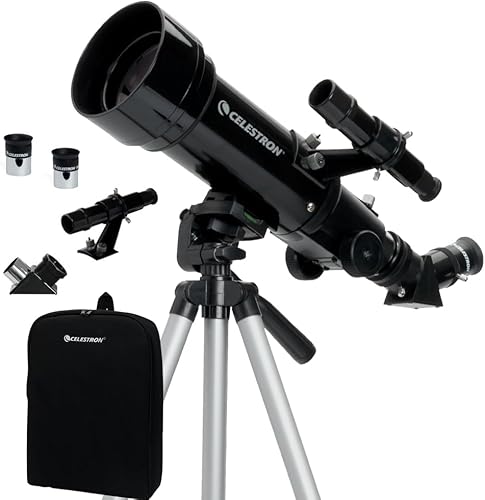
The Celestron 70Az excels as an ultra-portable entry tool for casual stargazers. Its fully coated glass optics deliver sharp lunar details despite mechanical mount limitations.
See our flagship Best Telescope: Top Backyard Picks for Astronomy.
Verified Specifications
| Category / Type | Achromatic Refractor |
|---|---|
| Rated Output / Capacity | 70mm Objective Lens Aperture |
| Power / Motor | Manual Altazimuth Control |
| Build & Materials | Aluminum Tube and Plastic Fittings |
| Operating Noise | Silent Manual Operation |
| Duty Cycle / Runtime | Unlimited Visual Observing |
| Dimensions & Weight | 4.2 Pounds Total Weight |
| Key Safety & Controls | Manual Focus Wheel & Pan Handle |
What We Liked
- Extremely lightweight and portable backpack design
- Fast, tool-free setup for novice users
- Fully coated glass optics improve light transmission
- Includes two versatile eyepieces and finderscope
Trade-Offs
- Lightweight tripod can feel slightly wobbly
- Manual altazimuth mount lacks slow-motion cables
- Fringe chromatic aberration visible on bright objects
Optical Engineering and Core Refractor Design
The optical tube assembly utilizes a 70mm objective lens to gather sufficient light for lunar and planetary targets. Fully coated glass surfaces reduce internal light scatter effectively.
A modest focal length of 400 millimeters provides wide field views, comparable to optical compromises analyzed in a celestron nexstar 6se vs 8se comparison. This configuration keeps physical tube lengths compact.
The optical train features a 70mm objective lens crafted from crown and flint glass elements. This doublet configuration controls chromatic aberration reasonably well at lower magnifications, delivering crisp lunar terminator views.
Light gathering power reaches approximately 100 times the human eye, which adequately resolves major planetary features like Jupiter's cloud belts. The focal length spans 700mm, yielding a focal ratio of f/10.
- 70mm aperture balances light gathering with portability
- 400mm focal length yields a wide 1.43-degree field
- Fully coated optics maximize contrast during viewing
Lens Quality and Glass Performance
Quality glass elements distinguish this model from plastic toy telescopes. Users will experience sharp images when observing lunar craters and bright planetary discs.
Primary chromatic aberration remains minor during low-power sessions, though bright targets reveal slight purple fringes due to the short focal ratio design.
- Glass doublet lens elements ensure clean image transmission
- Anti-reflective coatings improve overall visual contrast
Real-World Output and Field Performance
Observing faint deep-sky targets requires advanced setups, which you can evaluate via the best celestron telescope for astrophotography overview detailing long-exposure optical tracking performance.
Terrestrial viewing benefits greatly from the included erect image diagonal. Distant wildlife and landscape features appear right-side up with natural color representation.
During nighttime testing, the optics resolve Saturn's rings distinctly using the included 10mm eyepiece. However, pushing past 140x magnification introduces noticeable image breakdown due to the aperture limits of the glass.
Terrestrial viewing yields high-contrast images when utilizing the 45-degree erecting diagonal. Landscape details remain sharp across the field of view, though slight purple fringing appears on extremely high-contrast daylight edges.
- Resolves lunar craters and major planetary features easily
- Erect image diagonal converts system for daytime spotting
- Provides sharp wide-field views of open star clusters
Magnification Limits and Eyepiece Pairing
The package includes twenty-millimeter and ten-millimeter eyepieces. These deliver twenty times and forty times magnification respectively for varied target observation.
Pushing past maximum practical magnification results in dim images. Sticking to the standard supplied glass eyepieces ensures optimal brightness and sharpness.
- 20mm eyepiece offers comfortable wide-angle viewing
- 10mm eyepiece provides closer planetary inspection
Video Review: Celestron AstroMaster 70az - Review, Assembly, \u0026 Testing
Mechanical Efficiency, Mount Mechanics, and Stability
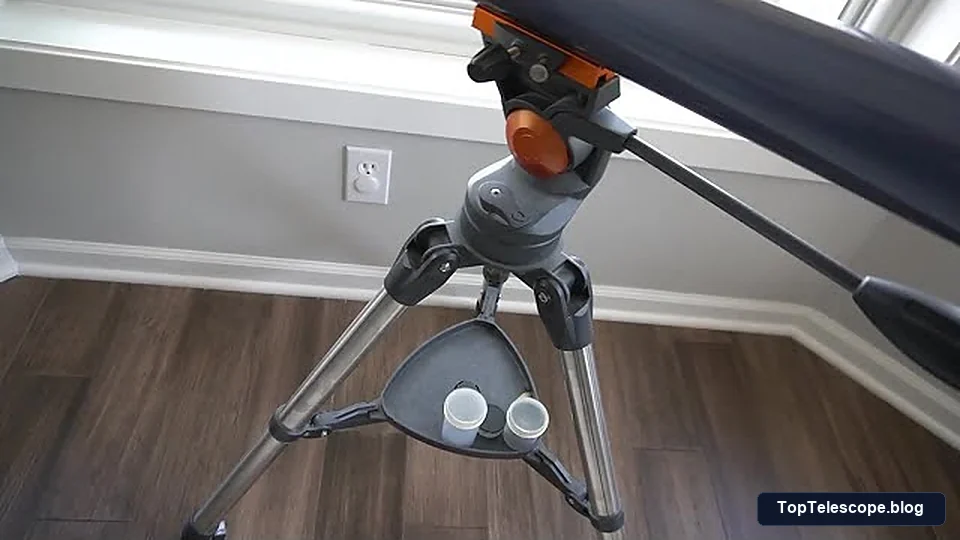
A lightweight altazimuth mount handles positioning duties via a simple pan handle. This design allows smooth vertical and horizontal tracking of moving celestial objects.
Mechanical rigidity represents a minor compromise given the low total weight. Users must allow settling time after adjusting focus on high-power targets.
The altazimuth mount utilizes an aluminum tripod frame with adjustable center bracing. While lightweight for transport, the pan handle control requires steady tension adjustment to prevent unwanted drift during tracking.
Manual adjustments require patience, mirroring what beginners learn when mastering entry-level gear. Choosing the right starter setup is detailed in our guide to the best celestron telescope for beginners for smooth operation.
- Altazimuth mount provides intuitive up-and-down movement
- Pan handle clutch locks the optical tube securely
- Lightweight aluminum tripod collapses for transit
Setup Ergonomics, Field Portability, and Accessories
Assembly requires zero tools, allowing complete field deployment in under two minutes. The entire kit packs neatly into a durable, custom-padded backpack.
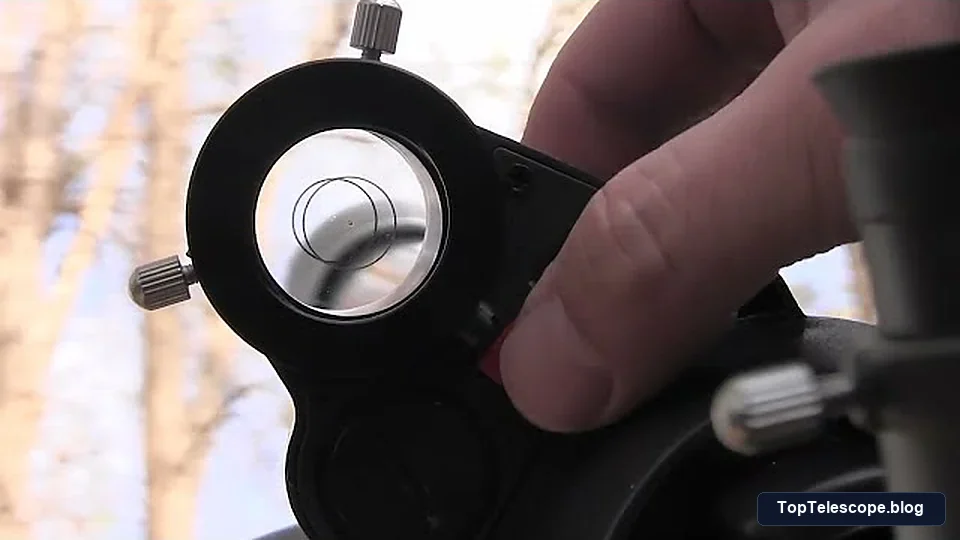
A reflex finderscope assists with initial target alignment. Users simply center the red dot on desired stars before inspecting through the main eyepiece.
Assembly requires zero tools, utilizing captive thumb screws on the accessory tray and mount head. The entire kit weighs under seven pounds total, making it exceptionally manageable for younger astronomers and rapid grab-and-go sessions.
Standard inclusions feature a Finderscope 5x24 for rough alignment alongside two eyepieces. Upgrading to a solid red dot finder significantly improves target acquisition speeds under light-polluted suburban skies.
- Tool-free attachment screws secure the optical tube
- Custom backpack holds all components safely
- Red dot finderscope simplifies target acquisition
Maintenance Protocols and Long-Term Durability
Routine maintenance requires minimal effort to protect optical coatings. Dust removal should always utilize a soft bulb blower before applying microfiber cloths.
Aluminum and composite construction resists environmental wear during travel. Storing the assembly inside its protective backpack prevents accidental impact damage.
Regular lens maintenance demands careful cleaning procedures outlined in our starsense explorer lt guide to safely remove abrasive particulate matter without scratching multicoated objective glass surfaces.
Mechanical joints benefit from occasional inspection of locking thumbscrews and tripod leg fasteners. Storing the tube assembly in a padded case prevents accidental denting of the aluminum optical tube.
- Inspect optical surfaces periodically for accumulated dust
- Store in dry conditions to prevent internal moisture
- Tighten tripod leg thumb screws if they loosen
Definitive Buyer Verdict and Target Audience Match
This instrument suits beginner hobbyists, traveling families, and casual nature enthusiasts. Its combination of low weight and optical clarity provides exceptional value.
Advanced astrophotographers should seek heavier equatorial systems. However, casual observers will appreciate the portability and straightforward design during weekend camping trips.
This instrument serves as an ideal entry point for absolute beginners and families seeking basic stargazing gear. Experienced hobbyists might find the mount stability limiting, but students appreciate the straightforward educational optics configuration.
Overall value relies heavily on managing expectations regarding aperture scale and mount rigidity. It successfully bridges the gap between toy telescopes and serious astronomical equipment for casual backyard observers.
- Ideal entry-level setup for kids and adults together
- Exceptional travel companion for remote stargazing
- Backed by a reliable two-year manufacturer warranty
Frequently Asked Questions
Can this telescope view faint deep-sky objects?
The 70mm aperture collects enough light for bright nebulae and star clusters under dark skies. Faint galaxies remain difficult to resolve clearly due to the modest lens size.
Is any assembly required before the first use?
No tools are needed for assembly. The tripod legs extend instantly, and the optical tube attaches securely via a simple thumbscrew mount.
Can I connect a camera for astrophotography?
Basic smartphone adapters fit the eyepieces for casual lunar snapshots. Serious deep-sky astrophotography requires motorized equatorial mounts not found here.
How do I clean the glass lenses safely?
Always use a bulb blower first to remove loose abrasive particles. Follow up gently with an optical microfiber cloth to avoid scratching coatings.
Is this telescope suitable for daytime terrestrial use?
The included erect image diagonal ensures proper orientation for spotting wildlife. This makes it an effective dual-purpose instrument for astronomy and nature.