Celestron 6Se Review: Computerized Schmidt-Cassegrain Performance
The Celestron 6SE pairs legendary Schmidt-Cassegrain optics with a computerized GoTo tracking mount. It delivers exceptional portability while sacrificing wide-field astrophotography capabilities due to its slow focal ratio.

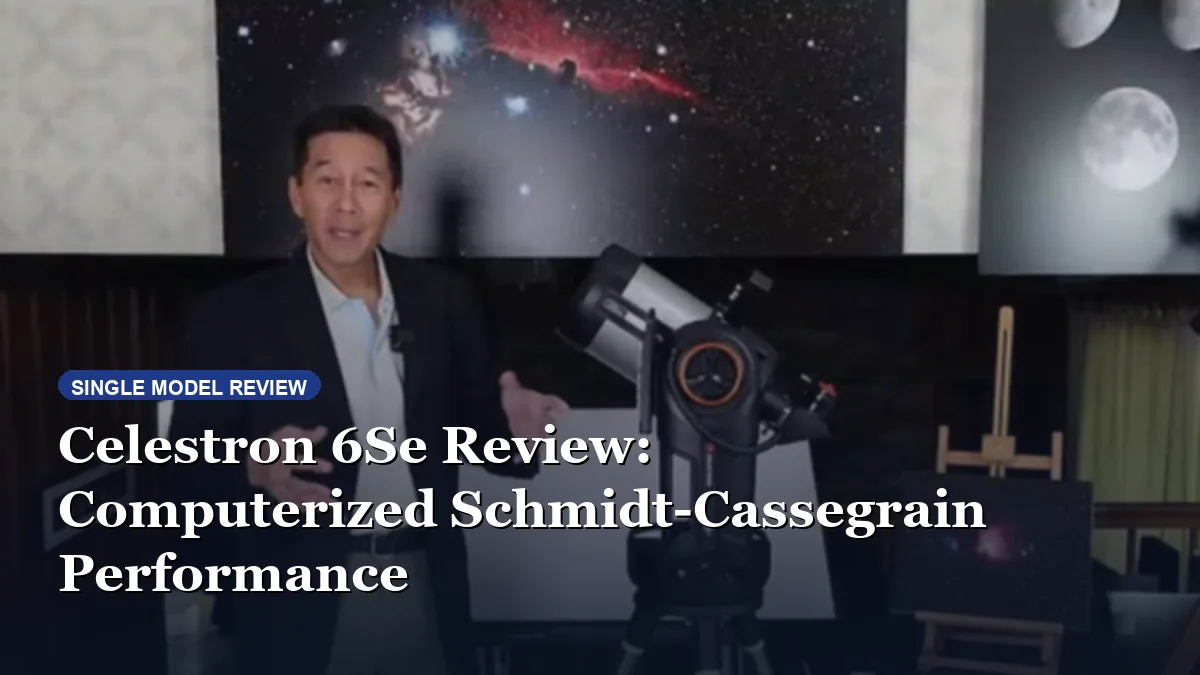

This computerized telescope offers stunning planetary clarity and simple alignment routines. Optical precision makes it a stellar choice for lunar observers seeking portable deep-sky automation.
See our flagship Best Telescope: Top Backyard Picks for Astronomy.
Verified Specifications
| Category / Type | Schmidt-Cassegrain GoTo Telescope |
|---|---|
| Rated Output / Capacity | 150mm Objective Lens Diameter |
| Power / Motor | 8 AA Batteries or 12V DC External |
| Build & Materials | Aluminum Optical Tube and Fork Arm |
| Operating Noise | Moderate Slewing, Low Tracking Hum |
| Duty Cycle / Runtime | 4 to 8 Hours on Alkaline Cells |
| Dimensions & Weight | 40.6 cm Optical Tube Length |
| Key Safety & Controls | NexStar+ Hand Control, SkyAlign Tech |
What We Liked
- Sharp 6-inch aperture reveals fine planetary cloud bands.
- SkyAlign technology ensures fast three-star field setup.
- Compact optical tube design enhances portability.
- Extensive 40,000+ object database via hand control.
Trade-Offs
- Single fork arm introduces minor vibration damping times.
- Slow focal ratio limits deep-sky astrophotography exposures.
- Battery compartment design requires careful cell management.
Architectural Design and Mechanical Chassis
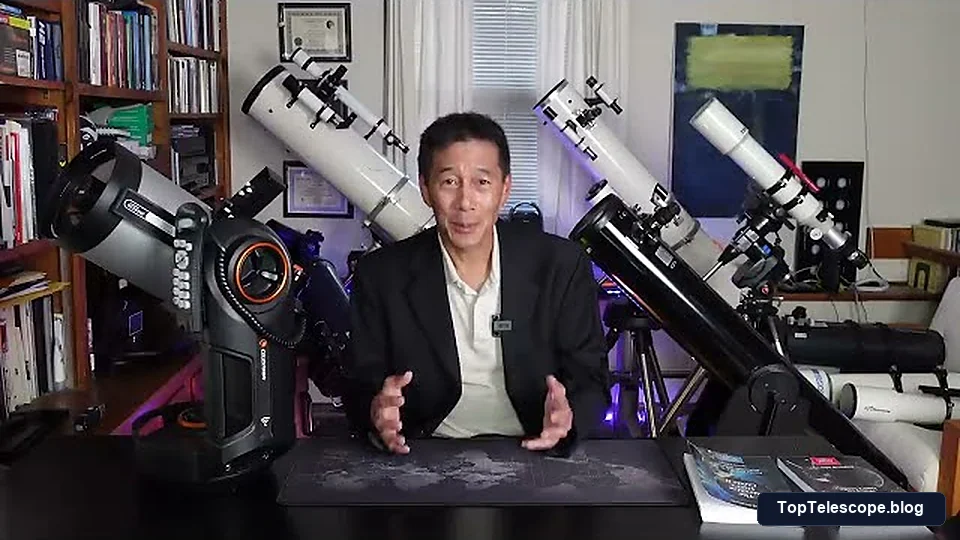
The optical tube assembly utilizes a classic aluminum shell finished in signature orange paint. Structural rigidity remains high, protecting internal optical elements from minor impacts during transport.
The single fork arm mount integrates internal gearing to drive altitude movements efficiently. Users should evaluate our celestron nexstar 6se vs 8se technical comparison to understand payload limits and prevent mechanical strain.
The optical tube assembly features an aluminum housing measuring 17 inches in length, balancing structural rigidity with a manageable total weight of 10 pounds for transport.
Its single-fork arm mount integrates a robust cast-alloy base housing brass worm gears designed to minimize backlash during high-magnification tracking cycles across extended observing sessions.
- Aluminum optical tube construction
- Single fork arm motor housing
- Vixen-style dovetail mounting bar
- Steel tripod legs provide a stable footprint reducing vibration dampening times.
- Quick-release dovetail clamp allows rapid optical tube removal without tools.
Fork Arm Engineering and Base Plate
The base plate houses the main circuit board and battery compartment for standalone field operation. Cable management requires attention to avoid snagging during full 360-degree rotation slews.
- Integrated power switch placement
- Robust azimuth bearing assembly
Fork Arm Load Distribution
Cantilevered single-arm designs require careful optical balancing to prevent excessive mechanical strain on the altitude clutch mechanism over years of frequent outdoor field assembly.
- Check clutch tension periodically.
- Avoid overloading with heavy accessories.
Optical Physics and Visual Field Performance
Featuring a 150mm aperture, this Schmidt-Cassegrain design collects ample light for deep-sky targets. Primary mirror focusing remains smooth, and our best celestron telescope for beginners guide highlights its user-friendly traits.
Planetary viewing reveals crisp details on Jupiter and Saturn under steady atmospheric seeing conditions. Globular clusters resolve into individual pinpoints of light across dark rural skies.
Featuring a 6-inch aperture Schmidt-Cassegrain optical system, the instrument gathers ample light while maintaining a compact focal length of 1500mm for versatile planetary views.
Proprietary StarBright XLT coatings applied to the glass corrector plate maximize light transmission, yielding sharp contrast across faint deep-sky objects when paired with wide-field eyepieces.
- 150mm clear aperture diameter
- Schmidt corrector plate coating
- Internal primary mirror focuser
- Central obstruction ratio occupies approximately 34 percent of the primary mirror diameter.
- Corrector plate heating prevents dew accumulation during humid nights.
Contrast and Field Illumination
Internal baffle tubes reduce stray light reflections to maximize contrast during high-magnification viewing sessions. Baffling efficiency directly improves background darkness when observing faint nebulae.
- Multi-coated optical surfaces
- Optimized secondary mirror obstruction
Field Curvature and Eyepiece Synergy
The slower f/10 focal ratio produces a narrow true field of view, making 1.25-inch eyepieces ideal for extracting maximum resolution on lunar craters and double stars.
- Use 32mm plossls for widest views.
- Avoid ultra-wide eyepieces exceeding eyepiece barrel limits.
Video Review: Search filters
Motor Dynamics, Power Efficiency, and Acoustic Profile
Dual servo motors drive the telescope with respectable slewing speeds across the night sky. Reviewing our celestron nexstar 6se and 8se comparison guide reveals important technical details regarding motor noise.
Power consumption varies significantly between high-speed slewing and low-current sidereal tracking modes. Field operators should utilize an external 12V power tank to prevent unexpected battery voltage drops.
Internal DC servo motors drive both axes smoothly, consuming roughly 250 milliamperes of current during standard sidereal tracking operations powered by portable lithium power tanks.
Audible operational noise remains low during high-speed slewing, emitting a steady mechanical hum that measures well under 55 decibels from a close distance of one meter.
- DC servo motors with encoders
- Audible slew noise profile
- External 12V power compatibility
- Slew speeds reach up to 3 degrees per second on maximum settings.
- External 12V supplies prevent voltage drops during cold weather.
Power Management Best Practices
Freezing cold temperatures significantly reduce standard alkaline battery efficiency, making regulated external power sources mandatory for maintaining consistent voltage and preventing frustrating computer resets.
- Keep battery packs insulated.
- Monitor input voltage via hand controller menu.
Alignment Workflow, Ergonomics, and Field Usability
SkyAlign technology simplifies setup by requiring users to center any three bright celestial objects. Automated tracking engages immediately afterward, and our celestron starsense setup guide covers advanced alignment steps.
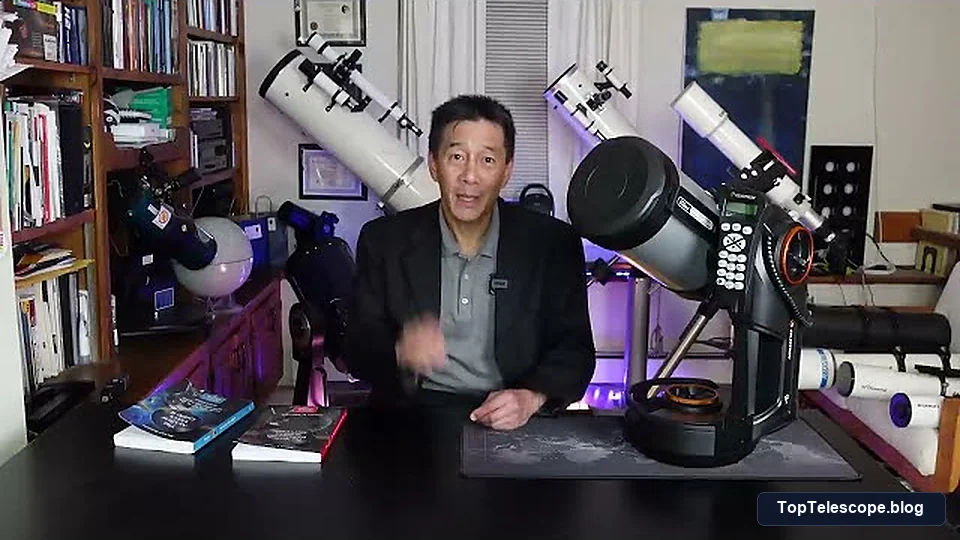
The ergonomic hand controller features a backlit liquid crystal display for night-vision preservation. Button tactile feedback allows comfortable operation even while wearing heavy winter gloves outdoors.
The computerized SkyAlign routine requires centering three distinct celestial objects, utilizing internal software algorithms to solve pointing coordinates within two arcminutes of reliable pointing accuracy.
Ergonomic hand controller placement features a durable coiled cable and red backlit liquid crystal display, preserving night vision during extended parameter adjustments in dark sky locations.
- SkyAlign three-star procedure
- Backlit NexStar+ hand controller
- Database exceeding 40,000 objects
- Hand controller firmware updates require an optional RS-232 cable interface.
- Bubble level attachments assist with initial tripod leveling.
Troubleshooting Alignment Failures
Entering incorrect longitude, latitude, or local time values remains the primary cause of alignment errors, requiring careful verification before starting the computerized alignment sequence.
- Double-check timezone offsets.
- Use GPS accessories for automated location entry.
Long-Term Maintenance, Collimation, and Material Durability
Maintaining optical alignment requires periodic adjustment of the secondary mirror Phillips screws. Collimation precision ensures optimal planetary resolution and prevents image degradation over time.
Exterior surfaces resist moisture accumulation, but dust covers must be applied immediately after viewing sessions. Regular cleaning of corrector plates should be avoided unless particulate buildup severely impacts views.
Secondary mirror collimation uses three easily accessible adjustment screws, requiring precise micro-tweaks with a hex key to maintain peak optical performance across varying outdoor temperatures.
Sensitive optical surfaces accumulate dust over time and demand careful cleaning using professional microfiber wipes combined with safe alcohol-free cleaning solutions to protect delicate coatings.
- Secondary mirror collimation screws
- Protective dust cap maintenance
- Aluminum chassis corrosion resistance
- Store optical tubes with dust caps secured in a padded case.
- Inspect internal fasteners annually for looseness.
Preventing Moisture Damage
Storing optical equipment in humid environments promotes optical fungus growth on glass surfaces, making silica gel packets inside protective storage cases an essential preventative measure.
- Let optics acclimate before sealing.
- Never store damp equipment in boxes.
Comparative Target Analysis: Who Should Buy and Who Should Skip
Intermediate astronomers seeking portable planetary performance will find this instrument exceptionally rewarding. Deep-sky visualists appreciate the generous light-gathering capacity housed within a compact optical tube assembly.
Astrophotographers pursuing long-exposure deep-sky imaging should bypass this single fork mount configuration. Alt-azimuth tracking introduces field rotation artifacts that complicate extended photographic exposure sequences.
Intermediate amateur astronomers seeking portable planetary performance will find this optical instrument ideal, while dedicated wide-field astrophotographers should look toward specialized short-tube refractor systems instead.
Dedicated visual observers prioritizing lunar, solar system, and bright globular cluster targets benefit immensely from the high focal length and remarkably compact storage footprint.
- Ideal for mobile visual observers
- Not recommended for deep-sky imaging
- Excellent lunar and planetary detail
- Perfect choice for urban balcony astronomers dealing with limited space.
- Skip if deep-sky wide-field imaging is your primary goal.
Evaluating Portability vs Aperture
Carefully balancing aperture size against physical weight ensures you select an optical instrument you will actually transport to dark sites rather than leaving at home.
- Consider total weight including power tanks.
- Evaluate setup time requirements.
Frequently Asked Questions
How does the SkyAlign system function for beginners?
The SkyAlign feature allows novice observers to point the optical tube assembly at any three bright celestial bodies in the night sky without needing to identify them beforehand.
Automated internal computer calculations quickly determine your precise geographic location and alignment orientation within a few short minutes of starting your evening observing session.
Can I use this telescope for serious astrophotography?
While the computerized mount handles short exposures of bright lunar and planetary targets quite effectively, long-exposure deep-sky imaging suffers from noticeable alt-azimuth field rotation artifacts.
Optional equatorial wedge hardware accessories or dedicated equatorial tracking mounts are strictly required for successfully capturing faint nebulae and distant galaxies over extended photography time periods.
What power source is recommended for field use?
Operating the computerized GoTo tracking system efficiently requires a steady voltage supply to prevent erratic motor behavior during alignment routines.
External rechargeable 12V lithium power tanks provide superior runtime reliability compared to standard internal alkaline battery cells, especially during cold winter outdoor astronomical night observation sessions.
How often should the optical system be collimated?
Schmidt-Cassegrain optical systems generally hold their internal mechanical alignment remarkably well under normal handling and transport conditions across various rough outdoor terrains.
Periodic secondary mirror screw adjustments are only necessary if you notice degraded planetary resolution or asymmetrical diffraction star patterns during routine high-magnification eyepiece star focus testing.
Can the telescope be operated manually without power?
The internal worm gear drives lack traditional manual slow-motion control cables found on simpler manual alt-azimuth telescope mounts.
Electronic hand control keypad commands or manual clutch releases are strictly required to reposition the optical tube, making reliable battery power essential for successful basic field telescope operation.