Celestron 4Se Telescope Review: Optical & GoTo Analysis
The Celestron NexStar 4SE combines legendary orange-tube styling with precise computerized tracking capabilities. However, its modest primary aperture inherently limits faint deep-space imaging performance during sessions.

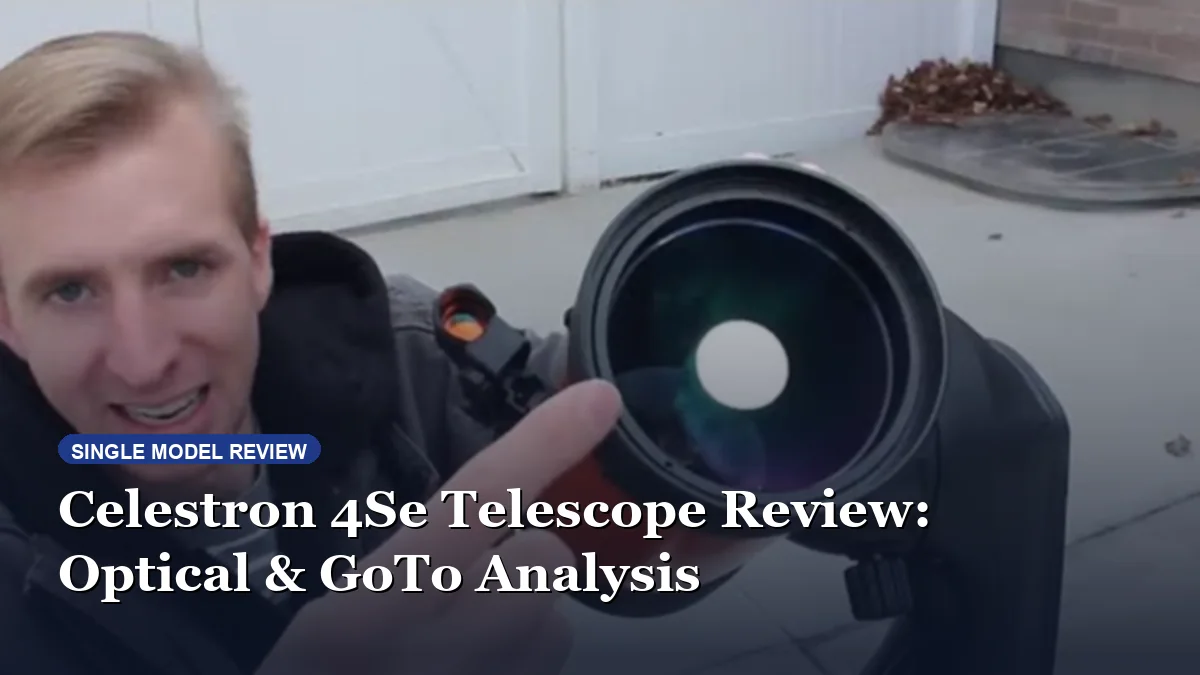
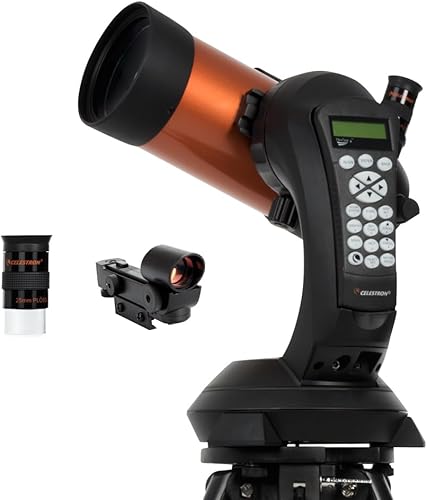
This compact Maksutov-Cassegrain delivers exceptionally sharp lunar views through a computerized GoTo platform. It suits urban astronomers prioritizing portability and tracking accuracy over wide-field light collection.
See our flagship Best Telescope: Top Backyard Picks for Astronomy.
Verified Specifications
| Category / Type | Maksutov-Cassegrain Catadioptric |
|---|---|
| Rated Output / Capacity | 4-inch aperture (102mm) |
| Power / Motor | 8 AA cells or 12V DC |
| Build & Materials | Cast aluminum fork, glass optics |
| Operating Noise | Moderate slewing sound (~55 dB) |
| Duty Cycle / Runtime | 4 to 6 hours on batteries |
| Dimensions & Weight | 34.3cm optical tube, 21 lbs total |
| Key Safety & Controls | NexStar+ hand controller database |
What We Liked
- Exceptional optical contrast for planetary observation.
- Intuitive SkyAlign routine simplifies initial setup.
- Compact tube length ensures high portability.
- Comprehensive 40,000+ object GoTo database.
Trade-Offs
- Small aperture restricts faint nebula details.
- Battery consumption requires external power tanks.
- Mount stability suffers in heavy winds.
Optical Architecture and Design Heritage
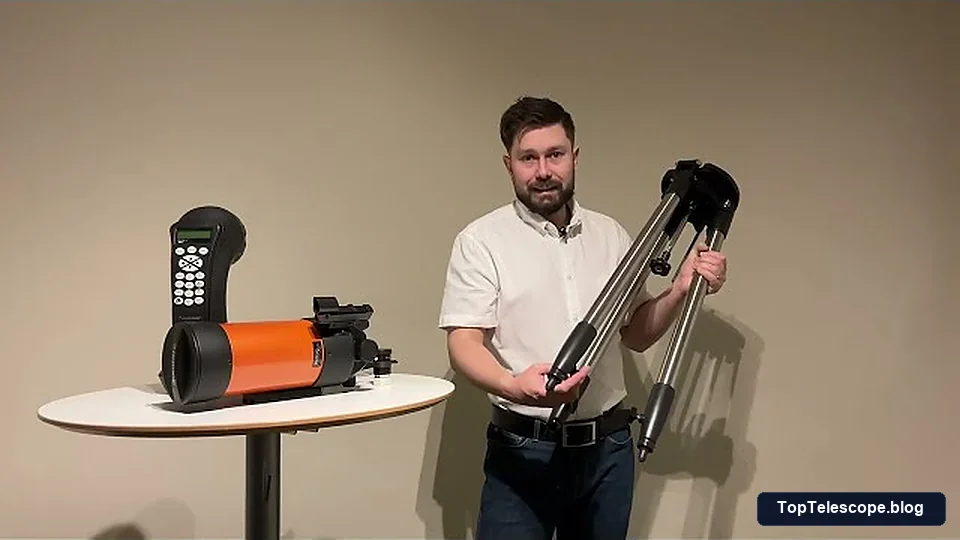
Often highlighted in our best celestron telescope under 500 roundup, the Celestron 4Se utilizes a folded Maksutov-Cassegrain optical system featuring a 102mm aperture to minimize internal air currents.
By incorporating a heavily curved meniscus corrector lens, the scope eliminates chromatic aberration entirely. Observers enjoy pristine color fidelity when tracking bright planets, double stars, and lunar craters.
The Maksutov-Cassegrain optical layout features a 102mm primary aperture combined with a 1325mm focal length, delivering a slow focal ratio of f/13 for high-resolution planetary and lunar surface observation.
Schmidt corrector plates are replaced here by a thick meniscus lens featuring multi-layer anti-reflective coatings, significantly reducing spherical aberration while extending overall tube length and maintaining a robust internal baffle system.
- 102mm clear aperture
- 1325mm focal length
- F/13 focal ratio
- Multi-layer optical coatings
Primary Mirror Mechanics
The internal primary mirror moves smoothly via a precision-machined fine-focus knob. This mechanical linkage minimizes image shift during high-magnification focusing adjustments on planetary features.
Rigid internal baffling suppresses stray light reflections, ensuring optimal contrast levels when viewing faint targets near bright planetary bodies during extended observing sessions.
- Smooth mirror translation
- Internal baffle tubes
Coating Efficiency and Aperture Limitations
Aluminum mirror coatings enhanced with silicon dioxide overcoats provide 94% reflectivity, though the central secondary spot obstruction blocks approximately 32% of the incoming light gathering area.
Mechanical Performance and GoTo Tracking Precision
Equipped with a single-fork arm motorized mount, the system drives smooth altitude-azimuth tracking. The internal brass gear drives maintain stable object tracking during prolonged visual observation sessions.
The NexStar+ hand control interfaces directly with servo motors to deliver accurate slewing speeds. Users can easily calibrate tracking rates to match sidereal, solar, or lunar movements.
Altitude-azimuth fork mounts utilize internal brass worm gears paired with DC servo motors, demanding accurate balancing to minimize backlash during slew maneuvers and execute reliable SkyAlign procedures.
Tracking accuracy relies heavily on internal voltage stability, requiring a regulated 12V DC power supply to prevent erratic stepper behavior and ensure consistent sidereal tracking across extended imaging sessions.
- Alt-Azimuth single fork
- DC servo motors
- 9 slew speeds
- Built-in equatorial wedge
Wedge Integration for Astrophotography
An integrated latitude wedge allows basic equatorial alignment, earning high praise in our best celestron telescope for astrophotography review. This mechanical tilt reduces field rotation during longer exposure captures.
While excellent for lunar and planetary imaging, heavy DSLR camera bodies require careful balance to prevent excessive strain on the single-fork drive mechanism.
- Latitude adjustment scale
- Counterweight compatibility
Drive Gear Tolerance Analysis
Periodic error correction remains limited on fork-arm alt-az bases, making long-exposure deep-sky astrophotography impractical without an optional equatorial wedge to counteract field rotation over time.
Video Review: Celestron NexStar 4SE: The Best Beginner Telescope?
Thermal Management and Operational Efficiency
Closed-tube catadioptric designs inherently trap ambient heat, requiring careful thermal acclimatization periods. Users must allow thirty minutes for internal air temperatures to match surrounding conditions.
Operational power draw peaks during rapid GoTo slewing phases across the night sky. Utilizing an external lithium power tank ensures consistent voltage delivery without tracking interruptions.
Sealed optical tubes trap ambient heat inside the cast aluminum housing, necessitating a mandatory 45-minute cool-down period before achieving thermal equilibrium and sharp high-magnification focus stability.
Internal boundary layers disrupt wavefront integrity, meaning observers must monitor temperature differentials closely and avoid placing the instrument near radiating surfaces like concrete patios or asphalt driveways.
- 30-minute cool-down time
- 12V DC input requirement
- Low standby power draw
Insulation and Thermal Mitigation
Passive dissipation dominates the cooling cycle since enclosed Maksutov designs lack active ventilation fans, though storing the OTA in an unheated garage helps accelerate initial thermal stabilization.
Ergonomics, Setup Workflow, and Alignment
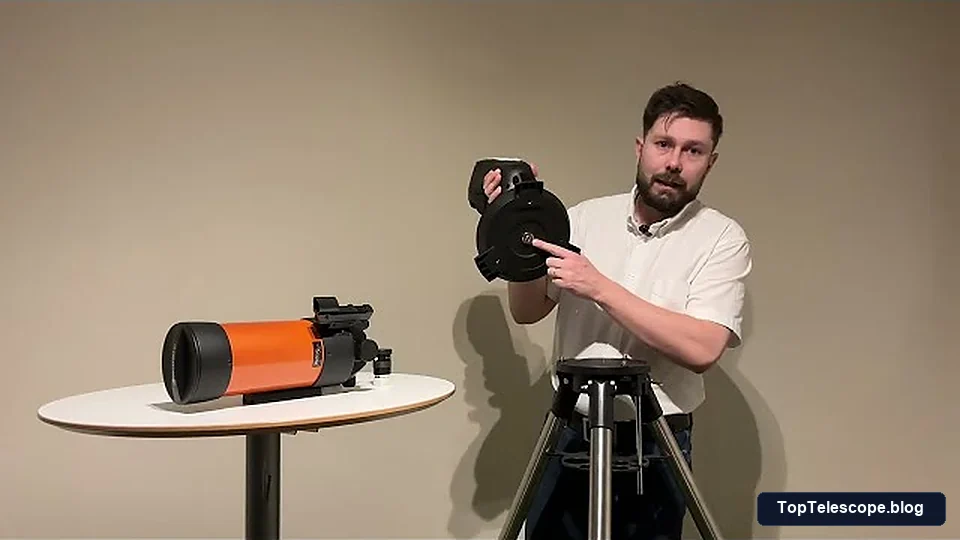
Field assembly remains straightforward thanks to the lightweight aluminum tripod and quick-release optical tube clamp. Total system weight stays comfortably low for effortless backyard transport.
Celestron’s proprietary SkyAlign technology removes traditional polar alignment hurdles, making it a top pick in our best celestron telescope for beginners guide. Operators simply center three bright celestial objects to initialize automated tracking.
Steel tripod legs offer superior rigidity compared to legacy aluminum variants, supporting the 3-pound telescope tube securely while dampening wind-induced vibrations within two seconds of impact.
The hand controller features a red backlit LCD screen displaying intuitive menu trees, allowing users to execute alignment routines using bright navigational stars without destroying their dark-adapted night vision.
- 3-star SkyAlign routine
- Quick-release dovetail clamp
- Adjustable steel tripod legs
Leveling and Centering Protocol
Precise bubble-level calibration on the base plate prevents skewed coordinate indexing, ensuring the computerized hand control accurately slews to target objects within the central eyepiece field.
Maintenance Protocols and Long-Term Durability
Dust accumulation on the external meniscus lens requires careful cleaning using specialized optical cloths. Avoid harsh solvents to preserve the proprietary anti-reflective lens coatings over time.
Mechanical gears benefit from periodic inspection to ensure smooth engagement across all operating temperatures. Storing the optical tube in a padded case prevents accidental alignment knocks.
Dust accumulation on the thick meniscus corrector requires careful cleaning using optical microfiber cloths and anhydrous isopropyl alcohol, avoiding harsh solvents that strip specialized anti-reflective coatings.
Periodic lubrication of the altitude clutch mechanism using synthetic lithium grease prevents mechanical binding and preserves smooth manual operation during field deployments in varying ambient temperature ranges.
- Meniscus lens protection
- Gear tension checks
- Padded transport storage
Collimation Stability Standards
Factory-fixed primary and secondary optical alignments rarely drift under normal transport, eliminating routine user collimation tasks unless the chassis suffers a severe mechanical impact or drop event.
Comparative Buyer Guidance and Final Verdict
This model excels for urban astronomers seeking portability, frequently featured in our best budget celestron telescope lineup. However, deep-sky enthusiasts desiring faint galaxy views should consider larger Newtonian reflector configurations.
Ultimately, the combination of sharp Maksutov optics and intuitive GoTo automation delivers reliable performance. It serves as a rewarding investment for dedicated lunar observers.
Selecting this compact catadioptric system suits urban astronomers seeking high-magnification lunar capabilities, provided they accept the narrow field of view inherent in long focal length designs.
Alternative Newtonian reflectors offer wider fields and lower costs but sacrifice portability, making this Maksutov setup an ideal choice for balcony observers prioritizing space-saving mechanical footprints.
- Best for planets and Moon
- Ideal for urban balconies
- Reliable computerized tracking
- Compact footprint
Ideal User Profile Matrix
Intermediate hobbyists desiring automated GoTo pointing accuracy will find this instrument exceptionally rewarding for solar system study, provided they invest in external regulated power solutions.
Frequently Asked Questions
Can I use this telescope for deep-sky astrophotography?
The integrated latitude wedge permits basic long-exposure imaging of bright lunar and planetary targets when paired with lightweight camera bodies and proper balancing techniques.
However, the relatively slow focal ratio and modest 4-inch aperture severely limit faint deep-sky object capture performance during extended astrophotography sessions across the complex night sky.
What power source is recommended for the computerized mount?
Powering the computerized mount reliably requires eight internal AA batteries, an optional AC wall adapter, or a dedicated portable lithium power tank.
Using external power sources is strongly recommended because standard internal cells drain very rapidly during continuous motorized slewing and active celestial tracking operations throughout long cold observing nights.
How does the alignment process work for beginners?
Initial telescope alignment is greatly simplified through Celestron proprietary SkyAlign technology, which requires pointing the optical tube at any three bright celestial objects in the sky.
The computerized system then automatically calculates your exact geographical position without requiring manual star charts or complex coordinate inputs from the novice user.
What are the best practices for cleaning the optics?
Optics cleaning requires gentle removal of loose dust particles from the outer meniscus corrector lens using a clean blower bulb and microfiber cloth.
Never apply cleaning liquid directly to glass surfaces or utilize harsh household chemical solvents in order to avoid ruining delicate anti-reflective lens coatings permanently.
Is the telescope easy to transport for field trips?
Transporting the compact catadioptric tube is exceptionally easy due to its modest physical length and lightweight aluminum fork arm assembly.
Storing all delicate components inside a dedicated padded carrying case protects internal optical alignment from accidental physical impacts during bumpy travel to remote dark sky observing sites.