Celestron 31051 AstroMaster 130EQ Review
The Celestron AstroMaster 130EQ MD pairs a Newtonian optical tube with a motorized equatorial mount. It delivers capable deep-sky views while requiring careful mechanical balancing during initial setup procedures.

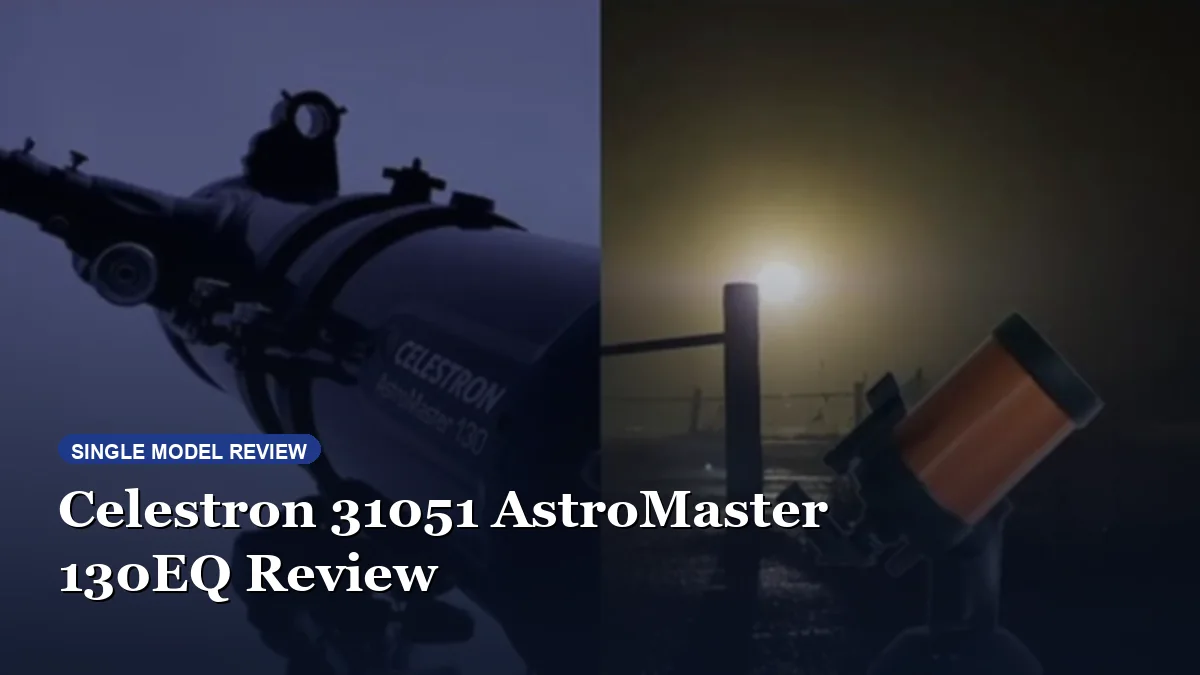

This budget reflector offers rewarding optical performance for dedicated beginners. However, users must master equatorial alignment to enjoy stable tracking under dark skies.
Explore related alternatives in our Best Celestron Telescope For Beginners.
Verified Specifications
| Category / Type | Newtonian Reflector |
|---|---|
| Rated Output / Capacity | 130mm Aperture |
| Power / Motor | Included RA Motor Drive |
| Build & Materials | Aluminum and Steel |
| Operating Noise | Low-decibel DC motor hum |
| Duty Cycle / Runtime | Continuous tracking via battery |
| Dimensions & Weight | 27 lb total assembly |
| Key Safety & Controls | Manual slow-motion cables |
What We Liked
- Generous 130mm light-gathering aperture
- Included RA motor drive for tracking
- Sturdy steel tube construction
- Coated glass mirrors for clarity
- Complete starter eyepiece bundle
Trade-Offs
- Equatorial setup steep for novices
- Aluminum tripod requires dampening
- Motor drive requires manual adjustments
- Bulkier storage footprint overall
Optical Architecture and Mirror Design
The optical tube features a 130mm parabolic mirror designed to gather substantial light. This aperture captures faint nebulae and distant galaxies far beyond smaller beginner instruments.
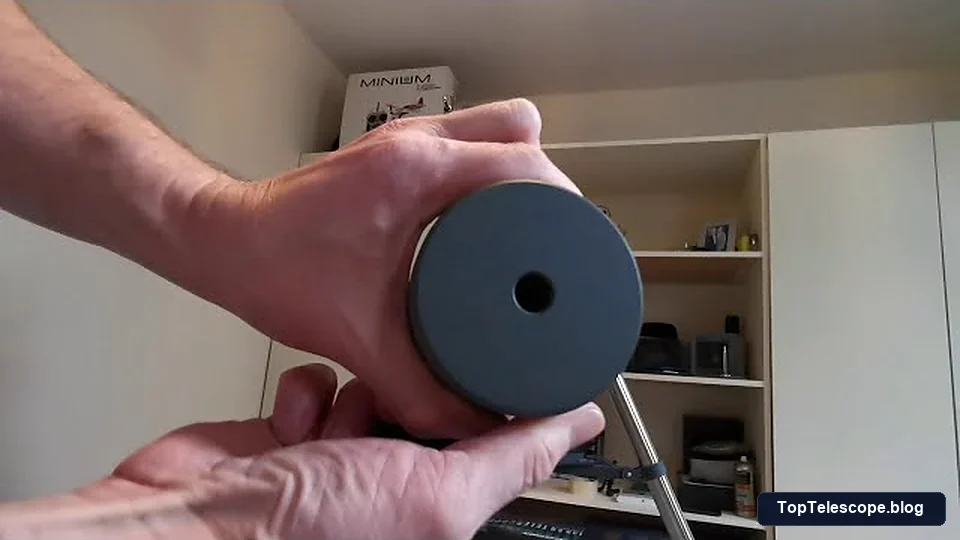
Aluminum coatings on the primary and secondary optics enhance overall reflectivity. Users should verify mirror cleanliness periodically to maintain sharp visual contrast during planetary sessions.
The 130mm aperture primary mirror gathers substantial light, featuring a parabolic or spherical surface depending on exact manufacturing batches. Users must verify mirror figure parameters for sharp planetary resolution at high magnifications.
Newtonians rely on a secondary flat mirror held by a robust three-vane spider. Proper alignment of this optical train ensures minimal diffraction spikes while maintaining optimal contrast across extended deep-sky nebulas and star clusters.
- 130mm aperture diameter
- Parabolic primary mirror design
- Reflective aluminum coatings
Focal Length and Magnification Range
A 650mm focal length yields a fast focal ratio ideal for wide-field observations. Pairing this tube with standard eyepieces provides versatile magnification steps for lunar and planetary targets.
Chromatic aberration is entirely absent due to the reflective design. This guarantees crisp color fidelity across bright stellar targets without distracting purple fringing artifacts.
- 650mm focal length
- Fast f/5 optical speed
Mechanical Assembly and Equatorial Mount
The CG-3 equatorial mount utilizes heavy steel legs to reduce unwanted vibrations. Proper counterweight balancing remains essential for smooth manual tracking across the night sky.
Setting up the mount requires aligning the polar axis with celestial north. Our best celestron telescope for beginners picks provides essential tips before attempting high-magnification planetary observations.
The CG-3 equatorial mount utilizes aluminum legs and a cast metal head to support the optical tube assembly. Adequate tightening of all locking levers reduces unwanted mechanical flexure during extended viewing sessions outdoors.
Setting up circle coordinates requires balancing the counterweight shaft carefully. Proper counterweight placement prevents excessive strain on the right ascension and declination worm gears, ensuring smoother manual tracking motions under clear night skies.
- CG-3 equatorial mount
- Adjustable steel tripod
- Counterweight balancing system
Slow-Motion Controls and Ergonomics
Flexible cables allow precise adjustments in right ascension and declination axes. These controls prevent jarring movements when centering faint objects in the eyepiece field.
Locking levers secure the optical tube firmly during extended viewing sessions. Careful handling prevents slippage when adjusting balance points in cold outdoor conditions.
- Flexible slow-motion cables
- Positive locking levers
Video Review: What Can You See Through a 130mm Telescope? (Real Views!) | Celestron Astromaster 130EQ
Tracking Performance and Motor Drive Operation
The included right ascension motor drive automates celestial tracking effortlessly. It compensates for Earth's rotation to keep objects centered within the eyepiece during long sessions.
Battery power supplies consistent voltage to the small DC tracking motor. Users must ensure fresh batteries are installed to prevent tracking drift during extended observations.
The included right ascension motor runs on standard batteries, providing hands-free sidereal tracking for lunar and planetary targets. Users must monitor battery voltage levels closely to prevent slow tracking drift during long imaging runs.
Gear backlash in the drive system requires careful clutch engagement to minimize target jumping when reversing directions. Engaging the worm gear properly yields steady drift correction across extended observation windows without frequent manual corrections.
- RA motor drive included
- Battery-powered DC operation
Motor Calibration and Speed Adjustment
Fine-tuning the motor speed ensures accurate sidereal tracking rates. Small speed discrepancies can cause gradual drift, requiring periodic manual corrections using the slow-motion cables.
Operating the motor in cold weather demands fresh alkaline batteries. Low temperatures drain power rapidly, which can compromise tracking stability during winter observing runs.
- Sidereal tracking rate
- Cold-weather battery considerations
Usability, Setup, and Field Alignment
Initial assembly requires patience and careful reading of the instruction manual. Transporting the assembled mount and optical tube demands a spacious vehicle or two separate trips.
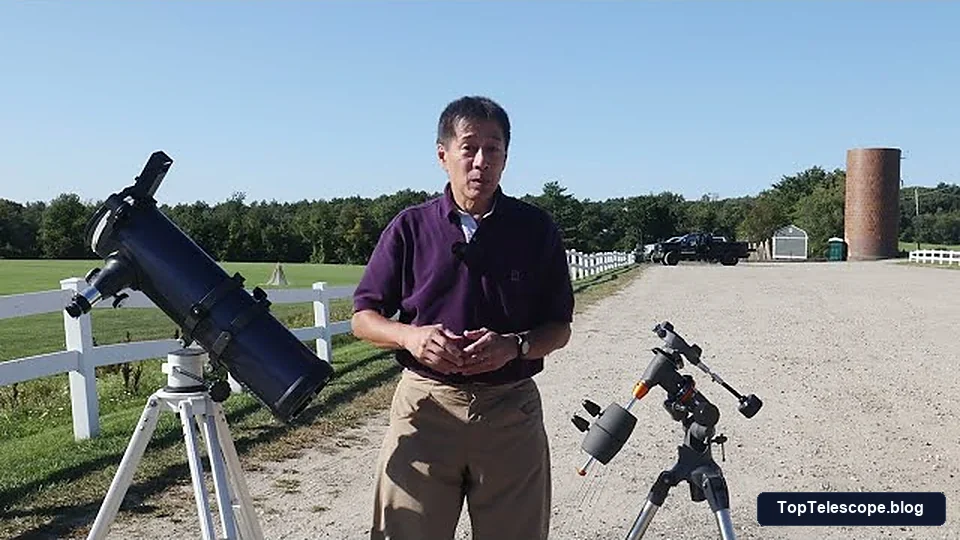
Finding objects with any model featured in our best celestron telescope under 500 options is aided by a finder scope. Proper alignment of this scope during daylight hours saves immense frustration.
Polar alignment is achieved by pointing the polar axis toward Polaris using the latitude adjustment bolt. Correct alignment drastically reduces the need for constant declination adjustments while observing celestial objects at high magnifications.
Ergonomic placement of accessory trays helps stabilize the tripod structure while keeping eyepieces accessible. Organizing tools in the dark prevents accidental lens drops and speeds up the entire field assembly procedure significantly.
- Step-by-step assembly required
- Daytime finder scope alignment
Eyepiece Selection and Field of View
Included eyepieces provide low and high magnification starting points. Upgrading to wider-apparent-field oculars enhances comfort and reveals finer details across extended deep-sky targets.
Focus tension adjustments prevent heavy eyepieces from slipping downward. Maintaining smooth focuser movement is crucial for achieving sharp focus on fast stellar targets.
- Standard 1.25-inch focus barrel
- Dual eyepiece bundle included
Maintenance, Collimation, and Durability
Newtonian reflectors require periodic mirror collimation to ensure optimal sharpness. Using a collimation cap or laser tool keeps optical elements properly aligned for crisp views.
Dust accumulation on the primary mirror is inevitable during outdoor use. Cleaning should be done strictly according to manufacturer guidelines to avoid scratching delicate optical coatings.
Regular optical alignment using a collimating cap ensures sharp images are preserved over years of transport. Never touch optical glass directly; instead, use compressed air to remove loose dust particles safely.
Aluminum optical tubes resist rust but require dry storage conditions to protect internal coatings from humidity. Inspecting fastener tightness periodically prevents structural loosening caused by thermal expansion cycles during seasonal temperature shifts.
- Periodic mirror collimation
- Delicate optical coatings care
Storage and Environmental Protection
Storing the telescope in a dry indoor environment prevents corrosion. Selecting gear from our best celestron telescope for astrophotography lineup ensures quality dust covers protect your optics between sessions.
Avoiding extreme temperature shocks protects glass mirrors from thermal stress. Gradual acclimation outdoors ensures stable optical performance during cold winter nights.
- Dry indoor storage
- Thermal acclimation protocols
Practical Imaging and Visual Limitations
Planetary viewing reveals cloud bands on Jupiter and Saturn rings. Deep-sky targets like the Orion Nebula appear bright, though faint galactic structures require truly dark skies.
Astrophotography is limited to basic lunar and bright planetary captures. Long-exposure deep-sky imaging requires specialized tracking mounts beyond the capabilities of this standard equatorial setup.
This Newtonian configuration excels at wide-field lunar viewing but faces limitations in short-exposure astrophotography due to focal plane travel limits. Planetary webcam imaging remains achievable with suitable Barlow lens combinations.
Light pollution filters help boost contrast when observing faint emission nebulas from suburban backyards. Keeping expectations realistic regarding galaxy details ensures satisfying visual sessions without encountering excessive optical frustration.
- Lunar and planetary capability
- Bright deep-sky objects visible
Aperture Boundaries and Light Gathering
A 130mm aperture collects adequate light for moderate magnification studies. However, extremely faint Messier objects remain elusive under light-polluted suburban night skies.
Managing expectations regarding visual brightness helps beginners stay motivated. Most distant galaxies appear as faint smudges rather than vibrant photographs seen in professional publications.
- 130mm light grasp limits
- Suburban light pollution impact
Comprehensive Buyer Verdict and Recommendations
This optical tube found in our best budget celestron telescope guide provides an excellent balance of aperture and mechanical capability. It serves dedicated astronomy enthusiasts who are willing to learn equatorial alignment.
While setup demands patience, the motorized tracking rewards persistent operators. Strong optical performance makes this kit a worthy investment for aspiring amateur astronomers.
Beginners seeking a hands-on introduction to astronomy will find this setup offers a solid mechanical balance between cost and performance. Patience with manual star-hop navigation remains essential for long-term hobby enjoyment.
Upgrading stock eyepieces over time unlocks the true potential of the primary mirror optics significantly. Investing in sturdy accessories transforms this entry-level reflector into a reliable platform for intermediate stargazing adventures.
- Balanced aperture and mechanics
- Motorized tracking rewards patience
Final Suitability Assessment
Casual users seeking instant grab-and-go views might prefer simpler alt-azimuth mounts. Conversely, learners eager to explore equatorial tracking will find immense value here.
Thorough preparation ensures long-term satisfaction with this capable Newtonian instrument. Embracing the learning curve unlocks deeply rewarding views of the wonderful night sky.
- Ideal for dedicated learners
- Equatorial tracking value
Frequently Asked Questions
How difficult is it to assemble this telescope for a beginner?
Initial mechanical assembly typically requires around one hour of careful, deliberate attention to the detailed user manual provided directly inside the product shipping box.
While the process demands patience from absolute beginners, clear step-by-step instructions successfully guide users through tripod setup, equatorial head attachment, and optical tube balancing without major hurdles.
Does a Newtonian reflector require regular maintenance?
Periodic optical collimation is an absolutely essential routine maintenance procedure that ensures your primary and secondary mirrors remain perfectly aligned for maximum image sharpness across distant targets.
Utilizing a simple collimation cap or specialized laser tool allows operators to complete this quick adjustment easily, guaranteeing crisp planetary views during every single clear night sky observation session.
How does the included motor drive improve stargazing?
The included right ascension motor drive runs on standard portable batteries to automatically compensate for the constant rotation of the Earth during your extended outdoor astronomical observations.
This highly convenient electrical mechanism keeps celestial objects centered nicely within the eyepiece field, preventing constant manual adjustments while you study distant nebulae and bright star clusters.
Can I use this telescope for astrophotography?
While you can easily capture wonderful photographs of the Moon and bright planets using a compatible smartphone adapter accessory, deep-sky astrophotography requires much more specialized equatorial tracking equipment.
The standard mechanical mount is optimized primarily for visual astronomy rather than long-exposure imaging, limiting faint deep-sky capture without advanced guiding hardware upgrades or heavy modifications over time.
Is the telescope easy to transport to dark sky sites?
Transporting this telescope safely requires careful logistical planning because the optical tube, equatorial mount, and heavy steel tripod form a relatively bulky equipment assembly overall.
Breaking the gear down into separate component parts makes it much easier to load securely into a standard vehicle for weekend camping trips or remote dark sky sessions.