Celestron 21061 Astromaster 70Az Refractor Review
This budget refractor offers straightforward optical performance for beginners. However, its lightweight mechanical frame requires careful handling during high-magnification tracking.


The Celestron 21061 provides sharp starter optics for casual stargazing, backed by an easy tool-free setup that appeals to absolute beginners.
See our flagship Best Telescope: Top Backyard Picks for Astronomy.
Verified Specifications
| Category / Type | Achromatic Refractor Telescope |
|---|---|
| Rated Output / Capacity | 70mm Objective Lens Aperture |
| Power / Motor | Manual Alt-Azimuth Control |
| Build & Materials | Aluminum Tripod and Coated Glass Optics |
| Operating Noise | Silent Manual Operation |
| Duty Cycle / Runtime | Unlimited Visual Observing Runtime |
| Dimensions & Weight | Lightweight Portable Field Configuration |
| Key Safety & Controls | Erect Image Star Diagonal Included |
What We Liked
- Fully coated glass optics deliver bright, crisp images.
- Tool-free setup enables rapid field assembly.
- Erect image diagonal supports terrestrial viewing applications.
- Lightweight aluminum tripod improves overall portability.
Trade-Offs
- Alt-Azimuth mount lacks slow-motion tracking cables.
- Lightweight frame is susceptible to wind vibrations.
- Included eyepieces require future quality upgrades.
Optical Engineering and Objective Lens Construction
The optical heart of this instrument relies on a 70mm objective lens engineered to capture sufficient light for lunar craters and bright planets. Fully coated glass surfaces minimize internal light loss.
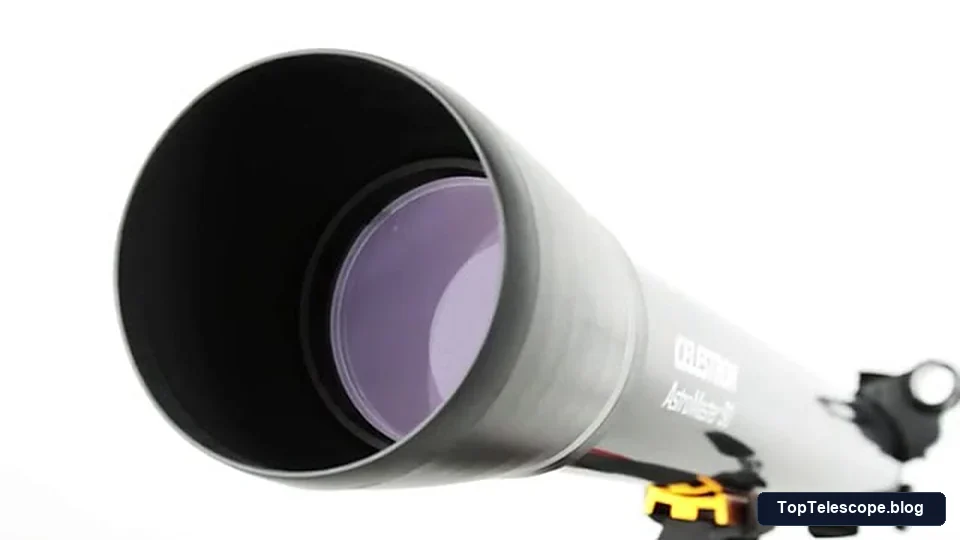
Achromatic doublet configurations help control chromatic aberration, although high-contrast targets may still exhibit minor violet fringing. Overall optical transmission remains remarkably clean for an entry-level instrument.
Primary focal length measurements reach 900 millimeters, establishing a moderate ratio matching top picks featured in our best refractor telescope for viewing planets and galaxies evaluation.
- 70mm clear aperture collects adequate night sky light.
- Anti-reflective coatings maximize overall light transmission.
- 900mm focal length promotes high-contrast planetary details.
Evaluating Glass Coatings and Light Transmission
Applying chemical coatings to glass air-to-glass surfaces directly reduces glare and internal scattering. This treatment ensures that faint stellar points retain high contrast against dark skies.
Users will notice improved fidelity when observing bright targets like Jupiter's cloud belts or Saturn's distinct rings during steady atmospheric conditions.
- Coating layers protect vulnerable glass surfaces.
- Scatter reduction enhances contrast on lunar terminators.
Mechanical Build Quality and Alt-Azimuth Mount Design
Mechanical integrity centers around a simplified alt-azimuth mount highlighted in our best refractor telescope for beginners resource, allowing extremely smooth directional tracking across both axes.
Constructed largely from rigid plastics and anodized aluminum, the chassis balances weight reduction with adequate structural rigidity for casual backyard astronomy sessions.
The included adjustable tripod extends smoothly, though fully elevated heights can introduce minor stability compromises during gusty outdoor weather conditions.
- Alt-azimuth mount supports intuitive point-and-view operation.
- Panning handle enables smooth manual tracking adjustments.
- Anodized aluminum legs provide reliable structural support.
Mount Stability and Tracking Ergonomics
Operating a manual alt-azimuth mount requires gentle touches to prevent image jitter at high magnifications. The built-in clutch tension knob helps regulate resistance smoothly.
Observers must anticipate slight target drift when using high-power eyepieces due to the absence of geared slow-motion cables on this specific model variant.
- Clutch tension knob adjusts axis movement resistance.
- Manual tracking demands patience at high power.
Video Review: Celestron AstroMaster 70az - Review, Assembly, \u0026 Testing
Real-World Visual Performance and Magnification Limits
Field testing reveals crisp lunar crater shadows and distinct planetary phases when paired with optimal eyepieces. Theoretical magnification limits peak around one hundred forty power under ideal skies.
The bundled twenty-millimeter eyepiece delivers wide, comfortable fields for star clusters, while the ten-millimeter variant pushes closer inspection limits for planetary cloud bands.
Terrestrial viewing benefits greatly from the erect image star diagonal, transforming the astronomical setup into an effective spotting scope for daytime wildlife monitoring.
- Lunar surface details appear sharp and well-defined.
- Bundled eyepieces cover wide and intermediate fields.
- Erect diagonal converts scope for daytime spotting.
Setup, Ergonomics, and Field Usability
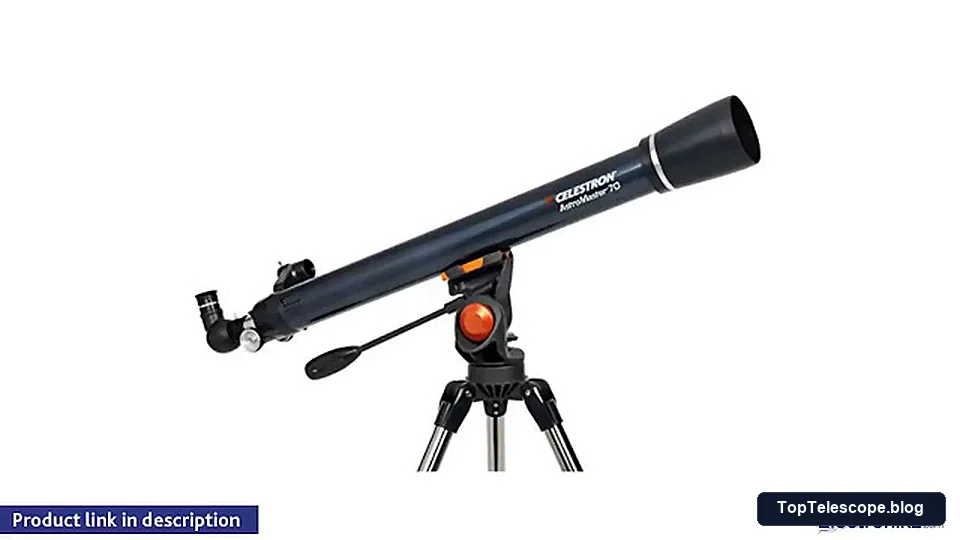
Rapid field deployment is a primary design advantage, requiring zero specialized tools for complete mechanical assembly. Tripod spread and optical tube attachment take mere minutes.
The red dot finder scope projects a clean LED reticle onto the sky, significantly simplifying initial alignment procedures for novice astronomers of all age groups.
Weighing under ten pounds fully assembled, the entire apparatus transports effortlessly from indoor storage areas to backyard viewing locations without physical strain.
- Tool-free assembly accelerates backyard deployment speed.
- Red dot finder simplifies initial celestial alignment.
- Lightweight chassis ensures effortless backyard portability.
Thermal Efficiency and Environmental Duty Cycles
Refractor designs inherently seal optical tubes, protecting internal glass elements. As detailed in our refractor vs reflector telescope guide, thermal equilibrium settles quickly outdoors.
Dew formation on the objective lens during extended night sessions represents a common operational hurdle. Utilizing a flexible dew shield mitigates premature lens fogging effectively.
Continuous viewing duty cycles remain unrestricted by battery capacities or mechanical motors, allowing uninterrupted observation sessions limited only by local weather conditions.
- Sealed optical tube blocks dust and moisture accumulation.
- Rapid thermal acclimation minimizes internal optical distortion.
- Passive cooling ensures unlimited visual operating hours.
Routine Maintenance and Long-Term Durability
Maintaining optical clarity requires occasional dry dust removal using a specialized micro-fiber cloth or bulb blower. Direct finger contact with the objective lens must be strictly avoided.
Mechanical fasteners across the tripod and mounting bracket should be inspected periodically and gently tightened to prevent loosening caused by regular field transport vibrations.
Storage in a dry, temperature-controlled environment prevents internal mold growth on lens coatings and preserves mechanical longevity across many years of consistent stargazing.
- Dry bulb blowers safely remove loose surface dust.
- Periodic fastener checks maintain structural joint integrity.
- Dry storage protects delicate optical anti-reflective coatings.
Definitive Buyer Verdict: Who Should Invest?
This optical instrument represents an ideal choice featured inside our best celestron telescope for beginners guide. The accessible design shines brightly for novice stargazers.
Advanced astrophotographers or deep-sky specialists should explore heavier equatorial platforms with larger apertures. However, casual backyard observers will appreciate the straightforward mechanical operation and sharp optics.
- Perfect starting tool for beginner backyard astronomers.
- Exceptional value for combined celestial and terrestrial viewing.
- Skip if advanced deep-sky astrophotography is desired.
Frequently Asked Questions
Can this telescope be used for viewing distant wildlife during the day?
Yes, the included erect image star diagonal corrects upside-down orientations. This engineering feature transforms your setup into an effective daytime spotting scope for landscapes.
What level of astronomy experience is required to operate this device?
This model targets complete beginners with its tool-free assembly design. The red dot finder makes initial celestial target acquisition intuitive and completely frustration-free.
Does this telescope package include eyepieces for higher magnification?
The kit supplies two distinct eyepieces for varied magnification levels. You receive a wider twenty-millimeter ocular alongside a higher-power ten-millimeter eyepiece for closer planetary inspections.
How should the glass objective lens be cleaned safely?
Always use a bulb blower first to remove loose abrasive dust particles. Finish cleaning by gently wiping surfaces with a clean micro-fiber cloth to protect coatings.
Is this telescope suitable for capturing deep-space astrophotography images?
While casual smartphone snapshots of the Moon work well, deep-sky astrophotography requires motorized tracking mounts. This manual alt-azimuth platform is built primarily for visual astronomy sessions.