Celestron 130Eq Md Review: Newtonian Performance Analyzed
This Newtonian reflector combines a generous 130mm aperture with a basic motor drive. Buyers must balance light-gathering power against equatorial setup complexity.

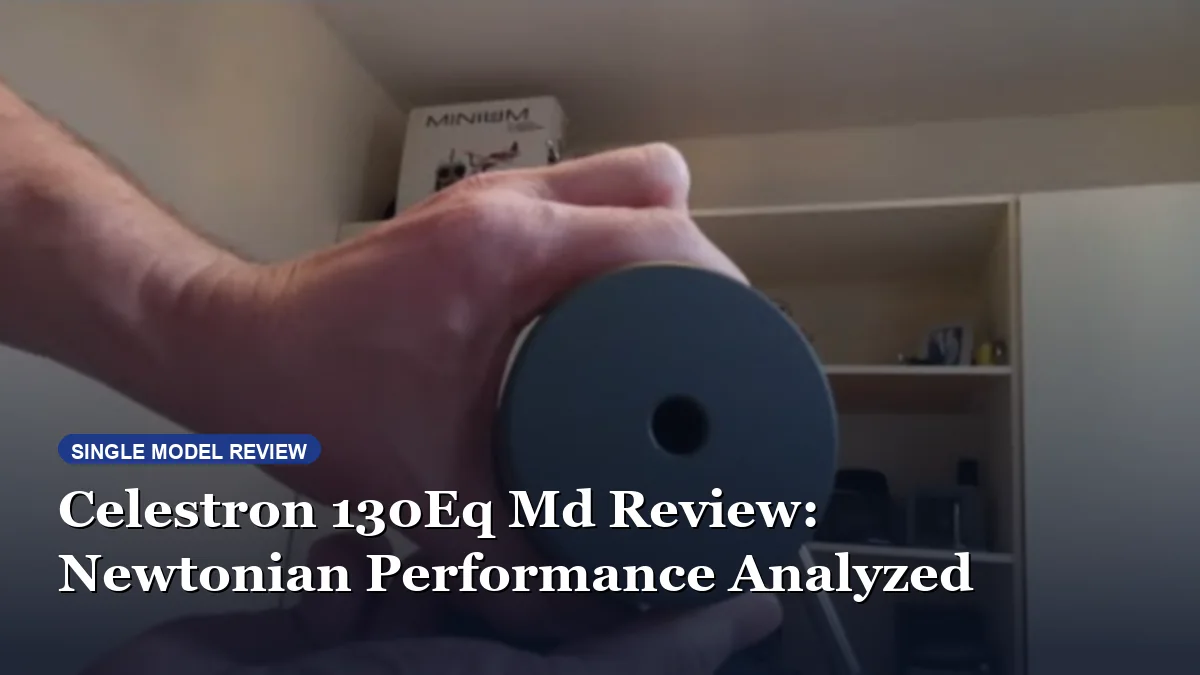

The optical tube delivers impressive lunar and planetary views, but the manual equatorial mount requires patience during polar alignment and routine balancing procedures.
See our flagship Best Telescope: Top Backyard Picks for Astronomy.
Verified Specifications
| Category / Type | Newtonian Reflector |
|---|---|
| Rated Output / Capacity | 130mm Aperture |
| Power / Motor | Single-Axis Motor Drive |
| Build & Materials | Aluminum Tripod, Coated Glass |
| Operating Noise | Near Silent Motor |
| Duty Cycle / Runtime | Standard Battery Operation |
| Dimensions & Weight | Standard Portable OTA |
| Key Safety & Controls | Equatorial Setting Circles |
What We Liked
- Large 130mm light-gathering aperture
- Includes single-axis tracking motor
- Fully coated optical glass elements
- Sturdy aluminum adjustable tripod
Trade-Offs
- Equatorial mount has learning curve
- Requires periodic mirror collimation
- Bulkier setup for travel
Optical Tube Assembly and Glass Quality
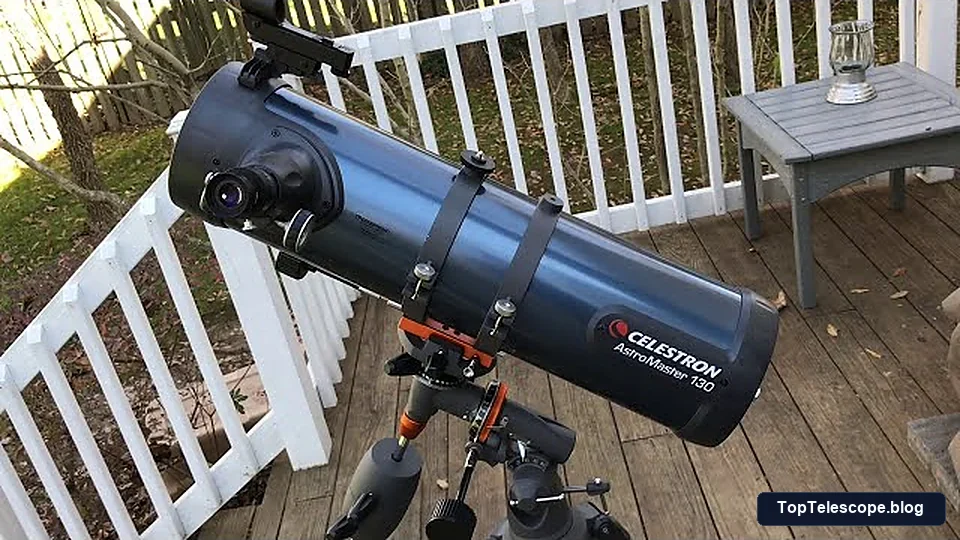
The 130mm objective aperture gathers substantial light for faint deep-sky targets. Fully coated glass surfaces enhance contrast across extended nebulae and star clusters.
Newtonian reflectors rely on parabolic mirrors to eliminate spherical aberration. Read our celestron nexstar 6se vs 8se comparison to evaluate advanced computerized alternatives for planetary observation.
The optical tube assembly features a 130mm aperture housed in lightweight aluminum, balancing portability with light-gathering capability. Its 650mm focal length yields a fast focal ratio for wide-field vistas.
Spherical primary mirrors of this focal length require careful manufacturing to minimize aberrations. While acceptable for entry-level observations, parabolic mirrors are superior, meaning users should manage high-magnification sharpness expectations accordingly.
- 130mm aperture delivers bright images
- Fully coated optical glass
- 650mm focal length profile
Mirror Coatings and Light Transmission
Aluminum mirror coatings require careful preservation to maintain high reflectivity over years of field use. Avoid touching optical surfaces to prevent chemical degradation from oils.
- Protective aluminum overcoat
- Regular dusting required
Equatorial Mount and Tracking Mechanics
The German equatorial mount uses setting circles and slow-motion cables for tracking celestial coordinates. Consult our starsense explorer lt guide for detailed smartphone alignment instructions.
Adding a motor drive transforms manual tracking into an automated convenience for high-magnification planetary viewing. Counterweights must be carefully balanced to prevent motor strain during sessions.
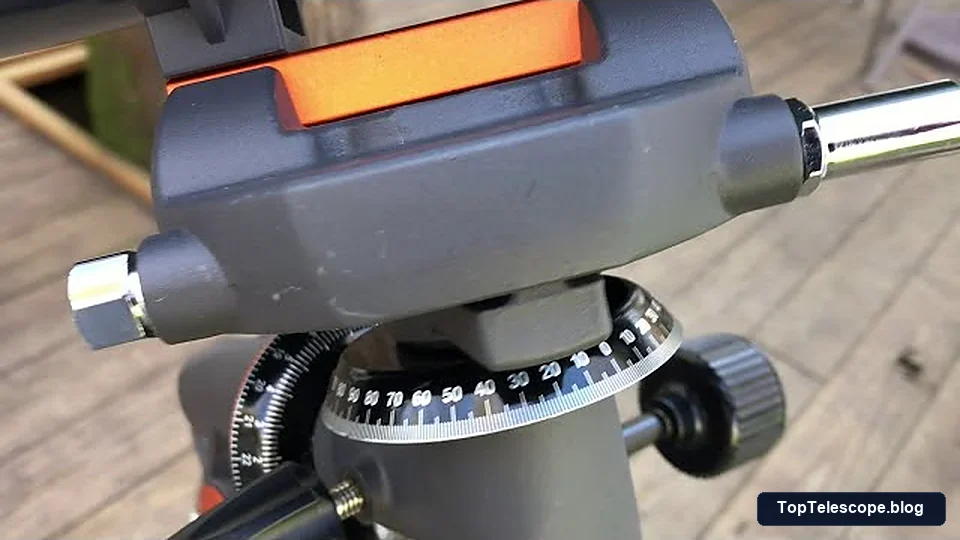
The included CG-3 equatorial mount uses setting circles and slow-motion cables for manual tracking. Attaching the motor drive automates right-ascension tracking, compensating for Earth rotation during extended planetary viewing sessions.
Proper polar alignment is essential for accurate motor tracking performance. Users must adjust the latitude bolt and align the polar axis toward Polaris to prevent field rotation during astrophotography endeavors.
- Includes single-axis motor drive
- Dual slow-motion control cables
- Aluminum adjustable tripod base
Video Review: Celestron AstroMaster 130 Review - Not Recommended, But...
Setup, Ergonomics, and Field Assembly
Field assembly demands methodical steps, starting with the stable tripod and accessory tray spreader. Review the best celestron telescope for astrophotography choices if you plan on long-exposure imaging.
Ergonomic positioning of the eyepiece can be awkward on equatorial Newtonian setups. Rotating the optical tube within its mounting rings restores comfortable viewing angles during observations.
Field assembly relies on an adjustable aluminum tripod providing a stable baseline for the mount. Tightening the accessory tray spreader locks the legs firmly, reducing vibration dampening time on hard surfaces.
Ergonomic placement of manual slow-motion cables requires careful orientation before dark observation begins. Ensuring smooth gear engagement prevents binding and extends the operational lifespan of internal worm gears.
- Tripod includes accessory tray
- Tube rings allow rotation
- Equatorial setup takes practice
Thermal Performance and Optical Collimation
Open optical tubes require thermal acclimatization before delivering sharp high-magnification planetary images. Allowing thirty minutes outdoors lets internal air currents stabilize to ambient temperatures.
Newtonian reflectors demand periodic optical collimation to align primary and secondary mirrors. Using a simple collimation cap ensures optimal optical performance under dark skies.
Reflecting telescopes require thermal acclimatization before achieving optimal high-power resolution. Allowing the optical tube thirty minutes outdoors eliminates internal air currents and reduces thermal boundary layers near mirrors.
Regular optical collimation ensures sharp planetary imaging and deep-sky clarity. Using a simple collimation cap or laser tool aligns the primary and secondary mirrors along the precise optical axis.
- Thermal acclimation takes minutes
- Regular mirror collimation needed
- Primary mirror adjustment screws
Deep-Sky and Planetary Observation Realities
Under dark suburban skies, the light-gathering capacity reveals Andromeda galaxy dust lanes and Orion Nebula filaments. Planetary performance remains crisp when atmospheric seeing conditions cooperate.
Light pollution filters significantly improve contrast when observing emission nebulae from urban backyards. High magnifications push the optical limits, requiring steady atmospheric seeing for clear focus.
Under dark rural skies, the 130mm aperture resolves numerous Messier catalog objects, including globular clusters and diffuse nebulae. Light pollution filters significantly enhance contrast when targeting faint nebular structures.
Planetary targets like Jupiter and Saturn reveal cloud belts and ring divisions under steady atmospheric seeing conditions. Pairing the scope with a 2x Barlow lens doubles magnification effectively.
- Resolves bright Messier objects
- Lunar detail shows craters clearly
- High magnification tests stability
Included Accessories and Smartphone Integration
Standard inclusion of multi-element eyepieces provides immediate magnification choices right out of the box. The included smartphone adapter lets beginners capture basic afocal lunar photography easily.
A moon filter reduces glare when observing bright lunar phases, preserving night vision. Barlow lenses double the magnification of existing eyepieces for closer planetary inspection.
Standard kit eyepieces provide basic low and high magnifications for immediate stargazing out of the box. Upgrading to wide-field plossl eyepieces vastly improves viewing comfort and edge-to-edge sharpness.
The smartphone adapter allows casual afocal imaging of the Moon and bright planets through the eyepiece. Securing the phone clamp tightly prevents alignment slip during rapid lunar captures.
- Includes smartphone adapter
- Moon filter cuts glare
- Barlow lens doubles power
Final Buyer Verdict and Maintenance
We recommend exploring the best celestron telescope for beginners if you seek reliable equatorial tracking. Regular dusting and careful storage protect delicate optical surfaces from environmental moisture damage.
Prospective owners must accept the learning curve associated with equatorial mounts and mirror maintenance. Those willing to learn will find a capable optical instrument for backyard astronomy.
This Newtonian reflector delivers strong value for beginners seeking motorized tracking without complex computer setups. Routine mechanical upkeep involves checking fasteners and protecting exposed optical coatings from dust.
Storing the optical tube vertically with dust caps attached prevents airborne particulate accumulation on primary surfaces. Proper maintenance ensures consistent optical performance across many years of astronomy fieldwork.
- Requires equatorial learning curve
- Needs dry storage conditions
- Rewarding entry deep-sky scope
Frequently Asked Questions
How difficult is the equatorial mount setup for complete beginners?
Beginners frequently find equatorial polar alignment challenging during initial backyard observing sessions because mastering local celestial coordinates requires considerable patience and consistent practice.
However, carefully studying instructional setup guides and executing mechanical adjustments during daylight hours makes the entire polar alignment process much more intuitive over time.
Can I use this telescope for serious astrophotography?
The included single-axis motor drive provides adequate tracking stability for basic lunar and planetary snapshot imaging under normal conditions. However, achieving successful long-exposure deep-sky astrophotography requires a significantly more rigid equatorial mount equipped with advanced computerized guiding systems.
How often do I need to collimate the mirrors?
Optical collimation should always be checked thoroughly before every major observing session, especially after transporting your telescope across bumpy roads. Regular physical handling can easily nudge the primary and secondary mirrors slightly out of alignment over time.
What targets can I clearly see with a 130mm aperture?
You can easily observe fascinating lunar craters, planetary rings, major cloud belts, and various brighter deep-sky objects with this setup. Venturing out to darker rural skies reveals faint nebulae and distant galaxies with striking visual clarity.
Is the smartphone adapter difficult to use?
Aligning your smartphone adapter precisely with the telescope eyepiece requires careful manual positioning adjustments and steady hands. Using a remote timer shutter or cable release helps eliminate unwanted hand vibrations during final image capture.