Celestron 11 Edge HD Review: Advanced Astrophotography
This advanced optical tube delivers exceptional flat-field clarity. However, its heavy chassis requires a robust equatorial mount.

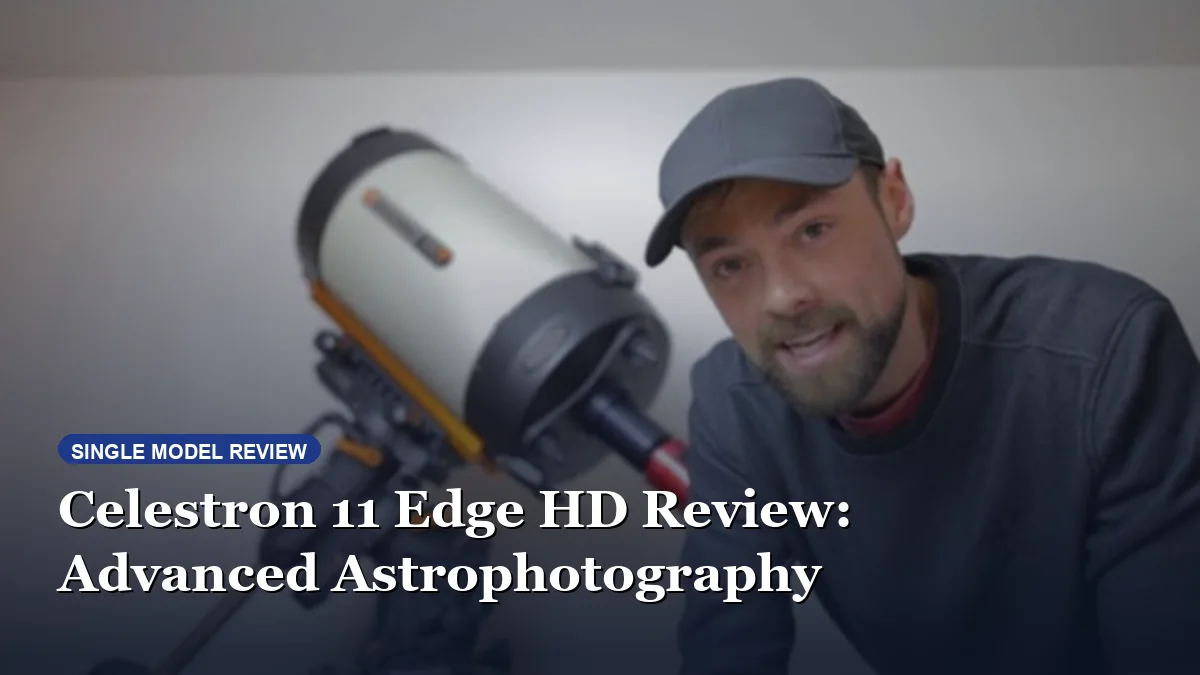

The EdgeHD 11 optical system provides exceptional coma-free performance for serious imagers. Be prepared for a lengthy thermal cooling period before capturing sharp frames.
See our flagship Best Telescope: Top Backyard Picks for Astronomy.
Verified Specifications
| Category / Type | Schmidt-Cassegrain Astrograph |
|---|---|
| Rated Output / Capacity | 11-Inch Aperture |
| Power / Motor | Solar Powered Accessories |
| Build & Materials | Aluminum Optical Tube |
| Operating Noise | Passive Cooling System |
| Duty Cycle / Runtime | Continuous Nighttime Operation |
| Dimensions & Weight | 31.5" Length, 45 lbs |
| Key Safety & Controls | Mirror Clutches & 10:1 Focuser |
What We Liked
- Coma-free flat field optics
- StarBright XLT coatings
- Primary mirror support clutches
- Integrated cooling vents
Trade-Offs
- Heavy 45-pound chassis
- Requires heavy-duty mount
- Long thermal acclimation time
Optical Architecture and Design Principles
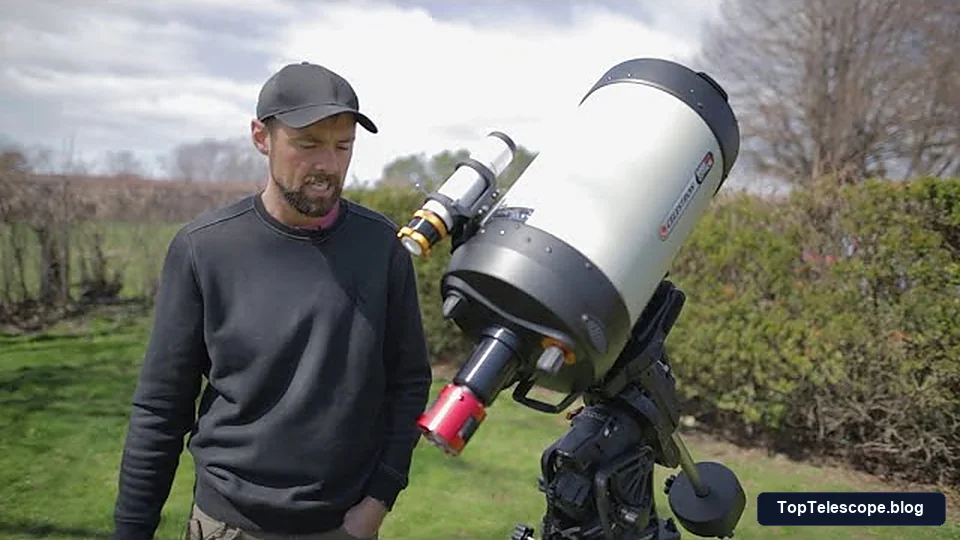
The EdgeHD optical design incorporates built-in field flatteners inside the baffle tube. This eliminates optical aberrations and ensures pinpoint stars across large camera sensors without sacrificing focal length.
Proprietary StarBright XLT coatings maximize light transmission throughout every glass surface. For deeper technical insights, consult our Celestron Edge HD 8 vs 8SE technical comparison to evaluate throughput differences.
- Built-in optical field flatteners
- StarBright XLT multi-coatings
- Optimized baffling system
Mirror Support and Stability
Primary mirror clutches secure the heavy optical glass during long tracking exposures. These mechanical locks prevent mirror shift when pointing the telescope at varying elevations across the night sky.
Integrated cooling vents feature integrated micromesh filters to exhaust trapped warm air. This passive ventilation design protects internal optics from dust intrusion while accelerating ambient temperature equilibration.
- Flexible mirror lock knobs
- Filtered cooling vents
Real-World Astrophotography and Visual Output
An expansive 11-inch aperture gathers substantial light for high-resolution planetary observations. Beginners exploring options can check our best Celestron telescope for beginners guide to compare portable starter models.
The wide flat field pairs seamlessly with modern CMOS sensors. Astrophotographers will appreciate the complete absence of corner astigmatism, saving countless hours during post-processing calibration and image stacking routines.
- 11-inch light gathering aperture
- 23mm Luminos eyepiece included
- 9x50 finderscope optics
Field of View Performance
Delivering a precise 0.67-degree field of view, this system captures sprawling star clusters easily. The optical train maintains critical sharpness right to the extreme corners of full-frame imaging sensors.
- Full-frame sensor compatibility
- Sharp corner-to-corner stars
Video Review: The Celestron Edge HD 11 Project
Thermal Management and Cooling Efficiency
Large Schmidt-Cassegrain optics require deliberate acclimation to ambient outdoor temperatures. Readers can examine our Celestron NexStar 6SE vs 8SE technical comparison to evaluate tube sizes and cooling behaviors.
Utilizing side ventilation fans accelerates the internal thermal stabilization process considerably. Operators should allow at least forty-five minutes of cooling time before attempting critical high-resolution imaging sessions outdoors.
- Ambient temperature acclimation
- Ventilation fan assistance
Managing Heat Retention
Massive glass thicknesses trap thermal energy during seasonal temperature drops. Proper venting ensures optimal image contrast and eliminates localized thermal plumes inside the optical tube assembly.
- Thermal gradient reduction
- Contrast preservation
Mechanical Rigidity and Focusing Mechanisms
Weighing forty-five pounds, the aluminum optical tube demands a heavy-duty equatorial mount. You can read our StarSense Explorer LT usage guide to learn alignment steps for similar setups.
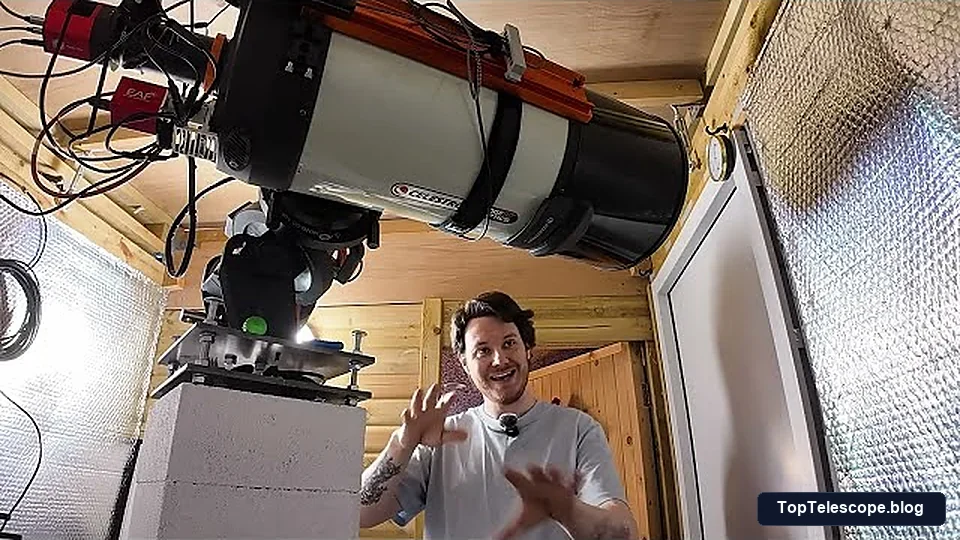
The manual focus system utilizes a robust 10:1 gear ratio for precise adjustments. This micro-focus capability allows astronomers to achieve critical focus effortlessly under varying seeing conditions and thermal shifts.
- CGE dovetail mounting bar
- 10:1 micro-focus control
Chassis Construction Quality
Rugged aluminum castings protect internal optical alignments against physical bumps during transport. Structural reinforcement ribs enhance overall rigidity across the entire length of the tube assembly.
- Aluminum cast housing
- Structural reinforcement
Routine Maintenance and Optical Alignment
Maintaining pristine optics requires regular inspection of the external corrector plate. Users must apply specialized optical cleaning solutions sparingly using micro-fiber cloths to prevent scratching delicate multi-coatings.
Collimation stability remains remarkably robust thanks to fixed primary mirror tolerances. Secondary mirror adjustments can be performed easily using standard hand tools when seasonal temperature swings affect alignment.
- Corrector plate cleaning protocols
- Stable collimation tolerances
Preventative Care Measures
Storing the optical tube with protective dust covers prevents particulate accumulation on sensitive glass surfaces. Proper humidity control inside storage areas stops potential mold growth on coatings.
- Dust cover usage
- Humidity management
Final Verdict for Advanced Imagers
This optical tube represents a premier choice for dedicated astrophotographers. Its flat-field performance and generous light-gathering capacity justify the substantial physical weight and required mounting infrastructure investment.
- Ideal for deep-sky imaging
- Demands robust mount support
Summary Recommendation
Advanced users seeking uncompromised optical clarity will find exceptional value in this astrograph system. Proper accessory pairing unlocks its full photographic potential across extended observing sessions.
- Uncompromised clarity
- Professional results
Frequently Asked Questions
Does this optical tube require a specialized heavy-duty mount?
Yes, the substantial 45-pound weight and long physical profile demand a robust equatorial mount capable of handling heavy payload capacities reliably during long imaging sessions.
Can I use full-frame DSLR and mirrorless cameras?
Absolutely, the advanced optical design produces flat, coma-free star images across large full-frame sensors without requiring separate external field flatteners during astrophotography.
How long does the primary mirror take to cool?
You should allocate approximately forty-five minutes for the massive primary glass to equilibrate completely with ambient outdoor temperatures before starting serious imaging.
Are the mirror locks necessary during astrophotography?
Engaging the internal mirror clutches is essential because it prevents unwanted image shift during long-exposure tracked imaging runs across the night sky.
What makes the EdgeHD different from standard SCTs?
Unlike traditional designs, integrated corrector lenses ensure coma-free flat fields right out to the extreme edges of modern digital imaging sensors.