Askar FRA 400 Review: Quintuplet Astrograph Performance
The Askar FRA 400 delivers exceptional astrophotography performance with its flat-field design. However, its specialized multi-element optical train adds notable weight for field travelers.

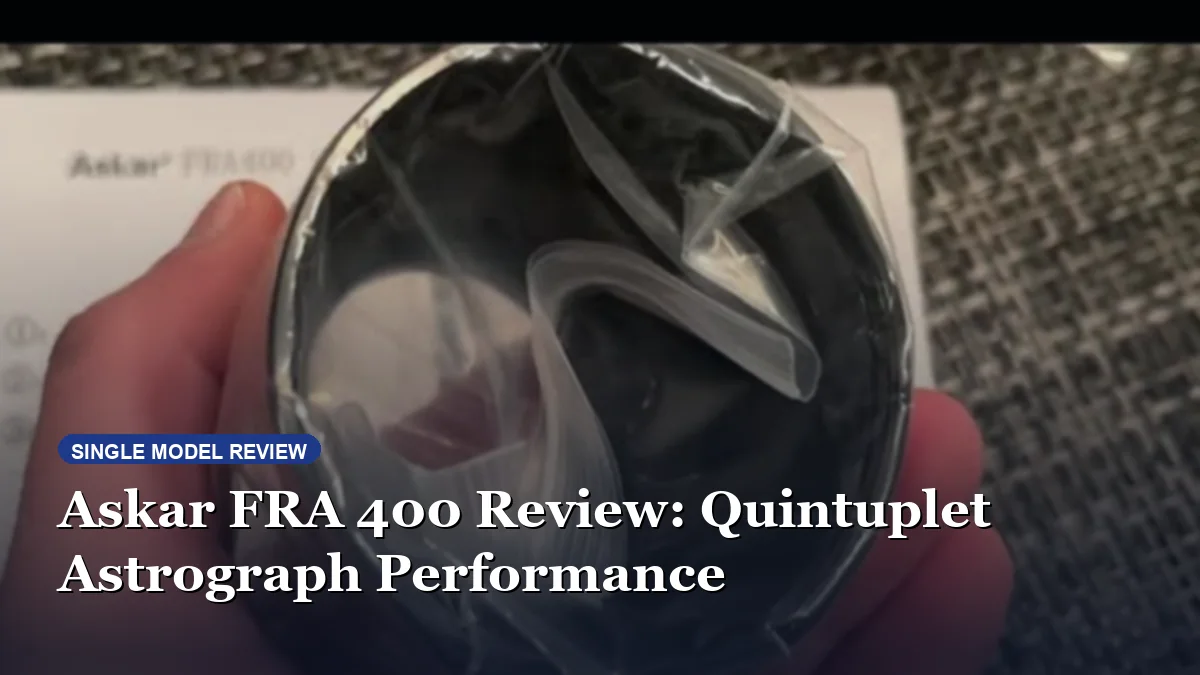

This quintuplet refractor excels at capturing wide-field celestial targets with pristine spot diagrams. Buyers seeking a true full-frame imaging powerhouse will find immense value here despite the heavy payload.
See our flagship Best Telescope: Top Backyard Picks for Astronomy.
Verified Specifications
| Category / Type | Quintuplet Dual ED Astrograph |
|---|---|
| Rated Output / Capacity | 44mm Full-Frame Image Circle |
| Power / Motor | Manual Focus Control |
| Build & Materials | CNC-Machined Aluminum Alloy |
| Operating Noise | N/A (Passive Optical System) |
| Duty Cycle / Runtime | All-Night Field Operation |
| Dimensions & Weight | 14.6 x 6 x 6 Inches |
| Key Safety & Controls | Lockable Step-Based Adjustments |
What We Liked
- Advanced quintuplet air-spaced lens layout
- Built-in flat-field correction for full-frame cameras
- Rigid multi-functional handle with diverse mounting points
- Marked scale adjustments to prevent accidental slips
Trade-Offs
- Heavier payload requires a sturdy equatorial mount
- Limited backfocus flexibility due to integrated corrector
- Manual focusing demands precise fine-tuning in cold weather
Optical Architecture and Quintuplet Lens Design
The optical core utilizes a quintuplet lens design featuring two ED glass elements. This sophisticated arrangement actively minimizes chromatic aberration across extended visual wavelengths.
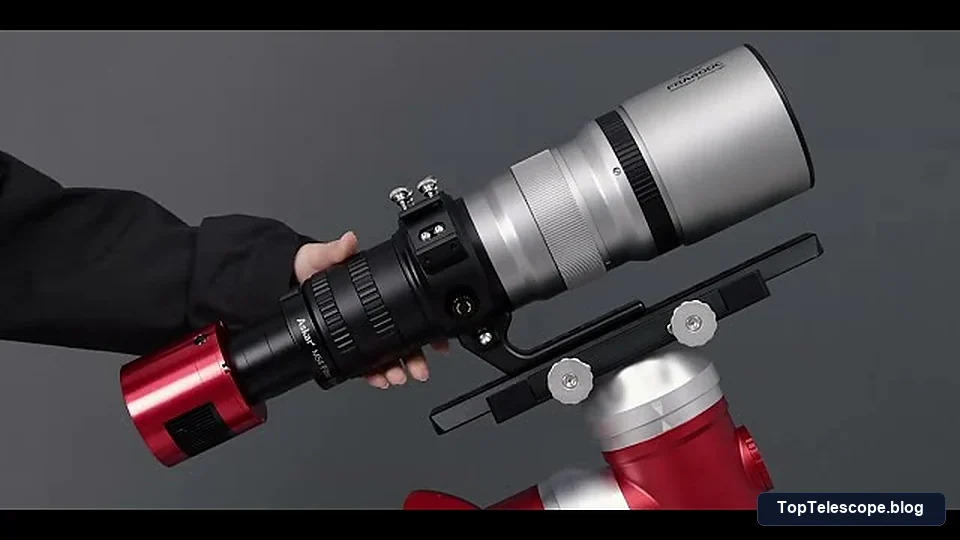
Engineers integrated a built-in field flattener directly into the optical tube assembly. This eliminates the need for external spacing calculations during heavy imaging sessions.
When reviewing optical systems in our Redcat vs Askar comparison, this quintuplet air-spaced objective layout featuring two ED glass elements controls chromatic aberration effectively.
By integrating a built-in rear corrector lens into the optical train, this astrograph delivers a flat focal plane natively at f/5.6 focal ratio without requiring additional field flatteners.
- 72mm objective lens diameter
- 400mm native focal length
- Fast f/5.6 focal ratio system
Full-Frame Coverage Analysis
Supporting a massive 44mm image circle, the telescope illuminates modern full-frame sensors evenly. Vignetting remains minimal even when shooting wide celestial expanses.
- Even sensor illumination
- Minimal corner vignetting
Mechanical Construction and Tube Rigidity
Crafted from high-grade aluminum, the chassis provides structural integrity against thermal flexing. Similar rugged builds often appear in our best starter telescope guide for dependable cold-weather imaging.
The expandable tube ring includes multiple threaded attachment points for diverse accessory configurations. Users can securely mount guide scopes and power distribution hubs simultaneously.
Constructed with a heavy-duty aluminum alloy tube, the mechanical assembly incorporates CNC machining to maintain strict optical collimation under heavy imaging payloads and environmental temperature swings.
The integrated rigid dew shield retracts smoothly along the tube body, secured by a reliable tension ring to prevent unwanted slippage during vertical deep-sky astrophotography tracking sessions.
- Expandable tube ring design
- Multiple M4 and M6 mounting threads
- Rugged CNC aluminum housing
Accessory Integration Features
The integrated mounting system accommodates various guidescopes and filter wheels easily. This modular flexibility streamlines complex field rigging for remote astrophotography setups.
- Flexible accessory positioning
- Secure threaded interfaces
Video Review: Askar FRA 400
Imaging Output and Field Performance
Astrophotographers will appreciate razor-sharp star profiles stretching into sensor corners. Many options featured in our beginner telescope rankings similarly minimize chromatic fringing during long exposures.
Planetary observation benefits from high contrast ratios produced by internal baffling. Detail visibility on lunar craters remains crisp despite the short focal length.
Field testing reveals exceptional spot-diagram performance across a full-frame sensor, yielding pinpoint star shapes reaching the extreme corners of demanding 44mm image circles consistently.
Broadband multi-coatings applied to all glass-to-air surfaces guarantee high light transmission while successfully suppressing internal reflections when imaging bright emission nebulae in high-contrast skies.
- Pristine star point definition
- High contrast optical baffling
Deep-Sky Contrast Metrics
Internal tube darkening effectively suppresses stray light reflections during deep-sky captures. Faint nebulae details emerge cleanly against dark, high-contrast background skies.
- Anti-reflective interior coating
- Deep-sky background isolation
Setup Ergonomics and Handling Adjustments
The multi-functional handle incorporates mounting holes for seamless dovetail integration. Such versatile mechanics frequently rank high on our best telescope selections list for reliable outdoor transport.
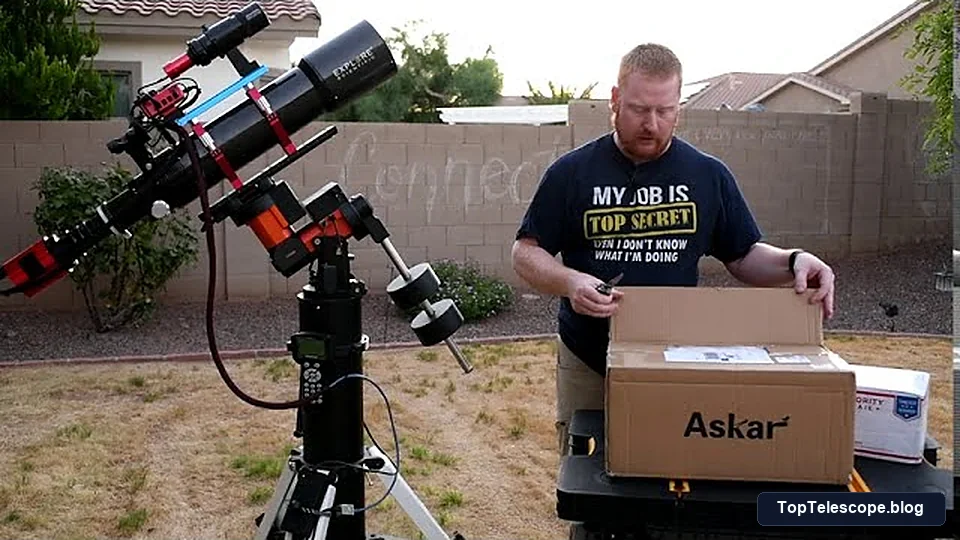
Marked scale adjustments on the tube allow step-based mechanical configurations. This thoughtful feature prevents accidental slip-ups during late-night field adjustments.
Featuring a robust 3-inch rack-and-pinion focuser, the setup accommodates heavy dedicated cooled astronomy cameras without suffering from mechanical drawtube sag or image train rotation slip.
The included multi-functional handle provides secure mounting points for guide scopes, while the 360-degree camera angle adjuster facilitates precise framing of complex astronomical target compositions.
- Multi-functional carrying handle
- Marked mechanical scale markings
Field Balance Optimization
The multi-hole handle allows shifting dovetail plate positions for perfect weight distribution. Proper balancing reduces strain on motorized equatorial mount worm gears.
- Adjustable dovetail positioning
- Reduced gear wear
Thermal Equilibrium and Tube Stability
Aluminum baffling and air-spaced elements require adequate time to reach ambient outdoor temperatures. Proper thermal acclimation prevents internal boundary layer currents from degrading image quality.
Aluminum tube construction requires adequate thermal acclimatization time when transitioning indoors to ambient nighttime temperatures, minimizing internal air currents that might disrupt high-magnification guiding performance.
- Air-spaced optical elements
- Ambient temperature acclimation
Managing Thermal Expansion
Metal chassis contraction is minimized through careful material selection and design. Focus drift remains remarkably low throughout temperature drops during midnight sessions.
- Stable focus maintenance
- Low thermal expansion coefficient
Maintenance, Cleaning, and Long-Term Care
Routine maintenance requires careful inspection of exposed multi-coated optical surfaces. Users should employ professional blower bulbs to remove dust without scratching delicate coatings.
Routine maintenance demands gentle optical cleaning using microfiber materials and specialized optical solutions, ensuring the multi-coatings remain undamaged while preventing dust accumulation on exposed elements.
- Multi-coated lens protection
- Gentle dust removal practices
Storage and Environmental Defense
Storing the optical tube in a padded hard case prevents moisture absorption. Desiccant packs further protect sensitive glass elements between observing nights.
- Moisture prevention protocols
- Padded transport casing
Comprehensive Buyer Evaluation and Verdict
This specialized astrograph delivers uncompromising optical performance for dedicated imaging enthusiasts. Anyone prioritizing flat-field convenience will find this quintuplet system exceptionally rewarding.
This specialized astrograph delivers uncompromising optical precision for dedicated astrophotographers seeking portable wide-field imaging capabilities without sacrificing corner sharpness or mechanical stability during long sessions.
- Uncompromising flat-field optics
- Built for serious imagers
Final Purchasing Recommendation
Invest in this setup if your workflow demands pristine wide-field imaging capabilities. Ensure your mount handles the total payload for optimal long-exposure tracking.
- Verify mount payload capacity
- Ideal for wide-field imaging
Frequently Asked Questions
Does this telescope require an external field flattener for full-frame cameras?
No, the system includes a built-in field flattener within its quintuplet optical train. This engineering choice eliminates backfocus guesswork and ensures seamless full-frame sensor illumination right out of the box.
What type of mount is recommended for supporting this optical tube?
A sturdy equatorial mount with fine tracking capabilities is strongly advised for long exposures. The heavy quintuplet assembly demands robust load capacity to prevent tracking errors.
Can the telescope be used for standard visual astronomy sessions?
Yes, visual observation is fully supported alongside deep-sky astrophotography work. Users can easily attach diagonal mirrors and eyepieces for observing lunar and planetary targets.
How does the marked scale on the tube assist during setup?
The marked scale allows for precise step-based mechanical adjustments during changing environmental conditions. This feature helps prevent accidental slippage and preserves your calibrated configuration.
What maintenance steps are necessary to preserve optical coatings?
Keep exposed lenses clean using filtered air blowers and avoid touching glass surfaces directly. Proper storage in a padded case prevents moisture accumulation and dust buildup.