Apertura AD12 Review: Massive Light-Bucket Performance
The Apertura AD12 delivers uncompromising light-gathering power for serious deep-sky astronomers. However, its massive optical tube demands dedicated storage space and robust vehicle transport.

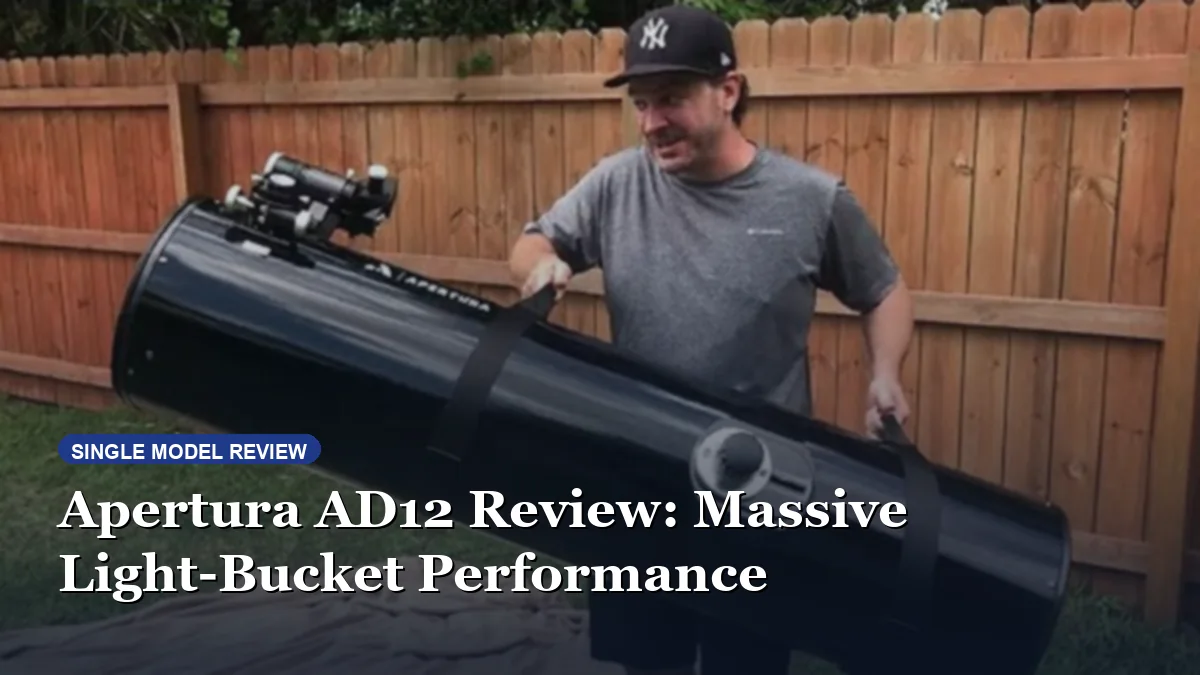

This 12-inch Dobsonian offers exceptional optical performance and premium accessories at a competitive value. Despite its heavy footprint, it remains the ultimate choice for faint nebulae and distant galaxies.
See our flagship Best Telescope: Top Backyard Picks for Astronomy.
Verified Specifications
| Category / Type | Newtonian Reflector Dobsonian |
|---|---|
| Rated Output / Capacity | 305mm Objective Diameter |
| Power / Motor | Manual Altazimuth Operation |
| Build & Materials | Borosilicate Glass & Laminate Wood |
| Operating Noise | Silent Manual Tracking |
| Duty Cycle / Runtime | Unlimited Visual Observing |
| Dimensions & Weight | 41kg Total Assembled Weight |
| Key Safety & Controls | Dual-Speed Crayford Focuser |
What We Liked
- Massive 12-inch aperture gathers exceptional light
- Includes smooth dual-speed Crayford focuser
- Rear cooling fan aids thermal equilibrium
- Sturdy rocker box minimizes vibration
- Comprehensive accessory bundle included
Trade-Offs
- Very heavy and bulky for transport
- Demands regular optical collimation checks
- Requires significant vehicle cargo space
Optical Design and Primary Mirror Engineering
Featuring a massive 12-inch parabolic mirror, this reflector gathers immense amounts of light. It reveals intricate spiral structures in distant galaxies that smaller apertures completely miss during dark-sky sessions.
The optical glass features high reflectivity aluminum coatings protected by a durable overcoat. This ensures maximum photon transmission to your eyepiece while resisting environmental degradation over years of heavy use.
The 12-inch parabolic primary mirror utilizes a precision-annealed borosilicate substrate with a thickness of roughly 50 millimeters, minimizing thermal distortion during rapid cooling cycles across fluctuating outdoor ambient temperature drops.
An enhanced aluminum coating delivers a certified 93% reflectivity rate, which you can evaluate further in our Apertura AD10 vs Orion XT10 comparison while maximizing photon throughput for faint deep-sky nebulae.
- 305mm aperture diameter
- 1524mm focal length (f/5)
- Borosilicate glass substrate
Mirror Substrate and Thermal Stability
The thick borosilicate substrate requires proper thermal acclimatization before high-magnification viewing. Taking thirty minutes to cool down eliminates internal tube currents and sharpens planetary images significantly.
Maintaining surface figure integrity under changing ambient temperatures is critical. The optical configuration holds its parabolic shape reliably once thermal equilibrium is fully achieved outdoors.
- Low expansion glass material
- Reliable parabolic figure retention
Mechanical Build Quality and Base Stability
The heavy-duty particle board rocker box provides a rock-solid foundation, similar to units analyzed in our Apertura AD8 vs Orion SkyQuest XT8 showdown, minimizing unwanted vibrations during manual tracking.
Teflon bearing pads on the azimuth base ensure buttery smooth horizontal movements. Meanwhile, the altitude tension clutch lets you fine-tune resistance to match heavy eyepieces effortlessly.
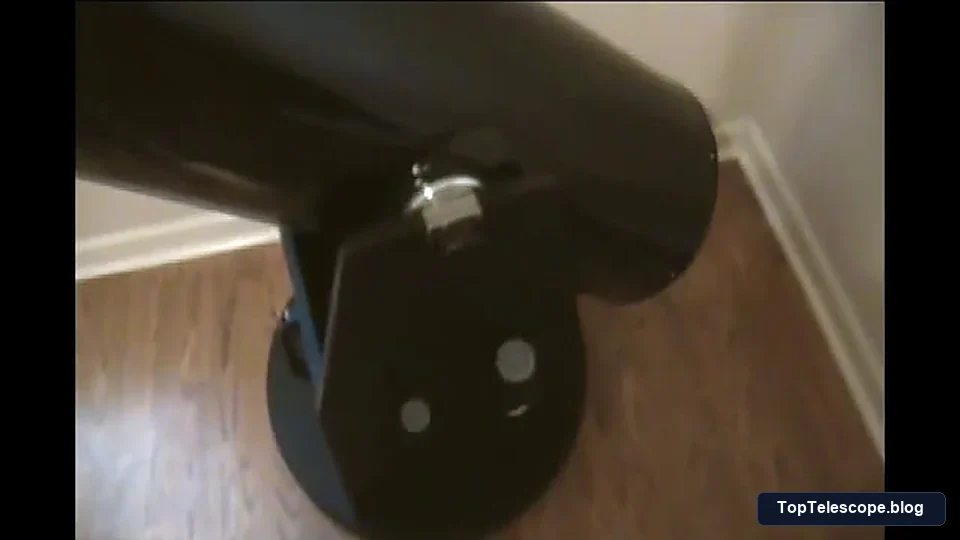
Constructed from heavy-duty particle board and melamine, the rocker box base features nylon-skid bearings combined with a roller bearing ground board to ensure smooth azimuth rotation without unwanted stiction during high-power tracking.
Altitude trunnions incorporate a tension brake system on both sides, allowing users to effortlessly balance heavy eyepieces or binoviewers without causing the massive optical tube assembly to slip out of position prematurely.
- Roller bearing azimuth base
- Sturdy laminate particle board
- Adjustable altitude tension knobs
Video Review: 【AD12 Dobsonian】| VLOG EP3 | Introducing my Dob | Apertura AD12 Dobsonian Telescope
Focuser Precision and Cooling System Mechanics
Included is a dual-speed Crayford focuser with a ten-to-one reduction knob, a feature highlighted in our Celestron StarSense Explorer 8 vs Apertura AD8 guide that eliminates image shift.
A rear-mounted cooling fan accelerates mirror thermal equalization with ambient air. Powered by a standard battery pack, it draws heat away from the primary glass surface efficiently.
The dual-speed Crayford focuser operates with a 1:10 reduction ratio, providing microscopic focus adjustments that completely eliminate image shift while securely holding heavy 2-inch wide-field eyepieces through brass compression rings.
A built-in rear cooling fan operates on a standard battery pack, actively drawing ambient air across the primary mirror surface to accelerate thermal equilibrium and reduce boundary layer turbulence during early evening observation sessions.
- 2-inch dual-speed Crayford focuser
- 1.25-inch adapter included
- 12V DC cooling fan
Real-World Deep-Sky Performance and Collimation
Under dark skies, faint Messier objects burst with unprecedented detail, a performance metric examined closely in our Sky-Watcher Classic 200P vs Apertura AD8 review where globular clusters resolve cleanly.
Regular optical alignment using a laser collimator remains essential for sharp views. Fortunately, thumb screws on the primary cell make field adjustments tool-free and remarkably straightforward.
Under dark skies, the massive aperture resolves globular clusters into thousands of individual stellar points while revealing intricate spiral structures in Messier galaxies that smaller instruments simply cannot render with comparable visual contrast.
Maintaining precise alignment requires a reliable laser collimator inserted into the 2-inch drawtube, allowing observers to quickly adjust the spring-loaded primary mirror cells using convenient rear thumb screws without needing extra tools.
- Exceptional galaxy cluster resolution
- Tool-free primary mirror collimation
- High contrast planetary details
Ergonomics, Transport, and Assembly Workflows
Transporting this optical tube requires two people or a spacious vehicle. At over forty pounds per major component, it falls firmly into the heavy-duty equipment category.
Setup involves placing the base on level ground and securing the tube. Integrated carrying handles on the rocker box simplify lifting and positioning the assembly safely.
Transporting the optical tube demands careful handling due to its 46-pound weight and 58-inch length, often requiring a dedicated vehicle or a two-person carrying strategy to prevent accidental impacts against doorframes or vehicle bumpers.
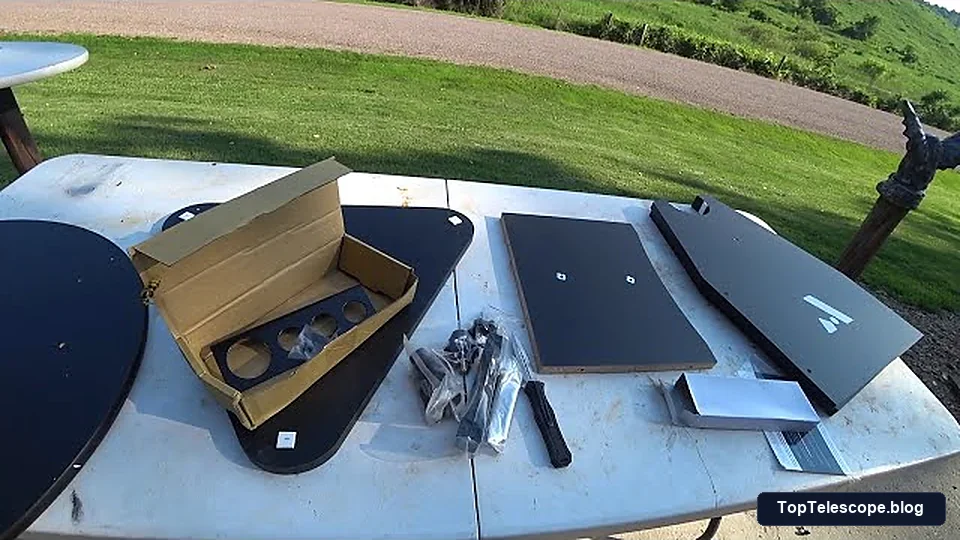
Assembly involves placing the base on level ground, lifting the heavy tube into the altitude cradles, and securing the side tension handles, a straightforward workflow taking approximately five minutes when all components are readily accessible.
- Two-piece modular design
- Integrated side carry handles
- Requires careful vehicle loading
Comprehensive Verdict and Final Value Assessment
For committed astronomers prioritizing aperture above portability, this telescope delivers unmatched value. Its comprehensive bundle of included accessories eliminates immediate upgrade expenses completely.
While physical size limits spontaneous grab-and-go sessions, the resulting celestial views reward every bit of effort. It remains an industry benchmark for serious visual observing performance.
Serious astronomers seeking uncompromising light-gathering power will find this instrument delivers exceptional optical performance that easily justifies the physical bulk required to transport and store such a large aperture Newtonian telescope design.
Careful adherence to routine mirror maintenance, proper collimation habits, and secure mechanical setups will ensure decades of reliable service, making this formidable optical system a cornerstone investment for dedicated visual deep-sky observers.
- Outstanding optical performance-to-cost ratio
- Comprehensive accessory package included
- Demands physical strength for transport
Frequently Asked Questions
Can this telescope be used for astrophotography?
This Dobsonian mount is optimized for visual astronomy rather than astrophotography. While you can capture bright lunar targets using a camera, long-exposure deep-sky imaging remains impractical without an equatorial tracking platform.
How difficult is it to maintain mirror alignment?
Routine optical alignment is straightforward once you learn Newtonian reflector mechanics. Utilizing a laser collimator allows you to quickly adjust the primary mirror using convenient tool-free thumb screws at the rear cell.
How long does the primary mirror take to cool down?
Thermal stabilization typically requires thirty minutes depending on the temperature differential. Turning on the integrated cooling fan accelerates this process, ensuring you achieve sharp planetary views much faster during sessions.
Can a single person transport and set up this telescope?
Transporting and assembling this heavy instrument is challenging for a single person. Splitting the optical tube and rocker box into separate trips makes handling much safer and prevents accidental equipment damage.
What accessories are included in the standard package?
The package includes a dual-speed Crayford focuser, an 8x50 finderscope, and quality wide-field eyepieces. Additionally, you receive a cooling fan battery pack ensuring immediate out-of-the-box readiness for stargazers.