Tabletop Dobsonian vs Tripod Telescope: Concise Verdict
Choosing between a tabletop base and a traditional tripod changes your entire viewing experience. Evaluating portability and aperture guides your final decision.

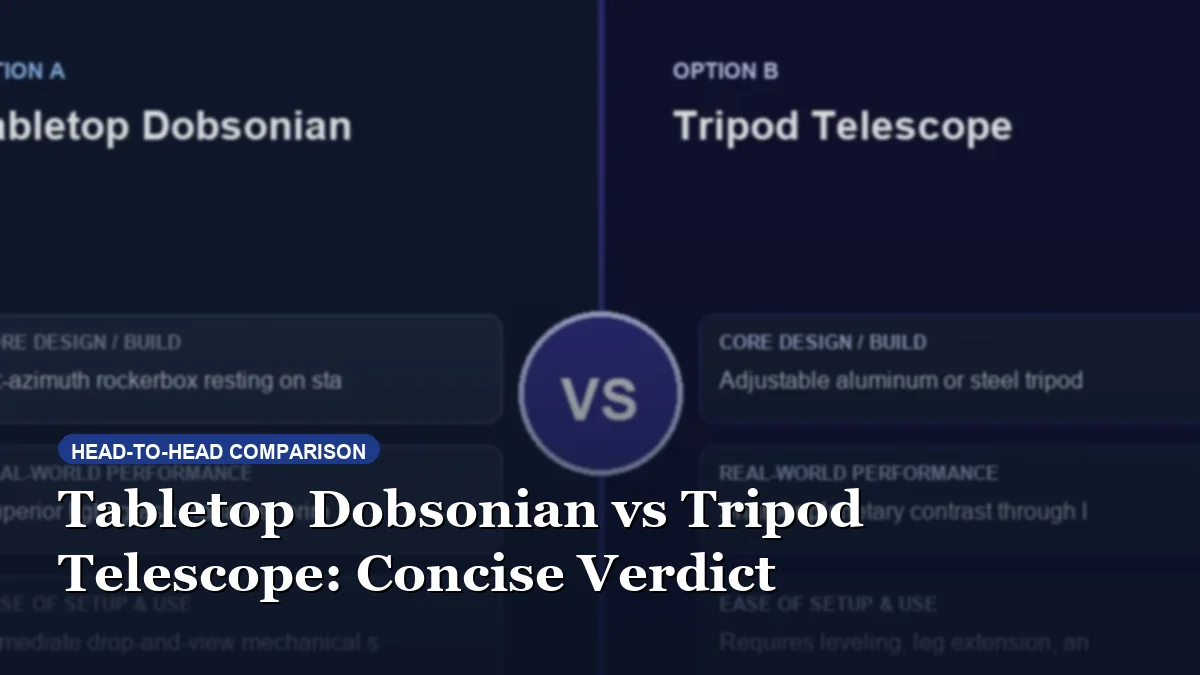
Choose the tabletop dobsonian for maximum light gathering on a budget, or pick the tripod telescope for standing height convenience and tracking flexibility.
Compare all top models in our Best Telescope: Top Backyard Picks for Astronomy.
Side-by-Side Breakdown
| Criteria | Tabletop Dobsonian | Tripod Telescope | Edge |
|---|---|---|---|
| Core Design / Build | Alt-azimuth rockerbox resting on stable surfaces | Adjustable aluminum or steel tripod legs | Tabletop Dobsonian |
| Real-World Performance | Superior light grasp via larger primary mirrors | Sharper planetary contrast through lenses | Tabletop Dobsonian |
| Ease of Setup & Use | Immediate drop-and-view mechanical simplicity | Requires leveling, leg extension, and alignment | Tabletop Dobsonian |
| Durability & Reliability | Sturdy wooden panels with minimal moving parts | Complex locking mechanisms and geared heads | Tabletop Dobsonian |
| Efficiency / Operating Footprint | Requires a secure table, box, or flat rock | Stands independently on any flat patch of earth | Tripod Telescope |
| Maintenance Requirements | Occasional mirror collimation and dust cleaning | Minimal optical alignment for sealed designs | Tripod Telescope |
| Best Ideal Use Case | Backyard deep-sky viewing with maximum aperture | Terrestrial spotting and high-angle planets | Tripod Telescope |
Optical Architecture and Aperture Efficiency
Understanding the fundamental optical design helps buyers select the ideal instrument. Newtonian reflectors on tabletop bases provide massive aperture advantages over similarly priced refractors mounted on wobbly aluminum tripods.
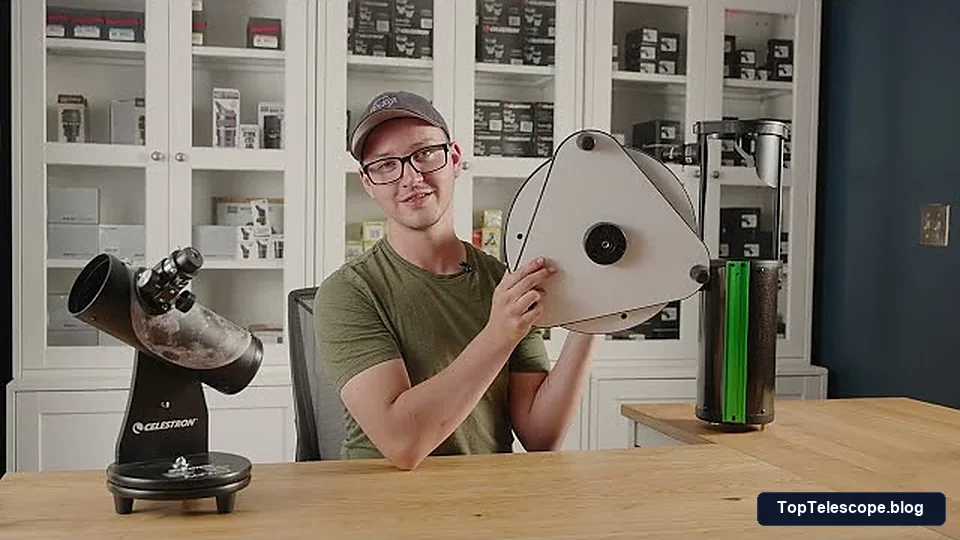
Light gathering capacity dictates what celestial objects remain visible under light-polluted suburban skies. Larger primary mirrors resolve faint nebulae and distant galaxies far better than smaller lenses found on standard starter setups.
Newtonian reflectors utilized in tabletop Dobsonians deliver unobstructed primary apertures for maximum light throughput per dollar. Tripod mounted catadioptrics integrate corrector plates, adding glass thickness that impacts transmission rates across visual spectrums.
Central obstructions in fast reflectors scatter a minor fraction of incoming wavefronts, slightly reducing high-frequency contrast. Conversely, compact tripod refractors completely avoid secondary mirror diffraction spikes, rendering planetary limb details with superior edge definition.
- Primary mirror diameter scales light gathering power directly.
- Central obstructions in reflectors affect overall image contrast.
- Glass purity influences chromatic aberration controls in lenses.
Light Gathering Power in Compact Formats
Aperture rules astronomical performance when viewing deep sky objects. Tabletop Dobsonians typically offer larger diameters, letting faint starlight concentrate intensely at the focal point for clear ocular inspection.
Refractors on tripods sacrifice aperture for portability, delivering crisp planetary views but struggling with faint deep sky structures due to physical lens size limitations.
- Reflectors maximize inch-per-dollar aperture metrics.
- Refractors eliminate diffraction spikes around bright stars.
Traveling to Dark Skies and Remote Horizons
Taking your instrument to dark international locations transforms backyard astronomy into an unforgettable expedition. Enjoy a quiet getaway in Menorca while setting up a compact tabletop reflector on a stone patio.
Escape to the British seaside in Cornwall for pristine coastal horizons. Packing the best dobsonian telescope easily into car boots ensures you stay prepared for unpredictable maritime weather conditions.
- Coastal winds require heavy counterweights for tripods.
- Tabletop units demand sturdy outdoor furniture for stability.
Mechanical Stability and Mount Mechanics
Mount stability dictates how easily you can track celestial targets at high magnification. Wooden rockerboxes offer incredible rigidity, damping vibrations much faster than thin aluminum tripod legs.
When adjusting focus knobs, stability prevents annoying image jitter. Solid engineering ensures your target stays centered while you swap eyepieces during long observing sessions.
Altitude-azimuth rocker boxes rely on low-friction bearing materials like Teflon and laminate boards to ensure silky tracking. Tripod systems incorporate mechanical geared slow-motion cables, requiring rigid aluminum legs to minimize torsional vibration during high-magnification viewing.
Tabletop bases eliminate long moment arms, drastically reducing susceptibility to wind gusts compared to tall tripod setups. However, unstable ground surfaces like dirt can easily induce unwanted mount resonance unless placed upon heavy-duty horizontal platforms.
- Rockerbox bases eliminate tripod leg vibrations entirely.
- Geared alt-azimuth tripod heads offer micro-adjustment controls.
Rockerbox Simplicity Versus Tripod Complexity
Tabletop Dobsonians utilize smooth Teflon pads and laminate surfaces for natural, intuitive movement. You simply push the optical tube up, down, left, or right without unlocking clutches.
Tripod systems incorporate mechanical altitude locks and pan handles. This adds mechanical complexity but allows for precise slow-motion tracking cables across the night sky.
- Teflon bearings offer buttery smooth manual tracking.
- Slow-motion cables prevent jerky movements at high power.
Wellness Retreats and Stargazing Integration
Combining outdoor relaxation with astronomy enhances modern vacation itineraries. Lean into all things wellness in Hawaii by setting up a portable optical tube on a balcony overlooking the Pacific.
Mindful stargazing requires gear that sets up without frustrating mechanical hurdles. Simple manual mounts let you relax and focus entirely on the cosmic wonders overhead.
- Balcony railings often accommodate tabletop clamps.
- Tranquil environments demand quiet, friction-based mounts.
Portability and Packing for Remote Expeditions
Gear weight and physical dimensions dictate how often you will actually use your telescope. Heavy setups often gather dust in closets, while grab-and-go units see frequent nighttime action.
Evaluating your transport mode ensures your instrument matches your lifestyle, whether traveling via compact car, airplane overhead bin, or hiking backpack into deep wilderness areas.
Packing a best tabletop dobsonian telescope involves managing a bulky optical tube alongside a rigid base. Tripod setups disassemble easily, fitting inside padded canvas bags for efficient airline carry-on compliance during travel.
Weight distribution matters significantly when hiking to dark-sky locations away from paved vehicular parking areas. A sturdy field tripod splits its mass evenly across multiple sections, preventing severe ergonomic fatigue during extended backcountry treks.
- Compact optical tubes fit easily into standard luggage.
- Tripod legs require separate carrying cases or straps.
Compact Tabletop Footprints in the Field
Tabletop Dobsonians combine the optical tube and base into a remarkably short, squat package. They occupy minimal floor space in small apartments and vehicle trunks alike.
Finding a suitable elevated platform is the only logistical requirement for tabletop models. Picnic tables, Tailgates, and boulders serve as excellent impromptu observing stations.
- Squat designs resist tipping over in moderate breezes.
- Single-piece units reduce assembly steps in darkness.
Sportfishing Trips and Coastal Getaways
Combining maritime adventures with nocturnal astronomy creates diverse travel experiences. Go sportfishing in Los Cabos by day and scan constellations along the Baja coastline by night.
Tripod telescopes excel on uneven coastal terrain where natural tables are entirely absent. Telescoping legs adapt instantly to sloping sandy beaches or rocky shorelines.
- Adjustable tripod legs level out uneven ground easily.
- Salt spray requires thorough cleaning after coastal sessions.
Setup Ergonomics and Field Usability
Ergonomic design influences how comfortable you feel during extended stargazing marathons. Reaching eyepieces at awkward angles causes neck strain and reduces overall viewing enjoyment.
Matching telescope eyepiece height to user stature is vital for children and adults alike sharing a single instrument during family astronomy nights under clear skies.
Operating a tabletop system requires an elevated surface like a picnic table to achieve comfortable eyepiece heights. Tripod mounts allow infinite height adjustments via center columns, accommodating diverse observer statures without needing auxiliary seating configurations.
Manual target acquisition on a best dobsonian telescope for beginners relies on smooth push-to motions that quickly become intuitive. Equatorial tripods introduce polar alignment complexities, demanding patience while mastering counterweight balancing techniques.
- Eyepiece placement determines comfortable neck angles.
- Adjustable tripod heights accommodate multiple different observers.
Finding a Stable Surface for Tabletop Units
Tabletop Dobsonians require an external structure to achieve comfortable viewing heights. Users must ensure their chosen table or box remains completely rigid during observations.
Without a proper stand, tabletop scopes force users to sit uncomfortably on the ground. Planning your observing furniture is a crucial preparatory step for success.
- Camping tables provide lightweight field support platforms.
- Rigid surfaces prevent annoying image shaking during focus.
Group Trips and Cultural Excursions
Sharing views with friends requires adaptable optical equipment that accommodates crowds. Take a group trip to North Carolina’s Crystal Coast and host impromptu sidewalk astronomy sessions.
After long days exploring local culture, relax under the stars. Experience sauna culture in Helsinki before cooling off with crisp views of the aurora borealis through a portable refractor.
- Crowds benefit from adjustable tripod eyepiece heights.
- Portable scopes foster shared community stargazing experiences.
Maintenance, Collimation, and Long-Term Durability
Optical instruments demand periodic upkeep to maintain peak performance standards. Reflectors require mirror alignment, while sealed refractors on tripods generally remain maintenance-free for years.
Understanding basic mechanical care protects your financial investment and ensures razor-sharp stellar images across countless observing seasons in diverse weather conditions.
Newtonian reflectors demand routine optical alignment using laser collimators to maintain sharp planetary images across wide fields. Refractor optics sealed inside metal tubes rarely require user intervention, ensuring reliable performance over decades of use.
Wooden tabletop bases need occasional sealant touch-ups if exposed to heavy dew or moisture during damp observation nights. Aluminum tripod legs feature anodized finishes that resist corrosion, standing up wonderfully to harsh environmental conditions outdoors.
- Mirror collimation keeps reflector optics sharp.
- Sealed lenses protect internal optical coatings from dust.
Mirror Alignment Demands for Reflectors
Tabletop Dobsonians use Newtonian optics that occasionally require manual collimation. Transporting the scope in a vehicle shifts primary and secondary mirrors slightly out of alignment.
Using a simple laser collimator corrects mirror tilt in minutes. This routine procedure guarantees maximum sharpness when splitting close double stars or viewing planets.
- Laser tools simplify field collimation procedures.
- Primary mirror clips hold optics securely during transit.
Tripod Joint Maintenance and Hardware Care
Tripod telescopes feature complex mechanical joints, knobs, and locking screws. Periodic tightening of accessory trays and leg bolts prevents wobbles from developing over time.
Aluminum and steel components resist rust but require drying after exposure to heavy dew. Proper storage prevents mechanical binding in adjustable elevation shafts.
- Lubricating gear teeth maintains smooth altitude motion.
- Checking leg fasteners prevents unexpected structural slippage.
Cost Efficiency and Value Proportions
Maximizing optical performance while respecting your budget requires careful specification analysis. Reflector designs deliver unmatched light grasp per unit cost compared to complex lens systems.
Investing your funds into primary mirror diameter rather than fancy tripod mechanics yields brighter, more detailed views of faint deep-sky celestial targets.
Manufacturing expenses for Dobsonians focus entirely on primary glass fabrication rather than complex mechanical gears. This design philosophy maximizes aperture per dollar, giving budget-conscious astronomers unmatched deep-sky performance without excessive financial outlays.
Tripod mounted telescopes distribute manufacturing costs between precision mount heads, slow-motion controls, and sturdy legs. Users essentially pay a premium for mechanical versatility, trading away raw light gathering potential for mechanical tracking convenience.
- Aperture per dollar favors tabletop reflector designs.
- Tripod manufacturing costs increase with heavy-duty mounts.
Maximizing Aperture on a Strict Budget
Tabletop Dobsonians redirect manufacturing funds away from tripods and directly into larger mirrors. This engineering choice provides incredible deep-sky views for budget-conscious amateur astronomers.
Beginners experience dimmer views with similarly priced tripod refractors. The smaller lenses simply cannot capture enough photons to reveal faint galactic spiral arms.
- Larger mirrors reveal elusive deep-sky nebulosity.
- Simple wooden bases keep overall retail costs low.
Waterway Transit and River Cruise Astronomy
Traveling across aquatic environments introduces unique storage and stability challenges. Packing an 8 inch dobsonian telescope or compact reflector safely allows magnificent views during your river cruise.
Stowage space inside cruise cabins is notoriously limited. Small optical footprints allow stargazers to bring equipment without cluttering narrow corridors or shared living areas.
- Compact footprints fit inside small cabin lockers.
- Ship vibrations demand stable tabletop dampening pads.
Ultimate Field Verdict and Ideal User Profiles
Selecting the right telescope ultimately depends on your personal observing habits and physical surroundings. Urban balconies and dark-sky campsites require vastly different equipment configurations.
By weighing aperture advantages against setup ergonomics, you can invest in an optical tool that delivers lifelong astronomical enjoyment without frustration.
Tabletop Dobsonians suit backyard observers seeking maximum aperture for faint nebulae and distant galaxies. Their intuitive handling and unbeatable value make them exceptional entry-level tools for casual stargazing enthusiasts exploring the cosmos.
Tripod systems cater directly to mobile travelers, urban balcony viewers, and planetary specialists prioritizing stable tracking. Choosing between these designs depends entirely on balancing your observing environment against desired optical performance targets.
- Match your environment to the correct mount type.
- Prioritize aperture for deep-sky targets and galaxies.
Selecting Your Perfect Configuration
Choose a tabletop dobsonian if you prioritize maximum light gathering and simple mechanics. They reward users willing to secure a sturdy table for deep-sky viewing.
Select a tripod telescope if you need independent standing height and terrestrial viewing versatility. They provide comfortable ergonomics for mixed family observing sessions.
- Dobsonians suit dedicated deep-sky stargazers best.
- Tripods accommodate casual planetary and landscape viewers.
Final Recommendations for Everyday Astronomers
Evaluate your local light pollution levels before purchasing. Dark rural skies make large tabletop reflectors shine, while bright suburban settings benefit from versatile tripod setups.
Ultimately, the best telescope is the one you use most frequently. Pick the design that seamlessly fits your lifestyle and travel ambitions.
- Frequent usage outweighs theoretical optical perfection.
- Consider storage space before buying large apertures.
Frequently Asked Questions
Can a tabletop dobsonian be mounted on a regular camera tripod?
Most tabletops lack standard tripod screw threads without an adapter plate. Using a vixen-style dovetail bar securely bridges this compatibility gap.
Which telescope type is better for observing planets?
Tripod-mounted refractors often provide sharper high-contrast planetary details. However, larger tabletop reflectors excel at resolving faint cloud bands through massive light grasp.
Do tabletop dobsonians require frequent optical maintenance?
They occasionally need primary mirror collimation after transport. Using a simple laser tool ensures sharp stellar focus every single night.
Are tripod telescopes easier to use for children?
Tripods offer adjustable leg heights that accommodate shorter observers easily. Adding a sturdy step stool helps children reach eyepiece heights comfortably.
Which design offers better value for deep-sky viewing?
Tabletop Dobsonians deliver much larger primary mirrors for less money. This design prioritizes aperture per dollar over complex mechanical tripods.