Skywatcher 72Ed vs 80Ed: Technical Head-to-Head
Evaluating two popular doublet refractors for astrophotography and field astronomy. Choosing between them depends on your focal length and payload limits.

Pick the 72ED for ultra-portable wide-field imaging and airline travel. Choose the 80ED when you need extra light grasp and resolving power for lunar details.
Compare all top models in our Best Telescope: Top Backyard Picks for Astronomy.
Side-by-Side Breakdown
| Criteria | Skywatcher 72Ed | 80Ed | Edge |
|---|---|---|---|
| Core Design / Build | Ultra-compact doublet design | Traditional intermediate refractor | 72Ed |
| Real-World Performance | Wide flat fields of view | Higher resolution on planets | 80Ed |
| Ease of Setup & Use | Extremely lightweight footprint | Standard tracker compatible | 72Ed |
| Durability & Reliability | Robust CNC aluminum housing | Solid metal tube assembly | Tie |
| Efficiency / Operating Footprint | Fast focal ratio imaging | Slightly longer focal reach | 72Ed |
| Maintenance Requirements | Minimal doublet collimation checks | Stable lens cell design | Tie |
| Best Ideal Use Case | Mobile wide-field astrophotography | General visual and imaging | Split |
Core Design and Engineering Differences
Examining the fundamental design reveals distinct engineering goals. The 72ED prioritizes ultra-compact travel dimensions, while the 80ED offers a traditional aperture size designed for general visual observing and entry-level imaging tasks.
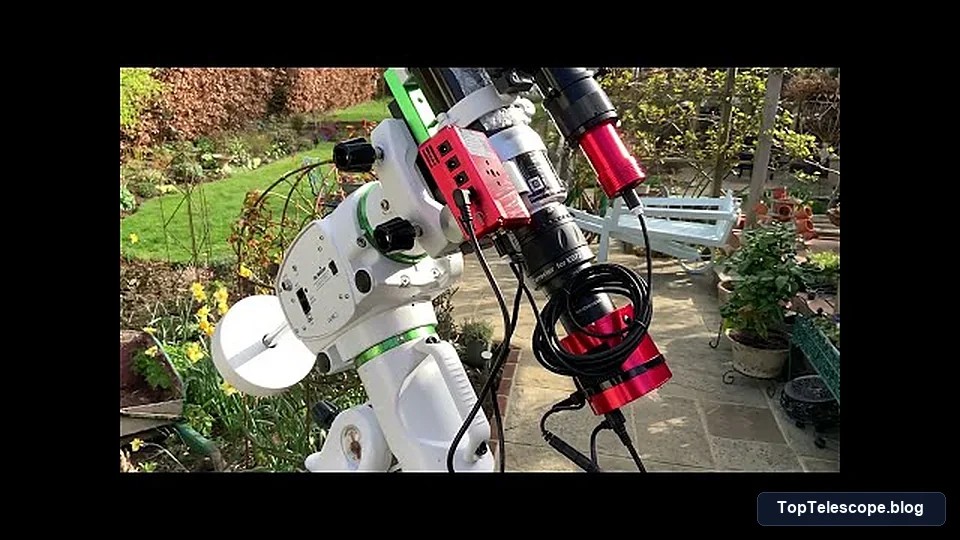
Both instruments utilize air-spaced doublet lens configurations housed in CNC-machined aluminum tubes. Internal baffling differs significantly to manage stray light reflections across varying focal ratios and internal dew shield extension mechanisms.
The Sky-Watcher 72ED utilizes a compact doublet optical tube assembly featuring an air-spaced configuration. This physical architecture significantly reduces overall optical length, making it ideal for minimalist travel mount platforms and cramped backyard observation spaces.
Conversely, as noted in the evostar 80ed ds pro review, the 80ED incorporates a longer focal tube requiring a sturdier mounting interface to mitigate torsional flexure when hanging heavy cameras.
- The smaller 72ed relies on a shorter optical tube assembly measuring roughly 420mm in length with the dew shield retracted completely.
- Tube rings and mounting plates vary slightly in weight distribution, requiring careful balancing adjustments on smaller tracking mounts during your initial field setup.
- Premium anodized finishes protect external aluminum surfaces against minor scratches and dew exposure during extended overnight imaging sessions in humid environments.
Internal Baffling and Tube Construction
Proper internal baffling prevents off-axis light from degrading image contrast during high-contrast planetary or lunar observations. Manufacturers optimize knife-edge baffles specifically for each tube diameter to maximize clear aperture usage.
The structural rigidity of the optical tube prevents flexure when hanging heavy dedicated astronomy cameras off the rear focuser drawtube during long exposures.
- Precision internal ring baffles eliminate internal reflections efficiently.
- Blackened tube interiors suppress stray light transmission remarkably well.
Optical Performance and Glass Quality
Glass selection dictates color correction and sharpness. While contrasting optical designs are evaluated in the skywatcher heritage 150p review, these refractors incorporate extra-low dispersion elements to minimize chromatic aberration.
The focal ratio differences directly impact exposure times when capturing faint nebulae and distant galaxies using modern scientific complementary metal-oxide-semiconductor camera sensors.
Both instruments employ Extra-low Dispersion glass elements to combat chromatic aberration. However, the shorter focal ratio of the smaller aperture inherently introduces tighter color correction constraints during high-magnification planetary observation sessions under steady seeing conditions.
Edge-of-field illumination profiles differ noticeably when pairing these refractors with large-format sensors. Utilizing a matched field flattener becomes mandatory on the faster 72ED system to maintain round pinprick stars across APS-C diagonal measurements.
- ED glass formulation reduces secondary spectrum dispersion effectively.
- Multi-layer anti-reflective coatings maximize overall light transmission throughput.
- Edge-of-field sharpness remains high on APS-C sensor formats.
Color Correction and Chromatic Aberration
Controlling false color is critical for high-magnification lunar and bright star observations. The matched doublet objective lenses keep thermal expansion uniform across wide temperature swings.
Advanced optical coatings ensure high transmission percentages across the visible light spectrum for maximum contrast.
- Secondary spectrum is well controlled for standard doublet designs.
- Bright stellar targets show minimal purple fringing in focus.
Mechanical Build and Focuser Tolerances
Mechanical stability directly influences your ability to maintain critical focus throughout long imaging runs. Rack-and-pinion focusers feature adjustable tension screws to support heavy electronic auto-framing focus motors reliably.
Smooth focuser operation prevents image shifting when locking down focus positions after making fine adjustments under dark night sky conditions.
Mechanical rigidity depends heavily on the integrated dual-speed focuser. The 80ED typically features a slightly more robust drawtube housing, which gracefully resists image shift and load slippage under the weight of heavier filter wheel accessories.
Machined aluminum construction ensures thermal stability across changing nighttime temperatures. Users must periodically check the tension adjustment screws on both focusers to maintain precise friction control during long exposure astrophotography imaging runs.
- Dual-speed micro-focusers allow precise adjustments down to fractions of millimeters.
- Rotatable camera collars simplify framing targets without loosening gear trains.
- Anodized drawtubes resist wear during heavy field utilization cycles.
Focuser Stability and Payload Support
Supporting heavy accessories requires robust mechanical tolerances within the focuser drawtube assembly. Heavy filter wheels and camera combinations demand secure locking mechanisms to prevent slippage.
Precision gear reduction knobs provide the tactile feedback necessary for achieving pinpoint focus on faint deep-sky objects.
- Geared drawtubes eliminate slip under vertical telescope orientations.
- Compression rings protect inserted diagonals from marring.
Real-World Imaging and Field Performance
Field performance separates laboratory specifications from actual nighttime usability under variable atmospheric seeing conditions. Astrophotographers demand flat fields and tight stellar profiles across the entire imaging circle.
Visual observers look for bright, high-contrast views of star clusters, nebulae, and planetary surfaces without thermal distortion or mechanical vignetting issues.
Field performance tests mirror findings in our skywatcher evostar 80ed review, showing that smaller optics deliver sweeping celestial vistas while the 80ED pulls in fainter integrated flux via its increased light grasp.
Guiding accuracy changes slightly due to physical scale differences. Shorter focal lengths forgive minor tracking errors from entry-level trackers, while the longer instrument demands rigorous autoguiding calibration to eliminate elongated star profiles on deep sky targets.
- Wide fields capture expansive nebulae complexes with stunning visual clarity.
- Tracking mounts require less counterweight balancing with smaller optical tubes.
- Rapid thermal acclimation minimizes waiting times before imaging begins.
Astrophotography vs Visual Observing
Balancing photographic requirements with visual ergonomics shapes the overall user experience during late-night observing sessions. Field flatteners pair easily with both scopes to deliver pinpoint stars.
Short focal lengths provide forgiving platforms for beginners learning polar alignment and guiding software calibration routines.
- Fast focal ratios shorten required sub-exposure integration times.
- Wide apparent fields simplify manual object location procedures.
Portability and Payload Requirements
Travel convenience dictates how often your equipment actually makes it outside under dark skies. The compact physical footprint of these refractors makes them ideal grab-and-go astronomy tools.
Mount requirements scale directly with optical tube weight, allowing users to build lightweight travel kits that fit inside standard airline carry-on luggage compartments.
Travel constraints dictate system weight limits for remote expeditions. The ultra-compact 72ED easily rides atop lightweight photographic tripods, reducing your total payload capacity requirements when hiking deep into dark sky observation locations.
Scaling up to the 80ED requires stepping up to intermediate equatorial mounts. As detailed in our skywatcher 80ed review, precise counterweight balancing prevents gear wear during prolonged tracking operations.
- Lightweight rings reduce total payload weight on small tracking mounts.
- Compact transport cases protect delicate optics during rugged vehicle transit.
- Quick assembly features save valuable time during freezing night sessions.
Travel Readiness and Storage Footprint
Packing gear securely for remote expeditions requires rugged protective housing and thoughtful dimensional planning. Retractable dew shields significantly shrink the overall storage length.
Airline overhead compatibility ensures your primary optics travel safely inside the cabin rather than checked baggage.
- Padded transport bags fit easily into compact vehicle trunks.
- Minimalist mounting hardware reduces assembly clutter in the field.
Maintenance and Collimation Stability
Maintaining optical alignment through bumpy car rides is essential for consistent astronomical imaging results. Doublet lens cells generally hold collimation much better than complex triplet designs.
Routine maintenance involves simple dust removal and occasional dew shield cleaning using approved optical microfiber cloths and specialized cleaning solutions.
Lens cell security relies on robust retaining rings that withstand transport vibrations. The factory alignment of both doublet designs generally holds firm, minimizing the need for complex optical collimation adjustments by the end user.
Dust accumulation on exposed multicoated surfaces requires careful cleaning protocols using pure optical grade solutions. Protective metal dust caps should always be secured immediately after every observing session to preserve coating integrity.
- Fixed lens cells prevent accidental misalignment during transit vibrations.
- Durable exterior coatings withstand minor environmental moisture exposure easily.
- Simple mechanical designs allow straightforward user-serviceable adjustments.
Long-Term Durability and Care
Protecting optical coatings from dust and moisture preserves instrument resale value and optical performance over decades of active use. Proper storage caps safeguard lenses between sessions.
Aluminum tube construction resists corrosion even when subjected to heavy morning dew accumulation during coastal observing trips.
- Silica gel packets inside storage cases prevent internal mold growth.
- Scratch-resistant paint finishes maintain pristine cosmetic appearance.
Which Option Fits Your Setup
Choosing the ideal telescope involves balancing aperture, focal length, physical weight, and your primary observational goals. Dedicated astrophotographers often favor maximum portability.
Visual astronomers typically lean toward slightly larger aperture instruments to resolve finer details on planetary disks and faint deep-sky structures.
Selecting the right OTA depends on your primary observational goals and travel habits. Backpack astrophotographers will deeply appreciate the remarkable featherweight footprint of the smaller aperture during transit and field setup routines.
Stationary backyard astronomers seeking deeper reach into faint deep-sky catalogues should lean toward the larger model. Its superior resolving power provides a more rewarding visual experience for lunar and planetary details.
- Select the 72ed if your priority is ultimate airline travel convenience.
- Choose the 80ed when seeking a versatile hybrid visual and imaging platform.
- Evaluate your existing mount payload capacity before making final purchase decisions.
Making Your Final Purchase Decision
Careful evaluation of your local light pollution levels and transport habits will clarify which instrument best matches your lifestyle. Matching the scope to your mount is crucial.
Investing in quality mounting accessories ensures stable tracking performance for long-exposure astrophotography projects under dark rural skies.
- Prioritize mount stability over optical tube size for imaging success.
- Consider future camera upgrade paths when selecting focal lengths.
Frequently Asked Questions
Can I use these telescopes for serious astrophotography?
Both instruments serve as excellent entry-level platforms for deep-sky imaging when paired with a matching field flattener and a sturdy tracking mount. Choosing between them depends strictly on your desired focal length and travel constraints.
Do these refractors require frequent optical collimation adjustments?
Doublet lens cells are notoriously stable and rarely require manual collimation adjustments compared to fast Newtonian reflectors. This robust mechanical design ensures reliable performance after bumpy car transit to dark sky sites.
What size tracking mount do I need for these scopes?
Lightweight star trackers easily handle the smaller model, while the larger variant benefits from a sturdy intermediate equatorial mount. Ensuring adequate payload headroom prevents tracking errors during long exposures.
Are these telescopes suitable for beginner visual observers?
Both models provide sharp, high-contrast views of the moon, bright planets, and major star clusters with minimal setup complexity. Their intuitive operation makes learning basic celestial navigation straightforward and enjoyable.
Will I need extra adapters to attach my DSLR camera?
You will need a standard T-ring specific to your camera brand along with a compatible camera adapter tube to reach proper focus. These common accessories attach securely to the rear focuser drawtube.