Reflector vs Refractor Telescopes: Expert Comparison
Understanding optical differences helps astronomers select ideal gear. Mirrors and lenses offer distinct viewing experiences.

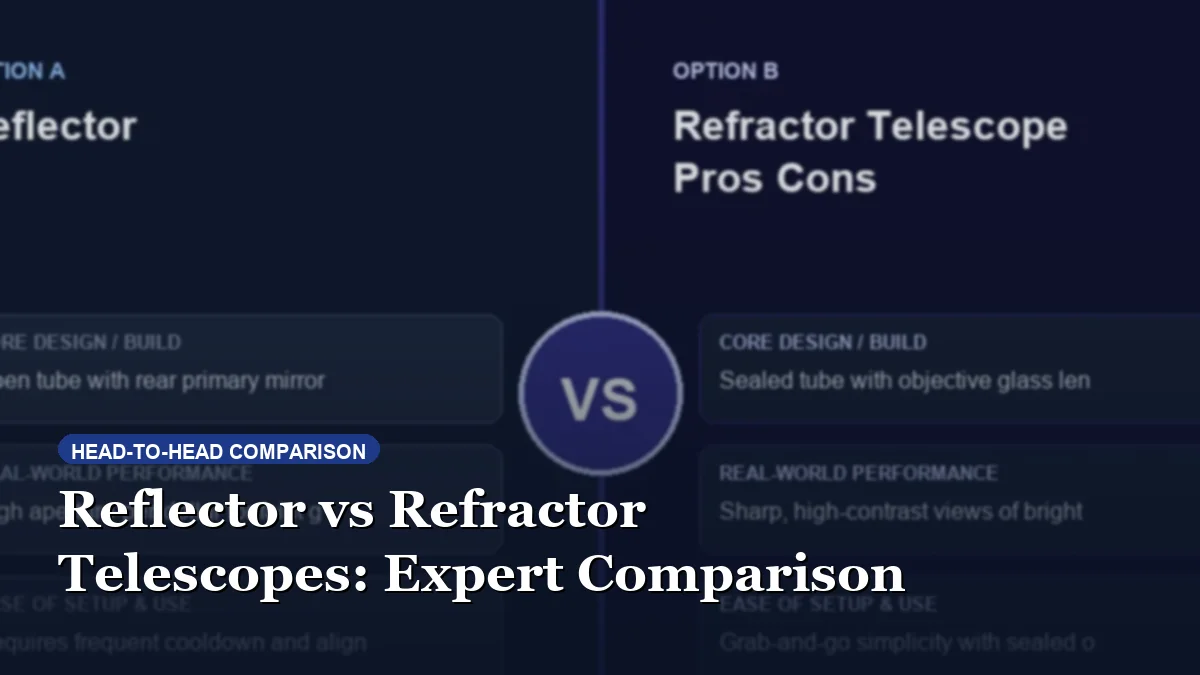
Choose reflectors for deep-sky light collection on tight budgets. Pick refractors for high-contrast planetary viewing with zero alignment hassle.
Compare all top models in our Best Telescope: Top Backyard Picks for Astronomy.
Side-by-Side Breakdown
| Criteria | Reflector | Refractor Telescope Pros Cons | Edge |
|---|---|---|---|
| Core Design / Build | Open tube with rear primary mirror | Sealed tube with objective glass lenses | Refractor |
| Real-World Performance | High aperture-per-dollar for faint galaxies | Sharp, high-contrast views of bright planets | Refractor |
| Ease of Setup & Use | Requires frequent cooldown and alignment checks | Grab-and-go simplicity with sealed optics | Refractor |
| Durability & Reliability | Exposed optical surfaces need careful handling | Rugged sealed design resists misalignment | Refractor |
| Efficiency / Operating Footprint | Bulky Newtonian tubes demand sturdy mounts | Compact physical length for equivalent power | Reflector |
| Maintenance Requirements | Regular mirror cleaning and collimation needed | Virtually maintenance-free factory-aligned cells | Refractor |
| Best Ideal Use Case | Deep-sky astrophotography and nebula hunting | Lunar, solar, and planetary observation | Refractor |
Optical Architecture and Design Principles
Newtonian reflectors utilize a curved primary mirror at the base of an open tube to gather incoming light rays. Secondary flat mirrors then bounce this concentrated light outward toward the side-mounted focuser.
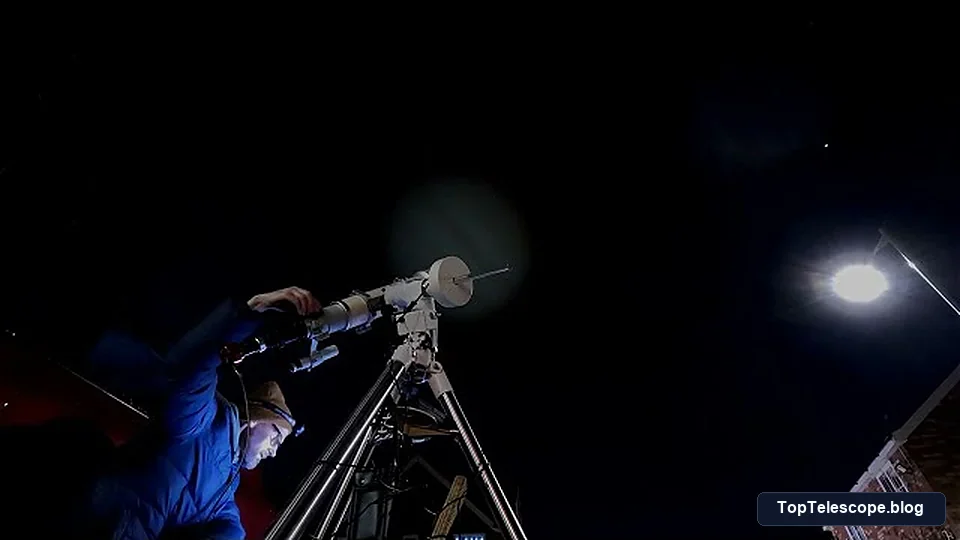
Refractor telescopes rely instead on precision glass objective lenses positioned at the front of a sealed tube. Exploring our best refractor telescope for beginners selection helps newcomers understand these clear optics.
Refractor telescopes utilize objective lenses to bend incoming starlight directly to a rear focal point. This dioptric design eliminates central obstructions, yielding pristine high-contrast planetary imaging without diffraction spikes.
Newtonian reflectors deploy a curved primary mirror reflecting light back toward an angled secondary flat mirror. This catoptric configuration removes chromatic aberration entirely, utilizing reflective coatings on Pyrex or quartz substrates.
- Reflectors use reflective aluminum-coated glass surfaces
- Refractors bend light via multi-element glass lenses
- Newtonian designs place the eyepiece near the top
Light Path Mechanics
Managing light paths efficiently determines overall system clarity and brightness during nighttime viewing sessions. Reflectors bypass chromatic distortion completely by utilizing reflection instead of refraction physics.
Refractor systems eliminate central obstruction shadows found in mirror builds, maximizing contrast across every single square millimeter of usable aperture.
- Central obstructions scatter minor amounts of incoming light
- Unobstructed refractor apertures yield pristine planetary edges
Light Path Mechanics
Light gathering efficiency relies heavily on aperture diameter and optical throughput. Premium broadband anti-reflective coatings maximize photon transmission across visible spectrums for exceptionally bright visual fields.
Mechanical tube assemblies must maintain rigid optical alignment under varying ambient temperatures. Heavy-duty aluminum alloy cells prevent shifting lenses during aggressive field transportation and setup routines.
- Objective lens cells incorporate adjustable push-pull screws ensuring precise element centering and eliminating optical pinching during severe thermal drops across midnight observing sessions.
- Ventilated mirror cells utilize integrated cooling fans to accelerate thermal equilibrium between internal optical surfaces and surrounding outdoor ambient night air temperatures rapidly.
Managing Glass, Mirrors, and Aberrations
Thermal expansion can severely impact large glass blocks inside massive reflector mirrors during rapid temperature drops. Careful thermal acclimatization remains vital before attempting high-magnification planetary observation sessions.
Refractor instruments combat chromatic aberration where light wavelengths fail to focus uniformly. Reviewing our best refractor telescope for astrophotography guide highlights models using apochromatic triplet lenses.
Doublet and triplet refractors employ specialized extra-low dispersion glass types to minimize false color fringes. ED glass elements bring multiple wavelengths into a singular sharp focal plane.
Reflectors suffer from coma aberrations requiring parabolic figures or corrective lenses near the focuser. High reflectivity aluminum mirror coatings protected by silicon dioxide overcoats ensure long-term durability.
- Primary mirrors require reflective coatings to maintain reflectivity
- Doublet and triplet lenses correct false color fringing
Dealing with Optical Distortion
Coma distortion affects fast Newtonian reflectors near the outer edges of wide-field eyepiece views. Adding specialized corrector lenses restores pinpoint star images across the entire visual field.
Spherical aberration also plagues inexpensive spherical mirrors unless manufacturers parabolize the glass surface. Premium refractors avoid this by grinding complex curves onto multiple glass elements.
- Parabolic mirrors eliminate standard spherical blur artifacts
- Field flatteners correct edge distortion in fast systems
Thermal Management and Glass Purity
Thermal management remains critical when dealing with thick glass substrates absorbing daytime heat. Active cooling prevents internal air currents from degrading high-magnification planetary visual observations.
Glass purity standards dictate overall manufacturing costs and final image fidelity across wide fields. Premium synthetic fused silica blanks offer exceptional thermal stability for professional astrophotography setups.
- Fluorite crystal doublets deliver unmatched color correction but demand careful handling against rapid thermal shock and harsh mechanical impact during transit.
- Dielectric mirror coatings achieve ninety-nine percent reflectivity ratings while resisting environmental degradation much better than standard unprotected aluminum thin-film evaporation layers.
Setup Efficiency and Transport Footprint
Large Newtonian optical tubes demand heavy-duty equatorial or Dobson mounts to prevent frustrating image vibrations. Their physical bulk requires significant vehicle storage space for dark-site traveling.
Refractor telescopes offer superior portability profiles within smaller aperture classes for mobile astronomers. A compact short-tube refractor fits easily into standard backpacks alongside essential accessories.
Refractor optical tubes offer rugged portability because fixed lens cells rarely fall out of alignment during transit. Compact doublet systems fit easily inside standard airline carry-on luggage compartments.
Newtonian reflectors require longer tube dimensions matching their focal length, increasing wind susceptibility outdoors. Sturdy equatorial mounts counterbalance heavy optical tubes to maintain steady tracking accuracy.
- Dobsonian bases provide stable alt-azimuth support effortlessly
- Refractor tubes integrate smoothly onto lightweight camera tripods
Field Deployment Practicalities
Rapid field deployment depends heavily on total system weight and balance ergonomics. Refractors excel here by allowing immediate outdoor usage without lengthy internal fan cooling delays.
Reflectors often require balancing heavy finderscopes and counterweights before tracking celestial objects reliably across the night sky.
- Cooling fans accelerate reflector thermal stabilization times
- Counterweight shafts add setup steps for equatorial mounts
Field Portability and Storage
Field assembly speed heavily influences overall observing satisfaction during freezing winter night sessions. Quick-release dovetail mounting bars allow rapid tool-free attachment to heavy-duty tripod heads.
Storage footprint considerations dictate whether equipment remains permanently assembled inside dedicated home observatories. Heavy counterweight shafts demand careful lifting ergonomics to protect user lower backs.
- Padded carrying cases featuring high-density foam inserts protect delicate glass objectives from severe vibrational shock during transport over bumpy rural unpaved roads.
- Retractable dew shields reduce total physical tube length significantly for compact storage without compromising moisture protection during damp evening outdoor viewing conditions.
Routine Maintenance and Alignment Needs
Collimation represents an ongoing routine task for Newtonian reflector owners using simple laser tools. Bumping the tube during transit knocks alignment out of true, making mastering reflector collimation essential for sharp views.
Refractor optics arrive permanently aligned from the factory inside sealed metal cells. Owners rarely need to touch internal lens elements, saving considerable time during pre-observation checks.
Refractor systems boast virtually maintenance-free optical tubes requiring occasional exterior lens dusting only. Factory-aligned lens cells eliminate user collimation tasks completely for hassle-free stargazing sessions.
Reflectors demand frequent mirror alignment using specialized collimation caps or laser tools before every session. Primary mirror adjustments ensure sharp focus across wide photographic fields of view.
- Laser collimators simplify mirror alignment procedures greatly
- Sealed refractor tubes keep dust away from internal glass
Long-Term Upkeep Realities
Aluminum mirror coatings eventually degrade after several years, demanding professional recoating services to restore peak reflectivity. Regular cleaning also carries risks of scratching delicate soft optical surfaces.
Glass lenses inside quality refractors resist environmental degradation far longer under standard backyard storage conditions. Simple exterior lens dusting is usually the only required maintenance action.
- Mirror recoating restores aged optical light transmission
- Lens pens safely remove stray fingerprints from glass
Collimation and Optical Upkeep
Dust accumulation on large primary mirrors degrades overall contrast over years of regular backyard use. Professional optical cleaning procedures require gentle washing solutions to prevent scratching delicate coatings.
Focuser drawtubes need periodic tension adjustments to support heavy camera rigs without slipping downward. High-precision rack and pinion gears maintain smooth focusing torque under extreme cold.
- Cheshire eyepieces provide reliable optical alignment verification by aligning internal reflection markers precisely with crosshair references inside the focuser drawtube assembly.
- Lens cleaning kits featuring pure optical grade isopropyl alcohol and microfiber cloths prevent chemical residue buildup on expensive multicoated glass objective surfaces.
Observing Target Specialization and Contrast
Faint deep-sky nebulae and distant galaxies demand massive light-gathering apertures found affordably in reflectors. Their larger mirrors capture photons from dim deep-space objects effectively.
Planetary observers benefit tremendously from the unobstructed optical path of high-end refractor telescopes. Crisp contrast reveals subtle cloud belts on Jupiter and delicate Saturn ring divisions.
These instruments excel at high-magnification lunar and planetary viewing due to unobstructed high-contrast light paths. Consult our best refractor telescope guide to find exceptional options featuring sharp airy disks.
Large aperture reflectors dominate deep-sky observation of faint nebulae and distant galaxies. Light-gathering power captures photons from dim celestial objects invisible in smaller instruments.
- Large reflectors reveal faint Messier catalog deep-sky objects
- Refractors excel at splitting tight binary star systems
Magnification and Resolution Limits
Pushing magnification limits requires pristine optical alignment and steady atmospheric seeing conditions. Reflectors provide high theoretical resolution limits per currency unit invested into aperture.
Refractors deliver exceptionally dark backgrounds between stars, enhancing visual contrast for planetary disk details.
- Maximum useful magnification scales directly with aperture size
- Apochromatic refractors maintain high contrast at high power
Target Specialization and Contrast
Contrast transfer function performance remains superior in refractors because no secondary mirror shadow scatters incoming starlight. Enclosed tube designs minimize internal thermal air turbulence effectively.
Wide-field astrophotography benefits greatly from fast focal ratios found in specialized Newtonian astrographs. Coma correctors flatten the image circle for modern large-sensor digital cameras.
- Faint planetary nebula observation requires high surface brightness delivered efficiently by large aperture reflector systems operating under dark rural observatory skies.
- Challenging double star splitting tests demand pinpoint stellar diffraction patterns produced flawlessly by high-quality air-spaced doublet or triplet refractor objective lenses.
Long-Term Durability and Mechanical Reliability
Open reflector tubes expose primary mirror cells and spider vanes to accumulating dust and moisture. Constructing protective covers helps mitigate environmental exposure during storage periods.
Heavy metal refractor construction withstands years of enthusiastic field usage without mechanical failure. Robust focuser assemblies handle heavy digital cameras securely without sagging out of alignment.
Sealed refractor optical tubes protect internal glass surfaces from airborne dust and moisture over decades of heavy usage. Robust metal construction withstands harsh field conditions reliably.
Open reflector tubes require regular mirror recoating every decade as aluminum layers oxidize outdoors. Anodized aluminum bodies resist corrosion and mechanical wear during frequent backyard setup sessions.
- Dust caps protect optical elements between observation sessions
- Crayford focusers provide smooth adjustment without backlash
Mechanical Build Integrity
Rack-and-pinion focusers on budget reflectors can sometimes exhibit mechanical slippage under heavy loads. Upgrading to dual-speed micro-focusers improves precise focusing control during astrophotography sessions.
Machined aluminum lens cells protect fragile glass elements from shock and thermal stress during handling.
- Dual-speed focusers offer fine adjustment capabilities
- Cast aluminum rings secure optical tubes firmly
Mechanical Reliability and Longevity
Mechanical mount interfaces must withstand heavy torque loads without developing unwanted play in altitude axes. Sturdy locking clamps secure expensive optical tubes safely against accidental tipping.
Environmental storage factors like humidity control prevent mold growth on organic cement layers inside multi-element lenses. Desiccant silica packets protect stored equipment inside sealed aluminum cases.
- Heavy-duty cast aluminum mounting rings prevent optical tube flexing during long exposure astrophotography sessions tracking faint deep-sky targets across the night sky.
- Stainless steel hardware fasteners resist rust formation when equipment encounters heavy evening dew accumulations during prolonged outdoor late-night astronomical observing expeditions.
Frequently Asked Questions
Which telescope design is better for viewing faint distant galaxies and dim nebulae?
Reflector telescopes provide significantly more light-gathering aperture for your budget, making them the superior choice for deep-sky observation. Their large primary mirrors capture enough faint photons to reveal distant celestial wonders clearly.
Do refractor telescopes require regular alignment procedures before every single night of stargazing?
No, refractor telescopes feature factory-aligned optics permanently sealed inside a robust metal tube assembly. This maintenance-free design lets you simply step outside and begin observing without fuss.
What causes false color fringing around bright planets in certain refractor telescopes?
Achromatic refractors bend different light wavelengths at slightly varying angles, creating an unwanted purple or blue halo around high-contrast objects. Upgrading to an apochromatic triplet design completely solves this optical issue.
How often must a Newtonian reflector owner perform collimation adjustments on their mirrors?
You should check and adjust your reflector mirror alignment whenever the telescope is transported to a dark-site location. Routine temperature shifts and mechanical bumps easily knock these sensitive optical elements slightly out of true alignment.
Can beginners successfully use a large Dobson-mounted reflector for backyard astronomical viewing?
Yes, Dobsonian mounted reflectors offer an intuitive up-and-down and left-and-right manual tracking experience that beginners master very quickly. They combine massive light-gathering power with exceptionally stable mechanical ground support bases.