Reflector vs Refractor For Planets: Technical Comparison
Choosing between reflectors and refractors for planetary observation requires balancing aperture advantages against absolute optical purity. This guide analyzes mechanical and physical factors to determine the best planetary telescope for your viewing style.

Select the refractor for flawless, high-contrast planetary viewing without thermal delays. Choose the reflector if you need massive light-gathering power and exceptional resolution on dim planetary features on a budget.
Compare all top models in our Best Telescope: Top Backyard Picks for Astronomy.
Side-by-Side Breakdown
| Criteria | Reflector | Refractor For Planets | Edge |
|---|---|---|---|
| Core Design / Build | Open or closed tube using a curved primary mirror. | Sealed tube using precision glass objective lenses. | Refractor |
| Real-World Performance | High resolution restricted by central obstruction diffraction. | Pristine contrast and sharp airy disks for planetary details. | Refractor |
| Ease of Setup & Use | Requires frequent cooldown and optical collimation checks. | Instant thermal stability and maintenance-free optics. | Refractor |
| Durability & Reliability | Mirrors can slip, requiring periodic alignment adjustments. | Lenses are securely mounted in fixed, robust cells. | Refractor |
| Efficiency / Operating Footprint | Offers large aperture per unit cost in bulky formats. | Smaller apertures demand longer focal ratios for sharpness. | Reflector |
| Maintenance Requirements | Regular mirror cleaning and collimation using laser tools. | Minimal exterior lens dusting only when strictly required. | Refractor |
| Best Ideal Use Case | Deep-sky viewing and high-resolution lunar observations. | Dedicated planetary and double star high-contrast imaging. | Refractor |
Core Optical Architecture and Planetary Resolution Limits
Planetary observation demands high surface contrast and razor-sharp resolution. Newtonian reflectors utilize parabolic primary mirrors to gather light, reflecting it toward a secondary flat mirror positioned inside the optical tube.
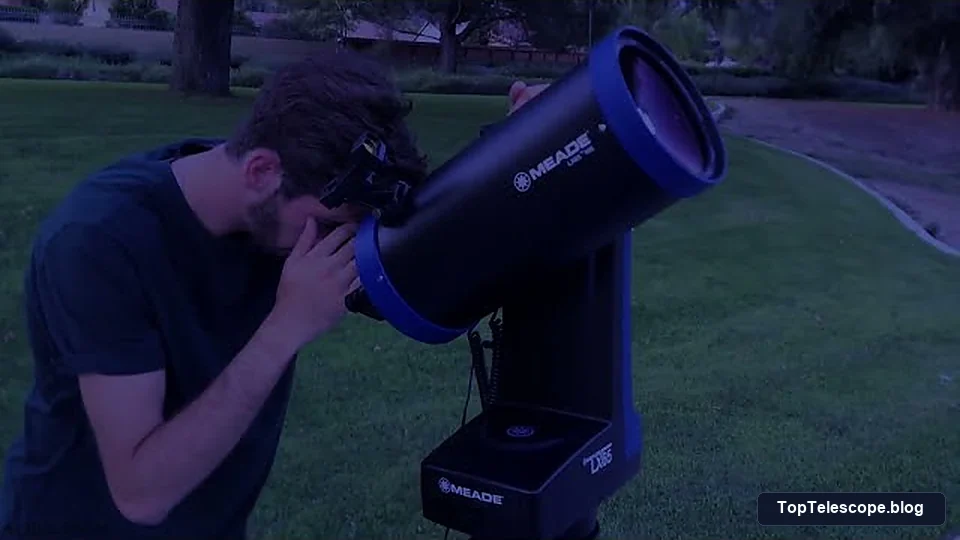
Conversely, apochromatic refractors employ multi-element glass lens objectives that bend incoming light to a common focal point. This fundamental architectural divergence creates distinct performance envelopes when targeting Jupiter, Saturn, and Mars.
Understanding how these light paths interact with atmospheric seeing conditions helps astronomers optimize their equipment. Both designs face unique physical constraints when pushing magnifications past two hundred power for planetary detail.
Planetary observers require maximum angular resolution to resolve fine cloud belts on Jupiter and the polar caps of Mars through steady atmospheric seeing conditions without losing contrast.
The Rayleigh criterion dictates that aperture diameter directly determines the smallest resolvable detail, favoring large reflectors, yet central obstructions scatter light and diminish high-spatial-frequency transfer efficiency notably.
Refractors bypass obstruction losses entirely, yielding an unobstructed wavefront that preserves exquisite peak intensity in the Airy disk, essential for splitting tight planetary double stars and low-contrast surface markings.
- Newtonian reflectors feature a secondary mirror spider vane that induces slight diffraction spikes.
- Refractors use total transmission lenses completely free of internal obstructions.
- Aperture diameter dictates the theoretical maximum resolution limit for both optical configurations.
Light Gathering Versus Contrast Transfer
Aperture rules supreme in resolving fine planetary storms and subtle atmospheric banding. Large reflectors provide massive light collection, allowing observers to push higher magnifications without dimming the planetary disc excessively.
However, the secondary mirror obstruction scatters a small percentage of incoming light. Refractors lack this obstruction, delivering superior contrast transfer that highlights faint albedo features on low-contrast planets.
- Central obstructions scatter roughly four to ten percent of incoming light energy.
- Unobstructed refractor apertures yield maximum modulation transfer function performance.
Primary Mirror Physics Versus Glass Refraction Mechanics
Reflector optics rely exclusively on front-surface reflection coatings deposited on glass substrates. Pyrex or quartz blanks prevent thermal warping, but the mirror must be precisely shaped to a parabolic curve to eliminate spherical aberration.
Refractor objectives rely on transmission through specialized glass types like FPL-53 or ED glass. Choosing from our best refractor telescope guide ensures color fidelity across the entire visible spectrum.
Newtonian reflectors rely on aluminum-coated glass front surfaces to reflect incoming photons, avoiding internal glass absorption entirely but introducing vulnerability to environmental degradation and coating oxidation over time.
Refractors force light through transmissive lens elements, requiring extremely homogenous optical glass formulations like FPL-53 to control dispersion and deliver pristine color fidelity across planetary focal planes.
- Reflector mirrors require high-reflectivity aluminum and protective quartz overcoats.
- Refractor lens cells require complex mechanical spacing to eliminate optical aberrations.
- Glass homogeneity is critical for eliminating internal stress fractures in large lenses.
Surface Accuracy and Wavefront Errors
Optical surfaces dictate the crispness of planetary diffraction patterns. Premium telescopes demand wavefront errors of one-quarter wave or better to ensure focused light forms tight airy disks on calm nights.
Testing optical quality involves evaluating Ronchi gratings and Foucault knife-edge tests. Both designs require rigorous quality control during manufacturing to achieve diffraction-limited planetary performance at high powers.
- Wavefront error measurements quantify overall optical surface smoothness.
- Diffraction-limited optics ensure maximum energy concentration in the central Airy disk.
Chromatic Aberration and High-Magnification Sharpness
Color fringing remains the primary historical enemy of refractor telescope designs. Simple achromats suffer from purple halos around bright planetary limbs, while apochromatic triplets utilize exotic glass elements to bring all three primary wavelengths into sharp focus.
Newtonian reflectors operate via reflection physics, making them inherently free of chromatic aberration. This optical advantage allows reflector users to enjoy pure color rendition on bright planets without investing in expensive corrective glass elements.
Achromatic refractors suffer from residual secondary spectrum aberration, casting distracting purple halos around bright planets like Venus unless paired with very slow focal ratios exceeding f/15.
Apochromatic designs employ extra-low dispersion glass triplets to force three primary wavelengths into a single focus, eradicating false color and maximizing crisp planetary contrast at extreme magnification.
- Apochromatic designs correct secondary spectrum dispersion across the visible spectrum.
- Reflectors exhibit zero chromatic aberration due to the universal nature of reflection.
- Fast achromats require specialized minus-violet filters to suppress false planetary color.
Managing False Color in Fast Optical Systems
Focal ratio plays a massive role in controlling false color performance. Long focal length refractors naturally minimize chromatic dispersion, whereas fast focal ratios demand advanced multi-element lens designs to maintain planetary sharpness.
Planetary filters can mitigate residual chromatic fringing in affordable achromatic refractors. Selecting the appropriate eyepiece combination further enhances contrast when observing brilliant targets like Venus or Jupiter.
- Focal ratios exceeding f/10 naturally suppress residual chromatic dispersion.
- Semi-apochromatic filters absorb specific offending wavelengths to clean up planetary edges.
Thermal Equilibrium and Tube Current Management
Thermal management dictates performance on any given night, as highlighted in our best telescope for viewing planets overview. Enclosed reflector tubes trap warm air currents, requiring cooling fans before high-magnification viewing.
Refractor tubes also trap heat within their objective cells, though smaller glass masses generally reach thermal equilibrium faster. Maintaining ambient temperature matching prevents internal air turbulence from destroying delicate planetary diffraction patterns.
Large Newtonian mirrors retain significant internal thermal mass, creating persistent boundary layer currents that destroy planetary high-magnification definition unless actively cooled using rear-mounted DC electric fans before critical viewing sessions.
Enclosed refractor tubes trap buoyant warm air, requiring careful ambient temperature matching to prevent internal convection plumes from degrading the tight Airy disc during critical planetary imaging runs.
- Active cooling fans accelerate primary mirror thermal stabilization in reflectors.
- Sealed optical tubes require extended cooldown periods in rapidly dropping temperatures.
- Boundary layer air currents across mirror surfaces degrade high-power image stability.
Overcoming Thermal Plumes in Closed Optical Tubes
Heat trapped inside a telescope tube ruins high-magnification planetary resolution instantly. Thermal plumes act like miniature mirages, blurring subtle cloud belts on Jupiter and obscuring craters on the lunar terminator.
Insulated tube designs and rear-cell extraction fans help eliminate internal temperature differentials. Ensuring complete thermal equilibrium allows observers to utilize maximum usable magnification during steady seeing windows.
- Exhaust fans actively flush warm boundary layers from mirror surfaces.
- Thermal equilibration prevents localized air mixing inside the optical tube assembly.
Mechanical Rigidity and Mount Integration Realities
Mechanical stability is crucial when tracking planets at magnifications exceeding three hundred power. Heavy equatorial mounts with robust steel tripods are necessary to eliminate vibration damping times caused by wind gusts or focusing adjustments.
Reflector tubes exert significant torque on mounts due to their physical length and offset eyepiece positions. Refractors offer more balanced ergonomics, though their heavy glass objective cells demand heavy-duty mount heads to prevent sagging.
Heavy equatorial mounts require rigid torsional stability to counteract cantilevered moment arms, ensuring that micro-vibrations from wind gusts do not wash out delicate planetary surface features.
Refractors maintain short moment arms on alt-azimuth or German equatorial platforms, providing exceptional mechanical damping that settles rapidly after manual focus adjustments during high-power planetary viewing sessions.
- Equatorial tracking motors are essential for sustained high-power planetary observation.
- Dovetail bar rigidity prevents flexure between the optical tube and mount head.
- Focuser mechanical tolerance prevents image shift during fine focus adjustments.
Focuser Precision for Critical Planetary Focus
Achieving precise focus on planetary features requires ultra-smooth mechanical focusers. Dual-speed Crayford or rack-and-pinion focusers with ten-to-one reduction knobs allow micro-adjustments without inducing image shake or mirror flop.
Mechanical slop in cheap focusers destroys high-power planetary clarity. Upgrading to precision planetary focusers ensures locked-in optical alignment during critical moments of exceptional atmospheric seeing conditions.
- Dual-speed reduction gears enable critical focus acquisition on planetary disks.
- Rack-and-pinion designs handle heavy planetary imaging camera payloads effortlessly.
Collimation Precision and Long-Term Optical Alignment
Maintaining optical alignment is routine when using selections from our best telescope for observing planets lineup. Transporting a Newtonian jostles mirrors, requiring laser collimation tools before each observing session.
Refractors feature permanently aligned objective lens cells sealed inside rigid housings. This maintenance-free design ensures long-term optical stability, making refractors ideal travel scopes for spontaneous backyard planetary viewing sessions.
Fast Newtonian reflectors demand frequent laser collimation to align primary and secondary mirrors, because mechanical flexing during transport disrupts the precise optical axis required for planetary sharpness.
Doublet and triplet refractor lenses feature factory-sealed cells that permanently maintain critical element spacing and tilt, eliminating routine user alignment tasks across years of intensive field use.
- Collimation cap and Cheshire tools verify axial alignment of mirror systems.
- Factory-collimated refractor lens cells eliminate user maintenance headaches entirely.
- Bumping a reflector tube instantly knocks delicate optical alignments out of true.
Field Collimation Techniques for Peak Performance
Mastering field collimation ensures your reflector delivers uncompromising planetary sharpness. Using a high-power star test on Polaris confirms that your optical axes are perfectly aligned for viewing tiny planetary details.
Quick adjustments to primary mirror leveling screws correct minor alignment drift caused by temperature swings. Regular maintenance guarantees your Newtonian performs at its absolute theoretical resolution limit.
- Star testing validates optical alignment under actual atmospheric seeing conditions.
- Ergonomic primary mirror knobs allow toolless collimation adjustments in the dark.
Setup Efficiency and Field Portability Demands
Field portability dictates how often your planetary setup actually gets used. Exploring options in our best telescope for looking at planets roundup helps you secure true grab-and-go convenience for quick evening sessions.
Large aperture reflectors demand bulky mounts and substantial vehicle storage space. While they deliver superior light grasp, their complex setup routines require dedicated dedication compared to straightforward refractor telescope systems.
Large aperture reflectors impose substantial transport burdens, requiring bulky tube assemblies and heavy counterweight systems that complicate rapid deployment for spontaneous backyard planetary observation nights.
Compact apochromatic refractors offer grab-and-go convenience, deploying in minutes on sturdy photographic tripods to deliver immediate, high-contrast planetary views without any frustrating mechanical setup delays.
- Alt-azimuth mounts offer rapid setup for casual weeknight planetary viewing.
- Large Newtonian OTAs require two-person assembly procedures in the field.
- Case storage protects sensitive optical components during transport to dark sites.
Balancing Aperture Size Against Storage Footprint
Owning a telescope that is easy to deploy guarantees more observing time. Massive reflectors unlock deep-space wonders, but their sheer physical footprint can discourage quick planetary sessions after a long workday.
A modest refractor stows neatly in a closet, ready for instant deployment when clear skies emerge. Weighing raw performance against your living space constraints ensures long-term hobby satisfaction and engagement.
- Quick-deployment setups maximize unexpected planetary viewing opportunities.
- Compact footprints eliminate physical storage friction in urban apartments.
Frequently Asked Questions
Which telescope design provides better contrast for viewing planetary details?
Apochromatic refractors offer superior contrast because they lack central obstructions. This unobstructed optical path yields crisp, high-contrast planetary images without diffraction-induced light scatter.
Do reflectors require constant alignment maintenance before every session?
Newtonian reflectors often require quick collimation checks after transport. Bumping the optical tube shifts mirror alignments, necessitating laser tool adjustments to ensure razor-sharp planetary performance.
Why do fast refractors suffer from purple fringing around bright planets?
Fast achromats fail to focus all light wavelengths at the exact same focal point. This dispersion creates distracting chromatic aberration halos around bright targets like Jupiter and Venus.
Can large aperture reflectors outperform small refractors on planets?
Large aperture reflectors resolve finer structural details during moments of excellent seeing. Their massive light-gathering power outweighs contrast losses when atmospheric conditions remain remarkably steady.
Which optical system is better suited for beginner planetary observers?
Refractors provide a maintenance-free experience ideal for absolute beginners. Their sealed lenses require zero collimation, allowing users to focus entirely on learning planetary navigation and observing techniques.