Reflecting Telescope vs Refracting Telescope Technical Guide
Choose your optical architecture wisely for stellar observations. This technical guide contrasts reflecting versus refracting systems for serious astronomers.

Select a reflector for maximum light-gathering aperture per unit cost. Choose a refractor for sealed-tube zero-maintenance reliability during transport.
Compare all top models in our Best Telescope: Top Backyard Picks for Astronomy.
Side-by-Side Breakdown
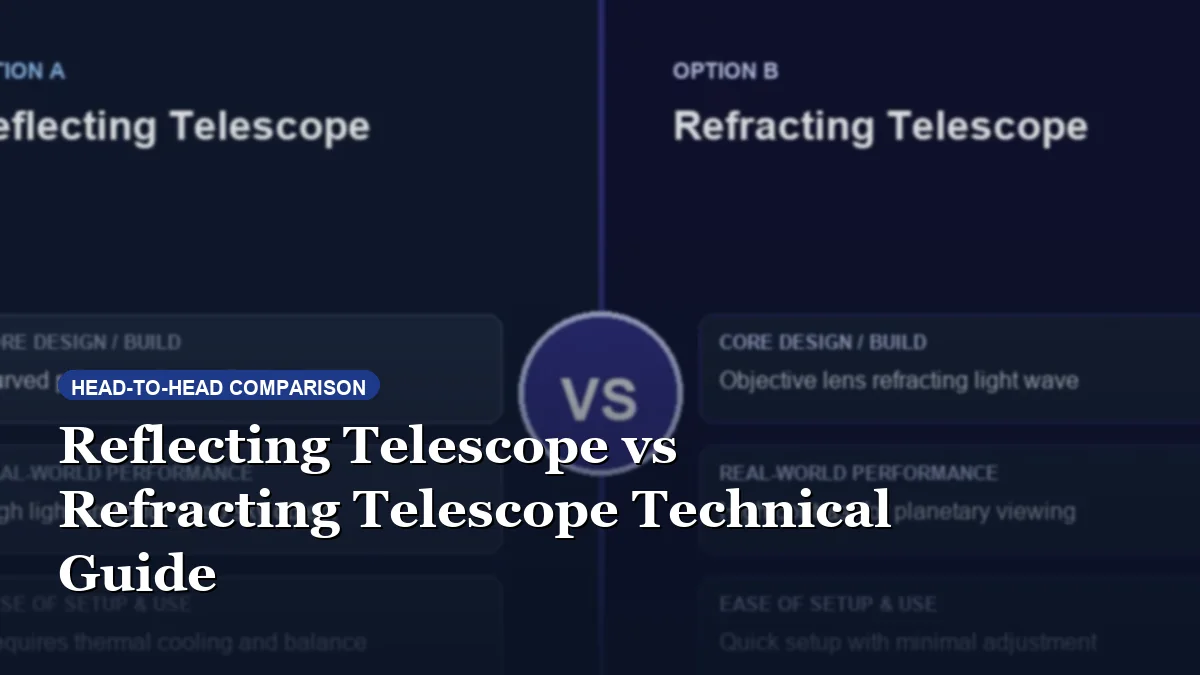
| Criteria | Reflecting Telescope | Refracting Telescope | Edge |
|---|---|---|---|
| Core Design / Build | Curved primary mirror reflecting light | Objective lens refracting light waves | Refractor |
| Real-World Performance | High light grasp for deep sky objects | High contrast for planetary viewing | Tie |
| Ease of Setup & Use | Requires thermal cooling and balance | Quick setup with minimal adjustment | Refracting Telescope |
| Durability & Reliability | Open tubes collect dust and moisture | Sealed optical tube protects elements | Refracting Telescope |
| Efficiency / Operating Footprint | Bulkier tube requiring sturdy mounts | Compact proportions for smaller mounts | Refracting Telescope |
| Maintenance Requirements | Frequent mirror collimation needed | Permanent factory optical alignment | Refracting Telescope |
| Best Ideal Use Case | Deep space nebulae and galaxies | Lunar and planetary observation | Tie |
Core Design and Engineering Differences
Reflecting telescopes rely on precision curved primary mirrors to gather incoming photons. Light travels down an open tube before bouncing back toward a secondary mirror positioned near the front aperture.
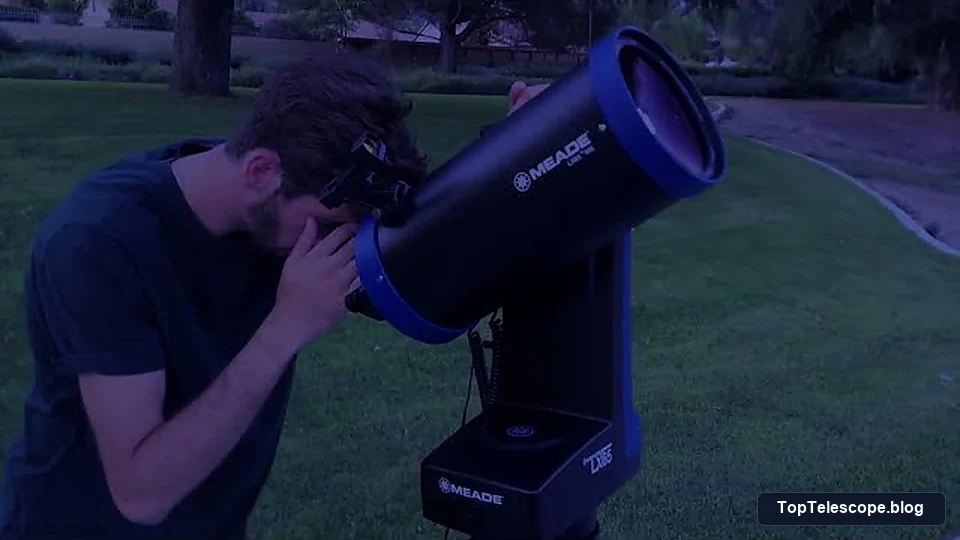
Refracting telescopes utilize glass objective lenses housed at the top of a sealed optical tube. Beginners searching for options can browse our comprehensive best telescope selections to compare different lens sizes and mounts.
Engineering tolerances dictate how each system handles physical stress during transit. Reflectors require mechanical cell adjustments, while refractors demand rigid cell mountings to prevent lens shift over time.
Reflectors utilize a curved primary parabolic mirror at the optical tube assembly rear, bouncing incoming parallel light rays forward to a flat secondary diagonal mirror mounted near the front aperture.
Refractors deploy a complex objective lens configuration at the forward dew shield, bending transmitted light rays through specialized glass indices before converging them accurately at the rear focal plane.
Mechanical chassis construction varies significantly between designs, requiring robust aluminum casting cells for heavy primary mirrors versus rigid internal baffle rings suppressing off-axis scatter inside long refractor tubes.
- Primary mirrors use reflective aluminum coatings on glass substrates.
- Objective lenses require multi-layer anti-reflective chemical coatings.
- Optical tubes isolate internal air currents differently across designs.
Optical Path Architecture
The internal light path defines the physical length of the optical tube assembly. Reflectors fold light efficiently, yielding shorter tubes relative to their overall focal lengths compared to traditional refractors.
Refractor tubes must match the physical focal length of the objective lens. This physical constraint makes large-aperture refractors exceptionally long, heavy, and challenging to mount on standard field tripods.
- Newtonian reflectors place eyepieces near the top side.
- Refractors place eyepieces directly at the bottom rear.
Optical Physics and Aberration Control
Optical aberrations challenge every telescope designer working with visible light spectra. New observers exploring these optical physics concepts will find helpful recommendations inside our best starter telescope guide for novice buyers.
Refractors suffer from secondary spectrum dispersion unless utilizing expensive extra-low dispersion glass elements. These specialized doublet or triplet lens configurations successfully control false color fringes around bright stars.
Spherical aberration affects both systems differently throughout manufacturing processes. Parabolized primary mirrors correct spherical errors in reflectors, while complex curve calculations manage lens shapes.
Chromatic aberration plagues standard glass doublets because different light wavelengths refract at distinct angles, creating unwanted purple halos around bright lunar limb features unless expensive ED glass elements are used.
Reflective optics completely bypass glass dispersion issues by relying on front-surface reflection, though they introduce distinct optical errors like coma distortion near the edge of fast parabolic mirror fields.
Spherical aberration requires precision figuring during manufacturing, forcing opticians to hand-correct Newtonian primaries or add corrective corrector plates found in modern catadioptric hybrid telescope optical configurations.
- Chromatic dispersion creates undesirable purple halos in simple achromats.
- Coma distortion affects fast parabolic mirrors near field edges.
- Apochromatic refractors deliver virtually color-free high contrast images.
Managing Image Contrast
Contrast performance depends heavily on internal light obstruction factors. Reflectors feature secondary mirror spiders that introduce slight diffraction spikes around exceptionally bright stellar targets.
Refractors offer unobstructed light paths free from central obstructions. This clean optical aperture maximizes contrast transfer, making refractors superior for resolving subtle planetary cloud details.
- Spider vanes scatter a fraction of incoming light.
- Unobstructed apertures maximize theoretical resolving power.
Real-World Performance and Light Gathering
Aperture diameter dictates the fundamental light-gathering capacity of any optical instrument. Reflectors scale up in aperture much more affordably, providing deeper views of faint nebulae and distant galaxies.
Refractor apertures are constrained by the physical limits of glass casting. Large glass blanks suffer from internal striae and sagging under their own weight, restricting practical refractor sizes.
Observing dim deep-sky targets demands the maximum photon collection that large aperture reflectors provide. Planetary observers often favor smaller refractors for their steady atmospheric performance.
Light gathering power scales directly with clear aperture diameter, allowing large Newtonian reflectors to collect vastly more photons than modest refractors while maintaining a much lower cost per millimeter.
Contrast transmission heavily favors high-end refractors because they lack an internal secondary mirror obstruction, delivering pristine planetary detail and sharp lunar terminator shadows with maximum Strehl ratio efficiency.
Thermal equilibrium times differ drastically based on tube mass and bulk air volume, meaning large open-tube reflectors require active cooling fans to stabilize internal air currents before high-magnification viewing.
- Limiting magnitude scales directly with clear aperture diameter.
- Image brightness favors large mirror surfaces in dark skies.
- Resolution limits follow theoretical diffraction math boundaries.
Deep Sky Versus Planetary Strengths
Faint deep-sky objects require large exit pupils and high photon throughput. Reflectors deliver the necessary light grasp to reveal spiral structure in distant galaxies under dark rural skies.
Planetary details demand exceptional contrast and sharp Airy disks. Refractors excel on lunar craters and Jovian cloud belts by delivering scatter-free high contrast optical signatures.
- Galaxies and nebulae benefit from large mirror diameters.
- Planets and double stars reward pristine lens contrast.
Setup Mechanics and Ergonomic Footprint
Field ergonomics dictate how easily an amateur astronomer deploys gear outside. Reflectors often require step stools when pointing near the zenith due to high eyepiece positioning.
Refractor eyepieces maintain more consistent viewing heights depending on mount design. However, long tube lengths demand heavy-duty mounts with significant counterweight systems for safe balancing.
Thermal acclimatization affects both systems during initial setup routines. Large glass masses trap heat, requiring cooling fans or time for internal air to reach ambient temperatures.
Eyepiece positioning on Newtonian reflectors often creates awkward angles near the zenith. Buyers prioritizing comfortable ergonomics should explore our best telescope for beginners selections featuring user-friendly mounts.
Refractors maintain a consistently comfortable viewing angle when paired with a star diagonal, although long focal lengths can still require adjustable observing chairs to safely reach low-altitude target coordinates.
Overall physical footprint management involves balancing tube length against moment arms, where compact Newtonian OTAs reduce leverage on mounts compared to long, unwieldy achromatic refractor tubes in gusty winds.
- Eyepiece position shifts drastically on Newtonian reflectors.
- Mount stability depends on rigid tripod leg footprints.
- Thermal equilibrium prevents internal tube air currents.
Portability and Field Transport
Transporting equipment to dark sky sites tests mechanical durability. Truss-tube reflectors break down into manageable components for car trunk transport despite large mirror diameters.
Solid-tube refractors lack modular breakdown capabilities for large apertures. Long focal length tubes require careful handling to prevent lens cell misalignment during bumpy car rides.
- Truss designs simplify large reflector transport.
- Solid tubes demand padded cases for safe travel.
Maintenance, Collimation, and Longevity
Routine maintenance keeps optical instruments performing at peak manufacturer specifications. Reflectors require frequent mirror collimation using laser tools or Cheshire eyepieces before every viewing session.
Refractors feature permanently aligned objective lenses sealed inside rugged cells. This factory alignment withstands rough handling, eliminating the need for regular user collimation adjustments.
Optical coatings degrade over many decades of environmental exposure. Aluminum mirror coatings require professional recoating periodically, whereas multi-coated lenses last indefinitely if kept clean.
Newtonian reflectors demand routine user collimation using laser tools or Cheshire eyepieces to align primary and secondary mirrors, ensuring optical axis precision prevents image degradation during transit vibrations.
Refractor optical cells are factory-sealed and permanently aligned, eliminating the need for regular user collimation adjustments while protecting delicate internal glass surfaces from ambient dust and moisture contamination.
Mirror coatings degrade over decades through oxidation and cleaning micro-scratches, eventually requiring professional re-aluminization services whereas high-grade glass lens elements maintain optical integrity indefinitely with proper care.
- Collimation screws align primary and secondary mirrors.
- Dust accumulation requires careful cleaning protocols.
- Sealed cells protect internal glass surfaces from moisture.
Long-Term Durability Factors
Mechanical longevity depends on construction materials and housing quality. Aluminum alloy tubes and precision machined cells resist thermal expansion and maintain structural integrity over years.
Open reflector tubes accumulate dust and pollen on primary mirrors. Owners must learn safe mirror washing techniques to maintain optimal reflectivity without scratching delicate optical coatings.
- Metal cells outlast plastic components significantly.
- Proper storage prevents mold growth on lens coatings.
Astrophotography and Mounting Demands
Astrophotography places extreme demands on mechanical and optical tolerances. Equatorial mounts tracking Earth rotation require balanced payloads to prevent tracking errors during long exposure imaging sessions.
Reflectors provide fast focal ratios ideal for capturing faint nebula signals quickly. However, their heavier tube weight demands robust, expensive computerized mount platforms.
Refractors offer wide flat fields and excellent chromatic correction for imaging. Their rigid optical tubes maintain focus stability across temperature drops during all-night photographic runs.
Deep-sky imaging payloads require rock-solid equatorial tracking mounts, where heavy reflector OTAs demand high weight capacities and counterweight balances to eliminate mechanical flexure during long exposure sequences.
Wide-field astrophotography thrives using short-tube apochromatic refractors paired with dedicated field flatteners, producing pinpoint star shapes across large camera sensors without suffering from off-axis coma.
Guiding accuracy depends heavily on rigid mechanical connections, making both telescope types sensitive to focuser sag when supporting heavy mirrorless camera bodies and filter wheel accessory trains.
- Focal ratios dictate photographic exposure duration requirements.
- Tracking accuracy requires precise polar axis alignment.
- Field flatteners correct edge aberrations in photography.
Imaging Payload Considerations
Camera bodies and filter wheels add significant weight to the optical train. Focusers must handle heavy imaging payloads without slipping or introducing mechanical flexure into the optical path.
Rack-and-pinion or Crayford focusers provide smooth adjustments under load. High-end focusers ensure your imaging sensor remains perfectly square to the incoming optical wavefront.
- Heavy cameras require robust dual-speed focusers.
- Preventing mechanical tilt is vital for sharp stars.
Choosing the Right System for Your Setup
Selecting the correct optical system depends on your specific observing goals. Assess your local light pollution levels, storage space, transport needs, and personal interest in routine maintenance.
Urban astronomers dealing with bright skies often prioritize high-contrast lunar views. Rural observers seeking faint deep-space structures should consult our best reflecting telescope for beginners guide to find suitable large apertures.
Budget allocation also influences the final equipment purchasing decision. Reflectors maximize inches of aperture per dollar, whereas premium apochromatic refractors command higher prices for smaller diameters.
Selecting between optical designs requires evaluating your primary observing goals, local light pollution levels, and physical storage capacity to ensure your gear matches your lifestyle and transportation limits.
Budget allocation should prioritize stable mount foundations over oversized optical tubes, because a shaky tripod ruins high-magnification viewing regardless of whether you choose a reflector or refractor.
Prioritizing low-maintenance planetary crispness naturally points toward quality refractors, whereas deep-sky nebula hunters seeking maximum light collection per dollar find unmatched value in large Newtonian reflectors.
- Storage space limits maximum optical tube length.
- Local skies dictate aperture versus contrast priorities.
- Maintenance appetite guides mechanical system choices.
Final Decision Framework
Weigh convenience against optical throughput before purchasing your telescope. Refractors reward users with instant grab-and-go usability and zero optical alignment chores.
Reflectors reward patient astronomers with unmatched light-gathering power for deep sky exploration. Match your lifestyle and astronomy ambitions to the right optical architecture.
- Prioritize refractors for low-maintenance portability.
- Choose reflectors for maximum deep-sky light grasp.
Frequently Asked Questions
Why do reflecting telescopes require frequent collimation?
Mirrors shift slightly during transport and temperature changes. Regular mirror alignment ensures crisp optical performance and sharp focus.
Can refractors be used for deep sky astrophotography?
Yes, apochromatic refractors deliver exceptional wide-field images. Their sealed glass cells provide stable star shapes across long exposures.
Which telescope type is better for beginners?
Refractors offer hassle-free setup and zero maintenance. Dobsonians provide maximum aperture value for budget-conscious deep sky beginners.
Do reflecting telescopes suffer from false color fringes?
No, mirrors reflect all light wavelengths equally. This physics principle eliminates chromatic aberration completely in reflector systems.
How long do telescope mirrors last before recoating?
Quality aluminum coatings last ten to fifteen years. Proper storage and dust prevention help maximize mirror coating longevity significantly.