Newtonian Telescope vs Refractor: Concise Verdict
Choosing between a Newtonian reflector and a refractor depends on aperture budget and maintenance tolerance. Understanding optical physics ensures you buy the right instrument for your night sky viewing goals.

Choose the Newtonian for maximum light gathering on deep-sky objects per budget. Select the refractor for pristine, zero-maintenance planetary sharpness and effortless grab-and-go portability.
Compare all top models in our Best Telescope: Top Backyard Picks for Astronomy.
Side-by-Side Breakdown
| Criteria | Newtonian Telescope | Refractor | Edge |
|---|---|---|---|
| Core Design / Build | Open tube with primary and secondary mirrors | Closed tube with front glass objective lenses | Tie |
| Real-World Performance | Massive light grasp for faint deep-sky targets | High-contrast pinpoint stars for planets | Tie |
| Ease of Setup & Use | Requires occasional manual mirror alignment checks | Instant grab-and-go readiness out of box | Refractor |
| Durability & Reliability | Open optical path susceptible to accumulated dust | Sealed tube protects internal glass elements well | Refractor |
| Efficiency / Operating Footprint | Bulkier optical tube requiring sturdy mounting gear | Compact proportions fitting standard lightweight tripods | Refractor |
| Maintenance Requirements | Frequent collimation and periodic mirror re-coating | Virtually maintenance-free routine lens care | Refractor |
| Best Ideal Use Case | Deep-sky nebulae, galaxies, and star clusters | Lunar, planetary, and wide-field astrography | Tie |
Optical Architecture and Light Collection Principles
Newtonian telescopes utilize a large concave primary mirror to gather starlight and reflect it toward a secondary flat diagonal mirror. This reflection design completely eliminates chromatic aberration while delivering massive aperture potential for deep-sky imaging.
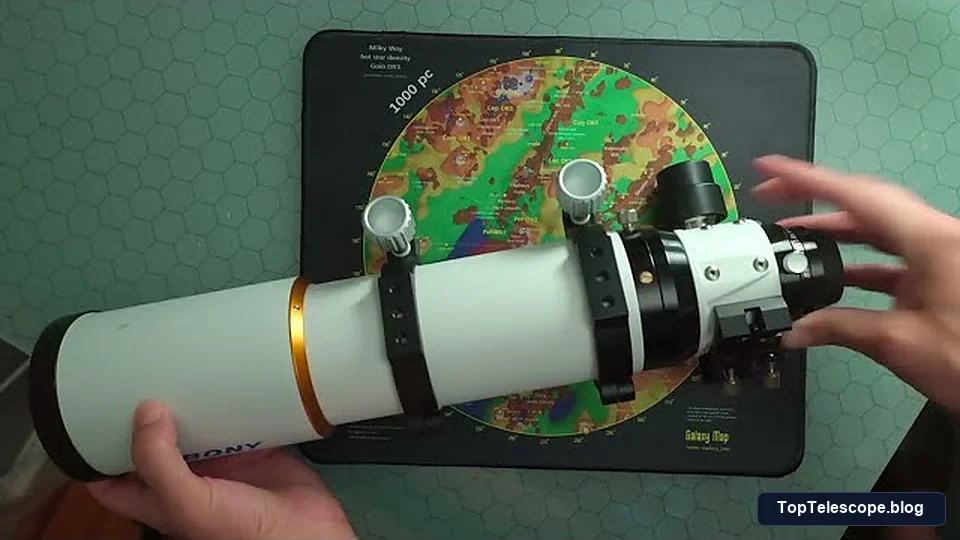
Refractors rely on precision-ground glass objective lenses at the front tube to bend incoming light rays to a rear focal point. This traditional closed-tube configuration provides exceptional contrast but becomes economically prohibitive at large apertures.
- Newtonian optical trains scale up in mirror diameter much more affordably than glass lenses, providing significantly higher light-gathering power for faint nebulae and distant galaxies under dark skies.
- Refractor optical assemblies seal objective lenses tightly inside robust metal tubes, protecting sensitive optical coatings from dust accumulation and moisture degradation during extended outdoor observation sessions.
Mirror Reflection Versus Lens Refraction
Light behavior inside these two systems differs fundamentally because mirrors reflect all wavelengths equally without dispersion. Glass lenses inherently bend blue and red light at slightly different angles, requiring expensive doublet or triplet elements.
Budget-conscious astronomers often prefer mirror-based reflectors because aluminum coatings are remarkably cost-effective to manufacture in large sizes. Glass lens blanks require flawless internal purity across massive volumes, driving up retail costs exponentially.
- Glass homogeneity requirements make large refractor lenses exceptionally heavy and expensive to produce without internal bubbles or structural stress fractures.
- Primary mirrors require only front-surface polishing and reflective aluminum coatings, bypassing the deep-material purity constraints of heavy optical glass blanks.
Chromatic Aberration Versus Spherical Distortion
Many selections in our best refractor telescope for beginners roundup feature modern glass types that minimize purple fringing around bright stars, balancing advanced optical corrections with reasonable retail costs.
Newtonians remain completely free of false color artifacts because reflection physics applies equally to every light wavelength. However, fast focal ratios in reflectors introduce coma aberrations that require external correction lenses.
- Refractor objective lenses bend different light frequencies unevenly unless specialized extra-low dispersion glass types are utilized during precise optical manufacturing processes.
- Parabolic primary mirrors in fast Newtonian setups create off-axis star distortion that demands careful eyepiece pairing or dedicated coma corrector accessories.
Managing Optical Imperfections in the Field
Observers targeting lunar details or bright planets will notice superior edge sharpness through quality refractors. The absence of a central secondary mirror obstruction delivers maximum contrast for finest planetary surface features.
Reflector users gladly trade minor off-axis aberrations for huge light-bucket advantages when hunting faint deep-sky fuzzies. Managing these distinct trade-offs defines your overall stargazing satisfaction in varying environments.
- Central obstruction spiders in Newtonian tubes introduce subtle diffraction spikes around bright stars during high-magnification viewing sessions.
- Unobstructed refractor light paths deliver pristine Airy disks that satisfy demanding amateur astronomers seeking ultimate high-power resolution.
Mechanical Mount Integration and Weight Distribution
Mounting a Newtonian optical tube assembly requires heavy-duty equatorial or Dobson bases due to physical length and weight leverage. Balancing these long tubes demands robust mechanical hardware and sturdy tripod platforms.
Refractors offer much shorter physical profiles in smaller apertures, allowing lightweight alt-azimuth or compact tracking mounts. This favorable mechanical footprint enhances overall setup speed during spontaneous stargazing nights.
- Dobsonians provide the most cost-effective mounting solution for large Newtonian reflectors through smooth altitude-azimuth wooden rocker boxes.
- Equatorial tracking mounts paired with long Newtonian tubes require rotating rings to keep eyepieces in comfortable viewing positions.
Ergonomic Eyepiece Placement Challenges
The Newtonian eyepiece position near the top front of the optical tube creates awkward viewing angles when pointing toward zenith targets. Users frequently need adjustable observing chairs or rotating tube rings.
Selecting models from our best refractor telescope for viewing planets and galaxies guide ensures comfortable viewing heights at the rear optical assembly, avoiding awkward zenith angles across the night sky.
- Zenith viewing with large Newtonian reflectors often forces awkward neck positions unless observers utilize extension piers.
- Rear-mounted refractor focusers ensure intuitive, seated access for younger astronomers and casual backyard observers alike.
Collimation Protocols and Mirror Maintenance Realities
Owning a Newtonian telescope means learning regular mirror alignment procedures known as collimation before every serious observing session. Transporting these optical tubes invariably knocks mirrors slightly out of precise geometric alignment.
Refractors arrive factory-aligned and permanently sealed within sturdy metal housings, requiring virtually zero user intervention over years of heavy use. This robust mechanical stability appeals heavily to novice equipment handlers.
- Laser collimators and Cheshire eyepieces help Newtonian owners quickly fine-tune primary and secondary mirror tilt angles in minutes.
- Sealed refractor objective cells prevent ambient dust and humidity from settling on internal glass surfaces during routine outdoor storage.
Long-Term Optical Upkeep and Cleaning
Exposed mirror coatings degrade gradually over many years, eventually requiring professional re-aluminizing services to restore peak reflectivity levels. Careful handling prevents premature scratching during occasional wet cleaning sessions.
Models featured in our best refractor telescope for astrophotography review retain their pristine optical coatings safely inside sealed cells, needing only minimal dust removal for dependable performance.
- Primary mirror washing requires delicate immersion techniques to dissolve organic residue without damaging enhanced reflective aluminum layers.
- Objective lens cleaning is rarely necessary and should be restricted to gentle micro-fiber dusting of outer glass surfaces.
Field of View and High-Magnification Planetary Resolution
Wide-field scanning of Milky Way star clouds shines brilliantly through short-tube refractors offering expansive, crystal-clear vistas. Their unobstructed light paths produce rich contrast that enhances faint extended nebulae.
High-magnification planetary observation benefits immensely from the massive apertures typical of budget-friendly Newtonian reflectors. Resolving tight double stars and subtle Jovian cloud belts requires substantial light gathering.
- Rich-field refractors excel at framing large celestial objects like the Andromeda Galaxy and the Pleiades star cluster effortlessly.
- Large Newtonian mirrors resolve faint lunar craterlets and dim planetary satellites that remain completely invisible in smaller apertures.
Aperture Scaling and Resolution Limits
Physics dictates that light gathering scales with the square of objective diameter, making large reflectors unbeatable for deep space. Refractors quickly become prohibitively expensive and unwieldy as apertures exceed six inches.
Smart buyers balance maximum resolution requirements against physical storage constraints to ensure long-term observing enjoyment without physical strain or logistical frustration during weekend field trips.
- Aperture fever drives many amateur astronomers toward large Newtonian Dobsonians for ultimate deep-sky penetration.
- Compromise focal lengths allow versatile performance across both lunar and deep-sky targets with careful eyepiece selection.
Portability Factors and Field Setup Ergonomics
Alternative choices highlighted in our best apochromatic refractor telescope guide eliminate bulky truss designs entirely, offering much more manageable tube dimensions for convenient vehicle packing.
Compact refractor setups fit easily into standard passenger car trunks alongside normal camping gear and luggage. This supreme portability encourages frequent impromptu observing trips away from urban light pollution.
- Truss-tube Newtonian designs break down into smaller modular components for easier transport to remote dark-sky observing sites.
- Short focal length refractors drop directly into padded backpacks, making them ideal travel companions for hiking astronomers.
Thermal Equilibrium and Environmental Acclimation
Large glass mirrors trap thermal heat inside thick substrates, requiring lengthy cooling periods before achieving sharp high-power focus. Cooling fans assist this thermal acclimation process during rapid temperature drops.
Small refractor tubes reach thermal equilibrium much faster because their lenses contain far less mass than thick primary mirrors. Quick cool-down times eliminate annoying image shimmer during early evening sessions.
- Active ventilation fans mounted behind primary mirrors accelerate thermal exchange with ambient evening outdoor air.
- Enclosed refractor cells stabilize temperature gradients efficiently, providing crisp planetary views shortly after stepping outside.
Frequently Asked Questions
Why do refractors cost significantly more per inch of aperture than Newtonian reflectors?
Apochromatic refractors cost significantly more per inch of aperture because manufacturing multiple distinct glass elements requires extreme precision. However, observers gain unmatched planetary contrast without ever needing to adjust mirror alignment.
How often must I collimate a Newtonian telescope before observing?
You should check mirror alignment before every serious observing session to ensure sharp high-magnification images. Transporting the optical tube in a vehicle naturally shifts the internal mirrors slightly.
Can beginners successfully operate a Newtonian reflector without prior experience?
Novice users master Newtonian reflectors quickly by learning basic collimation steps and practicing safe handling habits. Dobsonians offer the simplest manual mounting experience for budget-conscious beginners.
Do refractors suffer from any optical aberrations during high-power viewing?
Simple achromats exhibit noticeable purple fringing around bright objects due to light dispersion through glass lenses. Premium triplet apochromatic designs correct this issue completely for pristine visual clarity.
Which telescope type is better suited for astrophotography pursuits?
Astrophotographers often choose small refractors for wide-field imaging because they deliver pinpoint stars easily. Large Newtonians require heavy equatorial mounts and coma correctors for deep-sky photography.