Manual vs Motorized Telescope: Technical Comparison
Choosing between manual and motorized optical tubes involves balancing mechanical simplicity against automated tracking precision. Your field workflow dictates the ideal mechanical architecture.

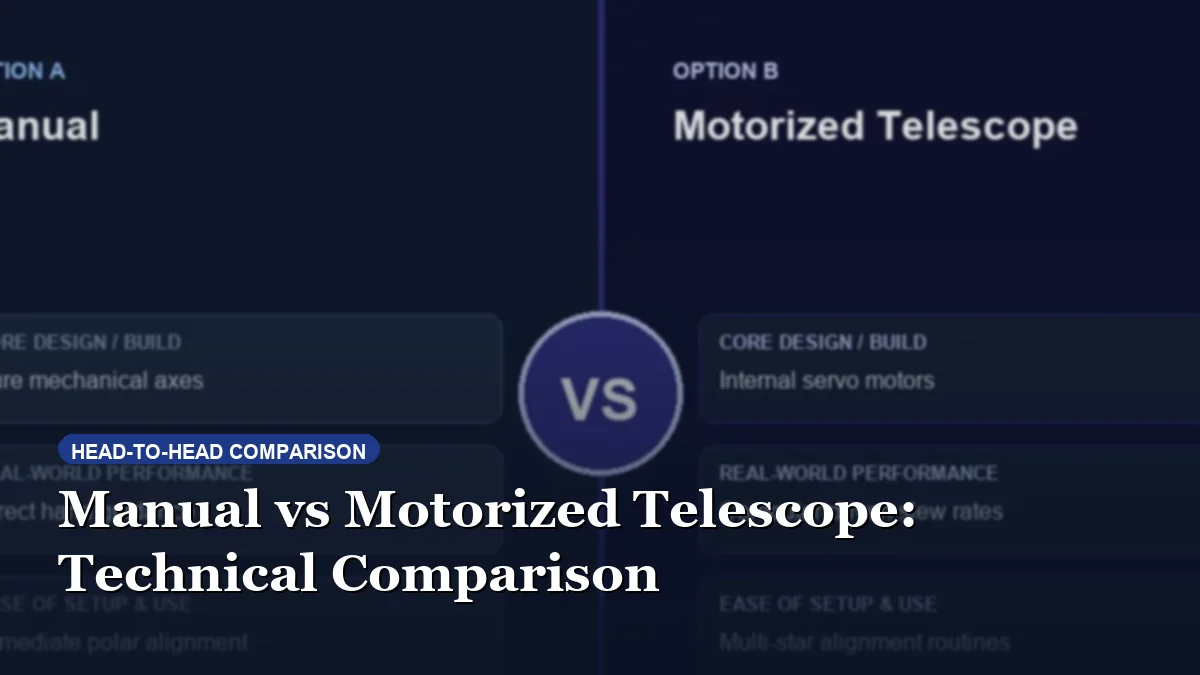
Choose manual mounts for pure mechanical reliability and zero power dependency during long field sessions. Select motorized platforms when precise automated tracking is required for high-magnification planetary observation.
Compare all top models in our Best Telescope: Top Backyard Picks for Astronomy.
Side-by-Side Breakdown
| Criteria | Manual | Motorized Telescope | Edge |
|---|---|---|---|
| Core Design / Build | Pure mechanical axes | Internal servo motors | Manual |
| Real-World Performance | Direct hand guidance | Computer-driven slew rates | Motorized Telescope |
| Ease of Setup & Use | Immediate polar alignment | Multi-star alignment routines | Manual |
| Durability & Reliability | Few electronic failure points | Complex circuit boards | Manual |
| Efficiency / Operating Footprint | Lightweight portable chassis | Heavy battery-dependent setups | Manual |
| Maintenance Requirements | Periodic manual tension adjustments | Firmware updates and gear greasing | Manual |
| Best Ideal Use Case | Wide-field deep-sky stargazing | Astrophotography and outreach events | Motorized Telescope |
Core Design and Mechanical Engineering
Manual telescopes rely on traditional alt-azimuth or equatorial mounts driven entirely by hand manipulation. Users must physically nudge the optical tube to compensate for Earth's rotation during prolonged celestial viewing sessions.
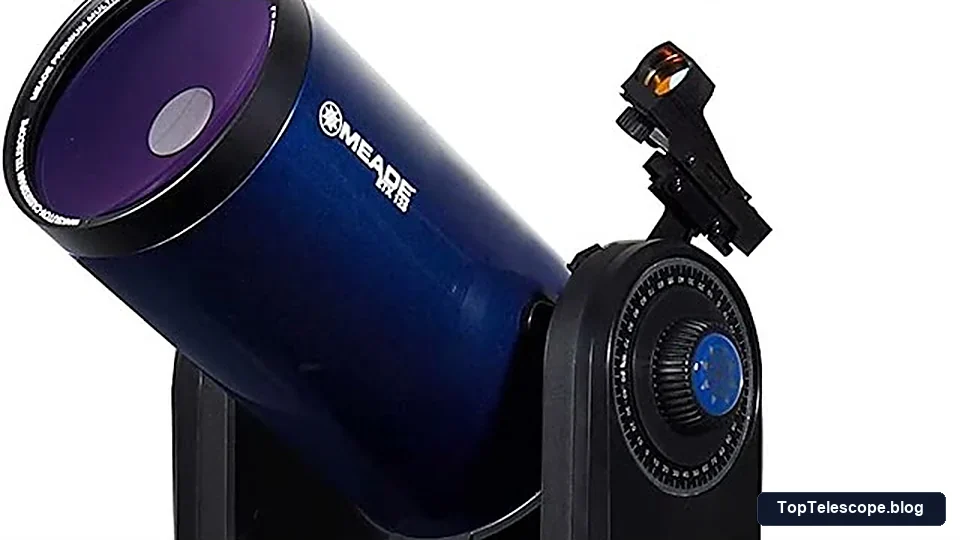
When selecting equipment, the best motorized telescope options integrate internal gearboxes and dual-axis servo motors into the mount head to drive the optical tube smoothly along celestial coordinates.
The internal mechanics of a motorized telescope require precise worm gears to translate motor rotations into tracking movement. High-end systems employ belt drives to minimize periodic error during long exposures.
Manual mounts rely on friction clutches and worm gears machined from solid brass to provide smooth manual panning resistance without introducing excessive backlash during high-magnification planetary observation sessions.
Motorized variants integrate stepper motors or brushless DC servos paired with high-reduction gearboxes to achieve precise sidereal tracking rates required for long-exposure astrophotography and deep-sky imaging tasks.
Structural rigidity differs significantly because motorized bases require heavier cast-aluminum housings to support internal gear trains, whereas manual altazimuth platforms prioritize lightweight portability and rapid field deployment.
- Manual systems utilize friction clutches and manual slow-motion cables.
- Motorized units depend on internal stepper motors and electronic hand controllers.
- Gear backlash directly affects tracking smoothness in motorized assemblies.
Mechanical Mount Architecture
Manual mounts bypass complex gear trains entirely, offering a direct tactile connection between your hand and the eyepiece view. This mechanical simplicity reduces potential points of hardware failure significantly.
Engineered stability in manual setups depends heavily on sturdy tripod legs and balanced counterweights to dampen ambient wind vibrations during high-magnification planetary viewing sessions.
- Direct drive designs eliminate gear slippage.
- Solid metal castings improve overall vibration damping.
Real-World Tracking and Optical Performance
When using the best motorized telescope for beginners, celestial objects are tracked automatically to prevent rapid drift out of the eyepiece field of view using sidereal tracking rates.
Manual telescope users must manually nudge the optical tube every few minutes to keep targets centered. This tactile adjustment can introduce slight vibrations, particularly when operating at magnifications exceeding two hundred power.
Computerized motorized systems utilize GOTO alignment algorithms to locate thousands of deep-sky objects automatically. This technology transforms complex star-hopping into a streamlined push-button search procedure for amateur astronomers.
Earth rotation causes celestial objects to drift rapidly across the eyepiece field, forcing manual observers to constantly nudge the scope using slow-motion control cables every few seconds.
Automated systems eliminate this drift by applying continuous counter-rotation matching Earth's axis, keeping faint nebulae centered in the optical path for extended visual evaluation periods.
Optical alignment remains paramount; even the most sophisticated tracking mount cannot compensate for collimation errors or thermal imbalance within primary mirrors during high-power viewing runs.
- Sidereal tracking maintains steady positioning for planetary imaging.
- Manual tracking relies on smooth slow-motion control knobs.
- High magnification amplifies vibration from manual adjustments.
Pointing Accuracy and Navigation
Traditional manual telescopes require star-hopping skills, using finder scopes and star charts to navigate the night sky. This method fosters a deeper working knowledge of stellar constellations and celestial coordinates.
Automated pointing systems eliminate manual searching entirely by cross-referencing internal databases with celestial coordinates. Users save valuable observation time when hunting for faint, elusive deep-sky nebulae.
- Star charts develop fundamental navigational competence.
- Database searches accelerate deep-sky target acquisition.
Power Consumption and Field Efficiency
Motorized telescopes demand a reliable external power source, typically utilizing heavy lithium-ion field batteries or AC adapters. Running out of electrical power completely disables automated tracking and computerized hand controllers.
Manual setups require zero electrical power, making them ideal for remote dark-sky locations far from standard electrical grids. You simply unpack the optical tube and begin observing immediately without cables.
Deploying a motorized platform involves leveling the tripod, aligning internal compasses, and completing multi-star calibration routines. This calibration sequence can take fifteen to twenty minutes before observations can begin.
Manual telescopes operate entirely independent of electrical grids, making them exceptionally reliable for remote dark-site expeditions where battery preservation determines total observation duration limits.
GoTo systems demand steady 12-volt power supplies, typically drawing between 0.5 and 2.0 amps depending on slewing activity and ambient temperature conditions affecting internal lubricants.
Field operators must carry auxiliary lithium power banks and insulated cables to prevent voltage drops that cause erratic hand controller behavior during cold winter imaging sessions.
- Motorized systems draw continuous current during extended viewing sessions.
- Field batteries add substantial weight to your travel gear.
- Manual telescopes operate entirely independent of electrical infrastructure.
Operational Readiness
Manual telescopes offer rapid deployment speed because you only need to level the tripod and balance the optical tube. You can achieve first light within minutes of arriving at your destination site.
Field efficiency favors manual units when weather conditions deteriorate unexpectedly, allowing for rapid packing without disconnecting complex power cables or computer interfaces.
- Fast deployment reduces exposure to cold elements.
- No cable management simplifies teardown routines.
Setup Routines and Alignment Protocols
Accurate tracking on equatorial motorized mounts requires precise polar alignment with the celestial pole. Misalignment causes field rotation and tracking drift during long-exposure astrophotography sessions.
Alt-azimuth manual telescopes require no polar alignment, simplifying field deployment for casual visual stargazers. You simply point the telescope and lock the axis clutches securely in place.
Computerized mounts need alignment stars entered into their hand controllers to build an accurate internal sky model. Selecting correct reference stars requires basic familiarity with bright navigational constellations.
Setting up a manual altazimuth telescope requires virtually zero preparation time beyond leveling the tripod and inserting your preferred eyepiece into the diagonal housing securely.
Computerized mounts necessitate rigorous initialization procedures, including entering precise GPS coordinates, local time zones, and performing multi-star alignment routines before autonomous navigation functions.
Polar alignment becomes mandatory for equatorial motorized setups, often requiring precise adjustments via an illuminated polar finder scope to eliminate field rotation during long exposures.
- Equatorial motorized setups demand careful polar scope calibration.
- Alt-azimuth manual systems bypass complex alignment steps entirely.
- Proper alignment ensures optimal tracking precision across the sky.
Software Calibration Demands
Manual users bypass calibration procedures completely, relying on optical finder scopes to manually center target objects. This workflow eliminates software error messages and alignment failures entirely.
Troubleshooting alignment errors on computerized mounts can consume precious dark-adaptation time if sensor data or time zone settings are entered incorrectly into the hand controller.
- Software glitches never interrupt manual viewing sessions.
- Time zone accuracy dictates GOTO pointing success.
Maintenance, Calibration, and Longevity
Owning the best beginner motorized telescope means managing sensitive circuit boards and internal encoders that require occasional firmware updates and protection against moisture damage during heavy dew conditions.
Manual mounts feature robust mechanical tolerances with minimal electronic components that could fail prematurely. Regular cleaning and occasional re-greasing of mechanical axes are usually all the maintenance required.
Mechanical simplicity ensures that traditional manual telescopes can operate reliably for decades with proper optical care. The absence of proprietary software prevents obsolescence issues over time.
Mechanical maintenance for manual mounts primarily involves cleaning old grease from gear teeth and periodically tensioning axis nuts to maintain optimal panning resistance values.
Motorized equipment introduces complex potential failure points, including circuit board degradation, encoder misalignment, and internal belt slippage that require specialized diagnostic troubleshooting methods.
Software firmware updates are essential for computerized hand controllers to maintain accurate satellite catalogs and correct underlying operational bugs over extended years of ownership.
- Electronic hand controllers require protective covers against moisture.
- Mechanical worm gears need periodic inspection for proper tension.
- Manual axes benefit from occasional cleaning and fresh grease.
Long-Term Hardware Reliability
Motorized platforms risk functional obsolescence if manufacturers discontinue software support for legacy hand controllers or internal operating systems. Hardware repairs can become expensive once warranties expire.
Owners of manual equipment enjoy permanent serviceability since replacement parts consist of basic mechanical fasteners, standard tension knobs, and accessible friction pads.
- Proprietary electronics limit DIY repair options.
- Standard mechanical parts ensure indefinite operational life.
Ergonomics and Operating Footprint
Motorized mounts are significantly heavier due to internal motors, drive gears, counterweights, and battery packs. Transporting these complex systems requires dedicated cases and careful packing procedures.
Manual telescopes provide superior portability with lightweight optical tubes and streamlined alt-azimuth mount bases. You can easily lift the entire assembly into a vehicle trunk for spontaneous stargazing trips.
Heavy motorized bases often provide excellent stability against wind gusts, provided the tripod legs are firmly anchored. However, motor housings can occasionally transmit low-frequency hums into the optical train.
The physical footprint of manual systems remains remarkably compact, lacking external battery packs, hand control pendants, and dangling power cords that frequently snag in total darkness.
Automated mounts increase operational complexity by adding external cables, heavy counterweights, and protruding motor housings that demand careful spatial awareness during night sessions.
Eyepiece placement on German equatorial mounts can force awkward viewing angles, requiring astronomers to occasionally loosen tube ring clamps and rotate the optical assembly.
- Heavy counterweights are mandatory for equatorial motorized setups.
- Lightweight manual tripods streamline solo field transport.
- Compact footprints favor manual scopes in tight urban spaces.
Vibration Control and Stability
Lightweight manual mounts require sturdy steel legs to prevent excessive shaking when focusing at high magnifications. Proper mass distribution ensures stable viewing without electronic interference.
Ergonomic hand placement on manual slow-motion cables allows delicate adjustments without disturbing the main optical alignment or shaking the supporting tripod structure.
- Steel tripod legs minimize high-magnification image jitter.
- Slow-motion cables enhance fine focusing ergonomics.
Selecting the Optimal System for Your Needs
Beginners often benefit from manual telescopes because they encourage foundational learning of celestial navigation and constellation mapping. Mastering star-hopping builds essential observing skills that persist for a lifetime.
Advanced astrophotographers and outreach coordinators require motorized platforms to maintain locked tracking on faint deep-sky targets. Automated tracking frees up time to manage camera settings and engage visitors.
Allocating your financial budget toward superior optical aperture rather than electronic motors maximizes your raw light-gathering power. Manual scopes offer larger lenses or mirrors per dollar spent.
Selecting the best manual telescope for beginners ensures completely intuitive operation and immediate optical gratification during spontaneous stargazing sessions without requiring any complex electronic setup hurdles.
Astrophotographers and urban astronomers dealing with light pollution benefit immensely from motorized GoTo databases that locate faint deep-sky targets through light-polluted skies.
Balancing mechanical simplicity against automated convenience ensures your equipment investment matches your specific observing style, physical stamina, and overall technical patience levels over time.
- Beginners gain strong navigational skills using manual scopes.
- Astrophotography strictly demands motorized tracking for long exposures.
- Outreach events run smoother with automated target acquisition.
Balancing Budget and Aperture
Investing in a motorized telescope trades optical aperture for automated convenience, complex electronics, and sophisticated tracking capabilities. Evaluate your primary observing goals before committing to either mechanical platform.
Matching your physical strength, transport vehicle capacity, and local light pollution levels ensures you select a telescope configuration you will use frequently.
- Aperture size dictates faint object visibility.
- Lifestyle constraints determine equipment weight limits.
Frequently Asked Questions
Are motorized telescopes difficult to set up for beginners?
They require multi-star alignment and power sources, which adds complexity for novices. Beginners should expect a slight learning curve during initial field sessions.
Can manual telescopes be upgraded with motors later?
Some equatorial mounts accept aftermarket motor kits for basic tracking capabilities. However, full computerized GOTO upgrades are rarely cost-effective or mechanically practical.
Which telescope type is better for deep-sky astrophotography?
Motorized equatorial platforms are strictly mandatory for long-exposure imaging work. Manual scopes lack the precise tracking required to prevent star trailing.
How do cold weather conditions affect motorized mounts?
Low temperatures drain battery capacity rapidly and can stiffen internal lubricants. Keeping spare power sources warm is essential for winter observing.
Do manual telescopes require any electronic maintenance?
They feature no internal circuitry or firmware, requiring zero electronic upkeep. Periodic mechanical cleaning keeps the axes turning smoothly.