Dobson 8 vs 10: Aperture and Portability Face-Off
Choosing between an eight-inch and ten-inch Dobsonian involves balancing optical reach with physical transportability. Both apertures offer immense light gathering power for serious visual astronomers.

Choose the eight-inch model for superior portability and quick backyard setup sessions. Opt for the ten-inch unit if you prioritize deep-sky image brightness and maximum resolution.
Compare all top models in our Best Telescope: Top Backyard Picks for Astronomy.
Side-by-Side Breakdown
| Criteria | Dobson 8 | 10 | Edge |
|---|---|---|---|
| Core Design / Build | Compact parabolic primary mirror in a balanced 203mm tube. | Larger 254mm mirror housed in a heavier, wider optical tube. | Dobson 8 |
| Real-World Performance | Delivers crisp lunar views and bright Messier catalog objects. | Collects fifty percent more light for resolved galaxy arms. | 10 |
| Ease of Setup & Use | Easily carried outside in one piece by most adults. | Demands two-trip setups due to a bulkier rocker box. | Dobson 8 |
| Durability & Reliability | Sturdy particle board base with robust metal optical tube. | Heavier structural bracing needed to support massive mirror cells. | Dobson 8 |
| Efficiency / Operating Footprint | Fits across standard vehicle backseats without complex folding. | Requires an SUV or crossover vehicle for secure field transit. | Dobson 8 |
| Maintenance Requirements | Rapid thermal acclimatization and straightforward collimation routines. | Requires cooling fans and careful primary mirror alignment upkeep. | Dobson 8 |
| Best Ideal Use Case | Backyard stargazers valuing fast deployment and easy transit. | Dedicated deep-sky observers seeking maximum photon collection. | 10 |
Core Design & Engineering Differences
Newtonian reflectors rely on parabolic primary mirrors housed in rigid metal tubes. The eight-inch configuration maintains a manageable tube length that easily fits across standard vehicle backseats without complex disassembly procedures.
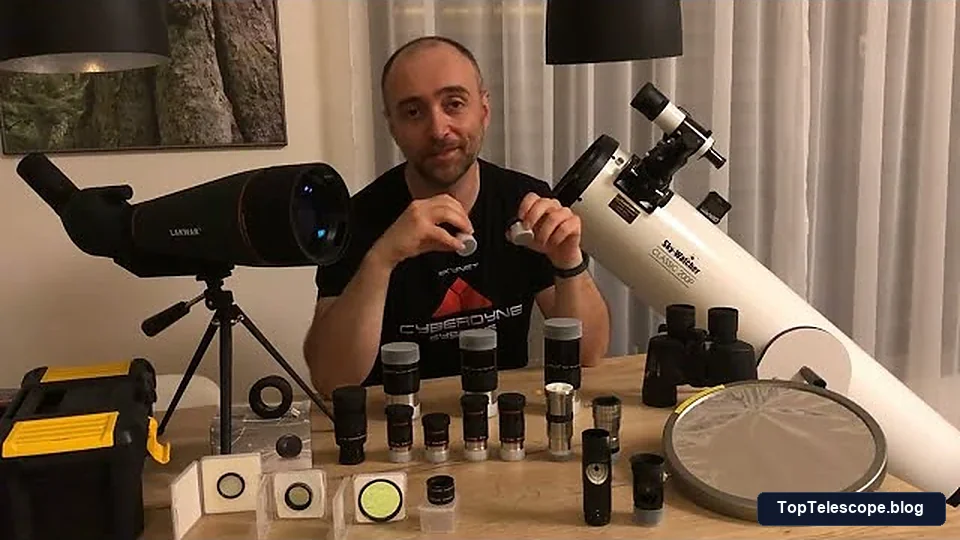
Stepping up to a ten-inch aperture increases primary mirror thickness and overall tube diameter. Reviewing the best telescope for looking at planets reveals how dimensional expansion requires heavier rocker boxes to maintain balance.
- Primary mirror diameters measure exactly 203 millimeters for the smaller system versus 254 millimeters for the larger variant.
- Optical tube assembly weights differ by roughly twenty to twenty-five pounds depending on specific manufacturer builds.
- Focal lengths typically range from 1200 millimeters to 1250 millimeters across both standard configurations.
Optical Physics & Focal Ratios
Most standard Dobsonians operate around an f/6 focal ratio, which balances comfortable eyepiece heights with manageable coma aberrations. Shorter focal lengths in larger mirrors demand high-grade eyepieces to maintain sharp edge-to-edge stellar pinpoint accuracy.
Central obstructions caused by secondary mirror spiders scale proportionally with aperture sizes. Both systems utilize robust four-vane spiders, minimizing diffraction spikes while providing rigid support for the critical optical alignment assemblies.
- Secondary mirror obstructions remain under twenty-five percent of the total primary diameter.
- Optical coatings feature high reflectivity aluminum protected by silicon dioxide overcoats.
Core Design & Engineering Differences
Moving from an eight-inch to a ten-inch primary mirror increases light-gathering surface area by roughly fifty-six percent, demanding thicker borosilicate glass substrates to prevent thermal sagging and optical figure distortion during rapid nighttime temperature drops.
Focal length also scales upward significantly, moving from typical 1200mm configurations in standard eight-inch models to roughly 1250mm or 1400mm in ten-inch variants, directly impacting eyepiece height and requiring taller observing ladders for comfortable zenith viewing angles.
Real-World Performance Comparison
Light-gathering capacity dictates your ability to resolve faint deep-sky nebulae and distant galaxies. The ten-inch mirror collects roughly fifty percent more photons than an eight-inch surface, revealing subtle spiral structure in intermediate-class galaxies.
Planetary viewing depends heavily on local seeing conditions and thermal acclimatization periods. An eight-inch mirror cools down to ambient outdoor temperatures much faster, offering crisp lunar details earlier in your evening observation session.
- Limiting stellar magnitudes increase by roughly half a magnitude when moving up to the larger optical system.
- Atmospheric turbulence impacts larger apertures more severely, demanding steady seeing conditions to exploit extra resolution.
Magnification Limits & Resolution
Theoretical maximum magnification scales directly with aperture diameter under pristine atmospheric conditions. While both scopes easily handle high-power splitting of tight double stars, the ten-inch variant sustains clarity at three hundred magnification.
Contrast transfer functions favor larger apertures when observing low-surface-brightness planetary nebulae. However, stray light management becomes critical, requiring flocked interior tubes to maintain optimal background darkness during deep-sky sessions.
- Maximum useful magnification reaches approximately four hundred power under exceptional atmospheric seeing.
- Rayleigh criterion limits dictate that larger mirrors resolve tighter binary star systems successfully.
Real-World Performance Comparison
Under dark skies, the ten-inch aperture resolves noticeably fainter deep-sky targets, pushing threshold magnitudes deeper by approximately 0.4 to 0.5 magnitudes, which clearly separates marginal spiral arm structure from unresolved smudge features in extended galaxies.
Planetary and lunar contrast transfer remains heavily dependent on seeing conditions, but the larger optical aperture of the ten-inch system allows higher useful magnifications before diffraction limits degrade image sharpness on steady atmospheric nights.
Maintenance, Efficiency & Longevity
Routine mirror maintenance remains a fundamental aspect of owning large Newtonian reflector telescopes. Both configurations require periodic primary mirror collimation using laser tools or Cheshire eyepieces to ensure sharp optical alignment.
Pyrex and BK7 glass substrates handle thermal expansion differently during rapid temperature drops. Ensuring adequate cool-down times prevents boundary layer currents from distorting your high-magnification planetary and lunar viewing experiences.
- Primary mirror cleaning is necessary only every two to three years under normal backyard operating conditions.
- Ventilation fans significantly accelerate thermal equilibrium for thick glass substrates in larger optical tubes.
Coating Longevity & Protection
Modern aluminum coatings protected by silicon dioxide overcoats resist oxidation over many years of active outdoor use. Storing optical tubes vertically with dust covers prevents abrasive dust accumulation on delicate primary mirror surfaces.
Mechanical rocker boxes require occasional hardware tightening and Teflon pad cleaning to maintain smooth azimuth motion. Applying silicon spray lubricants to friction surfaces preserves effortless manual tracking at high magnifications.
- Primary mirror cells utilize six-point or nine-point flotation systems to prevent glass warping.
- Dust covers should feature secure elastic bands to withstand gusty outdoor wind conditions.
Maintenance, Efficiency & Longevity
Primary mirror coatings degrade over time due to oxidation, requiring professional realuminizing every decade, whereas maintaining optimal collimation using a laser collimator or Cheshire eyepiece ensures peak on-axis performance before every observing session.
Dust accumulation on large mirrors causes negligible light loss, but improper cleaning techniques inflict micro-scratches that scatter light, making regular use of distilled water rinses and photograde optical tissue mandatory for extending mirror lifespan.
Ergonomics, Mounting & Mechanical Stability
Dobsonian mounts rely on simple altitude-azimuth designs utilizing laminate friction pads for smooth manual tracking. The eight-inch base features a compact footprint that operates stably on uneven lawn surfaces or wooden observing decks.
Larger ten-inch bases demand significantly more floor space and present lifting challenges for solo astronomers. Handling the bulky rocker box requires careful lifting techniques to prevent strain on your lower back during transport.
- Base weights range from twenty pounds for smaller units up to forty pounds for heavy-duty ten-inch structures.
- Alt-azimuth friction clutches allow custom tension adjustments for heavy 2-inch eyepieces and Barlow lenses.
Eyepiece Height & Observer Comfort
Maintaining a comfortable viewing posture is essential during multi-hour deep-sky marathon observing sessions. An eight-inch tube rarely requires an observing chair at zenith, whereas the ten-inch system often demands a seated position.
Choosing between these popular sizes is simple when reviewing best telescope options to match your physical handling capabilities before evaluating heavy particle board rocker boxes and azimuth rotation smoothness.
- Eyepiece heights at zenith reach approximately 48 inches for the eight-inch variant.
- Adjustable observing chairs prevent neck strain during extended zenith viewing sessions.
Ergonomics, Mounting & Mechanical Stability
Particle board rocker boxes absorb ambient moisture if left unsealed, whereas high-grade Baltic birch plywood rocker boxes combined with Teflon bearing pads deliver buttery-smooth azimuth rotation without binding or stick-slip friction issues.
Altitude tension clutches must support heavier gear configurations, particularly when swapping lightweight Plössl lenses for massive two-inch ultra-wide eyepieces, preventing unexpected telescope nose-diving during high-magnification planetary tracking sequences.
Transport, Storage & Setup Workflows
Field portability often dictates how frequently observers take equipment outdoors. Selecting a model from our best starter telescope guide helps ensure the optical tube slips easily into the backseat of a compact sedan.
Packing a ten-inch optical tube usually requires an SUV, crossover vehicle, or careful hatchback Tetris arrangement. Storage footprint in residential apartments heavily favors the smaller eight-inch footprint for everyday closet organization.
- Total setup time takes approximately five to ten minutes for experienced backyard astronomers.
- Two-piece modular designs allow effortless breakdown into manageable component weights for transport.
Rapid Deployment Strategies
Streamlining your backyard setup routine maximizes precious clear-sky observing time throughout the week. Carrying out the base and tube in two separate trips reduces risk of accidental impact against narrow doorways.
Carrying handles bolted to the optical tube simplify transport from indoor climate-controlled storage to the yard. Securing the dust cover securely protects optical coatings during outdoor transit across dewy grass.
- Sturdy side handles distribute the heavy optical tube weight evenly across your arms.
- Protective caps shield mirror cells from accidental moisture contact during transport.
Transport, Storage & Setup Workflows
Transporting an optical tube assembly requires careful padding inside a vehicle, as the massive weight of a ten-inch tube can stress vehicle suspension systems and strain your back during solitary loading operations.
Storing your Dobsonian in a climate-controlled environment prevents mold growth on optical coatings, while keeping the base elevated on rubber feet protects wooden panels from floor humidity and accidental basement flooding risks.
Which Option Fits Your Setup
Selecting the right instrument from any best telescope for beginners roundup depends entirely on your physical storage space and transit capabilities. Astronomers valuing frequent quick sessions will appreciate the lighter eight-inch weight.
Dedicated deep-sky observers seeking maximum photon collection should invest in the larger optical platform. Balancing physical ergonomics against optical performance gains ensures long-term satisfaction with your chosen Newtonian investment.
- Consider your physical lifting limitations before committing to heavy telescope components and bulky bases.
- Evaluate local light pollution severity to determine if extra light-gathering power fits your skies.
Final Purchasing Considerations
Budget considerations extend beyond the initial telescope purchase to include essential accessories like premium eyepieces. Investing surplus funds into quality wide-field optics enhances viewing comfort across either aperture size.
Local light pollution levels also influence whether extra aperture translates into visible deep-sky details. Dark sky travel magnifies the performance gap, making the ten-inch powerhouse exceptional for rural expedition trips.
- Factor in accessory costs for coma correctors when using fast Newtonian telescopes.
- Prioritize portable power tanks if you add digital setting circles later on.
Which Option Fits Your Setup
Observers prioritizing rapid backyard deployment and frequent travel often choose the eight-inch model for its superior portability, lower overall mass, and manageable physical dimensions that fit across standard vehicle backseats easily.
Dedicated deep-sky astronomers willing to manage a heavier two-piece transport system will find that the ten-inch configuration delivers noticeable performance gains without crossing into unmanageable observatory-grade weight classes.
Frequently Asked Questions
Can an eight-inch Dobsonian resolve spiral galaxies?
Yes, an eight-inch mirror easily reveals bright Messier galaxies and subtle structures. Excellent dark skies remain essential for faint deep-sky object visibility.
Is a ten-inch Dobsonian too heavy for regular transport?
The ten-inch tube and base weigh significantly more than smaller models. Stronger astronomers manage transport easily, but frequent field trips require careful vehicle planning.
How often must primary mirrors undergo collimation?
Collimation checks are recommended before every serious backyard observing session. Routine transport over bumpy roads requires precise optical realignment using a laser tool.
Do I need specialized eyepieces for fast focal ratios?
Fast optical systems introduce edge aberrations that demand high-grade eyepieces. Premium wide-field designs maintain sharp stellar pinpoints right to the extreme field stops.
Which telescope offers better long-term value for beginners?
The eight-inch model provides an ideal balance of cost and portability. Beginners enjoy easy handling routines while exploring hundreds of deep-sky targets.