Reflector vs Refractor vs Standard Telescope Comparison
Navigating optical design choices requires understanding fundamental physics. Selecting the proper tube configuration ensures optimal celestial viewing performance.

Choose refractor and reflector designs for specialized optical paths, or select a standard telescope for balanced, all-around backyard astronomy sessions.
Compare all top models in our Best Telescope: Top Backyard Picks for Astronomy.
Side-by-Side Breakdown
| Criteria | Difference Between Reflector And Refractor | Standard Telescope | Edge |
|---|---|---|---|
| Core Design / Build | Uses lenses or primary mirrors | Standardized multi-purpose optical tube | Side A |
| Real-World Performance | Highly optimized for specific targets | Reliable general-purpose clarity | Side B |
| Ease of Setup & Use | Varies by mounting requirements | Streamlined for quick backyard deployment | Side B |
| Durability & Reliability | Exposed optics need careful handling | Enclosed factory-aligned mechanical housing | Side B |
| Efficiency / Operating Footprint | Optimized light paths per aperture | Standard focal lengths and tube sizes | Side A |
| Maintenance Requirements | Frequent mirror collimation or lens cleaning | Minimal routine factory calibration needed | Side B |
| Best Ideal Use Case | Advanced planetary or deep-sky imaging | General backyard stargazing and education | Side B |
Optical Architecture and Light Gathering
Evaluating internal optics demands a close look at how light travels through your tube. Refractor systems use glass lenses to bend incoming starlight directly toward a focal point.
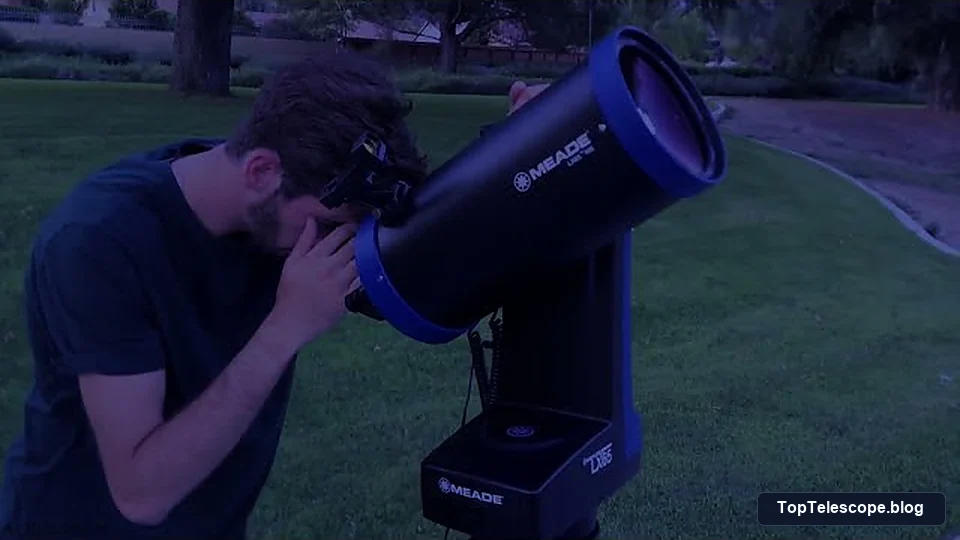
Conversely, Newtonian reflectors capture photons using a curved primary mirror situated at the rear of the optical tube. This bounces light forward to a secondary diagonal mirror.
Standard telescope designs typically package these core optical elements into user-friendly configurations. For expert recommendations, check out our best refractor telescope picks to maximize nighttime visual clarity.
Refractor telescopes utilize a front objective lens to bend incoming starlight directly to a rear focal point. This dioptric design seals the optical tube completely against circulating air currents and dust.
Reflectors deploy a large parabolic primary mirror at the base of an open tube to gather light. Incoming photons bounce back up to a diagonal secondary mirror before exiting sideways.
Light gathering capacity scales directly with the clear aperture diameter regardless of the optical layout. Larger apertures resolve finer details by collecting more photons per second from faint deep-sky targets.
- Refractor lenses eliminate central obstructions completely.
- Reflector mirrors require precise structural alignment.
- Standard tubes balance simplicity and focal reach.
Lens Refraction vs Mirror Reflection
Light transmission through glass introduces specific physical behaviors. Refraction bends different wavelengths at varying angles, creating unique optical challenges during high-magnification sessions.
Reflection avoids color dispersion by bouncing all wavelengths equally from a reflective aluminum coating. This provides inherently pure color fidelity across bright targets.
- Glass lenses transmit light forward.
- Coated mirrors reflect incident photons.
Chromatic Aberration and Image Fidelity
Managing visual artifacts is crucial for crisp planetary observation. Simple lens refractors frequently suffer from chromatic aberration, showing distracting purple halos around bright lunar limbs.
Reflector configurations completely bypass lens-based color fringing. Because reflection relies on geometry rather than refraction, all visible wavelengths focus at the exact same physical plane.
Standard multi-purpose telescopes often incorporate corrective doublet or triplet elements. These engineering choices mitigate color fringing while maintaining a compact physical observing footprint.
Refractor lenses refract different wavelengths of light at slightly varying angles, causing false color fringing. Premium ED glass elements bring multiple wavelengths into a single unified focal plane.
Newtonian reflectors rely entirely on front-surface reflection rather than transmission through glass. Because reflection is wavelength independent, these mirror systems remain completely free of native chromatic aberration.
High-fidelity planetary imaging demands tight control over optical aberrations across the visible spectrum. Achromatic refractors require long focal ratios to suppress purple halos around bright lunar limbs.
- Refractors require expensive glass to reduce halos.
- Reflectors exhibit zero native chromatic aberration.
- Standard setups balance cost and color correction.
Managing Color Fringing
Observers combating false color must understand focal ratios. Longer focal ratios naturally minimize dispersion issues in standard glass lens configurations.
Apochromatic systems use exotic fluorite elements to lock all colors together. These premium builds command significantly higher manufacturing investments for serious astrophotographers.
- Long focal ratios reduce visual halos.
- Exotic glass elements improve color correction.
Tube Mechanics and Ergonomic Footprint
Physical dimensions dictate how easily your equipment travels to dark sky sites. Large aperture reflectors feature bulky tubes requiring sturdy equatorial or heavy alt-azimuth mounts.
Refractor tubes remain slender but grow exceptionally long when focal lengths increase. This creates high leverage forces that demand rigid mounting solutions during breezy nights.
Standard consumer telescopes strike a practical mechanical compromise. Their balanced dimensions fit comfortably inside standard vehicle trunks without sacrificing optical performance.
Refractor optical tubes are generally longer and demand heavy-duty equatorial mounts to manage leverage. The eyepiece position shifts significantly during tracking, requiring sturdy adjustable observer chairs.
Reflectors feature shorter physical lengths relative to their focal distances, reducing mounting torque requirements. Placing the eyepiece near the upper side tube improves standing viewing ergonomics.
Balancing an optical tube requires careful dovetail rail positioning to prevent motor strain during slewing operations. Proper weight distribution ensures smooth axis tracking under varying thermal conditions.
- Reflector tubes are wide and require robust mounts.
- Refractor tubes grow long with high focal lengths.
- Standard builds optimize transport and storage.
Portability and Mounting Demands
Field ergonomics directly influence how frequently you unpack your gear. Heavy counterweights and complex mounting heads add significant setup time under dark skies.
Quick-release dovetail bars streamline attachment procedures for standard optical tubes. Minimizing mechanical complexity ensures faster transition from storage to active stargazing.
- Heavy mounts extend field setup durations.
- Dovetail plates simplify optical tube attachment.
Routine Maintenance and Collimation
Telescope upkeep ensures sustained optical precision over years of field use. Newtonian reflectors require frequent mirror collimation using laser tools to keep light paths aligned.
Sealed optical tube assemblies in standard configurations rarely need internal adjustments. Their factory-aligned lenses remain secure through normal transit and temperature shifts.
Dust accumulation on exposed primary mirrors eventually degrades contrast. Careful cleaning procedures protect delicate reflective coatings from permanent scratching during maintenance.
Sealed refractor assemblies rarely require optical alignment adjustments unless subjected to severe mechanical impacts. Factory-set objective cells maintain permanent collimation throughout years of rigorous field transport.
Newtonian reflectors require frequent mirror alignment using specialized equipment. Consulting our optical alignment tools guide helps you maintain precise optical axis alignment for sharp planetary resolution.
Primary mirror coatings degrade over decades and eventually necessitate professional re-aluminum services. Keeping dust covers securely fastened prevents premature surface contamination during storage intervals.
- Reflectors need regular mirror collimation.
- Refractors feature factory-sealed lens cells.
- Standard telescopes minimize alignment chores.
Cleaning Glass and Mirror Coatings
Improper cleaning techniques can ruin delicate optical coatings permanently. Technicians recommend using pure distilled water and professional microfiber cloths for safe residue removal.
Mirrors feature front-surface aluminum layers that scratch easily. Gentle immersion cleaning prevents abrasive particle damage during routine maintenance sessions.
- Always use professional optical cleaning solutions.
- Avoid wiping dry mirrors to prevent scratches.
Cost Efficiency per Millimeter of Aperture
Budget allocation dictates maximum achievable light gathering power. Reflectors deliver the lowest cost per millimeter of aperture because grinding mirrors is cheaper than shaping multi-surface glass lenses.
Large objective lenses require flawless optical glass blanks polished on four separate surfaces. This manufacturing complexity drives refractor pricing sharply upward as diameters increase.
Standard telescope packages bundle adequate apertures with versatile mounts. This approach provides accessible entry points for hobbyists seeking reliable performance without excessive spending.
Manufacturing large-scale glass lenses with four precision-ground optical surfaces demands exceptional craftsmanship. Consequently, apochromatic refractors command a much higher cost per millimeter of clear aperture.
Mirror substrates require only a single front reflective surface to be ground and polished accurately. This manufacturing advantage makes reflectors the undisputed king of budget-friendly aperture.
Educational institutions and amateur astronomers often select reflectors to maximize light gathering capability within strict budget constraints. Maximizing light capture remains essential for studying faint nebulae.
- Mirrors offer maximum aperture for modest budgets.
- Large lenses involve expensive multi-surface grinding.
- Standard bundles balance cost and capability.
Investment Value for Beginners
New astronomers benefit from evaluating long-term equipment value. Purchasing a balanced standard setup prevents early frustration caused by overly complex optical maintenance.
Investing in a high-aperture reflector yields immediate rewards for deep-sky observation. Exploring our best beginner telescope guide helps you evaluate models built for maximum light gathering capability.
- Simple setups reduce beginner learning curves.
- Large apertures reveal faint deep-sky objects.
Deep Sky Versus Planetary Observation
Target selection heavily influences your ideal optical configuration. High-contrast refractors excel at resolving crisp planetary details, lunar craters, and tight double star systems.
Wide aperture reflectors dominate deep-sky observation of faint nebulae and distant galaxies. Their massive light gathering power captures photons from objects millions of light-years away.
Standard telescopes provide versatile compromise performance across all targets. They satisfy casual observers who wish to explore planets and star clusters during the same evening.
High-contrast refractor optics excel at resolving tight double stars and intricate lunar features. Reviewing our field flattener and focal reducer guide helps maximize contrast transfer efficiency across bright planetary discs.
Large aperture reflectors dominate deep-sky observation by funneling vast quantities of light into the eyepiece. Faint galaxies and distant star clusters reveal structural details through large light buckets.
Selecting the right optical system depends heavily on your primary astronomical observing targets. Balancing planetary contrast against deep-sky light collection dictates the ideal telescope format.
- Refractors excel at high-contrast planetary views.
- Reflectors gather faint light for deep-sky targets.
- Standard scopes handle varied astronomical objects.
Magnification Limits in Real Seeing Conditions
Atmospheric turbulence ultimately limits maximum useful magnification in the field. Pushing magnification beyond local seeing limits produces blurry, unusable planetary images.
Selecting appropriate eyepiece focal lengths matches your optical tube capabilities. Maintaining sensible magnification preserves sharp image contrast throughout extended viewing sessions.
- Atmospheric seeing restricts maximum magnification.
- Matched eyepieces preserve sharp contrast levels.
Environmental Durability and Storage
Storage environments impact the longevity of sensitive optical instruments. Rapid temperature swings cause thermal expansion, requiring adequate cool-down time before observing begins.
Enclosed standard tubes protect internal optics from ambient dust and moisture. Storing equipment in climate-controlled areas prevents internal mold growth on optical coatings.
Open reflector designs accumulate dust quickly when left unprotected. Utilizing tight-fitting dust caps and vertical storage covers preserves mirror reflectivity between observation nights.
Refractor tubes protect optical elements from moisture accumulation and direct particulate settling between sessions. Their sealed configurations endure harsh outdoor environments with minimal risk of internal mirror oxidation.
Open-tube reflector designs allow ambient air circulation to accelerate thermal acclimation before viewing. However, exposed primary mirrors accumulate dust and require protective storage covers during prolonged inactivity.
Proper humidity control inside storage areas prevents optical mold growth on glass surfaces. Maintaining stable temperatures protects delicate reflective mirror coatings against premature environmental degradation.
- Thermal acclimation prevents internal tube currents.
- Enclosed designs shield optics from ambient dust.
- Proper covers extend mirror and lens lifespans.
Thermal Acclimation and Tube Currents
Internal air currents distort starlight until optical tubes match ambient outdoor temperatures. Allowing thirty minutes of thermal acclimation resolves fuzzy planetary viewing issues.
Ventilated reflector cells utilize cooling fans to accelerate thermal stabilization. This hardware upgrade reduces waiting times during chilly winter observation sessions.
- Thermal equilibrium ensures sharp focus clarity.
- Cooling fans speed up mirror temperature drop.
Frequently Asked Questions
What is the primary operational difference between a reflector and a refractor telescope?
Refractor telescopes use glass lenses to bend and focus incoming starlight toward an eyepiece. Conversely, reflectors utilize curved mirrors to bounce photons back up the tube to a focal point.
Why do beginner astronomers often choose standard telescope configurations?
Standard telescope designs provide an accessible, pre-packaged balance of aperture and mounting stability. They eliminate complex mirror alignment tasks, allowing users to start viewing immediately without technical frustration.
Do Newtonian reflector telescopes require regular user maintenance?
Yes, reflectors demand frequent mirror collimation using alignment tools to ensure crisp images. Transporting the optical tube across rough roads naturally shifts the primary and secondary mirrors slightly.
What causes chromatic aberration in basic telescope systems?
Chromatic aberration occurs when simple glass lenses bend different light wavelengths at varying angles. This physical limitation creates distracting purple color fringing around bright lunar and planetary targets.
How does aperture size affect deep-sky versus planetary viewing performance?
Larger apertures gather more light, revealing faint distant galaxies and nebulae with impressive detail. Smaller high-contrast instruments often deliver superior planetary resolution during steady atmospheric seeing conditions.