Coronado PST vs Lunt LS50THA: Solar Scope Showdown
Choosing between these dedicated hydrogen-alpha solar telescopes requires balancing aperture size against classical optical lineage. Field astronomers must weigh tuning precision and mechanical integration.

Choose the Coronado PST for lightweight portability and legendaryprominence contrast, or select the Lunt LS50THA for higher resolution and advanced pressure tuning stability.
Compare all top models in our Best Telescope: Top Backyard Picks for Astronomy.
Side-by-Side Breakdown
| Criteria | Coronado Pst | Lunt Ls50Tha | Edge |
|---|---|---|---|
| Core Design / Build | 40mm aperture etalon design | 50mm aperture doublet design | Lunt Ls50Tha |
| Real-World Performance | Exceptional chromospheric contrast | Superior resolving power and scale | Lunt Ls50Tha |
| Ease of Setup & Use | Ultra-lightweight portable footprint | Slightly heavier robust chassis | Coronado Pst |
| Durability & Reliability | Proven heritage mechanical seals | Modern pressure-tuning mechanism | Lunt Ls50Tha |
| Efficiency / Operating Footprint | Compact travel-friendly dimensions | Standard Vixen dovetail integration | Coronado Pst |
| Maintenance Requirements | Routine blocking filter inspections | Standard etalon and doublet care | Tie |
| Best Ideal Use Case | Quick grab-and-go visual sessions | Detailed imaging and visual study | Lunt Ls50Tha |
Core Design and Optical Engineering
Hydrogen-alpha solar observing demands specialized optical engineering to isolate the narrow 656.3nm wavelength. Both instruments utilize Fabry-Perot etalons to achieve this extreme filtration before light reaches the eyepiece.
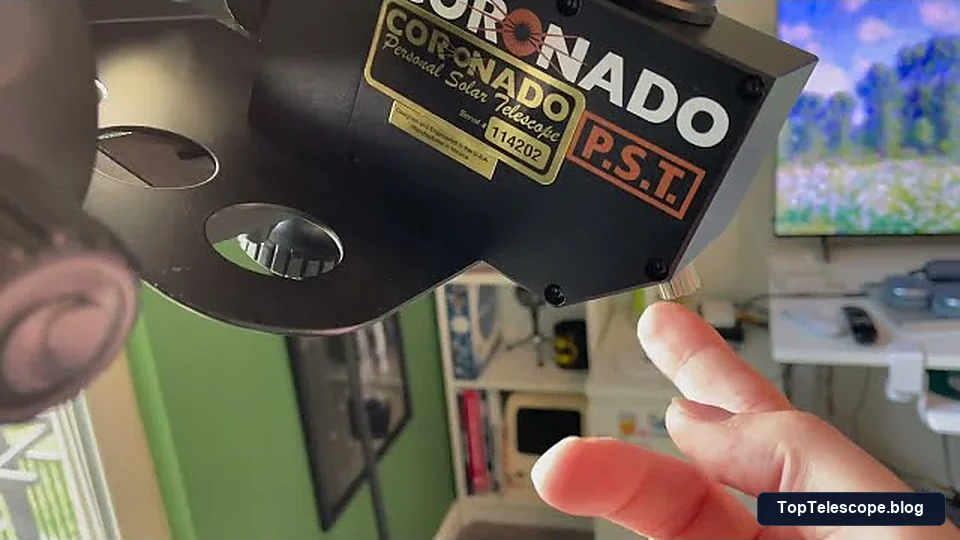
Aperture size forms the foundational optical differentiator between these two popular systems. Mechanical housings also dictate how thermal expansion and environmental stress affect internal tuning stability during long sessions.
The Coronado PST utilizes a 40mm aperture internal etalon design coupled with a blocking filter. For broader alternatives, read our comprehensive lunt ls50tha solar telescope review highlighting advanced tuning performance.
Conversely, the Lunt LS50THA incorporates a 50mm aperture front-mounted etalon system providing greater light-gathering power. Its wider glass diameter resolves finer surface granulation and tighter active region details than smaller apertures.
- Coronado features a traditional 40mm objective lens configuration.
- Lunt incorporates a larger 50mm primary doublet lens element.
- Both systems rely on internal blocking filters for safety.
Aperture and Resolution Dynamics
Larger apertures gather more photons, directly increasing the theoretical resolving power of fine solar features. The extra ten millimeters on the Lunt provide noticeable gains in surface detail.
Smaller apertures often yield wider focal depths, making focus acquisition straightforward for novice users. Physics dictates that resolution scales directly with clear aperture diameter across all wavelengths.
- Resolution limits are governed by the Rayleigh criterion.
- Larger lenses reveal finer granulation structures.
Real-World Solar Performance and Resolution
Observing the solar chromosphere requires high contrast to reveal delicate filaments. For deeper insights into entry-level optics, consult our detailed coronado solar telescope review covering everyday field performance.
Prominence visibility remains a standout attribute for the classic Coronado optical train. Meanwhile, the Lunt excels at resolving complex active regions and sunspot penumbral details across the disk.
Higher resolution depends directly on objective diameter, giving the Lunt a clear theoretical advantage in resolving micro-features. Users can push magnification further before diffraction limits degrade the crisp contrast of chromospheric network structures.
The Coronado PST still delivers high-contrast views of bright prominences despite its smaller light bucket. Its optical train excels at isolating the 656.3nm line with minimal scattered light reaching the final eyepiece focal plane.
- Chromosphere contrast highlights bright plage and dark filaments.
- Prominences appear clearly against the occulted sky background.
- Active regions show complex magnetic loop structures.
Surface Detail Versus Limb Prominences
Balancing disk contrast with limb prominence brightness challenges every solar telescope designer. Optical coatings must maximize transmission at the exact hydrogen-alpha line while rejecting unwanted continuum light.
Users frequently report crisp limb clarity with the smaller instrument. Higher magnification imaging often favors the increased resolving power of the larger objective lens.
- Disk features require homogeneous etalon spacing.
- Limb features demand excellent internal baffle design.
Tuning Mechanisms and Bandpass Stability
Etalon filters require precise mechanical or pneumatic tuning to remain locked on the hydrogen-alpha wavelength. Temperature fluctuations cause optical cavities to shift, necessitating user intervention during extended observation runs.
Mechanical tilt systems offer simple, direct control over the internal optical bandpass. When upgrading your equipment, browse our best telescope guide to compare top optical designs for solar and nighttime viewing.
Tuning accuracy dictates how effectively you isolate Doppler shifts in solar flares and filaments. The Coronado utilizes a mechanical RichView tilt system, whereas Lunt employs a precise pressure tuning piston mechanism.
Pressure tuners adjust internal air density to shift the bandpass smoothly across the solar disk. This pneumatic approach maintains uniform transmission characteristics across the entire etalon clear aperture without introducing undesirable optical aberrations.
- Tilt mechanisms adjust the angle of the transmitted light beam.
- Pressure systems alter internal air density inside the etalon cavity.
- Narrower bandpasses reveal higher contrast chromospheric structures.
Tilt Tuning Versus Pressure Tuning
Tilt systems can sometimes introduce slight off-axis optical aberrations at extreme adjustment angles. Modern pressure tuners eliminate this potential drawback by changing refractive index uniformly.
Field maintenance of pneumatic systems requires careful handling of internal O-rings and seals. Traditional mechanical adjusters offer straightforward field serviceability without specialized replacement parts.
- Pressure tuning ensures even bandpass distribution.
- Tilt tuning remains mechanically intuitive for beginners.
Ergonomics, Mounting, and Mechanical Build
Field ergonomics dictate how easily an astronomer can transport, mount, and operate these instruments. Lightweight configurations encourage frequent usage without causing physical fatigue during transit.
Mechanical dovetail bars and ring assemblies must securely support the optical tube assembly. Secure mounting prevents unwanted flexure during high-magnification solar imaging sessions.
Mechanical housing integrity ensures internal optical alignment survives transport to remote observing sites. The PST features a built-in Solar Finder sun-scope and a rugged cast-aluminum body designed for field portability and quick setup.
Lunt equips its telescope with a sturdy feather-touch focuser and standard dovetail bars. For novice astronomers seeking portable options, check our best starter telescope selections for ideal entry-level specifications.
- Integrated handle designs simplify safe optical transport.
- Vixen-style dovetail rails mount easily to standard astronomy mounts.
- Focus assemblies require smooth travel under load.
Portability and Field Deployment
Compact dimensions allow astronomers to pack the smaller scope into standard airline luggage. Quick setup times maximize observational windows during unpredictable weather patterns.
Heavier optical tubes demand sturdy tracking mounts to maintain steady framing. Balancing the chassis correctly prevents strain on internal focus mechanisms.
- Travel readiness reduces setup friction for users.
- Sturdy rings prevent accidental optical misalignment.
Maintenance, Thermal Management, and Safety
Solar telescopes operate under extreme thermal loads, requiring effective heat management strategies. Energy rejection filters prevent harmful infrared and ultraviolet radiation from entering the optical train.
Routine maintenance involves inspecting blocking filters for degradation and keeping exterior lenses pristine. Proper storage in dry environments protects delicate optical coatings from moisture damage.
Solar telescopes demand rigorous adherence to thermal management protocols to prevent internal optical coating degradation. Blocking filters require secure storage inside desiccant-lined cases to prevent moisture damage from ruining the delicate blocking coatings.
Safety certifications depend entirely on factory-sealed energy rejection filters that block harmful ultraviolet and infrared radiation. Never operate either telescope if the primary front objective filter shows any visible cracking, scratching, or delamination.
- Energy rejection filters shield internal optical components.
- Blocking filters must be inspected regularly for safety.
- Dry storage prevents fungus growth on coated surfaces.
Thermal Equilibrium and Safety Standards
Allowing the telescope to reach thermal equilibrium minimizes internal air turbulence during viewing. Certified blocking filters provide essential protection against harmful solar radiation leaks.
Never operate a solar telescope without verifying the integrity of upstream filtering elements. Regular safety checks ensure long-term viewing confidence and prevent eye injury.
- Thermal acclimatization improves high-power image clarity.
- Safety filters are mandatory for visual observing.
Operational Efficiency and Field Deployment
Streamlined workflows allow observers to capture fleeting transient solar events before conditions change. Efficient mechanical controls reduce the time spent fiddling with focus and alignment.
Quick acquisitionfinders or solar finders help center the solar disk rapidly without eye strain. Minimizing setup steps encourages impromptu observing sessions on busy days.
Rapid thermal equilibrium allows astronomers to capture fleeting moments of excellent atmospheric seeing conditions. The smaller thermal mass of the PST lets it reach ambient temperature quickly, minimizing internal air currents during morning sessions.
Field deployment requires stable alt-azimuth or equatorial mounts capable of tracking the sun smoothly. Utilizing a sturdy tripod reduces image jitter caused by wind gusts, ensuring uninterrupted observation of rapid solar flares.
- Solar finders project shadows for safe alignment.
- Friction focusers allow rapid initial coarse adjustments.
- Compact footprints fit easily on tabletop mounts.
Workflow Optimization for Imaging
Connecting dedicated planetary cameras requires precise backfocus measurements and sturdy adapters. Optimizing the imaging train ensures maximum sampling efficiency for high-framerate video captures.
Cable management prevents accidental tugging during automated time-lapse sequences of flares. Efficient power distribution keeps portable field stations running smoothly.
- Backfocus accuracy is critical for camera sensor placement.
- Stable connections prevent dropped frames during capture.
Choosing the Right H-alpha System
Selecting the ideal hydrogen-alpha telescope depends entirely on your primary observational goals and budget. Visual observers often prioritize portability, while imagers demand maximum resolving power.
Weighing optical trade-offs ensures you invest in a system that matches your astronomical ambitions. Both instruments deliver breathtaking views of our dynamic nearest star when used correctly.
Selecting between these two instruments hinges on balancing your aperture requirements against portability constraints. Observers prioritizing maximum spatial resolution will favor the Lunt, while travelers prioritize the lightweight PST chassis for transit.
Evaluate your intended mix of visual observing versus solar imaging before making a final purchasing decision. Both platforms provide exceptional gateways into narrowband solar astronomy, unlocking daily changes in our dynamic active star.
- Match aperture size to your primary viewing preferences.
- Consider mounting requirements before making a final purchase.
- Evaluate tuning preferences for local climate conditions.
Final Decision Framework
Review your storage limitations and travel habits before choosing a specific optical tube. Ensure your existing mount can handle the payload safely and securely.
Consult experienced community members to test both systems in person if possible. Real-world experience remains the ultimate guide for selecting specialized solar equipment.
- Assess travel habits for luggage compatibility.
- Test focus ergonomics during daylight hours.
Frequently Asked Questions
Can I use these solar telescopes for night astronomy?
No, specialized hydrogen-alpha and energy rejection filters block nighttime starlight entirely. These instruments are engineered exclusively for safe daytime solar observation.
What is the primary safety hazard when viewing the sun?
Unfiltered concentrated sunlight causes instant and permanent eye damage. Always verify that your blocking and energy rejection filters are securely installed.
How does pressure tuning differ from tilt tuning?
Pressure tuning alters internal air density to shift wavelengths uniformly across the etalon. Tilt tuning changes the physical angle of the filter element.
Do I need a specialized tracking mount for solar imaging?
Motorized tracking mounts simplify high-magnification imaging by keeping the sun centered. Manual alt-azimuth mounts work well for low-power visual observing sessions.
How often should blocking filters be inspected for wear?
Inspect your blocking filters annually for signs of optical coating degradation or oxidation. Store them in dry, temperature-controlled containers to maximize longevity.