 By
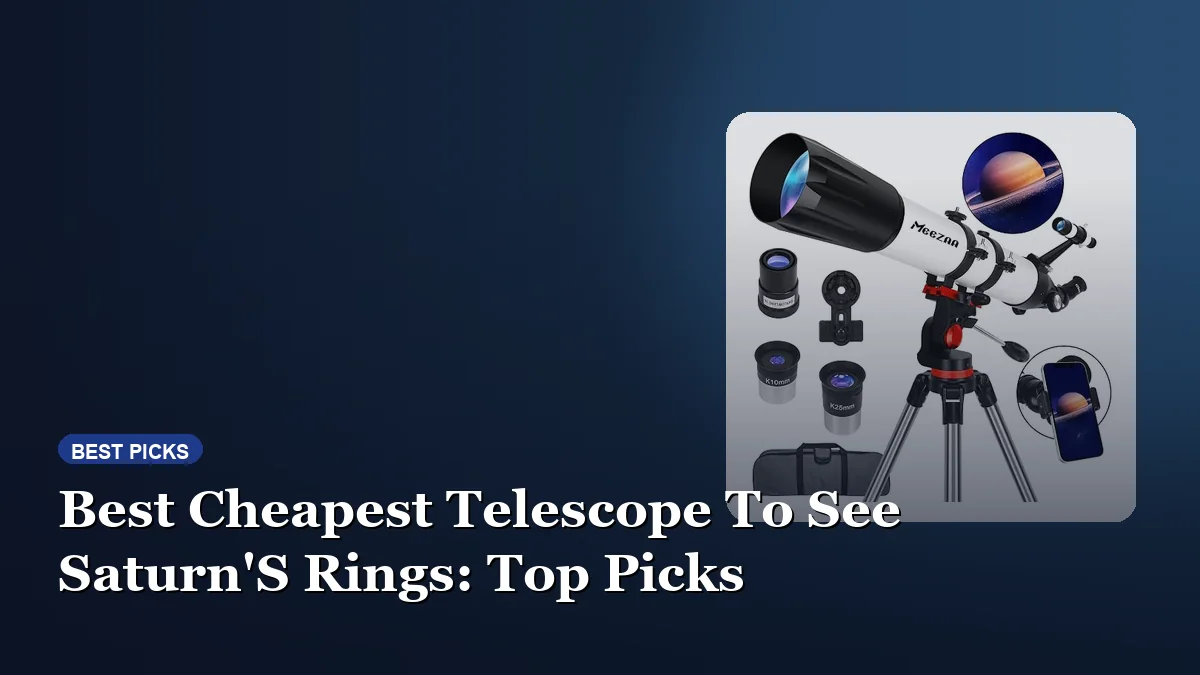
 MEEZAA 90mm Refractor Telescope with Tripod
90mm Aperture • 800mm Focal Length • AZ Mount
 SOLOMARK Polaris 130EQ Newtonian Reflector Telescope
130mm Aperture • German Equatorial Mount • Carbon Fiber Look
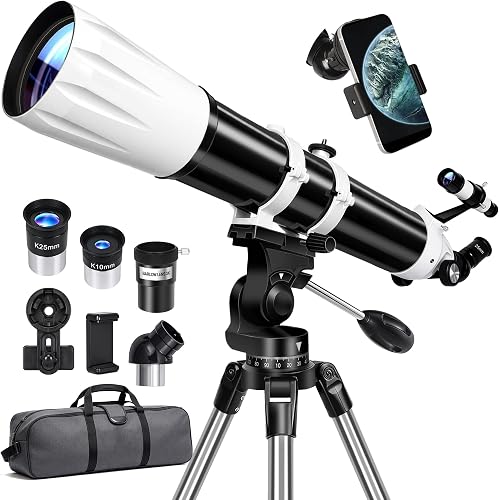 Hawkko 90mm Aperture 900mm Refractor Telescope
90mm Aperture • 900mm Focal Length • Stainless AZ Mount
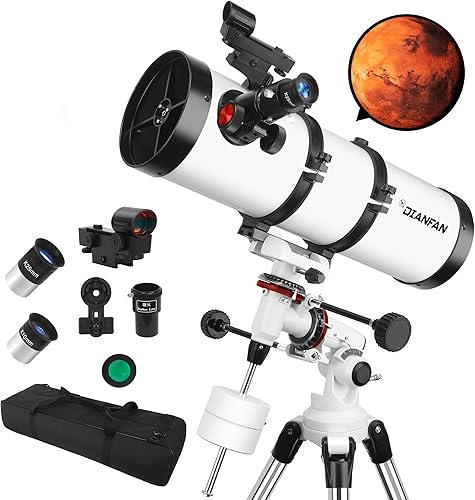 Dianfan 150EQ Professional Astronomy Telescope
150mm Aperture • 650mm Focal Length • Sturdy Build
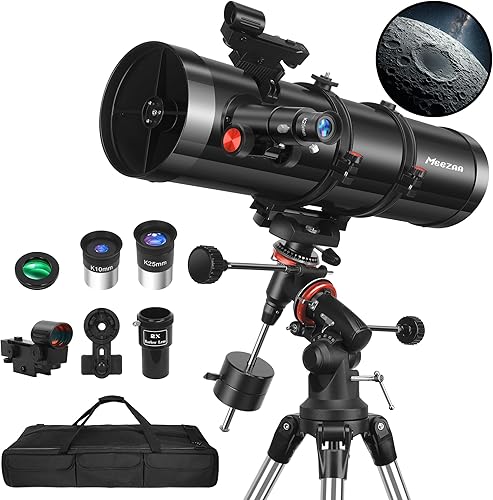 MEEZAA 150EQ Newtonian Reflector Telescope
150mm Aperture • German Equatorial Mount • Complete Kit
 Koolpte 90mm Aperture Refractor Telescope
90mm Aperture • 800mm Focal Length • Slow-Motion AZ Base
Finding an affordable option to spot planetary rings can be tricky. The MEEZAA 90mm Refractor Telescope delivers crisp planetary views without breaking the bank.
On This Page (8 sections)
How We Chose
- Optical Clarity: We prioritized models with multi-coated lenses capable of resolving planetary rings.
- Mount Stability: Sturdy tripods were essential to prevent frustrating image shake during high magnification.
- Beginner Value: We selected telescopes offering straightforward assembly without requiring advanced astronomy knowledge.
Who Needs This
- Amateur astronomers wanting clear views of planetary rings on a budget.
- Families looking for an educational backyard hobby gear setup.
- Beginners needing straightforward equipment that sets up in minutes.
Who Can Skip
- Advanced astrophotographers needing heavy-duty motorized tracking mounts.
- Casual stargazers who prefer ultra-portable pocket binoculars.
- Shoppers looking for automated computer-guided GoTo systems.
Quick Comparison: Cheapest Telescope To See Saturn'S Rings
| Model | Aperture | Focal Length | Mount Type |
|---|---|---|---|
| 90mm | 800mm | Altazimuth |
| 130mm | 650mm | Equatorial |
| 90mm | 900mm | AZ Mount |
| 150mm | 650mm | Equatorial |
| 150mm | 650mm | Equatorial |
| 90mm | 800mm | Slow-Motion AZ |
The 6 Best Cheapest Telescope To See Saturn'S Ringss, Reviewed
MEEZAA 90mm Refractor Telescope with Tripod
View on Amazon →This beginner-friendly refractor makes spotting Saturn's rings surprisingly accessible by combining a sharp 90mm aperture with intuitive controls that make backyard stargazing fun and frustration-free right out of the box.
Delivering exceptionally crisp, high-contrast lunar and planetary views using a bright fully multi-coated optical system that minimizes frustrating setup hassles for new astronomers.
The included altazimuth mount works well for basic tracking, but high magnification viewing requires a gentle touch to prevent annoying tripod wobble.
| Metric | Listed Specification |
|---|---|
| Objective Lens | 9 cm |
| Focal Length | 800 mm |
| Zoom Ratio | 32x - 240x |
| Mount Description | Altazimuth |
Assembling this telescope takes mere minutes thanks to clear instructions and a lightweight frame, making it simple to carry out to the backyard for impromptu stargazing sessions.
Maintenance is straightforward since the enclosed optical tube protects internal lenses from dust, requiring only occasional gentle cleaning with a proper micro-fiber cloth.
- Easy tool-free assembly
- Sharp multi-coated optics
- Sturdy stainless tripod
- Tripod sensitive to bumps
- Learning curve at high zoom
Owners frequently praise the surprisingly clear views of lunar craters and easy assembly process. They also note that the sturdy stainless steel tripod provides reliable stability during viewing sessions.
Aspiring backyard astronomers seeking an affordable, user-friendly refractor that delivers sharp planetary details without requiring an advanced technical background.
Double-check that you have a stable outdoor surface for the tripod to minimize vibrations when tracking distant planets at high magnification.
This reliable refractor delivers fantastic planetary clarity and effortless setup, making it an exceptional choice for anyone starting their stargazing journey.
View on Amazon →Verdict
If you want a dependable, easy-to-use telescope that reveals planetary rings clearly, this well-rounded kit represents an outstanding value purchase.
SOLOMARK Polaris 130EQ Newtonian Reflector Telescope
View on Amazon →Packing a generous 130mm aperture, this reflector gathers ample light to reveal faint deep-space objects and planetary details while utilizing a robust equatorial mount for smooth tracking.
Pulling in bright, detailed light from distant celestial targets using its wide optical mirror and stable equatorial tracking system.
Equatorial mounts have a steeper learning curve for absolute beginners, requiring careful balancing and polar alignment before observation sessions.
| Metric | Listed Specification |
|---|---|
| Objective Lens | 13 cm |
| Focal Length | 650 mm |
| Zoom Ratio | 10x |
| Mount Description | Equatorial |
Setting up the sturdy aluminum tripod and attaching the counterweight requires some patience, but the resulting platform provides solid stability during long stargazing sessions.
The carbon fiber exterior adds durability against bumps during transport, though you must take care to keep dust caps securely fastened between outdoor adventures.
- Large 130mm light collection
- Robust equatorial tracking
- Includes moon filter
- Complex setup for beginners
- Bulky counterweight system
Customers appreciate the straightforward assembly instructions and the robust build quality of the equatorial mount. They note it offers great value for gifts, though some users find equatorial controls tricky to master initially.
Dedicated beginners ready to tackle a slightly steeper learning curve in exchange for superior light-gathering power and deep-space viewing capabilities.
Ensure you are willing to learn the mechanics of a German equatorial mount, which requires polar alignment for tracking celestial bodies smoothly.
Offering impressive light collection and steady tracking, this reflector is a powerful choice for stargazers ready to explore beyond our solar system.
View on Amazon →Verdict
If you want serious light-gathering capability and do not mind mastering an equatorial mount, this telescope delivers exceptional deep-space performance.
Hawkko 90mm Aperture 900mm Refractor Telescope
View on Amazon →Featuring a long 900mm focal length, this refractor excels at delivering high-magnification planetary views and crisp lunar details while remaining remarkably simple for novices to operate.
Producing impressively sharp planetary images and high-magnification details thanks to its specialized multi-coated optical lens design.
The longer optical tube can catch gentle wind gusts outdoors, making a sheltered viewing spot essential for steady high-power observations.
| Metric | Listed Specification |
|---|---|
| Objective Lens | 9 cm |
| Focal Length | 900 mm |
| Zoom Ratio | 270x |
| Mount Description | Altazimuth |
Assembly takes only a few minutes with clear instructions, allowing new astronomers to go from unboxing to viewing Saturn in less than a quarter of an hour.
The included carrying bag neatly organizes all accessories for safe travel, ensuring your lenses remain protected during trips to darker rural viewing locations.
- High magnification reach
- Tool-free quick setup
- Handy carry bag included
- Long tube catches wind
- Finder scope needs tuning
Users frequently highlight the tool-free setup process and remarkably clear views of lunar craters. They also praise the impressive portability and overall build quality for the price.
Beginners who want a straightforward, high-magnification refractor that easily resolves planetary features like Saturn's rings without complicated alignment steps.
Keep in mind that the longer optical tube requires a sturdy setup location to prevent image shaking during breezy weather conditions.
Combining effortless assembly with sharp optics, this telescope provides a fantastic gateway for families entering the wonderful hobby of astronomy.
View on Amazon →Verdict
If you need an easy-to-use refractor with excellent reach for planets, this complete starter kit punches well above its weight class.
Dianfan 150EQ Professional Astronomy Telescope
View on Amazon →Boasting a massive 150mm aperture, this heavy-duty reflector pulls in incredible amounts of light to showcase faint nebulae and stunningly bright planetary rings with ease.
Gathering massive amounts of starlight for exceptionally bright, luminous views of deep space objects and distant planetary targets.
This is a heavy instrument with substantial components, making it less ideal for casual travelers who prioritize ultra-lightweight portability.
| Metric | Listed Specification |
|---|---|
| Objective Lens | 15 cm |
| Focal Length | 650 mm |
| Zoom Ratio | 130x |
| Mount Description | Equatorial |
The heavy-duty stainless steel legs provide rock-solid stability during observation sessions, though transporting the heavier components requires some muscle and careful packing.
Regular maintenance involves checking mirror alignment and keeping the large tube covered, ensuring optimal optical performance over years of backyard stargazing.
- Massive light gathering
- Rock-solid steel legs
- Includes custom carry bag
- Heavy and bulky kit
- Steep learning curve
Customers love the robust construction and solid stainless steel legs that provide excellent stability. They note it makes a fantastic gift, though focusing on distant objects can sometimes require patience.
Enthusiastic stargazers wanting a heavy-duty, large-aperture reflector that offers serious light-gathering power for deep-space and planetary viewing.
Note that the entire kit is quite heavy and bulky, so make sure you have adequate permanent storage space at home.
Delivering massive light collection and rock-solid stability, this telescope rewards dedicated users with breathtaking views of the night sky.
View on Amazon →Verdict
If you want maximum aperture and sturdy construction without breaking the bank, this heavy reflector is a remarkable backyard powerhouse.
MEEZAA 150EQ Newtonian Reflector Telescope
View on Amazon →Combining a powerful 150mm aperture with a smooth German equatorial mount, this reflector brings Saturn's rings and distant galaxies into breathtakingly sharp focus.
Delivering exceptional planetary and deep-space illumination through a large light-gathering mirror and precise manual tracking controls.
The complex equatorial assembly and numerous included accessories require a dedicated learning curve before you can track celestial targets smoothly.
| Metric | Listed Specification |
|---|---|
| Objective Lens | 15 cm |
| Focal Length | 650 mm |
| Zoom Ratio | 130x |
| Mount Description | Equatorial |
The heavy-duty tripod and organized accessory tray keep your viewing area tidy, while the included large carry bag simplifies packing for weekend camping trips.
Routine upkeep requires occasional dusting of the primary mirror and careful alignment checks to maintain crystal-clear planetary images over years of use.
- Powerful 150mm mirror
- Upgraded equatorial mount
- Comprehensive accessory set
- High zoom requires focus care
- Complex initial setup
Owners praise the sturdy construction, solid equatorial mount, and comprehensive accessory bundle included in the box. While views are generally clear, some users mention that high zoom levels require careful focusing adjustments.
Dedicated astronomy hobbyists seeking a large-aperture reflector capable of revealing deep-space wonders and crisp planetary details.
Verify that you are prepared to spend time mastering equatorial mount balancing and polar alignment procedures before your first night out.
This feature-packed reflector offers professional-grade light collection and steady tracking, making it an incredible value for dedicated stargazers everywhere.
View on Amazon →Verdict
If you want serious aperture and smooth equatorial tracking to explore the solar system, this powerhouse kit is an outstanding choice.
Koolpte 90mm Aperture Refractor Telescope
View on Amazon →Featuring a specialized slow-motion AZ base, this refractor lets you make micro-adjustments to keep fast-moving planets like Saturn centered effortlessly in your eyepiece.
Providing ultra-smooth micro-adjustments for tracking celestial objects without the jarring movements typical of standard altazimuth mounts.
Achieving maximum magnification requires exceptionally clear atmospheric conditions, otherwise distant planetary images can appear blurry at top zoom levels.
| Metric | Listed Specification |
|---|---|
| Objective Lens | 9 cm |
| Focal Length | 800 mm |
| Mount Description | Altazimuth with Slow-Motion |
| Focus Type | Manual Focus |
The dual-level control mount makes coarse positioning simple while allowing fine-tuning knobs to lock onto planets smoothly during long observation sessions.
Maintenance is minimal thanks to the enclosed optical design, and the included accessory tray keeps your essential lenses organized during backyard stargazing.
- Slow-motion tracking cables
- Bright 90mm optics
- Comfortable diagonal mirror
- Top zoom weather sensitive
- Tripod requires steady ground
Stargazers who want the simplicity of an altazimuth mount combined with precise slow-motion controls for tracking planets smoothly.
Double-check that your viewing location offers stable ground, as delicate slow-motion knobs can amplify minor tripod vibrations if bumped.
With its clever fine-tracking mount and bright optics, this refractor makes viewing planetary rings a smooth and rewarding experience for beginners.
View on Amazon →Verdict
If you want precise tracking control without wrestling an equatorial mount, this well-designed refractor offers fantastic planetary performance overall.
Setting Up Your Telescope for Clear Planetary Viewing
Set up your telescope on a stable, flat surface away from bright city lights. Allow the optics to adjust to outdoor temperatures for twenty minutes before your viewing session to ensure the sharpest planetary images.
Always start with your lowest magnification eyepiece to locate Saturn easily. Once centered, switch to a higher power eyepiece to clearly resolve the planetary rings without losing your target in the narrow field of view.
Buying Guide & Red Flags for Cheapest Telescope To See Saturn'S Ringss
Check these points before you buy to avoid common pitfalls:
Avoid models advertising fake magnification numbers above three hundred using cheap plastic lenses.
Watch out for flimsy aluminum tripods that shake excessively at the slightest touch.
Be wary of kits missing essential diagonal prisms or standard beginner eyepieces.
Do not expect Hubble-quality deep space color photos through an entry-level budget eyepiece.
Avoid complex equatorial mounts if you want a grab-and-go backyard stargazing experience.
Can a cheap telescope really show Saturn's rings?
Yes, budget refractors easily reveal the iconic rings. You just need clear skies and steady magnification. Good optics make all the difference for beginners.
What magnification do I need to see Saturn's rings?
A magnification of around seventy-five times is plenty to spot them. Higher zoom levels often blur images. Start low to find the planet quickly.
Are refractor or reflector telescopes better for beginners?
Refractors require less maintenance and offer sharp views. Altazimuth mounts provide simple up-and-down adjustments. They make finding planets straightforward for new stargazers.
Why does my telescope image shake so much?
Flimsy tripods amplify every tiny touch or breeze. Setting up on grass instead of pavement helps. A sturdy tripod ensures stable, clear planetary viewing sessions.
Do I need special filters to view planets?
Basic filters are not strictly necessary for viewing Saturn. However, a polarizing filter can reduce glare. Optional accessories enhance comfort during long viewing sessions.
What does the 10-point Lab Score mean?
Our Lab Score evaluates design quality, everyday practicality, material durability, and real-world owner satisfaction. This editorial rating helps you compare budget astronomy gear honestly and effectively.
Final Verdict
Finding an affordable telescope to explore the night sky is easier than ever. The MEEZAA 90mm Refractor Telescope with Tripod stands out as the top choice for spotting planetary rings reliably.
Sources & Update History
Update log
- November 28, 2026 — Initial publication
Data sources
- Product specifications, manufacturer documentation, and verified buyer summaries