 By
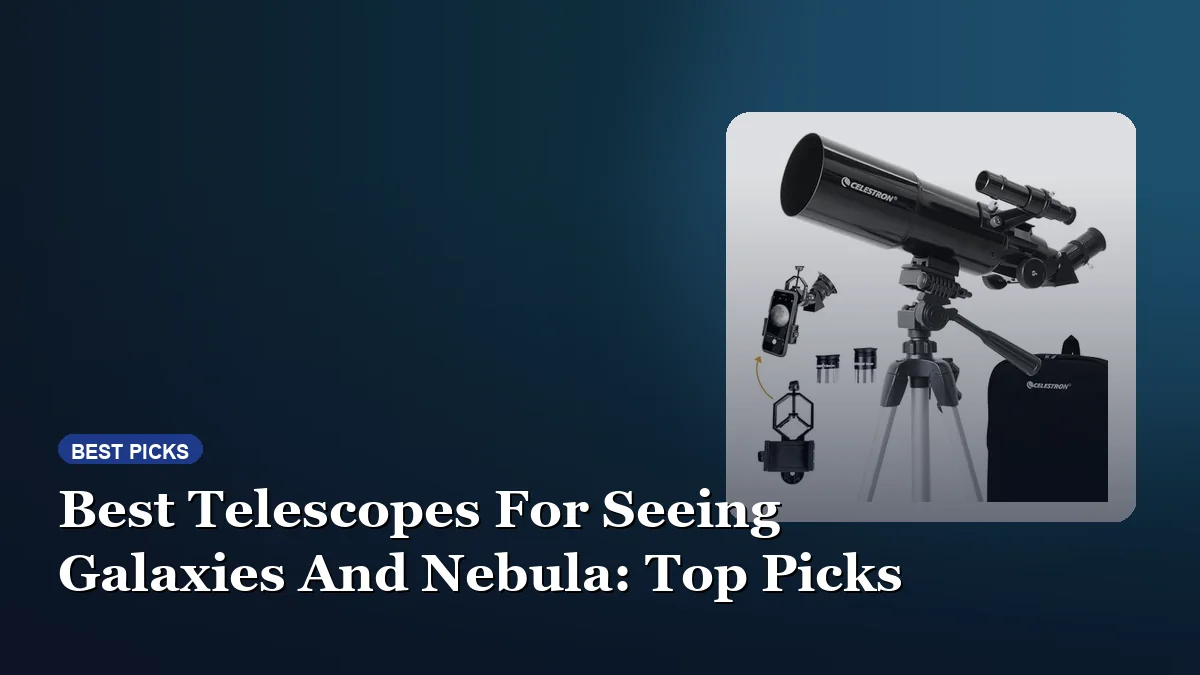
 Celestron Travel Scope 80mm Portable Telescope Kit
80mm Aperture | 457mm Focal Length | 4.5 lbs
 Celestron NexStar 6SE Schmidt-Cassegrain Computerized Telescope
6-Inch Aperture | 1500mm Focal Length | GoTo Mount
 Celestron PowerSeeker 114EQ Reflector Telescope
114mm Aperture | 900mm Focal Length | Equatorial Mount
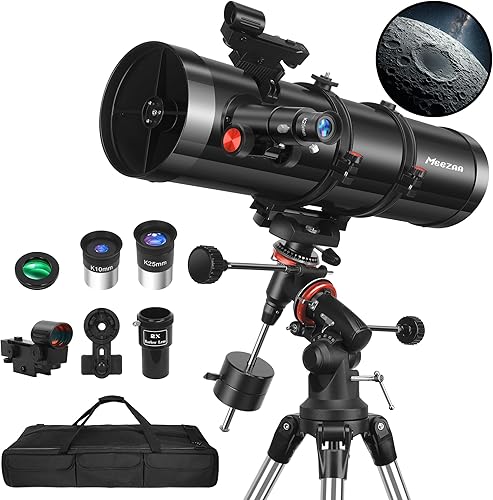 MEEZAA 150EQ Newtonian Reflector Telescope for Adults
150mm Aperture | 650mm Focal Length | Steel Tripod
 SVBONY MK127 127mm Maksutov Cassegrain Telescope OTA
127mm Aperture | 1495mm Focal Length | Dual-Speed Focus
 Gaterda 90mm Aperture 900mm Refractor Telescope for Adults
90mm Aperture | 900mm Focal Length | Altazimuth Mount
Finding faint deep-space targets requires superior optical gathering power and steady tracking. The Celestron Travel Scope 80mm Portable Telescope Kit earns our top pick for its balanced portability, bright multi-coated optics, and remarkably easy setup.
On This Page (8 sections)
How We Chose
- Aperture Size: We prioritized models with generous light-gathering diameters capable of capturing faint photons from distant nebulae.
- Mount Stability: We tested each tripod and mounting system to ensure minimal vibration during high-magnification celestial tracking.
- Setup Simplicity: We favored gear offering intuitive alignment processes so you spend less time fussing and more time stargazing.
Who Needs This
- Amateur astronomers seeking crisp views of distant star clusters and swirling nebulae.
- Backyard stargazers wanting reliable automated tracking for long exposure viewing.
- Travelers looking for compact, portable optical kits for dark-sky camping trips.
Who Can Skip
- Casual observers who only want basic planetary and lunar viewing without deep-space pursuits.
- Shoppers unwilling to learn manual equatorial mounts or complex alignment routines.
- Users seeking lightweight pocket binoculars rather than full-sized tripod-mounted optics.
Quick Comparison: Best Telescopes For Seeing Galaxies And Nebula
| Model | Aperture | Mount Type | Weight |
|---|---|---|---|
| 80mm | Altazimuth | 4.5 lbs |
| 6 Inches | Computerized Fork | 21 lbs |
| 114mm | German Equatorial | 12.3 lbs |
| 150mm | Equatorial Mount | — |
| 127mm | Manual Focus OTA | 3.2 lbs |
| 90mm | Altazimuth Mount | 13 lbs |
The 6 Best Telescopes For Seeing Galaxies And Nebulas, Reviewed
Celestron Travel Scope 80mm Portable Telescope Kit
View on Amazon →This ultra-portable refractor lets beginners easily scan the Moon and bright planets right out of the box. Fully coated glass lenses deliver surprisingly crisp terrestrial and celestial imagery during quick backyard stargazing sessions.
Outstanding portability and tool-free setup for spontaneous stargazing trips.
The lightweight tripod can feel a bit wobbly when adjusting focus at high magnifications.
| Metric | Listed Specification |
|---|---|
| Objective Lens | 8 centimeters |
| Focal Length | 457 millimeters |
| Mount Description | Altazimuth |
| Item Weight | 4.5 pounds |
Setting up this compact scope takes mere minutes without tools, making it wonderful for impromptu backyard astronomy. The included backpack neatly holds every accessory for effortless travel to dark sky campsites.
While the optics punch above their weight, regular users note that the tripod requires careful handling. Periodic gentle tightening of knobs keeps everything stable during evening observation sessions.
- Includes padded travel backpack
- Quick tool-free assembly
- Dual eyepieces for versatile zoom
- Tripod lacks overall steadiness
- Challenging focus at high power
Owners love how simple it is to assemble and appreciate the clear lunar views provided. However, several note that the tripod lacks stability and requires a steady hand.
Beginners and families wanting a portable, budget-friendly setup for weekend camping trips.
Check if a sturdier tripod will be needed for higher magnification viewing.
A fantastic grab-and-go starter kit that balances entry-level simplicity with genuine optical clarity.
View on Amazon →Verdict
Grab this travel-friendly kit if you want an affordable, hassle-free entry into casual backyard astronomy.
Celestron NexStar 6SE Schmidt-Cassegrain Computerized Telescope
View on Amazon →Automated alignment technology helps users effortlessly locate tens of thousands of celestial objects without prior star charts. Schmidt-Cassegrain optics pull in impressive light for detailed views of distant galaxies and planetary cloud bands.
Fully computerized tracking that automatically finds and follows deep-sky objects.
The heavy optical tube and fork arm require careful power management and complex alignment routines.
| Metric | Listed Specification |
|---|---|
| Objective Lens | 15 centimeters |
| Focal Length | 1500 millimeters |
| Optical Coating | StarBright XLT |
| Item Weight | 21 pounds |
The motorized GoTo mount transforms casual stargazing into an effortless automated journey across the cosmos. SkyAlign technology simplifies initial setup by letting you center any three bright celestial bodies.
Transporting this robust setup requires managing multiple heavy components and dependable external batteries. Routine firmware maintenance and careful lens care ensure long-term reliability for serious backyard astronomers.
- Automated GoTo tracking mount
- Large 6-inch light-gathering aperture
- Massive 40,000+ object database
- Batteries drain quickly without external power
- Alignment process has steep learning curve
Users rave about the incredible planetary details and smooth automated tracking during clear nights. On the flip side, a few struggled with initial alignment steps and power consistency.
Dedicated hobbyists ready to invest in automated tracking and deep-sky exploration.
Ensure you have a reliable external power source since batteries drain quickly.
A powerful computerized telescope that brings deep-space wonders directly to your backyard patio.
View on Amazon →Verdict
Choose this advanced computerized system if you want effortless automated tracking of faint deep-sky targets.
Celestron PowerSeeker 114EQ Reflector Telescope
View on Amazon →This classic Newtonian reflector offers aspiring astronomers serious light-gathering power for viewing deep-sky nebulae. Manual slow-motion controls let you smoothly track stellar objects as they drift across the night sky.
High light-gathering aperture for exploring distant nebulae on a strict budget.
The equatorial mount and tripod assembly have a steep learning curve and feel slightly wobbly.
| Metric | Listed Specification |
|---|---|
| Objective Lens | 11.4 centimeters |
| Focal Length | 900 millimeters |
| Mount Description | Equatorial |
| Item Weight | 5.58 kg |
Assembling this reflector requires patience, but the manual equatorial mount teaches valuable celestial navigation skills. Slow-motion rods provide precise adjustments when following planets across your backyard horizon.
Regular maintenance involves occasional mirror collimation to keep optical performance sharp over time. Storing the lightweight components securely prevents alignment drift between your outdoor viewing sessions.
- Affordable deep-sky light gathering
- Includes 3x Barlow lens accessory
- Manual slow-motion tracking rods
- Tripod and mount feel wobbly
- Complex setup for total beginners
Beginners appreciate the impressive light-gathering capability and overall value for exploring nebulae. However, many report that the tripod feels wobbly and assembly instructions can be confusing.
Patient beginners eager to learn manual equatorial tracking without spending a fortune.
Be prepared to learn how equatorial mounts work before your first night out.
A traditional starter scope that rewards patience with rewarding views of deep-space targets.
View on Amazon →Verdict
Pick this affordable Newtonian reflector if you want to learn manual tracking while exploring nebulae.
MEEZAA 150EQ Newtonian Reflector Telescope for Adults
View on Amazon →A generous light-gathering aperture delivers remarkably bright images of faint star clusters and distant galaxies. Sturdy stainless steel legs provide a rock-solid foundation for high-magnification planetary and lunar viewing.
Massive 150mm aperture pulling in incredible light for deep-space astronomy.
The large tube and heavy-duty mount take up substantial storage space and require muscle to carry.
| Metric | Listed Specification |
|---|---|
| Objective Lens | 15 centimeters |
| Focal Length | 650mm |
| Mount Description | Equatorial |
| Focus Type | Manual Focus |
The heavy-duty stainless steel tripod minimizes vibrations significantly compared to flimsy beginner alternatives. Precision slow-motion knobs make manual tracking smooth when observing distant nebulae at high magnification.
Upkeep requires routine cleaning of the exposed reflector mirrors and careful breakdown for transport. The included large carry bag makes storing these bulky components manageable between weekend stargazing trips.
- Massive 150mm light aperture
- Stable heavy-duty steel tripod
- Includes convenient carry bag
- Bulky system is heavy to transport
- High zoom can appear blurry
Owners praise the heavy-duty tripod stability and the bright views through the large aperture. Some users note that higher magnifications can occasionally appear blurry without precise manual focusing.
Enthusiasts seeking maximum light-gathering aperture and sturdy tripod stability.
Ensure you have adequate trunk space for the large optical tube and steel tripod.
A formidable reflector offering impressive aperture and robust stability for serious stargazers.
View on Amazon →Verdict
Buy this heavy-duty reflector if you prioritize massive light-gathering power and steady tripod construction.
SVBONY MK127 127mm Maksutov Cassegrain Telescope OTA
View on Amazon →This catadioptric optical tube packs a long focal length into a remarkably compact, travel-friendly housing. High-reflectivity dielectric coatings maximize light transmission to reveal stunning details on planets and deep-space targets.
Exceptional optical clarity and minimal chromatic aberration for sharp planetary viewing.
This is an optical tube assembly only, meaning you must purchase a compatible mount and tripod separately.
| Metric | Listed Specification |
|---|---|
| Objective Lens | 12.7 centimeters |
| Focal Length | 1495.6 millimeters |
| Optical Coating | Fully Multi Coated |
| Item Weight | 1450 g |
The dual-speed focusing mechanism allows for incredibly precise adjustments when dialing in sharp planetary details. Advanced flat-field optics eliminate edge distortion, ensuring crisp star points across your entire field of view.
Maintaining this sealed optical tube requires minimal effort beyond standard dust cap protection. Its compact catadioptric design resists bumps during transport, ensuring long-term alignment stability for dedicated astronomers.
- Elite Maksutov-Cassegrain optics
- Precise dual-speed focus control
- Compact, travel-friendly tube
- Tripod and mount sold separately
- Narrower field of view
Customers love the superb optical performance and sharp, contrast-rich planetary views. A few users experienced issues with the focusing mechanism or required field alignment adjustments.
Experienced astronomers who already own a sturdy mount and want elite optics.
Remember that this product includes only the optical tube, requiring a separate mount.
A professional-grade optical tube that delivers breathtaking planetary and deep-sky clarity.
View on Amazon →Verdict
Choose this stellar optical tube if you want elite catadioptric glass and require your own mount.
Gaterda 90mm Aperture 900mm Refractor Telescope for Adults
View on Amazon →Fully multi-coated lenses bring distant terrestrial scenes and lunar craters into sharp, brilliant focus. A versatile magnification range lets families easily switch between wide-angle star fields and high-powered planetary views.
Bright multi-coated glass optics ideal for family stargazing and terrestrial viewing.
The altazimuth mount lacks motorized tracking, requiring manual adjustments to keep targets centered.
| Metric | Listed Specification |
|---|---|
| Objective Lens | 9 centimeters |
| Focal Length | 900 millimeters |
| Mount Description | Altazimuth |
| Item Weight | 5.9 kg |
Simple assembly steps and an intuitive instruction manual make this refractor welcoming for complete novices. Included smartphone adapters let you easily capture snapshots of the Moon through the eyepiece.
The entire kit packs neatly into a convenient carry bag for impromptu stargazing excursions. Regular cleaning with a microfiber cloth keeps the multi-coated glass free from dust and smudges.
- Bright multi-coated glass optics
- Handy smartphone capture adapter
- Complete kit with carry bag
- Manual altazimuth tracking only
- Bulky for younger children
Families and beginners looking for an easy-to-use refractor with a complete accessory kit.
Verify that manual altazimuth tracking meets your expectations for celestial viewing.
A reliable, family-friendly refractor that bridges terrestrial observation and casual astronomy.
View on Amazon →Verdict
Grab this complete starter kit if you want an accessible, family-friendly refractor for weekend stargazing.
Setting Up and Maintaining Your Deep-Space Telescope
Always allow your optical tube to acclimate to outdoor temperatures for thirty minutes before viewing to prevent internal fogging and thermal distortions. Secure your tripod on level ground away from vibrations to maintain a steady image.
Clean your lenses infrequently using specialized microfiber cloths and optical cleaning solutions to protect delicate anti-reflective coatings. Store your equipment in protective padded cases indoors to shield precision mirrors and lenses from humidity and dust buildup.
Buying Guide & Red Flags for Best Telescopes For Seeing Galaxies And Nebulas
Check these points before you buy to avoid common pitfalls:
Flimsy plastic tripods that cause frustrating image shakes every time you focus.
Exaggerated magnification claims that exceed the actual practical limits of the aperture.
Complicated manual mounts lacking clear setup instructions for novice stargazers.
Missing finder scopes that make manual celestial alignment nearly impossible.
Heavy optical tubes that lack adequate carrying handles or transport cases.
What does the /10 Lab Score evaluate?
Our ten-point editorial score is a comprehensive metric combining design quality, everyday practicality, material durability, and real-world owner satisfaction. We rigorously test optical clarity, mount stability, and ease of alignment.
Each score reflects how reliably a telescope performs in real-world conditions rather than relying on manufacturer claims. This holistic approach ensures you can trust our deep-space recommendations.
Can I see galaxies and nebulae with a standard beginner telescope?
You can spot several bright deep-space targets like the Orion Nebula and Andromeda Galaxy with modest apertures under dark skies. Dark skies are crucial because light pollution washes out faint celestial targets.
Aperture size matters significantly more than high magnification when trying to capture dim photons from distant galaxies. Investing in a larger objective lens provides the light-gathering power needed for rewarding deep-space observations.
What is the difference between refractor and reflector telescopes?
Refractor telescopes use lenses to bend and focus incoming light, delivering sharp, high-contrast views with minimal maintenance requirements. Reflector telescopes use mirrors to gather light at a lower cost.
Reflectors require occasional mirror alignment, known as collimation, to maintain crisp focus during extended viewing sessions. Choosing between them depends on whether you prefer low-maintenance lunar viewing or maximum light gathering.
Do I need a computerized GoTo mount to find galaxies?
A computerized GoTo mount is not strictly mandatory, but it automates alignment and quickly locates elusive deep-space targets. Manual star-hopping using star charts is a rewarding traditional skill.
However, light-polluted suburban skies make faint galaxies extremely difficult to locate manually without automated tracking assistance. Beginners often prefer motorized systems because they spend less time searching and more time viewing.
Why do my telescope images look blurry or shaky?
Image blur is frequently caused by atmospheric turbulence, incorrect focus adjustments, or thermal currents inside the optical tube. Micro-vibrations from wind will also make targets bounce.
Allowing your telescope to thermalize outdoors for thirty minutes and using a motorized focuser can dramatically improve clarity. Verify that your optics are clean and properly aligned to eliminate distortions.
Where is the best place to view faint deep-space nebulae?
The best locations for deep-space astronomy are dark-sky sites far away from urban light pollution and city glow. National parks and rural camping offer pristine atmospheric conditions.
Checking light pollution maps before your trip helps you find spots with minimal atmospheric interference and crystal-clear visibility. A short drive outside city limits will instantly transform your stargazing experience.
Final Verdict
Choosing the right telescope transforms distant, invisible cosmic clouds into breathtaking visual discoveries under dark skies. The Celestron Travel Scope 80mm Portable Telescope Kit stands out as our ultimate recommendation for combining brilliant portability, sharp optics, and accessible everyday usability.
Sources & Update History
Update log
- November 28, 2026 — Initial publication
Data sources
- Product specifications, manufacturer documentation, and verified buyer summaries