 By
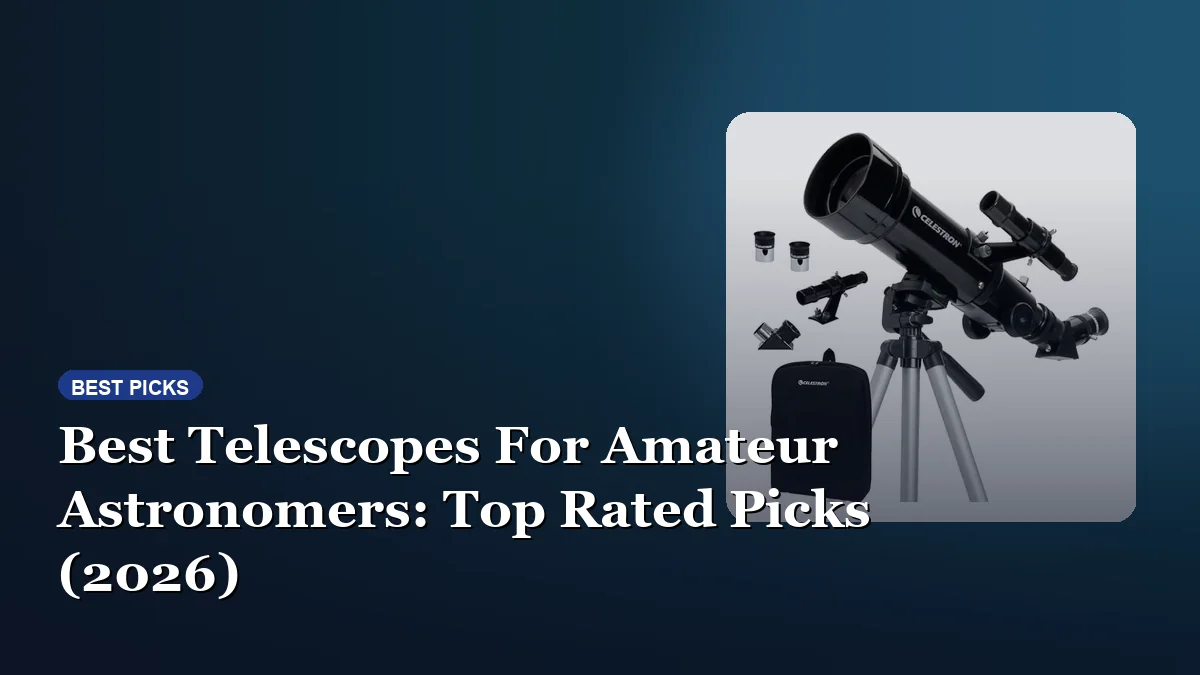
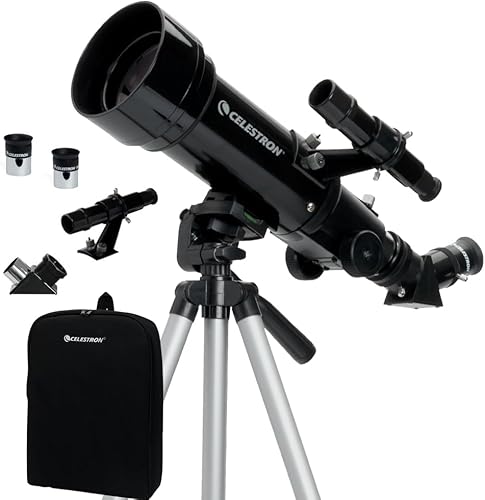 Celestron Travel Scope 70mm Beginner Portable Telescope
70mm aperture | Manual Altaz | 4.2 lbs
 Celestron PowerSeeker 127EQ Reflector Telescope
127mm aperture | German EQ | 13 lbs
 Celestron NexStar 8SE Computerized Telescope
8-inch optics | GoTo mount | Schmidt-Cassegrain
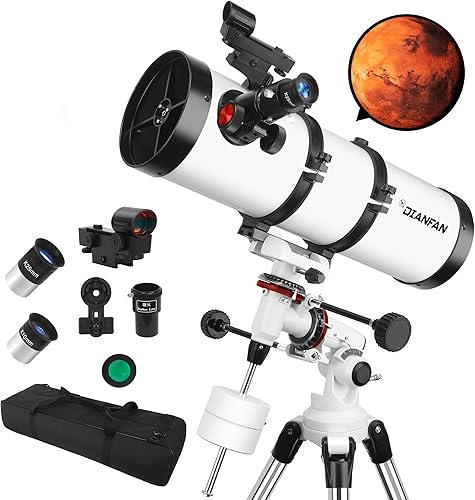 150EQ Professional Astronomy Telescope for Adults
150mm aperture | Equatorial | Steel tripod
 MEEZAA 90mm Aperture 800mm Refractor Telescope
90mm aperture | 800mm focal | Multi-coated
 Gaterda 90mm Aperture 900mm Refractor Telescope
90mm aperture | 900mm focal | Altaz mount
Our top recommendation is the Celestron Travel Scope 70mm Beginner Portable Telescope for its unmatched portability and user-friendly design. Beginners and seasoned stargazers alike will appreciate its quick setup and reliable optics.
On This Page (8 sections)
How We Chose
- Optical Performance: We prioritized sharp lenses and mirrors that deliver crisp details on lunar craters and distant planets.
- Build Quality: We checked tripod stability and frame materials to ensure units withstand regular backyard and field use.
- Ease of Use: We favored setups featuring intuitive focusing and straightforward manual alignment for hassle-free backyard stargazing sessions.
Who Needs This
- Beginners wanting an affordable entry point into backyard astronomy without getting bogged down by complicated equatorial mounts.
- Traveling stargazers needing a lightweight, portable telescope that packs down quickly for easy weekend camping trips and remote stargazing.
- Intermediate hobbyists looking for computerized GoTo tracking or larger apertures to explore deep-space nebulae and planets.
Who Can Skip
- Experienced astrophysicists requiring professional-grade observatory equipment with advanced tracking precision and specialized, expensive astrophotography cameras.
- Impatience-prone users who dislike manual alignment, polar balancing, or tinkering with complex mechanical counterweights in the dark.
- Urban dwellers living under heavy light pollution who lack access to dark skies or reliable transport options.
Quick Comparison: Best Telescopes For Amateur Astronomers
| Model | Aperture Size | Mount Type | Item Weight |
|---|---|---|---|
| 70mm | Altazimuth | 4.2 pounds |
| 127mm | German EQ | 13 pounds |
| 8 inches | Computerized GoTo | 10.88 kg |
| 150mm | Equatorial | — |
| 90mm | Altazimuth | — |
| 90mm | Altazimuth | 5.9 kg |
The 6 Best Telescopes For Amateur Astronomerss, Reviewed
Celestron Travel Scope 70mm Beginner Portable Telescope
View on Amazon →Designed for grab-and-go adventures, this compact refractor offers crystal clear lunar views and effortless setup without tools, packing easily into its own custom backpack for weekend camping trips.
Delivering unmatched portability and instant no-tool field assembly, this lightweight scope is truly built for amateur stargazers always on the move.
The lightweight aluminum tripod can feel a bit wobbly during windy outdoor viewing sessions, requiring a sheltered spot for maximum stability.
| Metric | Listed Specification |
|---|---|
| Objective Lens | 7 cm |
| Focal Length | 400 mm |
| Mount Type | Altazimuth |
| Total Weight | 4.2 lbs |
Setting up this compact refractor in your backyard takes mere minutes, allowing beginners to start exploring craters without complicated alignment procedures or frustrating technical hurdles.
While the included backpack makes transport a breeze, treating the mostly plastic construction with care ensures your travel telescope survives many seasons of outdoor exploration.
- Lightweight design
- No-tool setup
- Custom backpack included
- Wobbly tripod in wind
- Plastic parts feel fragile
Owners praise this starter scope for its exceptional portability and ease of use, making it a hit for younger children. However, a few note that stability can occasionally feel lacking in breezy conditions.
Active families and beginners seeking an ultra-portable telescope for casual backyard stargazing and weekend camping excursions without complicated gear.
Double-check that you always set up on a flat, solid surface to minimize any tripod shake during detailed planetary observations.
This friendly beginner scope delivers surprisingly fun lunar views in a remarkably lightweight and highly portable package that anyone can operate.
View on Amazon →Verdict
An ideal grab-and-go starter option for novice astronomers wanting effortless travel convenience and quick setup sessions under clear night skies.
Celestron PowerSeeker 127EQ Reflector Telescope
View on Amazon →Featuring a larger Newtonian reflector design, this scope gathers ample light for deep sky viewing while teaching beginners how to navigate using a manual German equatorial mount.
Providing impressive light-gathering power and smooth tracking controls for budding astronomers ready to learn manual celestial navigation.
Initial assembly can prove quite tricky for absolute novices due to dense instruction manuals and the mechanical complexity of counterweights.
| Metric | Listed Specification |
|---|---|
| Objective Lens | 12.7 cm |
| Focal Length | 1000 mm |
| Mount Type | Manual Equatorial |
| Item Weight | 13 lbs |
Navigating the night sky feels rewarding once you master the slow-motion control rods, letting you follow drifting stars smoothly across the celestial sphere.
The substantial optical tube requires careful balancing on its tripod, meaning you must take your time during setup to prevent accidental wobbles.
- High light gathering
- Equatorial slow-motion controls
- Includes Barlow lens
- Complex assembly
- Steep learning curve
Customers love the stunning lunar detail and bright views provided by the reflector optics. At the same time, many report that mastering the manual equatorial mount takes considerable patience and practice.
Dedicated beginners who want a true astronomical challenge and serious light-gathering power on a budget without breaking the bank.
Make sure you have plenty of patience for learning manual equatorial tracking before tackling faint deep sky objects overhead.
A powerful reflector that richly rewards user patience with stunning views of distant planetary rings and glowing nebulae.
View on Amazon →Verdict
A highly capable budget reflector for hands-on learners who are fully willing to master manual equatorial mounts and alignments.
Celestron NexStar 8SE Computerized Telescope
View on Amazon →Combining legendary Schmidt-Cassegrain optics with a fully computerized GoTo system, this advanced telescope automatically locates and tracks thousands of celestial wonders with push-button precision.
Delivering elite optical clarity and effortless automated sky tracking across an extensive built-in database of thousands of cosmic objects.
The sophisticated computer alignment process can occasionally frustrate tech-averse users who are seeking a completely plug-and-play stargazing experience.
| Metric | Listed Specification |
|---|---|
| Aperture | 20.3 cm |
| Focal Length | 2032 mm |
| Mount | Single Fork Arm |
| Coatings | StarBright XLT |
Aligning the computerized fork arm mount using bright stars unlocks automated navigation, letting you effortlessly hop between distant galaxies and faint nebulae.
Maintaining this premium motorized system requires reliable power sources, so keeping an external battery pack on hand ensures uninterrupted backyard viewing sessions.
- Massive 8-inch aperture
- Automated GoTo tracking
- Extensive object database
- Requires external power
- Complex computer setup
Astronomers rave about the breathtaking detail on planets and deep-space nebulae delivered by the large aperture. However, some experience occasional calibration frustrations with the computerized tracking system.
Intermediate to advanced hobbyists looking for a powerful, computerized telescope that completely automates complex deep-sky hunting routines.
Ensure you invest in a reliable portable power supply since the motorized GoTo mount drains standard household batteries very quickly.
A premier computerized scope that transforms complex nighttime stargazing into an effortless, highly rewarding automated experience for enthusiasts.
View on Amazon →Verdict
The ultimate upgrade choice for dedicated hobbyists demanding automated precision and massive light gathering power under dark skies.
150EQ Professional Astronomy Telescope for Adults
View on Amazon →Boasting a generous 150mm large aperture, this high-powered instrument captures brilliant light for detailed lunar studies supported by a rock-solid stainless steel tripod.
Providing exceptional light-gathering capability and rock-solid physical stability via a heavy-duty stainless steel field tripod.
The hefty overall weight makes transporting the entire equipment kit to remote dark sites somewhat physically demanding for single users.
| Metric | Listed Specification |
|---|---|
| Objective Lens | 15 cm |
| Focal Length | 650 mm |
| Mount Type | Equatorial |
| Weight | 14 kg |
Assembling the pre-mounted equatorial system takes a little patience, but the included slow-motion control cables make tracking celestial bodies across the meridian smooth.
The robust metal legs absorb minor vibrations effectively, ensuring your high-magnification planetary views remain steady even when gentle evening breezes pick up.
- Sturdy steel tripod
- Large 150mm aperture
- Smooth slow-motion cables
- Heavy equipment kit
- Bulky for travel
Users appreciate the sturdy build quality and impressive stainless steel legs that minimize shaking during viewing. Some note that focusing on distant objects requires careful adjustment and patience.
Enthusiastic beginners wanting a heavy-duty, high-aperture manual telescope built around a stable steel tripod foundation for backyard astronomy.
Check the total packed weight of the kit to ensure you can comfortably carry the heavy storage bag outdoors.
A heavy-duty optical performer that delivers bright, high-magnification views for dedicated backyard astronomers seeking value.
View on Amazon →Verdict
A robust high-aperture choice offering stable viewing for users tackling detailed lunar observation and planetary tracking.
MEEZAA 90mm Aperture 800mm Refractor Telescope
View on Amazon →Featuring fully multi-coated optics and a generous focal length, this refractor delivers remarkably crisp images of lunar craters alongside an included smartphone adapter.
Delivering sharp optical contrast and brilliant image clarity for beginners exploring deep planetary details and lunar craters.
The simple altazimuth mount lacks slow-motion controls, making fine adjustments at very high magnification slightly tricky to manage.
| Metric | Listed Specification |
|---|---|
| Lens Diameter | 9 cm |
| Focal Length | 800 mm |
| Mount | Altazimuth |
| Coatings | Fully Multi-Coated |
Putting the optical tube together takes just minutes with the clear manual, letting you transition quickly from unboxing to stargazing in your backyard.
The adjustable stainless steel tripod keeps the setup firmly planted on grass or patio tiles, reducing frustrating image shakes during viewing.
- Fully multi-coated lenses
- Quick 10-minute setup
- Includes phone adapter
- Altazimuth mount lacks slow-motion
- Bulky focal tube
Customers praise the stunningly clear views of craters and the remarkably straightforward setup process. The sturdy aluminum-bracketed tripod also receives high marks for keeping the scope stable.
Family stargazing sessions and beginners seeking an easy-to-use refractor telescope with excellent optical brightness and simple controls.
Note that manual tracking at high zoom requires gentle hand movements to keep your fast-moving celestial targets centered.
An approachable refractor that balances sharp optics with user-friendly features for new hobbyists entering astronomy.
View on Amazon →Verdict
A reliable multi-coated refractor offering bright views and quick assembly for fun family stargazing nights.
Gaterda 90mm Aperture 900mm Refractor Telescope
View on Amazon →Built with a long 900mm focal length, this high-powered refractor pulls in distant details across the solar system while remaining remarkably simple to operate.
Providing extended focal reach and multi-coated glass clarity for highly detailed planetary viewing sessions outdoors.
The lengthy optical tube catches backyard crosswinds quite easily, requiring a somewhat sheltered location for steady tracking.
| Metric | Listed Specification |
|---|---|
| Lens Diameter | 9 cm |
| Focal Length | 900 mm |
| Mount | Altazimuth |
| Item Weight | 5.9 kg |
Navigating celestial targets is straightforward using the included finder scope, helping beginners locate the moon and bright planets without confusion.
Everything packs down neatly into the included storage bag, making weekend camping trips or backyard observation nights exceptionally convenient to manage.
- Long 900mm focal length
- High magnification range
- Handy carry bag included
- Long tube catches wind
- Basic altazimuth tracking
Aspiring astronomers looking for a straightforward long-focus refractor telescope to explore lunar surfaces in depth.
Verify that you have adequate storage space at home for the longer optical tube and tripod legs.
A powerful long-focus refractor that delivers wonderfully sharp planetary views for enthusiastic beginner astronomers.
View on Amazon →Verdict
A stellar long-focus refractor combining great magnification potential with straightforward backyard usability for novices.
Setting Up and Maintaining Your Telescope
Always allow your telescope to acclimate to outdoor temperatures for thirty minutes before viewing to prevent internal lens fogging and thermal distortion. Balance your mount carefully to ensure smooth manual tracking across the night sky.
Store your optical tube in a dry, dust-free environment with lens caps securely attached. Clean glass elements sparingly using specialized optical microfiber cloths to protect delicate anti-reflective coatings from scratches.
Buying Guide & Red Flags for Best Telescopes For Amateur Astronomerss
Check these points before you buy to avoid common pitfalls:
Flimsy plastic focusers that introduce excessive wobble and make fine focal adjustments frustratingly difficult during viewing.
Unstable aluminum tripods lacking proper spreader braces, which wobble constantly in mild backyard crosswinds.
Excessive use of marketing hype boasting impossible magnification numbers beyond the practical physics of the aperture.
Vague or missing assembly instructions that leave first-time buyers stranded without proper mechanical guidance.
Poor-quality plastic diagonal mirrors that degrade image sharpness and reduce overall light transmission significantly.
What does the /10 Lab Score evaluate for amateur telescopes?
Our editorial Lab Score combines rigorous real-world evaluations of design quality, everyday practicality, material durability, and verified owner satisfaction. We test optical clarity, mount stability, and ease of assembly in actual backyard conditions.
This holistic rating ensures you invest in reliable gear that performs consistently under dark skies. You can trust these scores to highlight instruments that truly deliver exceptional value without frustrating beginners during crucial alignment phases.
How important is aperture size when choosing a telescope?
Aperture size is the single most important specification because it dictates how much light the telescope can gather. Larger apertures reveal fainter deep-space objects like nebulae and distant galaxies with greater clarity and brightness.
Smaller apertures remain perfectly suitable for bright targets like the Moon and major planets. Beginners should balance aperture needs against portability constraints to avoid buying equipment that becomes too heavy for regular outdoor transport.
What is the difference between refractor and reflector telescopes?
Refractor telescopes use lenses to bend and focus incoming light, resulting in sealed tubes that require virtually zero maintenance. Reflector telescopes use mirrors to gather light, offering larger apertures for lower costs but requiring periodic mirror alignment.
Refractors excel at high-contrast planetary viewing, while reflectors shine when exploring faint deep-sky wonders. Your choice depends entirely on whether you prefer maintenance-free simplicity or maximum light-gathering power per dollar spent.
Do I need a computerized GoTo telescope as a beginner?
Computerized GoTo telescopes automatically locate and track thousands of celestial objects using internal databases and motorized mounts. While this technology saves time, it introduces a software learning curve and requires reliable power sources in the field.
Beginners who enjoy manual celestial navigation might prefer simpler altazimuth mounts. If you want instant gratification and effortless object tracking, a computerized system is well worth the investment.
How do I prevent my telescope optics from fogging up?
Dew formation is a common outdoor challenge that occurs when moisture condenses on exposed corrector plates and lenses during chilly nights. You can prevent this by using a dedicated dew shield or investing in a gentle electric dew heater strip.
Always store your equipment inside its protective case until it has fully acclimated to ambient temperatures. Never wipe wet lenses with ordinary cloths, as this can easily scratch delicate anti-reflective optical coatings.
Can I use my amateur telescope for daytime terrestrial viewing?
Most astronomical telescopes invert or mirror images, making standard stargazing models awkward for daytime birdwatching or landscape viewing. However, you can easily correct this optical inversion by purchasing an inexpensive erecting prism accessory.
Refractor telescopes generally adapt better to terrestrial use than reflectors due to their straight-through optical designs. Always ensure your daytime viewing targets are safely away from the Sun to prevent severe, permanent eye damage.
What accessories are truly essential for beginner astronomers?
A comfortable adjustable observing chair is an absolute game-changer for long nights spent peering through eyepieces. Extra eyepieces providing different magnification levels will help you customize views for planets versus wide star clusters.
A red LED flashlight preserves your dark-adapted night vision while you read star charts in the field. Finally, a sturdy secondary weather cover protects your valuable gear from unexpected mist and moisture.
Final Verdict
Choosing the best telescope for amateur astronomers depends on your portability needs and tracking preferences. The Celestron Travel Scope 70mm Beginner Portable Telescope stands out as our top overall pick for effortless backyard stargazing.
Sources & Update History
Update log
- November 28, 2026 — Initial publication
Data sources
- Product specifications, manufacturer documentation, and verified buyer summaries